































A catastrophic comet strike leaves Earth’s surface trapped in an extinction-level impact winter, pushing humanity into subterranean cryo colonies. Survival now depends on steam power, geothermal energy, and an automated maintenance cycle where crews wake for brief stretches every ten years to repair the systems keeping everyone alive.
You play as a young apprentice mechanic who wakes in total darkness. The local power plant has gone offline, life-support networks are failing, and your mentor has disappeared somewhere below.
Ratcheteer DX builds its identity from that bleak, boxed-in setup. It is a compact top-down action-adventure dungeon crawler shaped by the design language of 1990s handheld classics. This enhanced release grows out of a monochrome, crank-operated Playdate original, bringing the game to Nintendo Switch and PC. The pocket-sized foundation remains clear, and the new version turns that small-screen blueprint into a fuller home console adventure through richer color, cleaner controls, and a wider sense of tactile play.
Lighting the Depths of the Machine
Darkness works as a real pressure point in the underground tunnels. Exploration depends on a lantern you keep using to cut through the gloom, exposing faint pixel outlines of hidden treasure chests, paths, and enemies. Light becomes a puzzle input with direct mechanical meaning. You can scare away shadow creatures, lure aggressive targets, and aim the beam at specialized elemental orbs to activate concealed architecture. Invisible bridges appear over bottomless chasms, giving the act of looking an active role in progression.
The mechanic premise feeds straight into the toolset. Your main implement is a wrench sword that shifts between combat, utility, and repair work. It strikes subterranean monsters, smashes obstructive boulders, and frees jammed machinery through a dedicated spin slash. Deeper exploration adds mining and mechanical gear with clear spatial uses. A heavy drill shield blocks projectiles and cuts through brittle masonry to expose secret corridors. Spring boots let you leap over obstacles, a glider opens aerial traversal, and rolling armor gives you fast horizontal movement.
Progress follows the reliable grammar of traditional top-down adventure design across five to six puzzle-heavy caverns. Each zone introduces one piece of equipment, then builds its layout around that tool. The structure asks you to read shifting tile patterns, solve spatial puzzles, search maze-like rooms for small keys, learn dense layouts, and find a boss key before reaching the central chamber.
Each boss rewards a specialized structural component, bringing you closer to the pilotable mechanical suit needed for the final conflict. That loop gives each cave a readable mechanical identity and keeps the compact rhythm intact.
Tunnels, Tolls, and Silent Guidance
The interconnected overworld map opens through a gradual metroidvania-style progression loop. New tools clear older environmental blockades, giving return trips to earlier zones a strong practical rhythm as missed secrets become reachable. A subterranean network of stone wells keeps that backtracking manageable by working as a fast-travel system.

Onboarding takes a minimalist stance. The pause-menu map places a helpful destination flag on your main objective, yet it gives limited layout information: general room adjacency with little exact path data. The game trusts intuitive experimentation, offers little direct tutorial guidance, and sometimes fails to draw attention to immediate environmental changes after a newly acquired item is triggered.
The underground economy rests on steady resource gathering. Breaking crates produces health-restoring hearts, and cracking rock faces earns valuable ore. That mineral currency is required beside specific quest objects to unlock progress, and it pays for emergency survival rations that revive you automatically when your health runs out. The death loop stays forgiving. Falling in a dungeon or outside in the wild sends the mechanic back to the current room’s entrance. You keep full health and every unlocked key, and cleared enemies stay gone from the screen until a full game over occurs.
Redesigning a Handheld Aesthetic
Moving from specialized portable hardware to standard screens called for major structural updates. The physical hand-crank system once used to power the lantern becomes a smooth trigger toggle. Tools now sit directly on controller buttons, cutting out the repeated inventory-menu visits that would otherwise slow every equipment change.
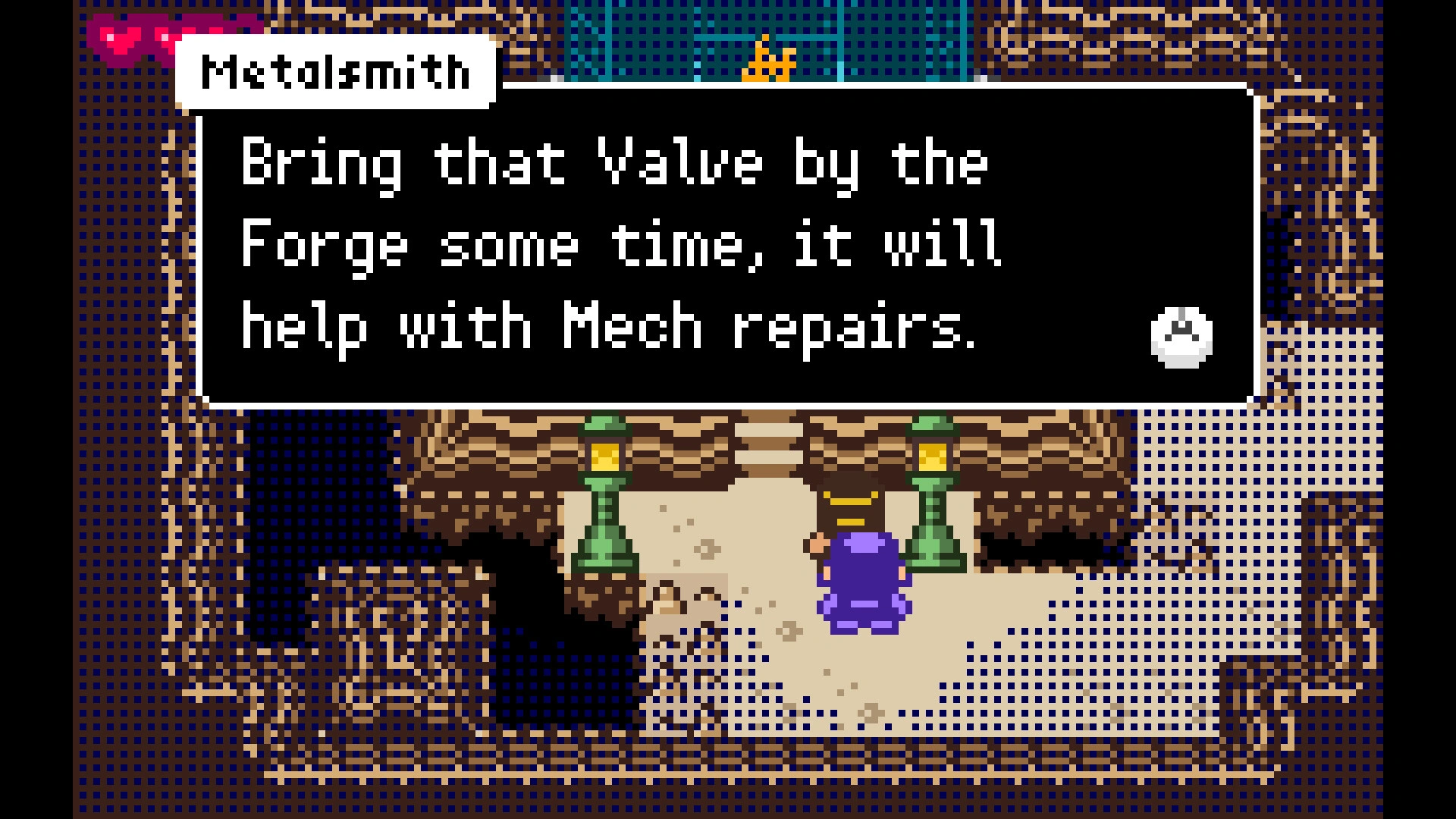
The visual style moves from early dim caverns into soft pastel palettes. The 8-bit, lo-fi pixel art includes four distinct color profiles: full color, stark black and white, standard Playdate gray, and retro Game Boy pea-soup green. Built-in video overlays, including scanlines, dot-matrix grids, and display filters, ease the eye strain that can come from enlarging low-resolution assets on modern large displays.
The soundscape carries a high-quality chiptune score with simulated surround-sound depth. Its melodies catch the emotional pull between bright heroism and industrial melancholy, which suits the lonely underground mood. The brief musical loops grow noticeable during long puzzle-solving stretches inside a single dungeon zone, softening the score’s impact through repetition.
The Friction in the Framework
Significant mechanical flaws interrupt the pacing, especially in control accuracy and collision physics. Platforming feels finicky because edge detection is slippery and protective invisible guardrails are absent. Miss the middle of a moving platform or waterspout and the mechanic slips straight into the abyss, turning movement into a trial-and-error chore. The glider’s floaty physics make precise sequences feel especially unstable, with overshooting targets becoming easy.
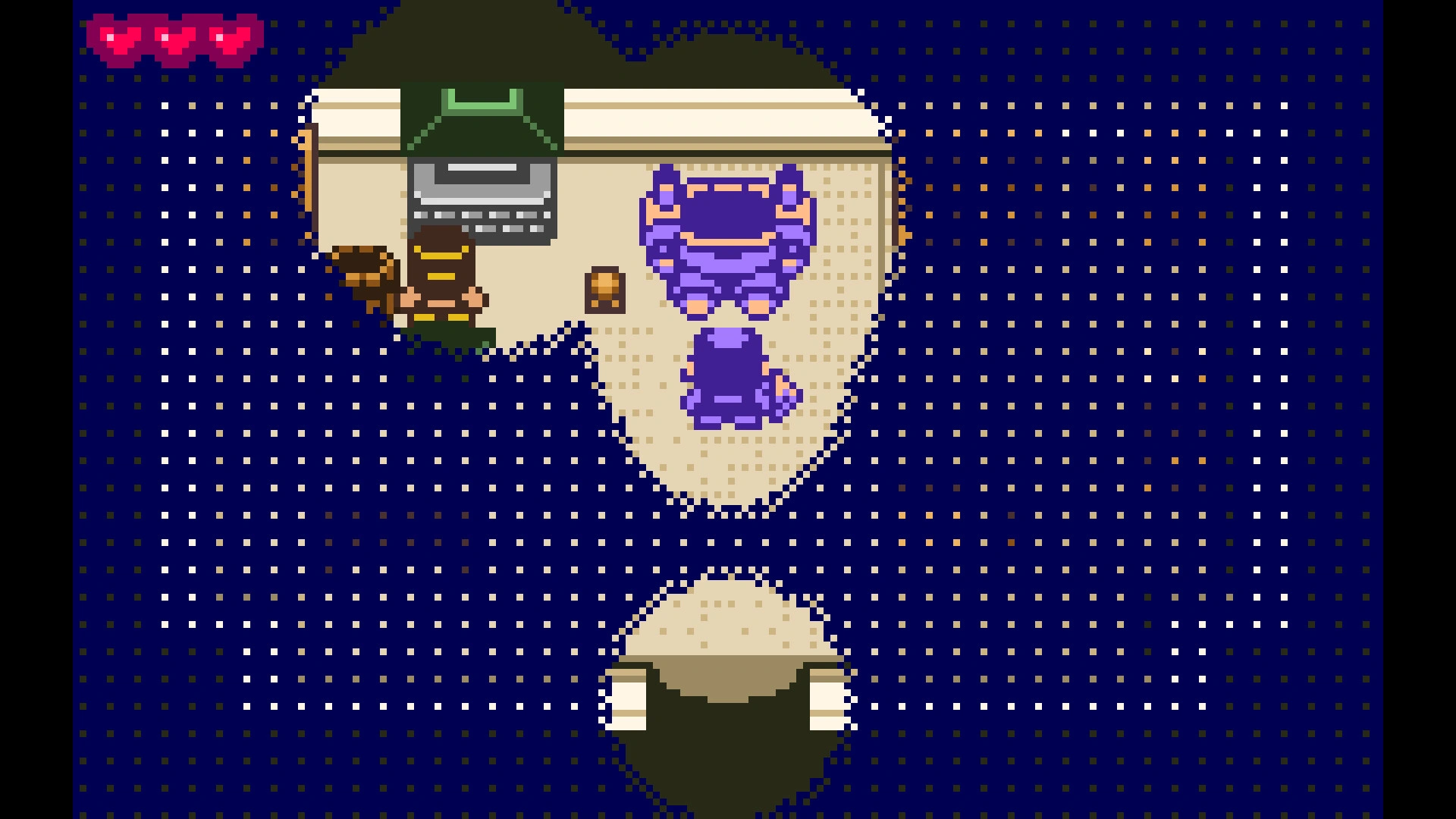
Late-game environmental hazards add harsh penalties. Snow quicksand patches are especially unforgiving, forcing a full-screen transition reset when your positioning slips by a single pixel. Some combat setups intensify the irritation, including aggressive ghost variants in the fourth cavern that crowd landing zones and disrupt active jump paths mid-air.
A few usability oversights add dull repetition to the exploration loop. Loose rubble obstacles respawn every time you cross a screen boundary, making you chop through the same rock barriers again during simple corridor backtracking. The endgame mechanical suit also demands exact, awkward jump alignment before you can climb inside. A standard button prompt would have solved that clunky interaction cleanly.
The Review
Ratcheteer DX
Ratcheteer DX successfully extracts the charming essence of 1990s handheld explorations, repurposing its mechanical blueprint for modern hardware. The atmospheric reliance on light, paired with an ingenious multi-use toolkit, provides a rewarding loop of subterranean problem-solving. However, severe platforming friction, unforgiving edge collision, and unpolished onboarding stifle its pacing. The experience functions as an attractive, nostalgic time capsule that delivers genuine mechanical ingenuity, even if structural rough edges occasionally block your momentum.
PROS
- Clever integration of darkness and lantern mechanics for environmental puzzle-solving.
- Versatile tool design gives weapons distinct, secondary traversal functions.
- Evocative, high-quality chiptune score with great atmospheric weight.
- Generous, low-stakes death loop minimizes repetitive backtracking.
CONS
- Finicky platforming controls with slippery edge detection.
- Minimalist map system lacks detailed room pathways.
- Repetitive rubble clearing between screen boundaries.
- Awkward jumping precision required for the endgame mechanical suit.