













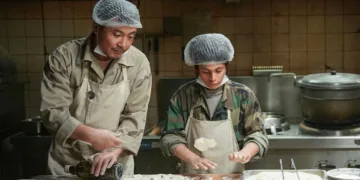













Moroccan filmmaker Laïla Marrakchi brings Strawberries, originally titled La Más Dulce, to the screen as a tense portrait of labor, silence, and survival. The film introduces Hasna, a former competitive athlete whose career ended under circumstances left unspoken.
She crosses the Mediterranean to work as a seasonal laborer on a large agricultural estate in Spain’s Huelva region, hoping to provide financial security for her child back home. Meriem, a younger and quieter woman, travels beside her in search of a new beginning. Their early hope, carried by a lively musical score as the bus passes through wide fields, fades as soon as they reach the Fresa del Carmen farm.
Marrakchi treats the setting with immediate physical force. The workers are placed in cramped communal barracks and sent into punishing labor inside vast plastic-covered greenhouses. The film understands this landscape as a machine built to exploit migrant women through language barriers, economic dependence, and geographic isolation. Under the harsh southern European sun, their invisibility becomes part of the farm’s business model.
Anatomy of an Economic Trap
The screenplay, written by Marrakchi and Delphine Agut, builds its power through daily transactional cruelties. The story moves by tracking the slow loss of autonomy, showing exploitation through small, calculated acts. Supervisors dock pay through arbitrary estimates of bathroom breaks.
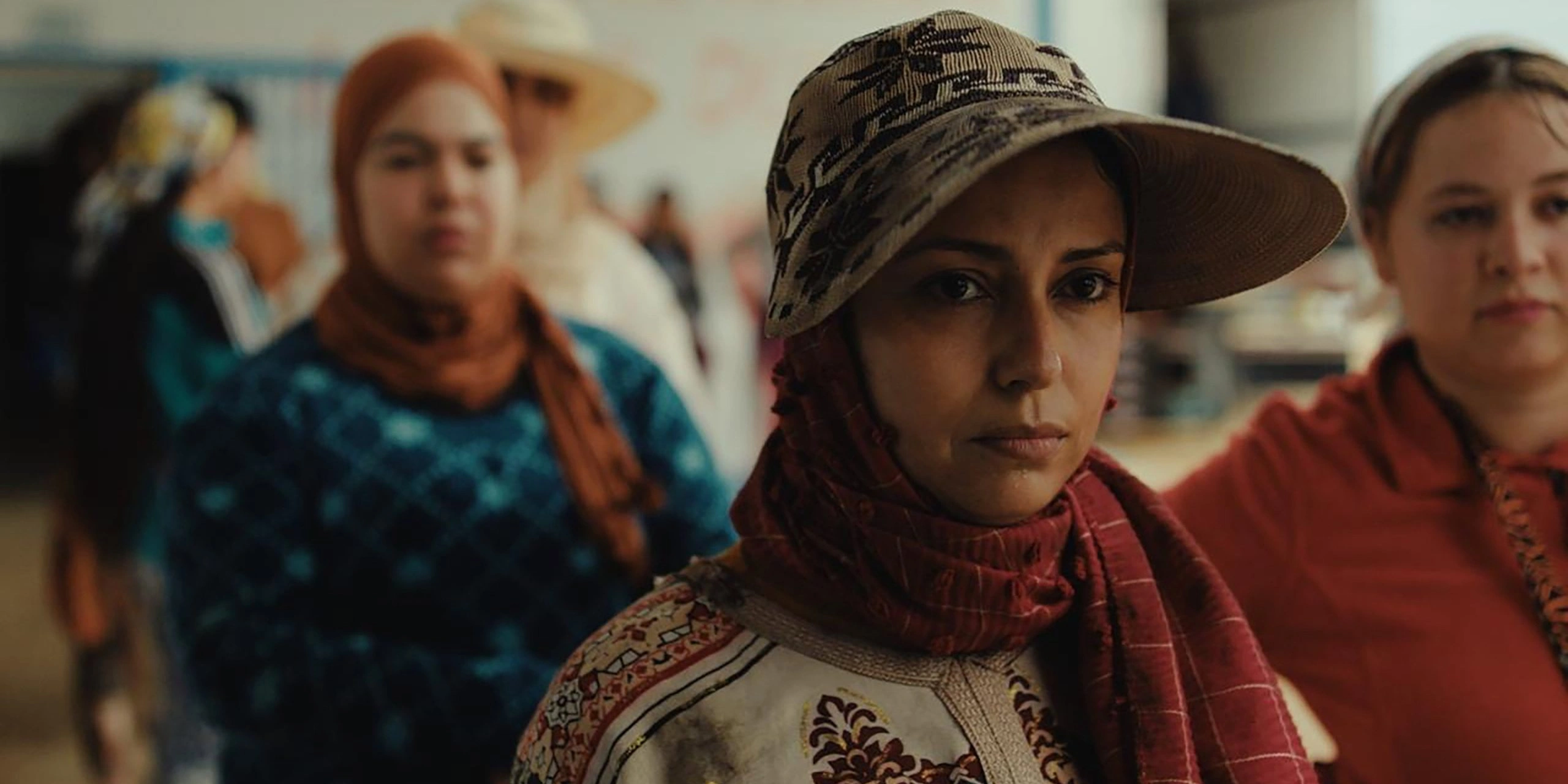
Hidden charges for basic services such as wireless internet drain the women’s wages before payday arrives. This attention to routine institutional corruption gives the film a plainspoken realism. Capitalism here has weight, heat, dust, and aching muscles.
The story turns darker in the estate shower block during a scene involving the property owner, Iván. Hasna faces a brutal moral choice when he enters and orders her to leave, abandoning Meriem in a vulnerable position. Hasna exits to protect her job, and the fragile bond inside the women’s shared housing unit breaks. The decision creates an immediate emotional distance among the roommates, separating veteran pickers Khadija and Zineb, the traumatized Meriem, and Hasna herself.
The script follows the damage caused by that fractured solidarity. Meriem is moved into a maid position inside Iván’s luxurious house, a change that masks continued personal abuse. The tension sharpens after a severe medical emergency involving a miscarriage leaves Meriem without proper healthcare.
That crisis pushes Hasna past her hesitation and toward outside help. With Ali, a sympathetic local shop employee, and Pilar, an idealistic legal-aid lawyer, Hasna begins a risky legal fight against farm management and a legal system content to keep these women unseen.
I tend to admire films that trust structure over speeches, and Strawberries earns that admiration through its accumulation of pressure. Its plot does not lunge toward melodrama. It tightens, scene by scene, until ordinary procedures begin to feel like traps closing from every side.
The Human Faces of Resistance
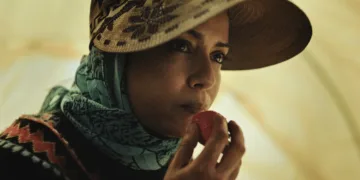
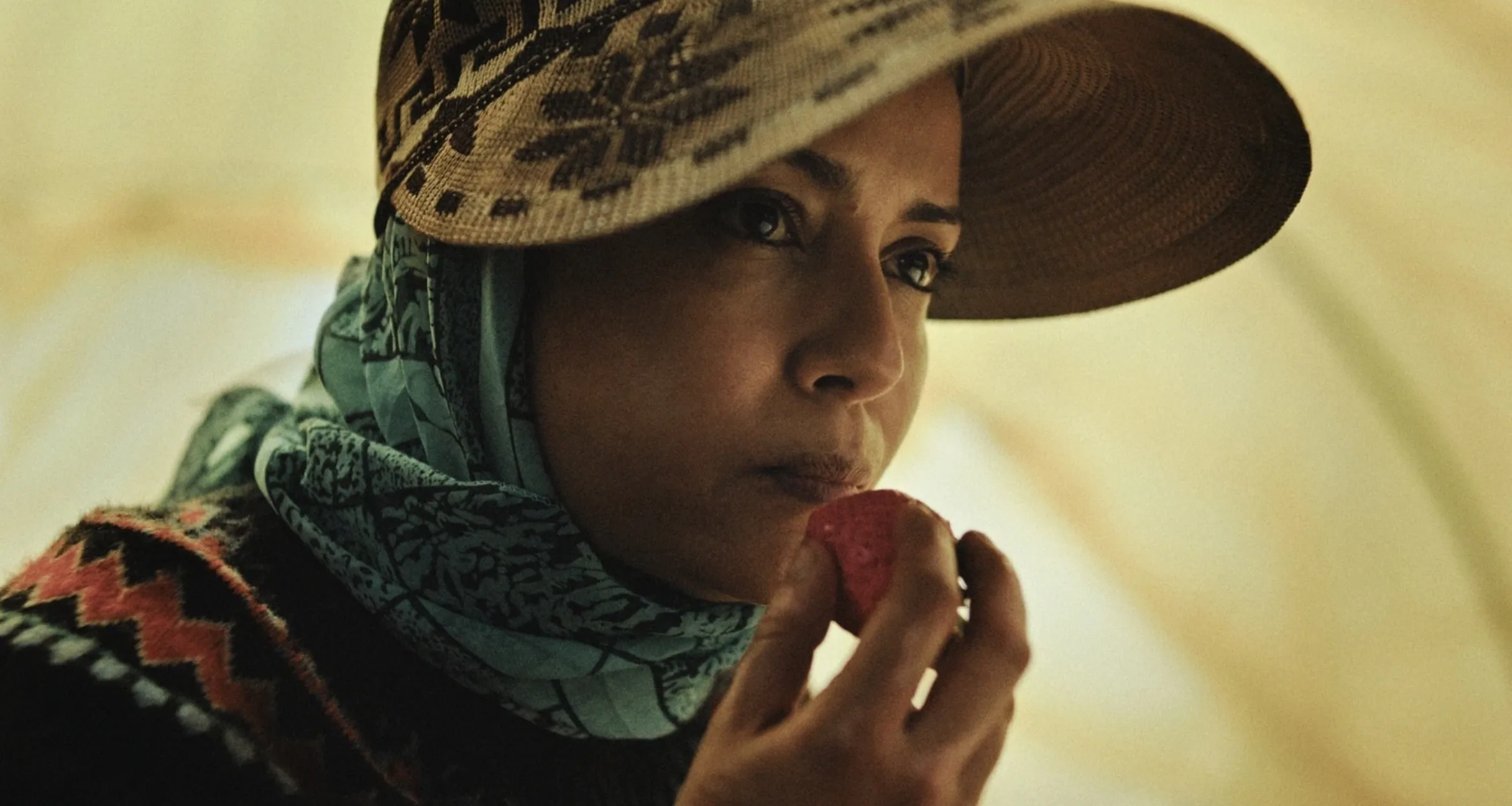
Nisrin Erradi gives a spectacular performance as Hasna, grounding the film through physical command and expressive body language. She plays Hasna as volatile, guarded, and prone to sudden bursts of defensive anger. The character’s athletic past informs the way Erradi carries herself.
Her posture suggests strength, even in loose, unglamorous work clothes. She also lets fatigue and vulnerability break through, especially when Hasna looks at a photograph of her son. Her late speech of defiance lands with real force because the film has made us feel every compromise that came before it.
The supporting cast gives this closed world texture and specificity. Hajar Graigaa plays Meriem with painful internal stillness, expressing the psychological impact of assault through vacant stares and sudden withdrawal from the group.
Hind Braik brings sharp contrast as Zineb, a younger woman who uses humor and personal ambition, including the hope of forming a relationship with a Spanish citizen, as a survival strategy. Fatima Attif gives Khadija a weary, grounded wisdom. As a five-year veteran of the fields, Khadija shows how long-term exploitation can wear down a person’s sense of self.
Pilar, the well-meaning attorney played by Itsaso Arana, creates the script’s most visible strain. Arana gives the role commitment, yet the writing shapes Pilar as a symbol of Western legal idealism. Her frequent cultural disconnect, especially her lack of awareness of the social dynamics within the Moroccan community, can make her feel like a mechanism built to push the legal case forward.
Capturing the Suffocation of the Greenhouses
Director of photography Tristan Galand gives the film a clear visual plan rooted in environmental pressure. The camera moves with restless hand-held energy, following laborers as they bend over crops through endless rows of white plastic greenhouses. The result is intensely physical. Heat, dust, repetition, and claustrophobia seem to press against the frame. The unstable movement reflects the precarious lives of the women on the farm.
Galand shifts the style inside Iván’s private residence. The owner’s estate is filmed with static, rigid compositions and cool, neutral lighting. The change underlines the power gap between employers and workers. Wealth brings space and stillness. Poverty demands motion, endurance, and bodily exhaustion.
Production designer Zineb Andress Arraki deepens the sense of confinement by creating a labor camp that feels like an open-air prison without needing visible fences. The film also uses the strawberries as a recurring visual motif. Early close-ups present the berries as signs of natural beauty and the promise of harvest.
Later images show rotting, fly-infested fruit decaying on the vine. The transformation is direct and effective. The produce mirrors the physical and spiritual wear forced onto the migrant workers, revealing a profit-driven system that consumes the people whose labor sustains it.
The social realist drama Strawberries (originally titled La Más Dulce) made its highly anticipated world premiere on May 18, 2026, screening in the prestigious Un Certain Regard section at the Cannes Film Festival. The feature is an international co-production between France, Morocco, Spain, and Belgium, exploring the harsh realities of the agricultural industry through the eyes of female Moroccan seasonal workers. Following its festival run, theatrical distribution and streaming availability will be handled by international rights holders, including Lucky Number and Bitters End.
Full Credits
Title: Strawberries
Distributor: Lucky Number, Bitters End
Release date: May 18, 2026
Running time: 101 minutes
Director: Laïla Marrakchi
Writers: Laïla Marrakchi, Delphine Agut
Producers and Executive Producers: Jean-François Elie, Nicolas Chaudeurge
Cast: Nisrin Erradi, Hind Braik, Fatima Attif, Hajar Graigaa, Mohamed Larbi Ajbar, Itsaso Arana, Paco Mora, Fran Cantos
Director of Photography (Cinematographer): Tristan Galand
Editors: Jean-François Elie, Nicolas Chaudeurge
Composer: Rob
The Review
Strawberries
Strawberries succeeds as an urgent, fiercely acted look at human exploitation, anchored by Nisrin Erradi’s phenomenal performance. While the screenplay occasionally falls into predictable storytelling traps and exhibits some flat characterization among the secondary cast, Laïla Marrakchi’s uncompromising direction and realistic atmosphere deliver a powerful impact. It is a vital piece of social cinema that refuses to look away from uncomfortable truths.
PROS
- A powerhouse, physically commanding lead performance by Nisrin Erradi.
- Immersive, claustrophobic cinematography that captures the brutal reality of the greenhouses.
- An authentic, deeply felt depiction of female solidarity and community under duress.
CONS
- On-the-nose dialogue that occasionally turns characters into mouthpieces for the themes.
- Flawed character development regarding the lawyer Pilar and certain backstory details.
- Pacing issues that cause the third act to feel slightly drawn out.