






















In November 2018, the community of Paradise, California, existed on a knife’s edge, though few knew it. Following a dry spell lasting over 200 days, the landscape was tinder-dry. High winds howled through the electrical towers, creating an atmosphere of palpable unease.
This arid calm was the prelude to the Camp Fire, one of the most destructive wildfires in the state’s history. Director Paul Greengrass plunges audiences directly into this setting in The Lost Bus, a harrowing account of the disaster.
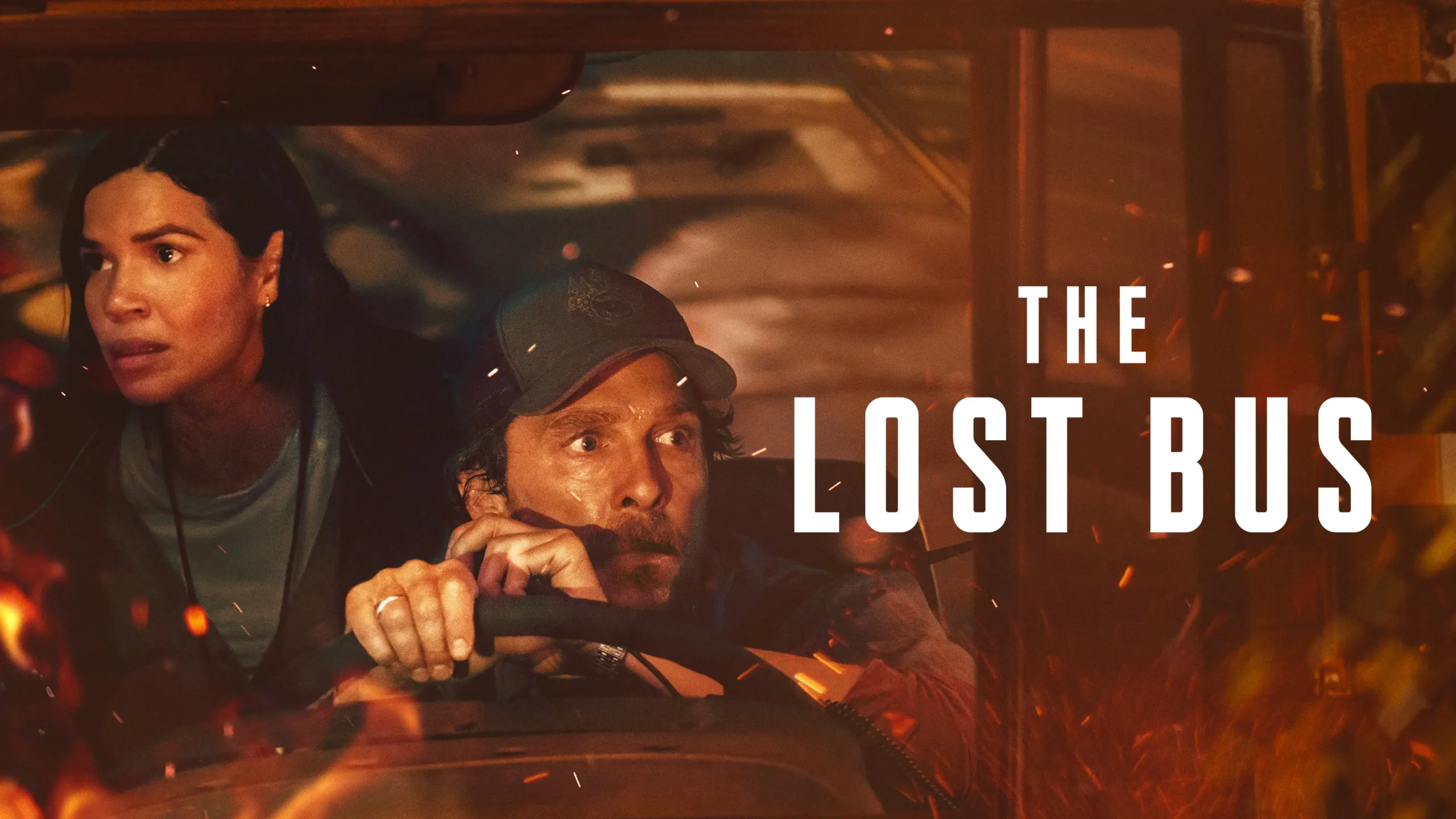
The film centers on the true story of Kevin McKay (Matthew McConaughey), a school bus driver, and Mary Ludwig (America Ferrera), a teacher, who together faced the inferno to save 22 children. It is a work of immense technical skill and visceral power, a modern disaster film whose immersive force is sustained by its lead performances, even when the human drama is saddled with a flawed script.
The Archetype and the Individual in the Face of Collapse
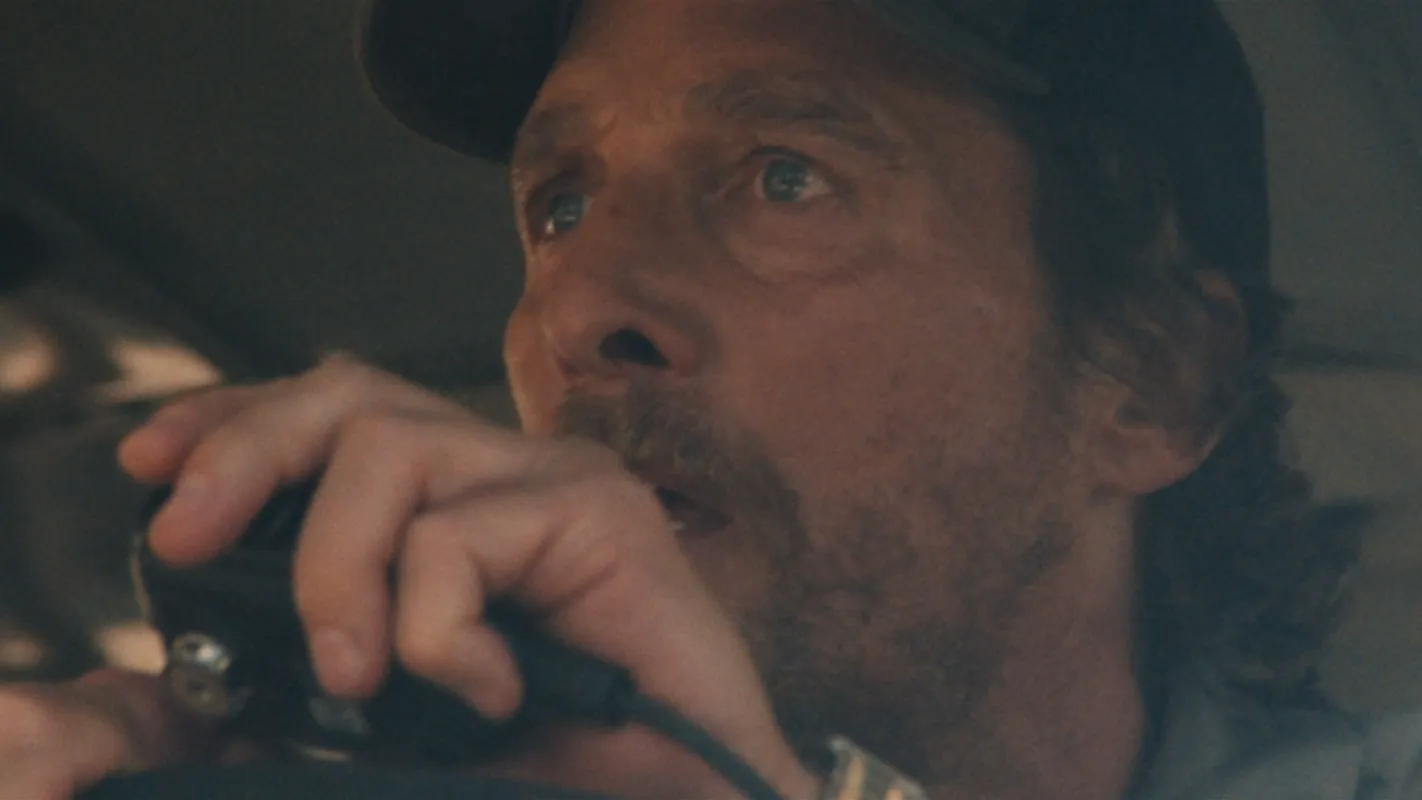
Matthew McConaughey’s performance as Kevin McKay is a masterful deconstruction of the cinematic hero. He embodies a distinctly American archetype—the weary, blue-collar individualist pushed toward communal action by crisis. Yet McConaughey strips the trope of its glamour, presenting a man whose heroism is reluctant, born of desperation and a fundamental decency he cannot shake.
His physical performance communicates volumes: the slump of his shoulders suggests a life of disappointments, while the frantic, searching glances from behind the wheel convey a primal panic that feels utterly authentic. This is not a movie star playing a part; it is an actor dissolving into the grime and terror of his character’s reality.
The film’s meta-casting choice, placing McConaughey’s real-life son and mother in their respective familial roles, deepens this quasi-documentary feel. It is a risky device that pays off, creating an uncanny intimacy that blurs the line between scripted drama and observed life, amplifying the story’s unbearable stakes.
America Ferrera provides the film’s essential emotional anchor as Mary Ludwig. She is a portrait of civic virtue under duress, her steadfast compassion acting as a fragile shield for the terrified children. Her performance is the humane counterpoint to the inhuman chaos of the fire. In a key monologue delivered inside the bus, Ferrera channels the same commanding presence she brought to Barbie, but here the context transforms its meaning.
Instead of corporate satire, her words are a desperate attempt to impose order and hope on an apocalyptic reality, making her eventual breakdown all the more wrenching. The supporting cast broadens the film’s canvas of a society fracturing in real time.
Yul Vázquez, as Battalion Chief Ray Martinez, is superb in the command center scenes, his clipped commands and growing frustration showing the systemic failure to contain the disaster. His performance provides a crucial macro perspective that contrasts with the suffocating micro-horror of the bus. Ashlie Atkinson is also a standout as Ruby, Kevin’s dispatcher, her evolution from a by-the-book boss to a figure of communal grief embodying the spirit of the town itself.
The Grammar of Immediacy: A British Realist in California
Paul Greengrass directs with a style that is less a collection of aesthetic choices and more a complete cinematic language. His signature docu-realism, rooted in the British tradition of films like Bloody Sunday and refined in American contexts with United 93, is applied here to create a state of sustained sensory overload.
The kinetic handheld camera is not used for superficial excitement; it is a narrative tool that forces the audience into the subjective, disoriented perspective of the characters. We do not simply watch the chaos, we are thrust inside it. This directorial approach transforms a regional American tragedy into a universally understood experience of visceral fear. The film is an exercise in controlled chaos, a masterclass in building and maintaining an almost unbearable level of tension.
Greengrass generates anxiety from the film’s opening moments, long before the fire begins its rampage. The ominous creak of Kevin’s aging bus, which we are told is overdue for maintenance, and the constant howling of the wind establish a world already primed for collapse.
The viewing experience becomes an exhausting, assaultive ride, a two-hour panic attack that rarely offers a moment of respite. His execution of the action sequences is defined by this oppressive realism. The central set piece is not a single explosion but a prolonged, claustrophobic struggle for survival within the metal confines of the bus.
The tension comes from the failing engine, the rising heat, and the children’s coughing fits. Specific moments—such as Mary’s desperate search for water outside the relative safety of the bus or Kevin’s white-knuckle navigation through impassable roads—are masterpieces of grounded suspense, focused entirely on the grim logistics of staying alive.
The Inferno as Antagonist: Visuals and Sound
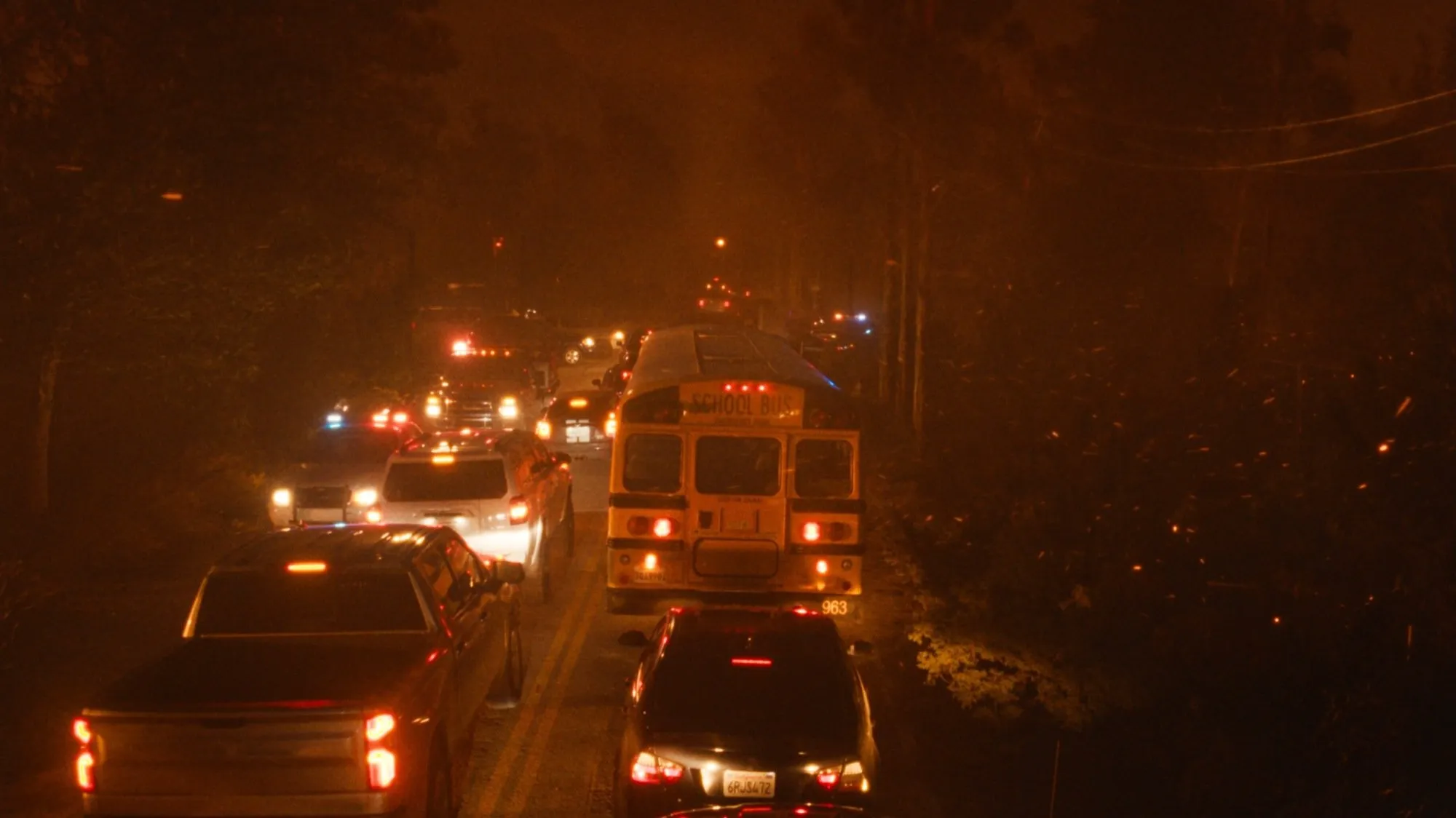
The wildfire in The Lost Bus is rendered as a living, breathing antagonist. It is portrayed as an unrelenting, almost supernatural force, an “uncaged monster” that devours everything in its path. Greengrass and cinematographer Pål Ulvik Rokseth visualize the fire as an apocalyptic entity, a wall of flame that transforms the familiar Californian landscape into a portal to another world.
The screen is filled with images of a sunless sky, choked with smoke and illuminated only by the vicious, orange glow of the inferno and a constant rain of sparks. This personification of nature as an amoral destroyer is a theme deep in the American narrative tradition, here updated for an age of climate-fueled catastrophe.
The film’s technical craftsmanship, particularly the seamless visual effects, is breathtaking. The commitment to hyper-realism creates a horror that is far more terrifying than any fantasy, as it authenticates the unimaginable reality of the event.
This visual assault is amplified by an oppressive and meticulously layered soundscape. The sound design plunges the audience into the auditory chaos of the disaster. The deep, roaring bass of the fire is a constant presence, punctuated by the sharp crackle of exploding trees and the distant wail of sirens.
Inside the bus, this macro-horror is contrasted with the intimate sounds of suffering: the children’s panicked sobs, the desperate gasps for air, and the sputtering groans of the failing engine. Greengrass makes the crucial decision to strip away a traditional musical score during the most intense sequences. This absence of music forces an uncomfortable intimacy, leaving the audience with nothing but the raw, unfiltered sounds of the catastrophe. It is a choice that makes the experience profoundly and unforgettably harrowing.
A Screenplay of Extremes
The film’s screenplay is a study in contrasts, a work of both riveting power and frustrating weakness. Its greatest strength lies in its structural focus on the procedural details of the disaster. The minute-by-minute struggle for survival aboard the bus is a masterwork of high-stakes plotting.
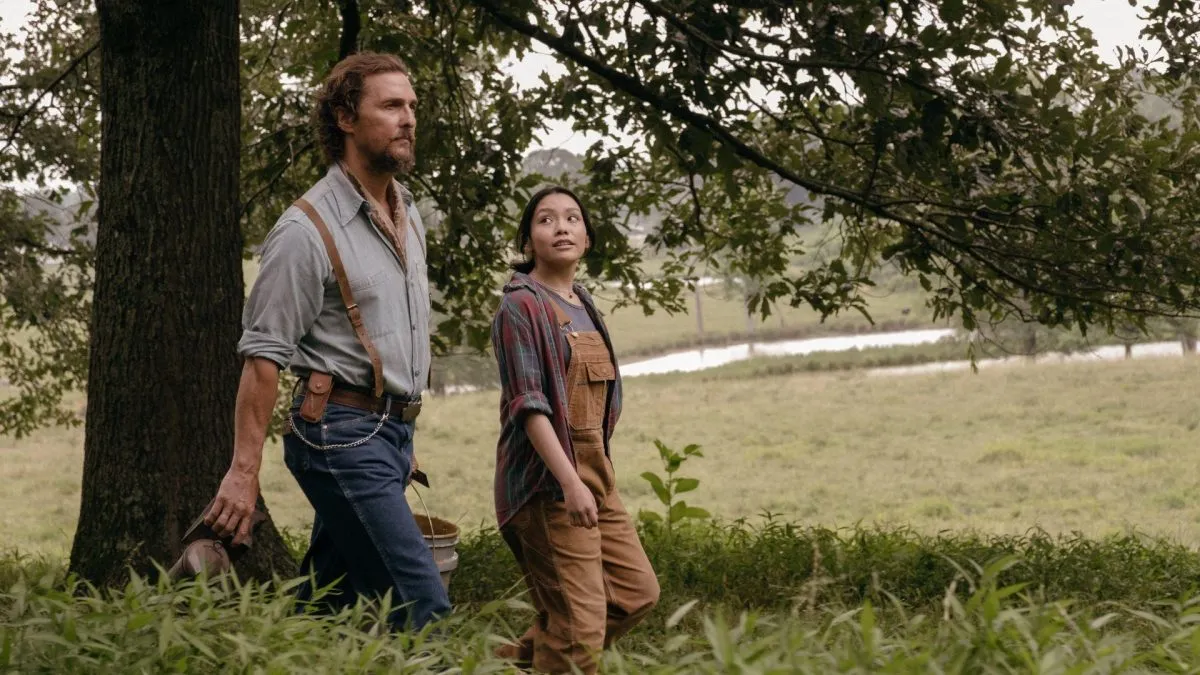
These sequences are complemented by the brief but effective scenes at the Cal Fire command post, which ground the story in logistical reality and journalistic detail. This part of the script functions as a gripping survival thriller, a narrative so elemental and powerful that it requires very little embellishment to be effective.
Yet, the screenplay repeatedly undermines its own strengths with a flawed and clumsy approach to personal drama. The dialogue is frequently on-the-nose, a flaw epitomized by an excruciating line where a character flatly states Kevin’s entire tragic backstory for the audience’s benefit. This kind of writing reflects a fundamental lack of faith in the viewer, a very conventional American screenwriting impulse that clashes violently with Greengrass’s immersive, show-don’t-tell direction.
The problem is compounded by the almost comical piling on of misfortunes in Kevin’s life at the film’s start. This “overkill” feels manipulative, an attempt to manufacture sympathy that paradoxically makes the character less believable. The raw, authentic terror of the fire needs no such heavy-handed emotional signposting; the script’s insistence on it creates a jarring dissonance between the film’s brilliant execution and its often weak dramatic core.
A Harrowing Portrait of a Localized Apocalypse
The Lost Bus is a formidable and essential piece of filmmaking. Its immense technical achievements and harrowing direction create an unforgettable viewing experience. The superb lead performances from Matthew McConaughey and America Ferrera provide the necessary human core, allowing the film to largely overcome its significant script weaknesses.
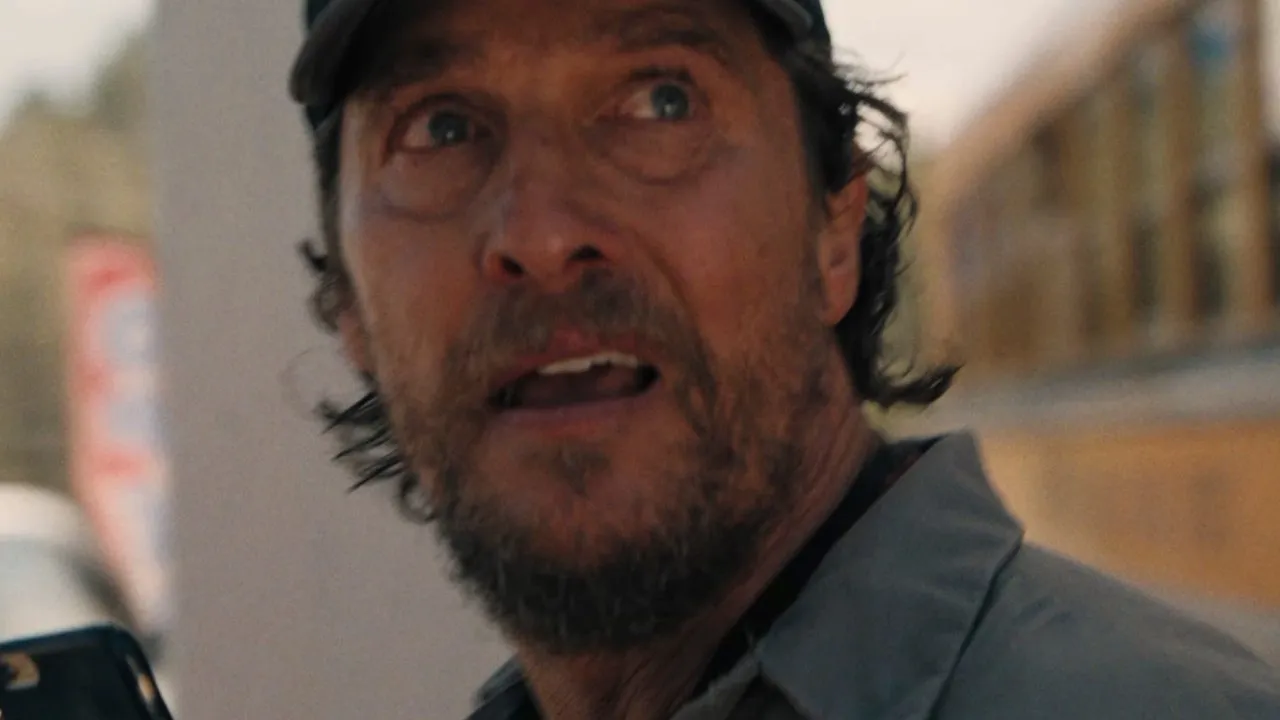
The story reflects on themes of resilience, ordinary heroism, and the fragility of life in the face of overwhelming forces. It functions as a potent tribute to the survivors and first responders of the Camp Fire. The film is a grueling but essential watch, serving as a stark depiction of a modern catastrophe. It leaves a lasting impression of the specific terror of that event and the enduring strength of the human spirit.
“The Lost Bus” is scheduled for a limited theatrical release on September 19, 2025, and will be available for streaming globally on Apple TV+ starting October 3, 2025.
Full Credits
The Review
The Lost Bus
Paul Greengrass’s The Lost Bus is a staggering technical achievement, a masterclass in visceral, immersive filmmaking that plunges the viewer directly into the heart of a terrifying inferno. Anchored by raw, powerful performances from Matthew McConaughey and America Ferrera, the film functions as a grueling but essential disaster picture. Its profound physical and emotional impact is undeniable, even as its power is occasionally undercut by a clumsy, melodramatic script that clashes with the director’s hyper-realistic style. It is a harrowing, unforgettable experience that showcases the best and worst of modern survival cinema.
PROS
- Paul Greengrass's intense and immersive docu-realism direction.
- Powerful, raw, and authentic lead performances from Matthew McConaughey and America Ferrera.
- Stunningly realistic visual effects and an oppressive sound design that create a terrifying atmosphere.
- Masterful execution of suspense and claustrophobic tension throughout the survival sequences.
CONS
- A clunky and often melodramatic screenplay with unnatural, expository dialogue.
- Heavy-handed character backstories that feel manipulative rather than organic.
- A tonal clash between the film's grounded, realistic style and its more conventional script elements.