


















• Latest
  • Trending
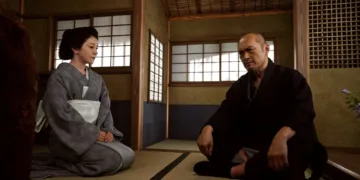
The Samurai And The Prisoner Review

The Samurai And The Prisoner Review: Kiyoshi Kurosawa Delivers a Stately Feudal Mystery

Ted Sarandos

Ted Sarandos Celebrates Netflix’s 10 Years in Korea Amid Leadership Shake-Up

38 minutes ago
Wentworth Halfway Home

“Wentworth: Halfway Home” Adds Nine Cast Members and Drops First Trailer

40 minutes ago
Incinerator Review

Incinerator Review: Warm Images Soften Difficult Questions

My Friend the Porn Star Review

My Friend the Porn Star Review: Private Desires Meet Professional Expectations

Solateria Review

Solateria Review: Familiar Paths, Demanding Parries

Flavors of Iraq Review

Flavors of Iraq Review: The Faces Memory Leaves Behind

Me Before Me Review

Me Before Me Review: Good Intentions Keep Raising the Stakes

The Town That Takes Review

The Town That Takes Review: The Hero Knows When to Leave

Samurai Vengeance Review

Samurai Vengeance Review: Tasuku Emoto Keeps Suspicion Smiling

Phantom Blade Zero Review

Phantom Blade Zero Review: Martial Mastery Through Meaningful Decisions

Gealtra Review

Gealtra Review: Shakespeare Has Competition in Cork

Adultery Review

Adultery Review: Two Generations, One Costly Affair

  • Home
  • Privacy Policy
  • Terms and Conditions
  • Gazettely Review Guidelines
Monday, October 26, 2026
GAZETTELY
  • Home
  • Movie and TV News
    Ted Sarandos

    Ted Sarandos Celebrates Netflix’s 10 Years in Korea Amid Leadership Shake-Up

    Wentworth Halfway Home

    “Wentworth: Halfway Home” Adds Nine Cast Members and Drops First Trailer

    Eric Bauza

    Eric Bauza, Voice of Bugs Bunny and Daffy Duck, Dies at 46

    Holland Taylor

    Holland Taylor Says Low Pay Drove Her Out of “Two and a Half Men” Contract

    James Gunn

    Gunn Tells Impatient DC Fans Standalone Stories Matter on Their Own

    Christopher Abbott

    Christopher Abbott Rules Out Professor X Cameo in “Avengers: Doomsday”

    Amanda Seyfried

    Amanda Seyfried Stands by Rejecting Gamora Role: “Obviously I Was Wrong”

    Nobody Wants This

    Erin Foster Eyes Season 4 of “Nobody Wants This” as Netflix Weighs Renewal

    Avengers Doomsday

    “Avengers: Doomsday” Trailer Puts Two Captain Americas on Screen

  • Movie and TV Reviews
    Incinerator Review

    Incinerator Review: Warm Images Soften Difficult Questions

    My Friend the Porn Star Review

    My Friend the Porn Star Review: Private Desires Meet Professional Expectations

    Flavors of Iraq Review

    Flavors of Iraq Review: The Faces Memory Leaves Behind

    Me Before Me Review

    Me Before Me Review: Good Intentions Keep Raising the Stakes

    The Town That Takes Review

    The Town That Takes Review: The Hero Knows When to Leave

    Samurai Vengeance Review

    Samurai Vengeance Review: Tasuku Emoto Keeps Suspicion Smiling

    Gealtra Review

    Gealtra Review: Shakespeare Has Competition in Cork

    Adultery Review

    Adultery Review: Two Generations, One Costly Affair

    Abandoned Review

    Abandoned Review: The Questions a Loving Home Cannot Answer

  • Game Reviews
    Solateria Review

    Solateria Review: Familiar Paths, Demanding Parries

    Phantom Blade Zero Review

    Phantom Blade Zero Review: Martial Mastery Through Meaningful Decisions

    Warrior Cats: Clans of the Forest Review

    Warrior Cats: Clans of the Forest Review: Earning a Name Before Earning Your Place

    Beyond the Dark: Nightwatch Review

    Beyond the Dark: Nightwatch Review: When Hiding Holds Up the Horror

    Mythmatch Review

    Mythmatch Review: The Comfort and Clutter of Being Useful

    Demon's Night Fever

    Demons’ Night Fever Review: Too Much Talking Before the Next Explosion

    Dynasty Warriors 3 Complete Edition Remastered Review

    Dynasty Warriors 3 Complete Edition Remastered Review: Where Another Officer Means Another Campaign

    Moto Rush Reborn Review

    Moto Rush Reborn Review: Tokyo Traffic Tests Your Nerves

    Penguin Colony Review

    Penguin Colony Review: Knowledge Comes at a Walking Pace

  • The Bests
No Result
View All Result
GAZETTELY
No Result
View All Result
The Samurai And The Prisoner Review

Minotaur Review: Zvyagintsev’s Masterful, Monochromatic Return to Form

Six Months In A Pink And Blue Building Review: A Vivid, Grainy Excavation Of Family Secrets

Home Entertainment Movies

The Samurai And The Prisoner Review: Kiyoshi Kurosawa Delivers a Stately Feudal Mystery

Shahrbanoo Golmohamadi by Shahrbanoo Golmohamadi
5 months ago
in Entertainment, Movies, Reviews
Reading Time: 5 mins read
A A
0
Share on FacebookShare on TwitterShare on PinterestShare on WhatsAppShare on TelegramSummarize with ChatGPTSummarize with Perplexity

Osaka in 1578 becomes a hostile mechanism, a volatile field where containment functions as the favored weapon of feudal life. Inside the chaos of the Warring States period, familiar measures of military power give way to colder pressures behind the stone barriers of Arioka Castle. The mountain fortress, under siege by the relentless forces of the warlord Nobunaga Oda, turns into a political kiln for its master, Lord Murashige Araki.

Masahiro Motoki plays Murashige with disciplined panic, giving him the air of a ruler watching his own class age out of history in real time. He clings to absolute command while feudal loyalty cracks beneath him, which is a fine metaphor for any institution that discovers obedience has an expiration date.

The siege outside the walls soon yields narrative control to a crisis inside them: a chain of inexplicable murders in locked rooms across the stronghold. Murashige, desperate to preserve order and protect his territory, forms a risky alliance with Kanbei Kuroda, played by Masaki Suda, a gifted rival strategist kept shackled in the castle’s deep dungeon.

Their arrangement reshapes the historical drama into a study of strategic gamesmanship, steering the film away from martial pageantry and swordplay toward dense, talk-driven warfare of the mind. A siege film, then, becomes a murder inquiry with a pulse of political theology. History loves a costume change.

Seasons of Intellect and Mortality

The screenplay adapts Honobu Yonezawa’s historical mystery novel Kokurojo through a disciplined chronological structure that mirrors the castle community’s slow corrosion. The plot moves through an episodic calendar divided into Spring, Summer, and Autumn, tracing the year-long siege through distinct seasonal chapters. Each phase begins with a bizarre death, then narrows into a fresh intellectual problem, as if the fortress itself has become a grim examination hall.

The Samurai And The Prisoner Review

The first case involves the murder of a child hostage, discovered with a fatal wound inside a locked space, with arrow and weapon both absent from the crime scene. Murashige approaches the matter like a forensic investigator stranded in the sixteenth century. He conducts interviews on tatami mats, studies entry points, and tests period-specific ballistic trajectories. The procedural detail gives the film an austere pleasure: deduction under starvation conditions, reason pressed against stone.

These self-contained crimes carry the architecture of Golden Age detective fiction, yet the film’s interest moves past culprit-reveal mechanics. Each answer places weight on the survivors, and every solution exposes the moral cost of endurance.

The mystery format becomes a pressure gauge for bushido, loyalty, faith, and the futility of warfare that keeps feeding itself. Violence appears as civic weather, almost routine, which makes the Buddhist and Christian questions of divine justice, human value, and ethical responsibility feel less ornamental and far sharper. The dead are clues. The living are the problem.

The Subterranean Chess Match

The psychological duel in the dungeon provides the film’s structural anchor, supplying a steady counter-rhythm to the political maneuvering above ground. The meetings between ruler and captive resemble a high-stakes chess match, with each line of dialogue shaped as a move designed to expose weakness. Their conversations create a form of verbal siegecraft, a talk-battle in which courtesy becomes camouflage and silence can bruise.

Motoki gives Murashige remarkable force, capturing the internal erosion of a leader near collapse. He plays the lord as a rational man drawn toward conscience over mindless aggression, yet his rectitude keeps meeting betrayal, fear, and the growing knowledge that his defense is failing. He investigates the murders while remaining trapped by his geopolitical reality, split between honor and survival. That split gives the performance its tragic electricity. He can read evidence. He cannot rewrite the age.

Suda’s Kanbei brings a different sort of power. Covered in filth and dressed in tattered rags, he still radiates intellectual command, staying several moves ahead of his captor while presenting solutions as intricate riddles. The dirt almost helps him. It turns him into a dungeon oracle, which sounds ridiculous until the film makes it work.

The ensemble around them sharpens the castle’s social geometry. Yuriko Yoshitaka gives Murashige’s wife, Chiyoho, a composed gravity in the upper quarters. She decodes hidden political threats and studies the shifting allegiances of rival clans, where gifts and social invitations function as veiled death warrants. Her calm is tactical, and her presence reminds the viewer that warfare also happens in rooms where people bow politely.

Geometries of Confinement

The director’s visual design, created with cinematographer Yasuyuki Sasaki, relies on strict architectural control to stress imprisonment as a lived condition. The camera often holds a middle distance, keeping sentimentality at bay while retaining contact with human suffering. This formal framing turns Arioka Castle into a psychological diagram. Walls dictate conduct. Corridors ration truth. Rooms become ethical traps with nice flooring.

The upper living quarters possess clean, understated luxury suited to eavesdropping and political calculation. The dungeon floor offers a dark, heavy void where truth arrives in uglier shapes. The division between these spaces gives the film its symbolic grammar: power above, knowledge below, rot everywhere. It is blunt, perhaps, yet effective.

Physical combat appears rarely and with purpose. The film avoids graphic bloodshed, presenting skirmishes from a distance or fixing attention on the quiet aftermath of violence. Death is treated as a somber fact of the world, stripped of entertainment value. This restraint turns warfare into an intellectual and moral system that the viewer must study, a machine of choices, pressures, and inherited codes.

Across the 147-minute runtime, the editing builds a distinct rhythm. Long, unbroken takes evoke the feel of a stage play, allowing conversations to gather mass and menace. Sudden cuts then fracture the historical atmosphere, pulling danger back into the frame from beyond the gates. The result carries cultural force because it treats history as a living argument about authority, faith, and the price of survival under systems built to crush hesitation.

The Samurai and the Prisoner had its highly anticipated world premiere at the Cannes Film Festival on 19 May 2026 as part of the Cannes Premiere selection. This prestigious launch will be followed by a theatrical rollout across Japan by Shochiku on 19 June 2026, with Janus Films handling its subsequent distribution across the United States. Viewers looking to experience this cerebral, slow-burning period piece will be able to catch its initial wave of screenings at prominent global cinema venues and upcoming international film exhibitions throughout the summer.

Full Credits

  • Title: The Samurai and the Prisoner (Kokurojo)

  • Distributor: Shochiku (Japan), Janus Films (United States)

  • Release date: 19 May 2026 (Cannes Film Festival World Premiere), 19 June 2026 (Japan Theatrical Release)

  • Rating: Unclassified 15+

  • Running time: 147 minutes

  • Director: Kiyoshi Kurosawa

  • Writers: Kiyoshi Kurosawa (Screenplay), Honobu Yonezawa (Based on the novel)

  • Producers and Executive Producers: Junyuki Shimoba, Tsutomu Tsuchikawa, Satoko Ishida

  • Cast: Masahiro Motoki, Masaki Suda, Yuriko Yoshitaka, Munetaka Aoki, Tasuku Emoto, Ryota Miyadate, Joe Odagiri, Shingo Bando

  • Director of Photography (Cinematographer): Yasuyuki Sasaki

  • Editors: Koichi Takahashi

  • Composer: Yoshihiro Hanno

The Review

The Samurai And The Prisoner

8 Score

The film is a meticulously constructed historical chamber piece that effectively trades traditional action for intellectual gamesmanship. By merging the structural rigor of a classic detective story with the heavy moral atmosphere of a feudal siege, the narrative provides a deep, rewarding exploration of authority under pressure. While the deliberate pacing and highly talky execution require patience, the sharp performances and formal visual control deliver an elegant, thought-provoking variation on the samurai genre.

PROS

  • Exceptional psychological chemistry and tension between lead actors Masahiro Motoki and Masaki Suda.
  • Rigorous, immaculate visual framing and architectural spatial design by cinematographer Yasuyuki Sasaki.
  • An intelligent genre hybrid that infuses classic detective mystery mechanics with profound Buddhist and Christian moral inquiries.
  • A refreshed, subversive approach to violence that favors historical and emotional consequences over empty spectacle.

CONS

  • The highly deliberate, 147-minute runtime presents a slow-burning pace that can feel overly static.
  • The repetitive structural blueprint of the seasonal chapters introduces a somewhat predictable narrative pattern.
  • The dense, dialogue-heavy focus may isolate viewers expecting standard samurai swordplay or rapid action sequences.

Review Breakdown

  • Overall 0
Tags: 2026 Cannes2026 Cannes Film FestivalDramaFeaturedHistoryKiyoshi KurosawaMasahiro MotokiMasaki SudaMunetaka AokiMysteryRyota MiyadateShochikuTasuku EmotoThe Samurai and the PrisonerYuriko Yoshitaka
Previous Post

Minotaur Review: Zvyagintsev’s Masterful, Monochromatic Return to Form

Next Post

Six Months In A Pink And Blue Building Review: A Vivid, Grainy Excavation Of Family Secrets

0 0 votes
Article Rating
Subscribe
Login
Notify of
guest
guest
0 Comments
Oldest
Newest Most Voted

This Week's Top Reads

  • Is This Seat Taken? Review

    Is This Seat Taken? Review: A Satisfying Mental Workout

    1313 shares
    Share 0 Tweet 0
  • Money Trap: The Karun Treasure Review: The Cost of Keeping Asım Lovable

    0 shares
    Share 0 Tweet 0
  • Phony Review: An Impostor Mystery With Excellent Social Problems

    1 shares
    Share 0 Tweet 0
  • Yaga Review: Carrie-Anne Moss Keeps Everyone Guessing

    0 shares
    Share 0 Tweet 0
  • Trust Review: Squandered Potential and an Incoherent Plot

    6 shares
    Share 0 Tweet 0
  • The New Stanford Prison Experiment Review: Netflix Schedules a Power Struggle

    0 shares
    Share 0 Tweet 0
  • Ghosts: The Possession of Button House Review: Borrowed Bodies and Familiar Faces

    1 shares
    Share 0 Tweet 0

Must Read Articles

Phantom Blade Zero Review
Reviews Games

Phantom Blade Zero Review: Martial Mastery Through Meaningful Decisions

3 hours ago
Adultery Review
TV Shows

Adultery Review: Two Generations, One Costly Affair

4 hours ago
The Mosquito Bowl Review
Movies

The Mosquito Bowl Review: Athletic Greatness Cannot Guarantee Survival

1 day ago
Newlyweds Review
TV Shows

Newlyweds Review: Later-Life Love Gets Room to Be Silly

2 days ago
Lupin Season 4 Review
TV Shows

Lupin Season 4 Review: The Gentleman Thief Loses Control of His Name

2 days ago
Loading poll ...
Coming Soon
Which of Alfred Hitchcock's 1960s thrillers is your all-time favorite?

Gazettely is your go-to destination for all things gaming, movies, and TV. With fresh reviews, trending articles, and editor picks, we help you stay informed and entertained.

© 2021-2026 All Rights Reserved for Gazettely

What’s Inside

  • Movie & TV Reviews
  • Game Reviews
  • Featured Articles
  • Latest News
  • Editorial Picks

Quick Links

  • Home
  • About US
  • Contact Us
  • Advertise with Us
  • Review Guidelines

Follow Us

Facebook X-twitter Youtube Instagram
No Result
View All Result
  • Gazettely | Movie, TV & Game Reviews, News, and Rankings
  • Movies
  • Entertainment News
  • Movie and TV Reviews
  • TV Shows
  • Game News
  • Game Reviews
  • Contact Us

© 2024 All Rights Reserved for Gazettely

wpDiscuz
0
0
Would love your thoughts, please comment.x