

























• Latest
  • Trending
Minotaur Review

Minotaur Review: Zvyagintsev’s Masterful, Monochromatic Return to Form

eBaseball PRO SPIRIT Review

eBaseball PRO SPIRIT Review: Baseball Decisions Without Button Overload

Accursed Review

Accursed Review: Desert Isolation Cannot Conceal a Thin Mystery

Sia: Nostalgic for the Present Review

Sia: Nostalgic for the Present Review: Singing Strength, Dancing the Effort

Characters Disappearing

Characters Disappearing Review: The Unused Years

Kill Trip Review

Kill Trip Review: Diletta Guglielmi Gives the Staring a Purpose

SURI The Seventh Note

SURI: The Seventh Note Review: Helping an Island Find Its Voice

Secret Lives of Gypsy Wives Review

Secret Lives of Gypsy Wives Review: Family Chemistry Outruns the Formula

The Gift of Deceit Review

The Gift of Deceit Review: Maternal Guilt Finds a Willing Seller

Laura Gallacher

Russell Brand Denies All Charges in Court as Wife Laura Gallacher Looks On

6 hours ago
Celebrity Traitors

Celebrity Traitors Finale: Maya Jama, James Acaster and King Kenny Hold the Keys

6 hours ago
Wentworth

UK Network 5 Buys ‘Wentworth’ Sequel Series Starring Katrina Milosevic

6 hours ago
Gregory Nava

Gregory Nava Vows to Finish Dolores Huerta Biopic After Her Death at 96

6 hours ago
  • Home
  • Privacy Policy
  • Terms and Conditions
  • Gazettely Review Guidelines
Thursday, October 29, 2026
GAZETTELY
  • Home
  • Movie and TV News
    Laura Gallacher

    Russell Brand Denies All Charges in Court as Wife Laura Gallacher Looks On

    Wentworth

    UK Network 5 Buys ‘Wentworth’ Sequel Series Starring Katrina Milosevic

    Gregory Nava

    Gregory Nava Vows to Finish Dolores Huerta Biopic After Her Death at 96

    The Hunger Games Sunrise on the Reaping

    ‘Sunrise on the Reaping’ Hailed as Best ‘Hunger Games’ Film in First Reactions

    Smile 3

    David Bruckner to Direct ‘Smile 3’ as Parker Finn Steps Back to Produce

    James Gunn

    James Gunn Calls Batman and Wonder Woman ‘Diamond Characters’ in DCU Plan

    Sam Heughan

    Sam Heughan Teases ‘Hunt for Gollum’ Role With New Zealand Hint

    Ali G Who Iz I

    ‘Ali G: Who Iz I?’ Extends Theatrical Run as Amazon MGM Defends Stunt Release

    Jamie Dornan 1

    Jamie Dornan on Following Viggo Mortensen as Aragorn: ‘It Will Always Be Viggo’

  • Movie and TV Reviews
    Accursed Review

    Accursed Review: Desert Isolation Cannot Conceal a Thin Mystery

    Sia: Nostalgic for the Present Review

    Sia: Nostalgic for the Present Review: Singing Strength, Dancing the Effort

    Characters Disappearing

    Characters Disappearing Review: The Unused Years

    Kill Trip Review

    Kill Trip Review: Diletta Guglielmi Gives the Staring a Purpose

    Secret Lives of Gypsy Wives Review

    Secret Lives of Gypsy Wives Review: Family Chemistry Outruns the Formula

    The Gift of Deceit Review

    The Gift of Deceit Review: Maternal Guilt Finds a Willing Seller

    Celebrity Traitors

    Celebrity Traitors Finale: Maya Jama, James Acaster and King Kenny Hold the Keys

    First Zone Review

    First Zone Review: The Cost of Keeping the Door Closed

    Capsized Review

    Capsized Review: Lily Rabe Carries the Weight of a Family Holiday

  • Game Reviews
    SURI The Seventh Note

    SURI: The Seventh Note Review: Helping an Island Find Its Voice

    Curse of Resthaven Review

    Curse of Resthaven Review: Hilltop Trades Cartoon Comedy for Gothic Dread

    ANOMALITH Review

    ANOMALITH Review: Mutation Struggles to Compete With Cheap Ammunition

    Banquet for Fools Review

    Banquet for Fools Review: Faith Has Weight

    Terrible Lizards Review

    Terrible Lizards Review: A Roadside Attraction Worth Exploring

    Virtue and a Sledgehammer Review

    Virtue and a Sledgehammer Review: Deconstructeam Puts Its Arguments in Your Hands

    The Wolf Among Us Remastered Review

    The Wolf Among Us Remastered Review: Authority Under Pressure

    Packing Life Review

    Packing Life Review: Satisfying Boxes, Familiar Problems

    Peregrino

    Peregrino Review: New Eden Feels Emotionally Out of Reach

  • The Bests
No Result
View All Result
GAZETTELY
No Result
View All Result
Minotaur Review

Ben’Imana Review: Exploring the Chasm Between Public Peace and Private Trauma

The Samurai And The Prisoner Review: Kiyoshi Kurosawa Delivers a Stately Feudal Mystery

Home Entertainment Movies

Minotaur Review: Zvyagintsev’s Masterful, Monochromatic Return to Form

Marcus Thorne by Marcus Thorne
5 months ago
in Entertainment, Movies, Reviews
Reading Time: 6 mins read
A A
0
Share on FacebookShare on TwitterShare on PinterestShare on WhatsAppShare on TelegramSummarize with ChatGPTSummarize with Perplexity

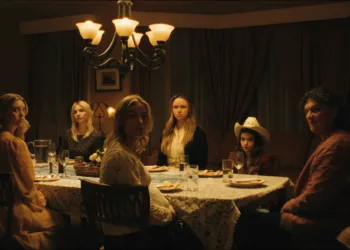
The widescreen image begins inside a chilled, vacant domestic interior. Minotaur, a psychological thriller from director Andrey Zvyagintsev, co-writer Simon Lyashenko, and cinematographer Mikhail Krichman, transplants the skeletal design of Claude Chabrol’s 1969 classic La Femme infidèle to provincial Russia during the dark, convulsive months of 2022. Dmitriy Mazurov plays Gleb, a powerful logistics CEO who learns that supply lines are tidy puzzles compared with the slow collapse of a marriage.

His company is straining under a mass flight of conscription-age workers, and the local mayor, played by Vladimir Friedman, summons corporate leaders with a demand that carries the chill of bureaucratic sacrifice: fourteen hand-picked employees sent to the front lines. That public pressure collides with private betrayal once Gleb discovers that his estranged wife, Galina, played by Iris Lebedeva, has taken refuge with Anton, a young photographer.

Zvyagintsev sets a clinical, dark tonal register from the opening frames. The film studies systemic entitlement with a hard, wintry gaze, letting geopolitical machinery, regional power games, and private moral corrosion grind against each other until individual lives become disposable material in a culture of self-preservation.

The Microcosm of Coerced Complicity

The screenplay uses the disintegration of Gleb’s marriage as a precise allegorical mirror for the autocratic order surrounding him. Gleb emerges as something scarier than a conventional, blood-drunk villain: an elite functionary with a clean desk, a calm voice, and a highly developed gift for ethical evaporation.

He is the perfect vessel for institutional apathy and corporate pragmatism with a pulse rate that seems regulated by spreadsheet software. When the mayor imposes the mobilization quota, Gleb skips moral objection and begins searching for a loophole.

He invents fourteen fictitious corporate positions, hires desperate strangers on permanent contracts, and signs their names over to the conscription office. The maneuver satisfies the state, protects his essential company structure, and shields his head of security, the same man serving as his private marital spy. Corporate loyalty earns a reprieve from the state meat grinder. The unknown and disconnected are processed out of sight.

That philosophy of survival through dominance passes directly to the next generation in a quiet domestic scene. When his adolescent son, Seryozha, complains about a schoolyard bully, Gleb offers no comfort and no plea for peace. He tells the boy to shake the bully before threatening to smash his face in, then frames the lesson as victory through the brain, achieved by strategic intimidation.

He commands his son to project authority while concealing emotional weakness. The scene prefigures the method Gleb later uses when facing his wife’s lover. Control is everything. A family lesson, apparently. Very practical. Terrible, naturally.

Galina exists in near-total isolation inside their lakeside dacha, an expensive trophy wife waking to her status as a glorified, disposable housewife. Her subjugation sharpens during a tense restaurant scene with their affluent circle. The gathering decays into toxic humor and casual misogyny from the men, while the women maintain practiced, polite smiles.

Social compliance becomes a performance, and everyone seems to know the blocking. The same ethical rot reaches the local authorities. When a casual inquiry brushes against Gleb, the police treat a possible investigation as a tedious routine and pause their questions for lunch. Noir has always understood that corruption loves paperwork. Here, it also has an appetite.

Shadows on the Parquet

Mikhail Krichman renders this moral vacuum through an austere widescreen grammar steeped in classic noir tradition. The camera moves in stalking, unhurried pans, carving domestic and professional spaces into vast zones of alienation. Expressionistic framing turns rooms into traps. Chiaroscuro principles shape the lighting, giving modern gray office blocks and cavernous home interiors the feel of spiritual cold storage. The visual field keeps asking the same question: how much emptiness can wealth furnish?

The production design sets the film’s two main environments in sharp thematic opposition, each space reflecting a damaged interior life. Gleb and Galina’s modernist dacha is wrapped in sterile blue-grey tones and filled with anonymous art of the luxury-hotel variety. It feels half-empty, airless, close to extinction. Anton’s cramped, messy studio apartment carries warmth, disorder, and lived-in imperfection. For Galina, it becomes a temporary sanctuary. Her posture relaxes there. Her body seems to remember another version of itself.

This formal control intensifies during a pivotal post-confrontation sequence that overturns the expected thriller rhythm. Zvyagintsev follows a grueling, real-time clean-up with clinical patience, refusing the mercy of a cut. The scene develops a streak of gallows humor as Gleb panics over the practical inconveniences of his crime, scrambling for kitchen roll and dragging a dripping towel across Soviet-era parquet. The physical clumsiness of the cover-up plays like a grim silent comedy, with echoes of Chaplin or Keaton trapped in a moral freezer.

The director avoids stylized death. The mundane frustrations produce realistic horror, with cheap amusement kept at a suspicious distance. Tension replaces catharsis. Later, a mesmerizing long take glides through the lover’s apartment in a 360-degree pan. The camera rests on abandoned objects, using slow, deliberate movement to expose the vacuum left by an affluent society that has bartered its soul for material comfort.

Sacrificial Mazes and Greyscale Skies

Dmitriy Mazurov anchors the film’s psychological structure through a carefully flattened affect. He gives Gleb an enigmatic, unreadable calm, the cold bearing of a bureaucrat performing the motions of existence. For the first hour, that mask stays fixed: a man of muted feeling, offering little evidence of inner life beyond calculation. During the central crisis, the icy surface fractures, and Gleb jolts into raw, panicked animation. He appears most human while sweating over survival. A small mercy, and a damning one.

Iris Lebedeva gives Galina a sharp counterforce. Her sparse dialogue carries volatility, and she shifts a scene’s emotional gravity through a resentful glance or a weary gesture. In the forced bedroom reconciliation, her demand to know where her true self fits within this patriarchal architecture cuts through the film’s polished surfaces. The question opens an identity crisis inside a marriage built on possession. Free will here has a narrow corridor. So does love. So does decency.

Through these performances, the title Minotaur gains layered symbolic force. The mythic beast suggests the predatory impulses buried inside the elite, while the labyrinth evokes the wider machinery that sacrifices young citizens to a rapacious state. The image of young men ritually fed to a monster carries historical weight, turning a local drama into a recurring pattern of suffering.

Zvyagintsev fixes that doom in the final sequence. An aerial shot captures an endless expanse of rolling clouds in harsh, drained greyscale. The monochrome image leaves the audience suspended in absolute isolation. It mirrors the sterile palette of the couple’s unhappy home and recalls distant, billowing military explosions, suggesting that the personal and political have fused past the point of return.

The political thriller drama Minotaur had its highly anticipated world premiere in the main competition at the Cannes Film Festival on May 19, 2026, marking director Andrey Zvyagintsev’s return to cinema after nearly a decade. Following its successful festival debut, global distribution company Mubi acquired the streaming and theatrical rights for North America, Latin America, the United Kingdom, Ireland, Germany, Austria, and Switzerland, where it will eventually be available to watch on their platform. Additionally, the film is scheduled for a wide theatrical release in France by Les Films du Losange on October 14, 2026.

Full Credits

  • Title: Minotaur

  • Distributor: Les Films du Losange, Mubi

  • Release date: May 19, 2026

  • Running time: 135 minutes

  • Director: Andrey Zvyagintsev

  • Writers: Simon Lyashenko, Andrey Zvyagintsev

  • Producers and Executive Producers: Charles Gillibert, Nathanaël Karmitz, Marco Perego, Andrey Zvyagintsev

  • Cast: Iris Lebedeva, Dmitriy Mazurov, Varvara Shmykova, Juris Žagars, Anatoliy Beliy, Vladimir Friedman, Anastasia Mischenko, Yuriy Zavalnyouk, Boris Kudrin, Rudgy Pajany

  • Director of Photography (Cinematographer): Mikhail Krichman

  • Editors: Anna Mass

  • Composer: Philip Glass

The Review

Minotaur

8.5 Score

Minotaur succeeds as a chilling, formalist synthesis of domestic rot and geopolitical anxiety. Andrey Zvyagintsev strips away conventional thriller mechanics, replacing cheap catharsis with a suffocating sense of moral compromises. Driven by Dmitriy Mazurov’s ice-cold performance and Mikhail Krichman’s clinical widescreen cinematography, the film transforms an ordinary tale of adultery into a damning allegory of institutional complicity. While the deliberate pacing and overwhelming nihilism will test general audience endurance, the sheer formal execution demands attention. It is a severe, magnificent dissection of a vacated society.

PROS

  • Austere widescreen cinematography and exceptional use of architectural space.
  • A brilliant, darkly comedic real-time clean-up sequence that highlights mundane horror.
  • Layered allegorical writing that seamlessly merges personal and macro-political decay.

CONS

  • Deliberate, unhurried pacing that requires extreme audience patience.
  • Galina's character arc feels slightly under-drawn toward the final act.
  • The unrelenting, clinical bleakness offers zero emotional catharsis.

Review Breakdown

  • Overall 0
Tags: 2026 Cannes2026 Cannes Film FestivalAnatoliy BeliyAndrey ZvyagintsevCG CinémaCrimeDmitriy MazurovDramaFeaturedIris LebedevaJuris ŽagarsLes Films du LosangeMinotaurMK ProductionMUBIThrillerVarvara ShmykovaVladimir Friedman
Previous Post

Ben’Imana Review: Exploring the Chasm Between Public Peace and Private Trauma

Next Post

The Samurai And The Prisoner Review: Kiyoshi Kurosawa Delivers a Stately Feudal Mystery

0 0 votes
Article Rating
Subscribe
Login
Notify of
guest
guest
0 Comments
Oldest
Newest Most Voted

This Week's Top Reads

  • Incinerator Review

    Incinerator Review: Warm Images Soften Difficult Questions

    0 shares
    Share 0 Tweet 0
  • Is This Seat Taken? Review: A Satisfying Mental Workout

    1283 shares
    Share 0 Tweet 0
  • Phony Review: An Impostor Mystery With Excellent Social Problems

    1 shares
    Share 0 Tweet 0
  • Gajab Raat Review: Manoj Bajpayee Knows the Price of Authority

    0 shares
    Share 0 Tweet 0
  • Money Trap: The Karun Treasure Review: The Cost of Keeping Asım Lovable

    0 shares
    Share 0 Tweet 0
  • Yaga Review: Carrie-Anne Moss Keeps Everyone Guessing

    0 shares
    Share 0 Tweet 0
  • The Mosquito Bowl Review: Athletic Greatness Cannot Guarantee Survival

    0 shares
    Share 0 Tweet 0

Must Read Articles

eBaseball PRO SPIRIT Review
Reviews Games

eBaseball PRO SPIRIT Review: Baseball Decisions Without Button Overload

4 hours ago
The Mongoose Review
Movies

The Mongoose Review: Liam Neeson’s Fugitive Finds a Fan Club

9 hours ago
Christmas at the Kringles Review
Movies

Christmas at the Kringles Review: Comic Chemistry Keeps a Faltering Horror Alive

10 hours ago
Dexter: Resurrection Season 2 Review
TV Shows

Dexter: Resurrection Season 2 Review: A Killer Seeking Credit

10 hours ago
Breeder Review
Movies

Breeder Review: Intelligence Has Its Price

1 day ago
Loading poll ...
Coming Soon
Which of Alfred Hitchcock's 1960s thrillers is your all-time favorite?

Gazettely is your go-to destination for all things gaming, movies, and TV. With fresh reviews, trending articles, and editor picks, we help you stay informed and entertained.

© 2021-2026 All Rights Reserved for Gazettely

What’s Inside

  • Movie & TV Reviews
  • Game Reviews
  • Featured Articles
  • Latest News
  • Editorial Picks

Quick Links

  • Home
  • About US
  • Contact Us
  • Advertise with Us
  • Review Guidelines

Follow Us

Facebook X-twitter Youtube Instagram
No Result
View All Result
  • Gazettely | Movie, TV & Game Reviews, News, and Rankings
  • Movies
  • Entertainment News
  • Movie and TV Reviews
  • TV Shows
  • Game News
  • Game Reviews
  • Contact Us

© 2024 All Rights Reserved for Gazettely

wpDiscuz
0
0
Would love your thoughts, please comment.x