




























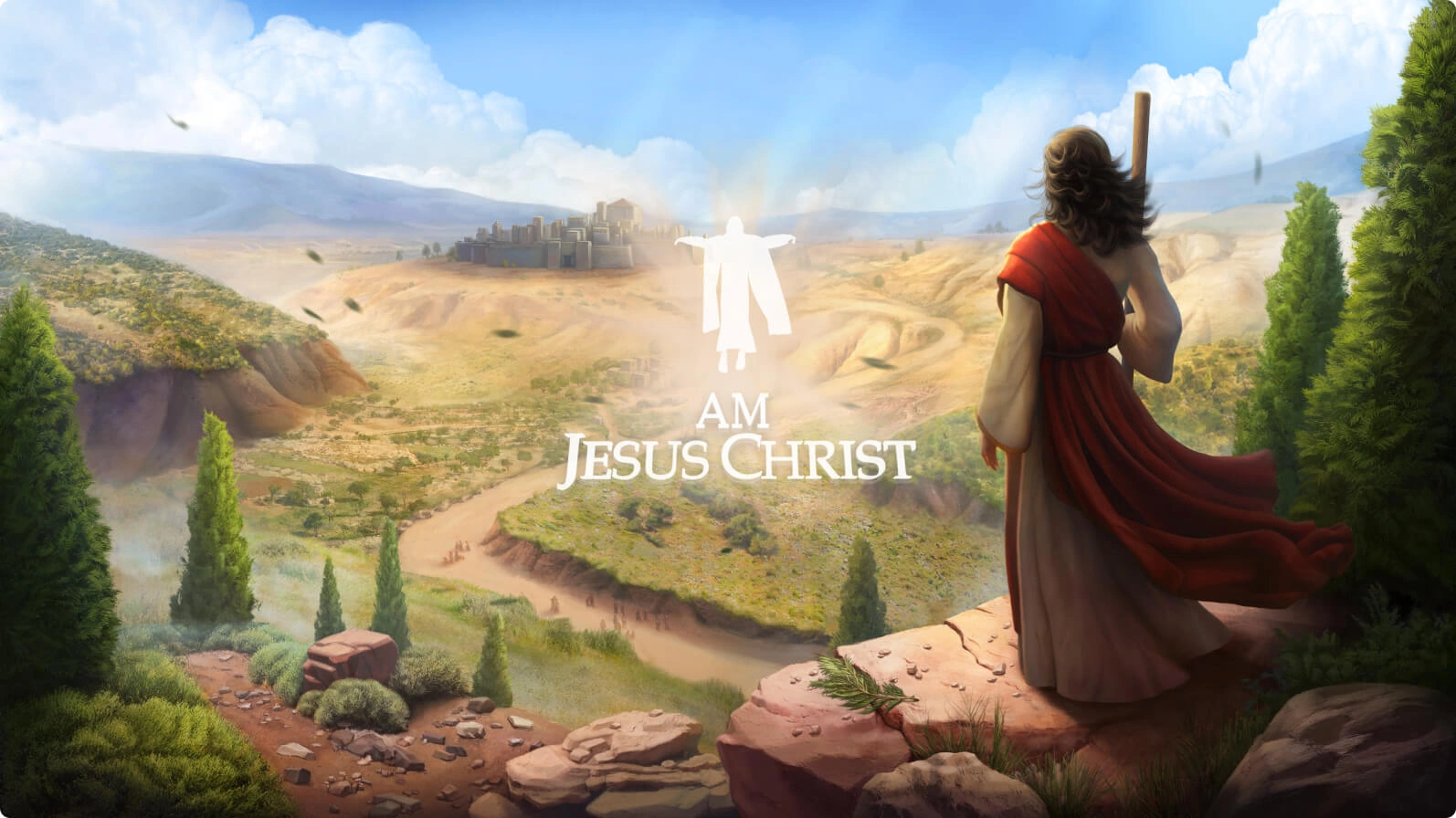

I Am Jesus Christ, developed by Space Boat Studios, turns the New Testament into a first-person simulation and adventure game with a highly literal design philosophy. It places players inside the viewpoint of the central figure of Christianity, guiding them through a direct re-creation of his life as framed by scripture.
The project has a large scope, moving from baptism to crucifixion and resurrection through a structure that treats biblical events as playable sequences. It works as an interactive biography built around education, with actual biblical text serving as the basis for its story and mechanics.
The setting re-creates parts of the historic Middle East, with particular attention to Galilee and Jerusalem. By placing the player behind the eyes of Jesus, the game seeks intimacy through direct participation. Parables and miracles become objectives, systems, and scripted actions inside a digital Holy Land. Its main purpose is instructional, using play to present scripture through a first-person framework rarely attempted with this degree of literal commitment.
Geography of the Sacred World
The game unfolds through structured chapters across a semi-open world made of villages, wilderness areas, and open plains. Its map links major sacred locations, including Nazareth, Gethsemane, Capernaum, Mount Tabor, and Golgotha. Exploration gives the player physical contact with this religious geography, and the act of moving between sites becomes part of the storytelling rhythm. The world design asks players to feel the distance between places, turning pilgrimage into a repeated play action.
Progression mixes exploration with visual novel segments. Animated cutscenes bridge missions and often include readings from specific scriptural verses. A codex functions as the game’s educational archive, with knowledge sections drawn from Exodus, Matthew, Mark, and Luke. The structure resembles a guided RPG questline, with recognizable milestones acting as main story beats. The meeting with John the Baptist, the recruitment of the twelve apostles, and the miracle of the loaves and fishes all become focal points in the campaign.
Jesus remains voiceless for most of the experience. This choice supports the reverent tone by letting players occupy the role without attaching the figure to a particular vocal performance. It also limits the expressive range of the protagonist, placing much of the emotional weight on events, scripture, and player action. The result is a story system built around participation, where the player performs sacred moments through objectives that follow a fixed biblical path.
The Mechanics of Divine Intervention
The main interactive loop is built around a miracle system powered by the Holy Spirit bar. This blue HUD indicator drains whenever the player performs divine acts. Prayer and specific prayer points restore the resource, creating a simple management layer that links spiritual practice to mechanical function. The game’s clearest design idea sits here: faith is translated into energy, and miracles become abilities with resource costs.
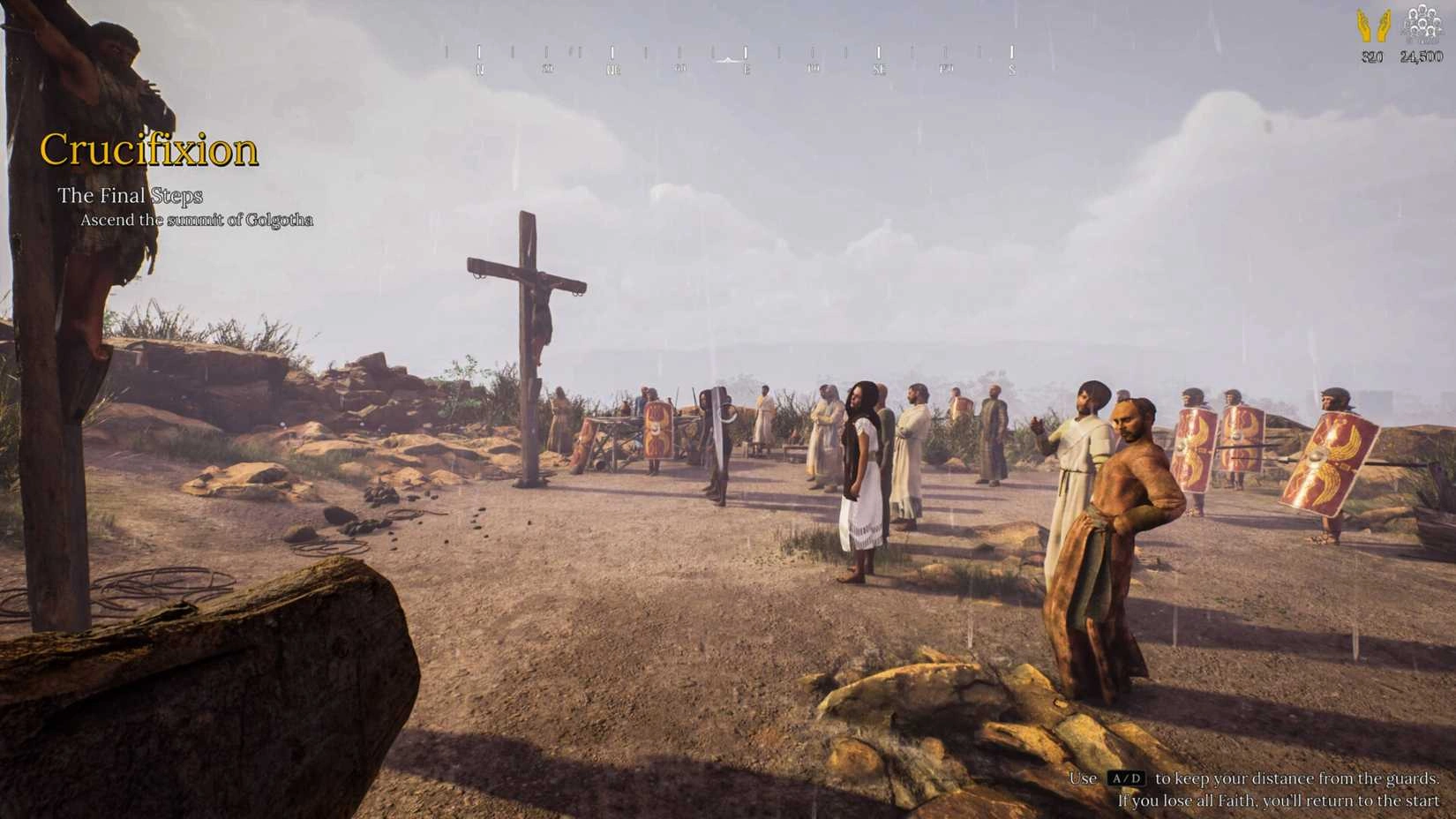
Each miracle type has its own play format. Healing uses a minigame where the player clicks on sores or wounds to cure figures such as lepers or the blind. Exorcisms shift into action encounters, asking the player to fire Holy Bolts at demonic entities, stun them, and drag them into portals.
These moments introduce red ghostly figures that alter the visual tone of the screen. Transformation miracles cover events like turning water into wine or multiplying food to satisfy quest objectives. Resurrection scenes, including the raising of Lazarus, use telekinetic puzzles built around moving objects or manipulating glowing cubes.
Divine Sight helps mark important items and objectives in the environment, giving exploration a clearer direction. Character progression appears through biblical puzzles based on the Commandments or Genesis, which gate access to new powers. These tests ask players to prove knowledge of the text before expanding their ability set. Compared with the looser agency found in many choice-driven RPGs and indie adventures, the path here is tightly scripted.
Player choice mostly appears through task completion, resource use, side quests, and achievement pursuit. Consequence is tracked through Faith and Followers, two secondary systems that measure the impact of the player’s actions. Faith works as a health bar during specific trials. Followers increase through side quests and specific achievements.
The desert trials against Satan provide the hardest mechanical challenge. These boss fights ask the player to dodge incoming projectiles and reflect attacks in a confined space. Their difficulty rises sharply compared with the rest of the game, creating a trial-and-error rhythm. The combat design gives the story a harsher mechanical edge, yet the controls struggle to match the intensity these encounters demand.
Technical Disconnects and the Uncanny Valley
The visual presentation works best in its ancient cities and natural spaces. The reconstructed settlements and landscapes create a pleasant atmosphere for exploration and stay consistent with the historical era the game aims to evoke. The environment art gives the player a readable sense of place, which matters because the campaign depends so heavily on movement through sacred geography.
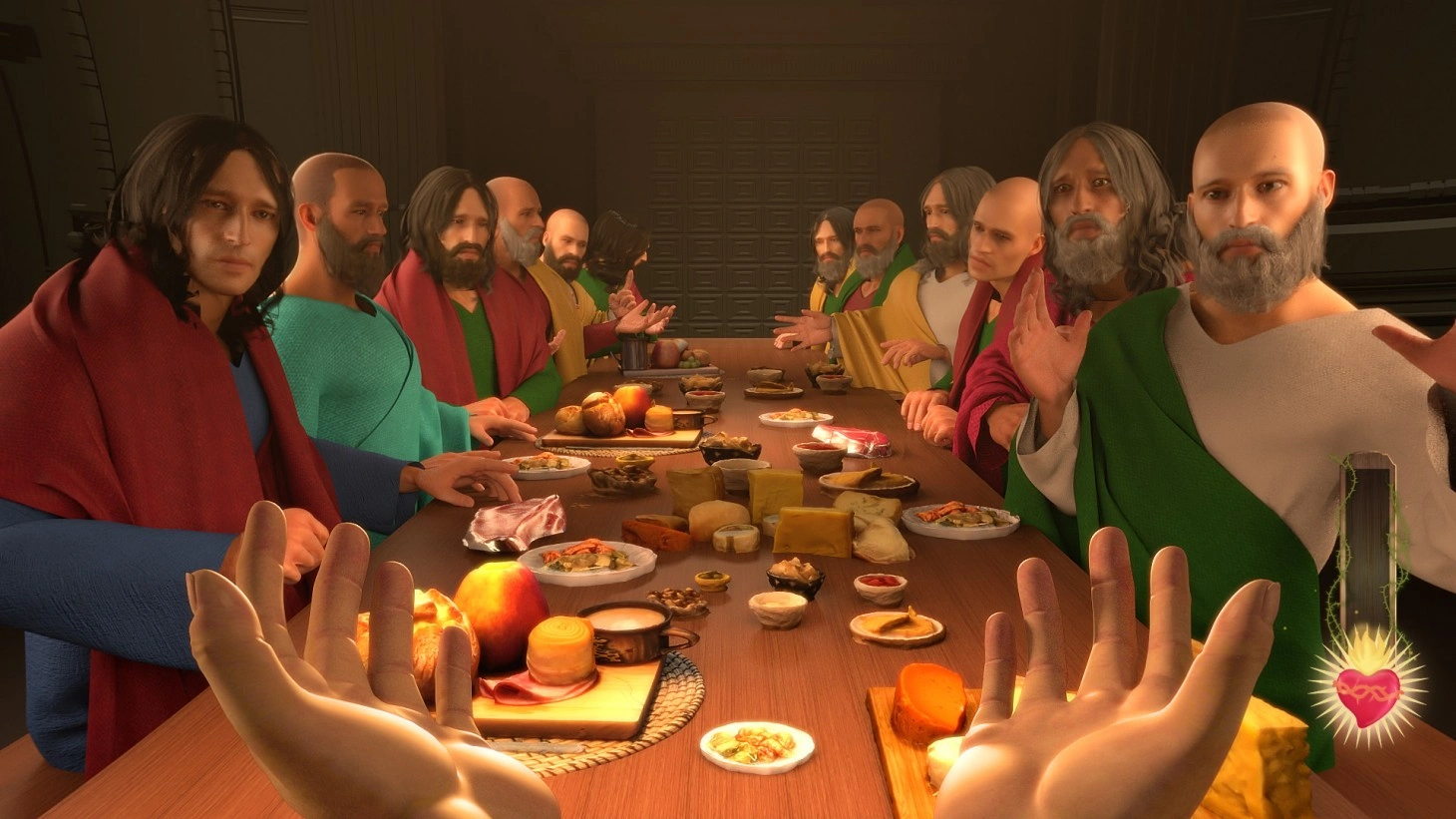
Character models expose the game’s technical limits. NPC variety is small, and repeated assets make many figures look identical. This repetition creates an uncanny valley effect across many encounters, weakening the intimacy that the first-person design tries to build.
The audio production faces similar problems through its use of artificial intelligence voice acting. Accents and vocal tones shift between scenes without explanation. The narrator sounds like multiple different people across the story, and the AI voice mispronounces specific words. It also fails to distinguish homographs, including the difference between the action of a bow and the weapon with the same spelling.
The soundtrack uses a standard church orchestral style. It supports the sacred tone of the work, though it lacks a distinct identity. Movement feels rigid, and action sequences lack precision. These issues hurt the pacing most during encounters with Roman soldiers and demonic forces, where the game asks for quicker responses than its controls can comfortably support.
The literal adaptation gives I Am Jesus Christ a clear identity, and its educational intent shapes every system. Its mechanics translate scripture into quests, puzzles, resource bars, and action encounters. The strongest moments come from that direct connection between story and play. The weakest moments appear when the game engine, animation, voice work, and controls cannot carry the weight of the subject with the same clarity.
The Review
I Am Jesus Christ
I Am Jesus Christ occupies a strange space between educational software and experimental simulation. The commitment to biblical accuracy provides a clear purpose for the systems, yet the mechanical execution remains shallow. Rigid controls and inconsistent AI voice acting undermine the intended solemnity. While the environmental design captures the scale of the Holy Land, the repetitive character models and clunky minigames prevent a fluid experience. It serves as a digital curiosity for those interested in the subject matter rather than a polished adventure title.
PROS
- Faithful biblical adaptation
- Expansive environmental design
- Clear educational focus
CONS
- Inconsistent AI voice acting
- Repetitive character models
- Rigid movement and combat