
























![Kingdom Hearts Collection [I-III] Review](https://gazettely.com/wp-content/uploads/2026/10/Kingdom-Hearts-Collection-I-III-1-360x180.webp "Kingdom Hearts Collection [I-III] Review: KHII Holds Steady as Newer Entries Fluctuate 37")



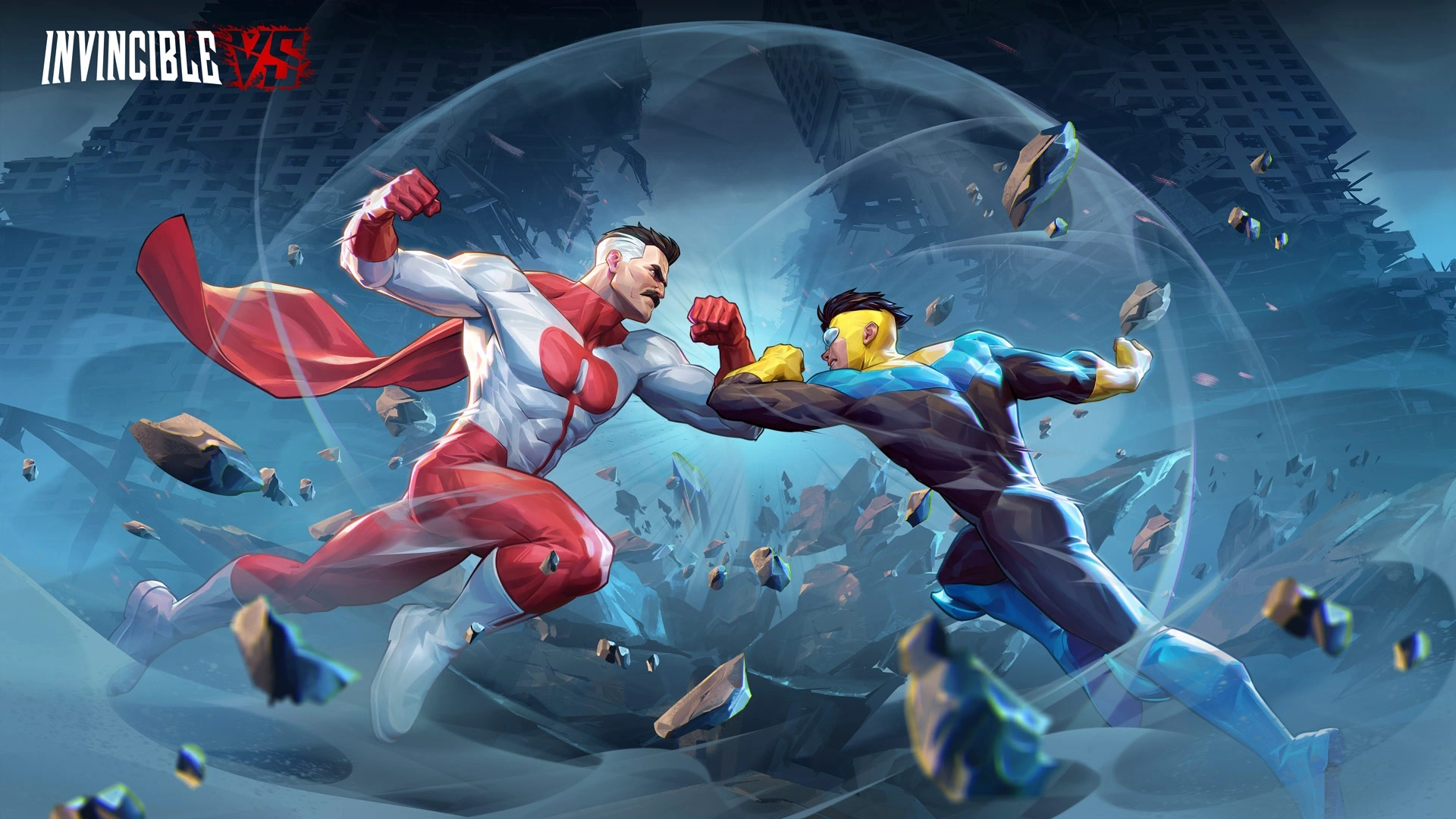

Invincible VS arrives as a high-speed 3v3 tag fighter from Quarter Up, translating the violent energy of the Image Comics series and the Amazon Prime show into a playable format. You build a three-character team and enter brutal fights where blood, impact, and momentum rarely let up. The visual design uses an “animation on twos” style that mirrors modern cinematic presentation.
It captures the series’ look while giving players a technical system shaped by genre specialists. The combat design pairs approachable inputs with serious tactical pressure. A short narrative sits beside online and offline modes built for competitive play. Characters trade insults tied to their shared history. The game keeps the cruelty of superpowered combat intact while remaining readable for fans who may be new to fighters.
Psychological Warfare and Mechanical Complexity
The combat loop draws from the mechanical depth of Killer Instinct. Combos operate as a shared contest between attacker and defender. During an offensive string, the attacker must watch a specific meter to keep the sequence alive. That same meter gives the defender a window to read the situation and search for escape. Long sequences become mental duels where timing, pressure, and prediction matter as much as execution.
Counter Tag works as a vital reset tool. You can trigger it to stop an incoming assault and return the match toward neutral. That option creates room for feints. If you sense that a counter is coming, you can fake a tag and bait a reaction. A successful bait leaves the opponent exposed to a heavy strike. A mistimed counter or failed bait creates immediate danger. Each exchange carries consequence because both players are constantly weighing risk against reward.
Resource management builds around the Assist Breaker. This mechanic costs two bars of meter and a portion of character health. The 50% health penalty reshapes long-term planning. Escaping a combo may save the active fighter, yet it weakens the teammate paying the price. The cooldown system stops players from treating it as a constant escape route. Good timing becomes essential, since a careless use can leave the full team exposed.
The movement system has the weight associated with 2D fighters such as Mortal Kombat. It feels heavier than the fluid motion found in some anime-style fighters. That weight asks you to commit to position and spacing. The control scheme uses four buttons for light, medium, heavy, and special attacks.
Auto-combos help newcomers find their rhythm, and these routes flow into cinematic finishers with strong visual punch. Advanced players can use Arena Shifts and Active Tags to extend screen control. These systems give high-level play the depth it needs without turning the basics into a wall.
Match resolution includes a dedicated overtime mechanic. If the timer expires, the game enters sudden death. Both players receive health restoration based on their remaining bench. A constant damage-over-time effect starts immediately. The final seconds turn into a frantic race for a decisive hit. The system favors aggression and rewards players who keep their timing clean under pressure.
Character Identity and Visual Fidelity
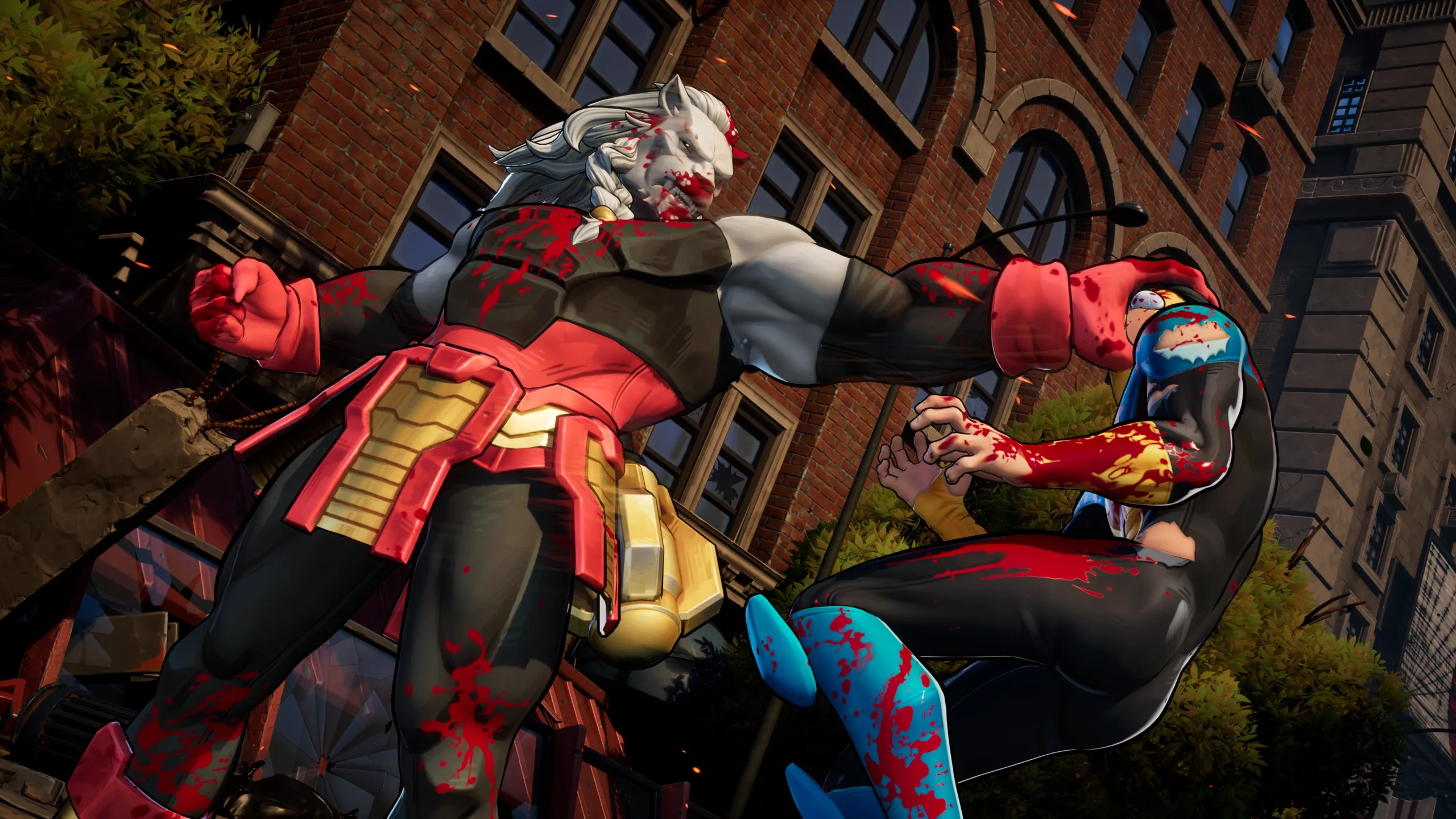
The roster carries a wide range of combat styles. Mark represents rushdown play through quick, close-range attacks. Battle Beast functions as a bully who controls space through raw physical force. Team construction matters because each character needs partners who support their strengths. Rex-Splode provides zoning utility with explosive projectiles, forcing opponents to rethink their approach whenever he controls the screen.
Mechanical outliers widen the roster’s tactical range. Dupli-Kate uses clones to extend her reach. Cecil relies on teleports and cyborg summons to attack from unexpected angles. Heavy hitters such as Monster Girl and Titan use armored moves to absorb incoming damage. The result is a roster where team identity changes meaningfully from one lineup to the next.
The game honors its source through mechanical expression. Superpowers look and feel consistent with the show. Heroic Strikes and ultimate finishers recreate famous panels and scenes, giving those attacks strong thematic force. Character interactions support that authenticity. Rivals and teammates exchange lines that reflect their specific bonds. J.K. Simmons returns as Omni-Man. Aleks Le gives the title character a strong performance. The soundalike performances hold respectably in places where original actors are absent.
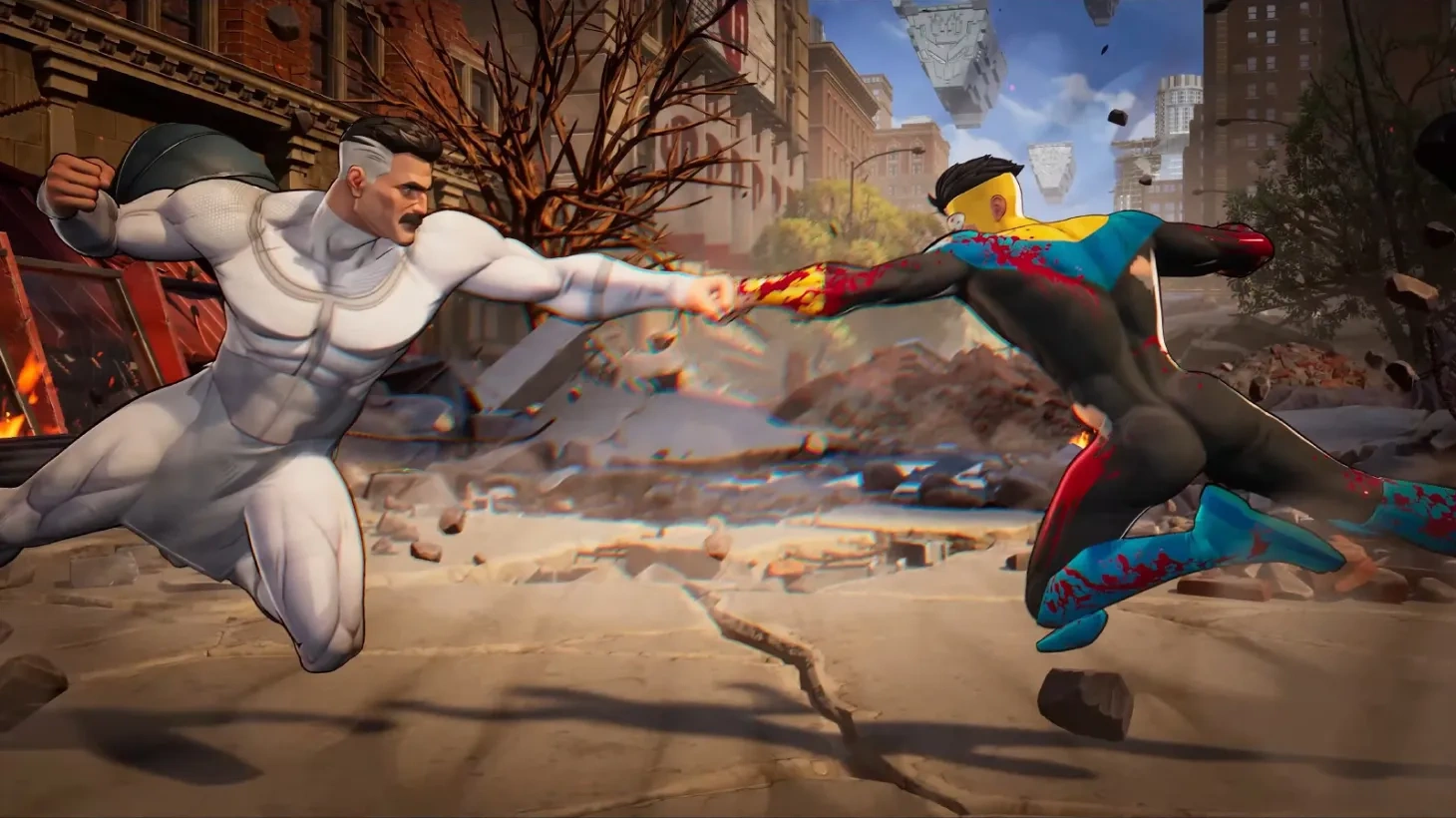
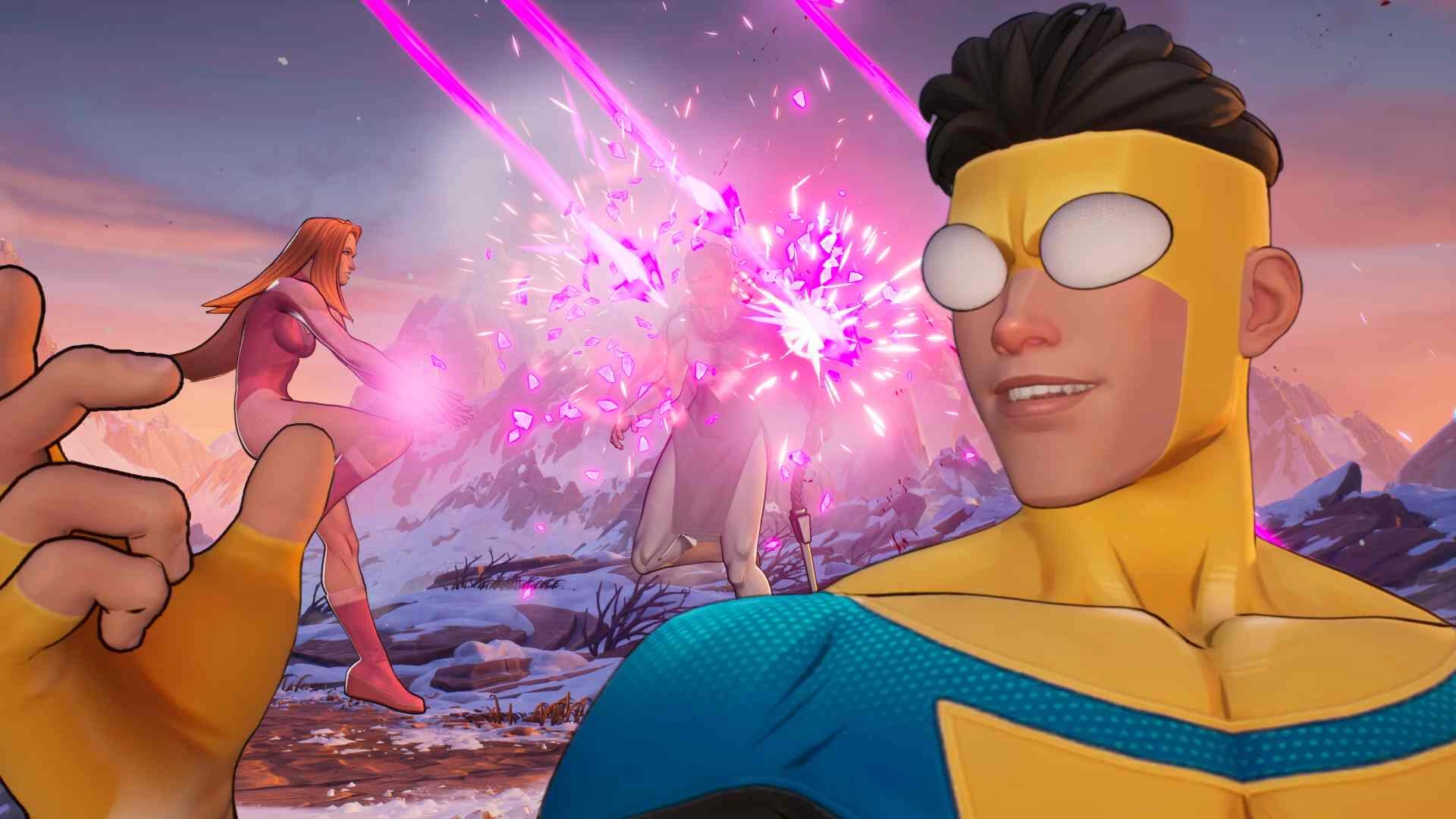
The “animation on twos” style gives every round a cinematic quality. The action looks pulled from a high-budget feature, with sharp poses and heavy contact. Gore drives much of the presentation. Characters show visible damage as fights continue. Blood splatters across stages and character models. This visual decay stresses the brutality of the world and keeps the stakes present in every match. Progressive damage makes victories feel earned and losses sting with the right kind of ugliness.
Cinematic Narrative and Thematic Balance
The narrative presents an original story with input from Robert Kirkman and writers from the show. It takes place within the existing series timeline. The premise brings in Omni-Man and a group of Viltrumites wearing their traditional uniforms, giving fans immediate tension to latch onto.
The campaign lasts about one hour, which makes it feel like a bonus episode. Cutscene production values are high. Large-scale battles involving the entire roster give the story a grand sense of scale. The transition from story to combat works well. Fights occur for clear reasons, avoiding the awkward feeling of friendly characters fighting with no cause.
The ending uses an abrupt cliffhanger. It introduces plot threads that remain unresolved. The lack of closure becomes a missed opportunity. The short length limits the story’s emotional force. You get a clear sense of the stakes, then the experience ends before it reaches a full peak. The campaign plays like an introduction to a larger tale and leaves the player wanting added substance.
The game balances humor and violence with confidence. It captures the witty dialogue that defines the series. Characters keep trading jokes as they inflict massive damage. Some interactions lean into tongue-in-cheek comedy. That lightness sits beside the grim physical reality of each fight.
The franchise has always thrived on that tonal clash, and the fighting game structure handles it well. You feel the force of each hit while still enjoying the cast’s personality. The narrative also works as a bridge for players new to the genre. It gives them a familiar entry point before they step into competitive modes.
Modes of Play and Technical Stability
Offline content includes several Arcade Mode ladders. You can choose from multiple difficulty settings. Viltrumite difficulty is the toughest option and tests your grasp of the core systems. Character-specific endings give a small reward for clearing these towers. Those endings add personality to the roster. A training mode led by Robot teaches the basics. The tutorials explain the technical systems clearly, making the deeper mechanics accessible across skill levels.
Online play uses reliable rollback netcode. Matches stay stable during high-level play. The lobby system allows several players to gather in one room. You can spectate fights while waiting for your turn, giving the mode a social rhythm close to a local arcade. Casual and ranked options let you find opponents suited to your skill level. The competitive environment feels fair because the technical foundation supports serious play.
A progression system rewards time spent with specific characters. You earn badges, frames, and backgrounds for your profile tag. These items use art from the show and the graphic novels. The system encourages roster experimentation and gives players a sense of growth outside individual matches. Your customized profile becomes a small display case for your accomplishments.
The current package lacks some helpful features. Combo trials are absent, which makes character mastery less guided than it could be. Character-specific guides are missing too. The replay viewer has no search function for other players, making high-level strategy study harder than expected. Dedicated fighting game fans will notice these gaps. Planned updates may address them later. For now, the game places its attention on core combat and online competition.
The Review
Invincible VS
Invincible VS stands as a technical fighter that handles its source material with care. The deep combo mechanics reward deliberate strategy while the visual style captures the gritty spirit of the animated series. The campaign stays brief and ends abruptly, yet the core combat remains consistently satisfying. It delivers a heavy, tactical experience for fans of the genre.
PROS
- Technical "two-way" combo mechanics that reward player timing.
- Faithful visual presentation using a cinematic animation style.
- Stable rollback netcode for a smooth online experience.
- Strong voice performances from the original cast members.
- A diverse roster with distinct mechanical identities.
CONS
- Brief narrative campaign that finishes with an abrupt cliffhanger.
- Weighty character movement that requires a period of adjustment.
- Lack of advanced training tools such as combo trials.
- Arcade mode endings feel simple and short.