

























![Kingdom Hearts Collection [I-III] Review](https://gazettely.com/wp-content/uploads/2026/10/Kingdom-Hearts-Collection-I-III-1-360x180.webp "Kingdom Hearts Collection [I-III] Review: KHII Holds Steady as Newer Entries Fluctuate 40")


The crocodile remains as a civic sign in Kaduna, while the living reptiles have largely withdrawn from the local waters. That ecological oddity gives Crocodile its first symbolic charge, a survival fable with mud on its shoes and Wi-Fi in its bloodstream. The film follows a band of siblings and cousins who named themselves The Critics before the world supplied its own label.
Raymond, Ronald, and Richard Yusuff, joined by Godwin and Victor Josiah, began their cinematic life with a single mobile phone. From a rough neighborhood, they turned scarcity into a digital frontier, which sounds romantic until one remembers the labor involved. Romance is cheap. Rendering takes electricity.
Pietra Brettkelly shares directorial credit with the collective, shaping a portrait that spans thirteen years of artistic growth. We watch them move from wide-eyed children into young men who understand the moral gravity of a lens. The footage travels across personal triumphs and quiet tragedies. Its form follows long observation, tracing self-taught creators from local curiosity to international recognition. Their devotion to science fiction becomes a purposeful break from the expected stories attached to their region.
Technological Leapfrogging and the Grid
The technical development of The Critics suggests a phenomenon one might call Digital Autodidacticism. They slipped past the costly gatekeepers of formal film education by treating YouTube as their primary classroom. With hand-sewn green screens and neighbors pressed into service, they built Hollywood-style spectacle in a dusty backyard. There is comedy in that image, certainly, and a small philosophical scandal too: the spaceship arrives before the stable power supply.
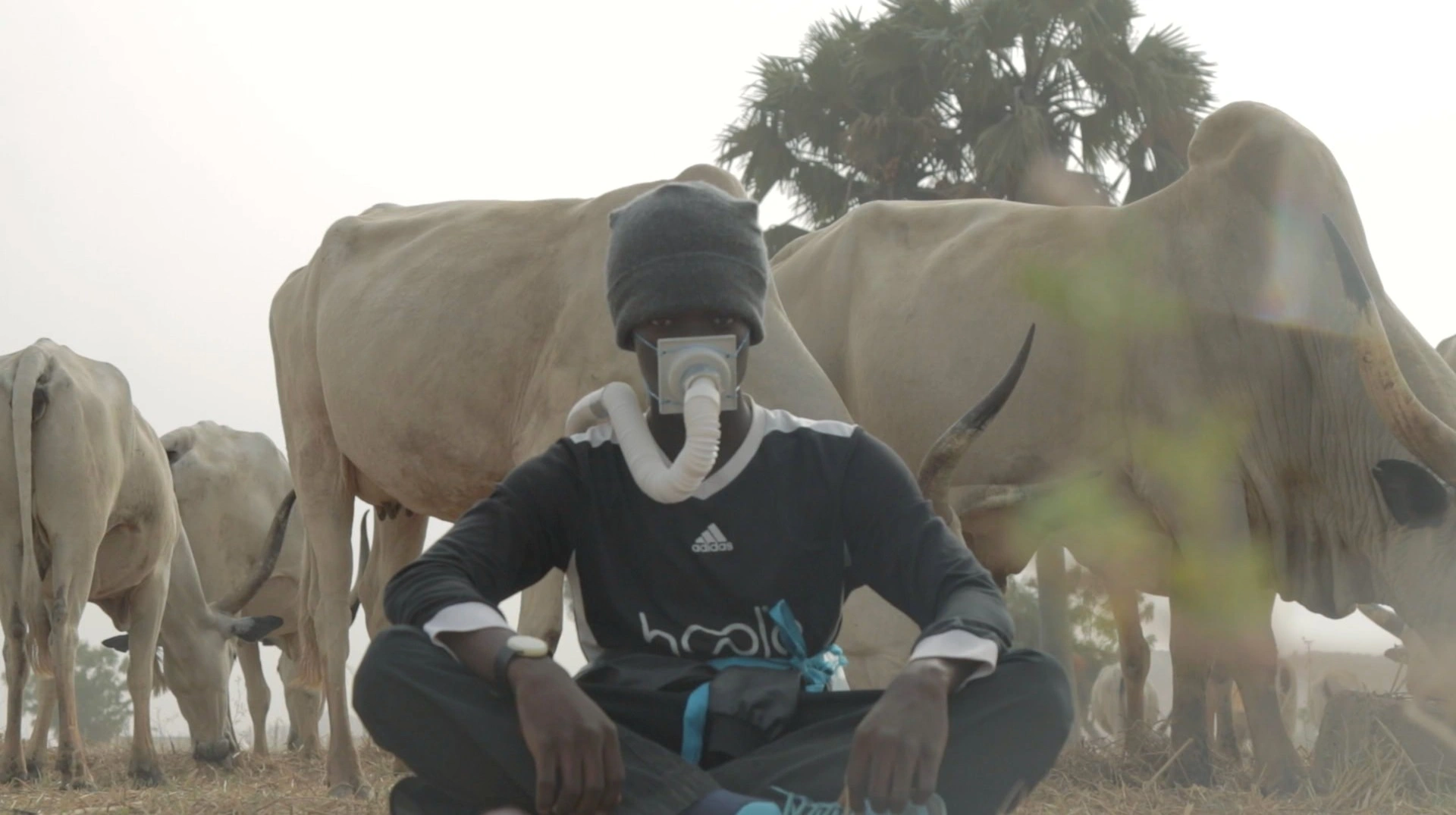
Their visual-effects education unfolds under the constant threat of a collapsing grid. Imagine rendering a spaceship as the lights flicker, cough, and vanish. This friction between high-tech ambition and low-tech infrastructure defines their practice. They develop a form of Infrascapism, a condition where imagination gains pressure from material constraint. The tighter the physical world becomes, the stranger and larger the image tries to grow.
The filmmaker package from J.J. Abrams arrives like a digital cargo-cult event, bringing professional tools such as the Canon C200. The shift in hardware moves their work from lo-fi mobile texture toward cleaner, polished cinematography. Raymond speaks clearly about the difference between their films and standard Nollywood output. For him, science fiction offers a way to look past immediate geography, past the inherited script of place.
Their success shows how global connectivity has democratized complex storytelling. A backyard in Kaduna can hold the same imaginative fertility as a soundstage in Burbank. That idea sounds naïve until the footage proves it with stubborn force. They master complex software with no university lecture hall behind them. Their technical defiance becomes a quiet rebellion against the belief that high-end art needs a high-end zip code.
Cinematic Polyphony and the Fly on the Wall
Brettkelly uses an observational style that sidesteps the sterile rhythm of standard talking-head interviews. She places the viewer inside the collective’s workspace, where chaos becomes both method and atmosphere. The edit works through Temporal-Syncing, splicing early cellphone clips with high-definition contemporary footage. The structure lets us witness the creators aging beside the maturation of their craft.
Magical realism becomes a bridge between harsh reality and internal life. Scenes from their own sci-fi shorts enter the documentary, making imagination feel as physical as the Kaduna heat. The line between documentary record and handmade fantasy grows porous. This is where the film’s symbolism sharpens: science fiction becomes shelter, weapon, mirror, and sometimes toy. A pretty useful toy, as toys go.
The film treats the group as a collective voice. Off-camera narration often preserves a shared identity, keeping any single member from becoming the lone protagonist. This choice matters. The Critics exist as a many-headed creative organism, a family-machine with cameras, arguments, jokes, fatigue, and ambition running through the same circuit.
Rachel, a nine-year-old who takes her turn in the director’s chair, shows the younger generation entering the frame. Her presence suggests the filmmaking bug as family contagion. The non-linear editing catches the frenetic energy of youth and gives emotional truth priority over calendar order. Memory becomes fluid here. The film mirrors digital life, where past and present occupy the same browser tab, slightly glitchy, strangely intimate.
The Death of Childhood and the Political Frame
As the members of The Critics enter their early twenties, the innocence of their early Star Wars homages begins to crack. The playfulness of youth meets adult responsibility and financial instability. Legal hurdles with a business manager cast a colder light on their early viral success. The dream survives, with bruises.
Their art shifts after a period of intense social unrest in Nigeria. The protests against police brutality act as a catalyst for a collective political awakening. Pure escapism gives way to work that reflects the trauma around them. This movement from genre fandom to social consciousness becomes the film’s most vital passage, since it shows imagination accepting history as part of its material.
Internal friction also enters the story as individual interests diverge, most clearly through Godwin’s pull toward the music industry. The collective changes shape under the pressures of professional life. Their path takes them to the Berlinale, where they meet the formal critique they once preemptively named themselves after. That is funny in the dry, cosmic sense: children call themselves critics, then grow up and become subject to criticism.
They are no longer kids playing with phones. They are artists who understand that creativity demands sacrifice. The film closes by recognizing their growth. They have found a voice marked by Nigerian specificity and global reach. They stand ready for the weight of the international gaze. The play has ended. The work has begun.
Crocodile premiered at the 76th Berlin International Film Festival on February 13, 2026, where it was showcased in the Forum section. This collaborative documentary captures the thirteen-year journey of a Nigerian filmmaking collective known as The Critics, tracing their evolution from children making shorts on mobile phones to globally recognized artists. Following its successful festival run earlier this year, the film is now available for streaming on MUBI, offering audiences a rare and intimate look at the intersection of DIY creativity and international cinematic acclaim.
Full Credits
Title: Crocodile
Distributor: MUBI
Release date: February 13, 2026
Rating: R12
Running time: 100 minutes
Director: The Critics, Pietra Brettkelly
Writers: Pietra Brettkelly
Producers and Executive Producers: Pietra Brettkelly, The Critics (Producers), Sir Idris Elba, Fran Wyborn, Chelsea Winstanley, Diene Petterle, Cushla Dillon, Kath Jones, Dave Long (Executive Producers)
Cast: Raymond J. Yusuff, Godwin Josiah, Ronald Yusuff, Victor Josiah, Richard Yusuff, Rachael Yusuff
Director of Photography (Cinematographer): The Critics, Rachael Yusuff, Basile Carre-Agostini, David Wills Augustin
Editors: Cushla Dillon, Chia Chi Hsu, Nicolas Chaudeurge
Composer: Tom Scott-Toft (Sound Design)
The Review
Crocodile
Crocodile serves as a raw observation of digital survival. It captures the friction between high-concept ambition and the physical limitations of a precarious environment. While the structural choppiness occasionally obscures the individual identities of the collective, the energy of their progression remains undeniable. It is a work of Kinetic-Resilience (a survivalist’s creative drive) that avoids standard sentimental traps. The film documents a specific moment in history where global connectivity allows for a decentralized cinema.
PROS
- The observational camera avoids traditional Western directorial tropes.
- The integration of the group's own sci-fi shorts provides a layered psychological portrait.
- The depiction of self-taught technical mastery is genuinely impressive.
- It captures the transition from juvenile fantasy to socially conscious art with honesty.
CONS
- The non-linear edit occasionally confuses the timeline of their growth.
- Individual members of the nine-person collective remain difficult to distinguish.
- The narrative skips over financial and logistical details that remain curious.
- The structure feels somewhat fragmented rather than a cohesive story.