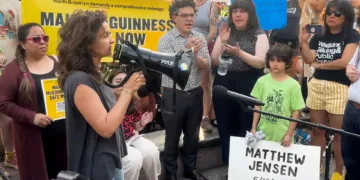











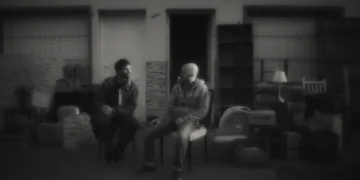













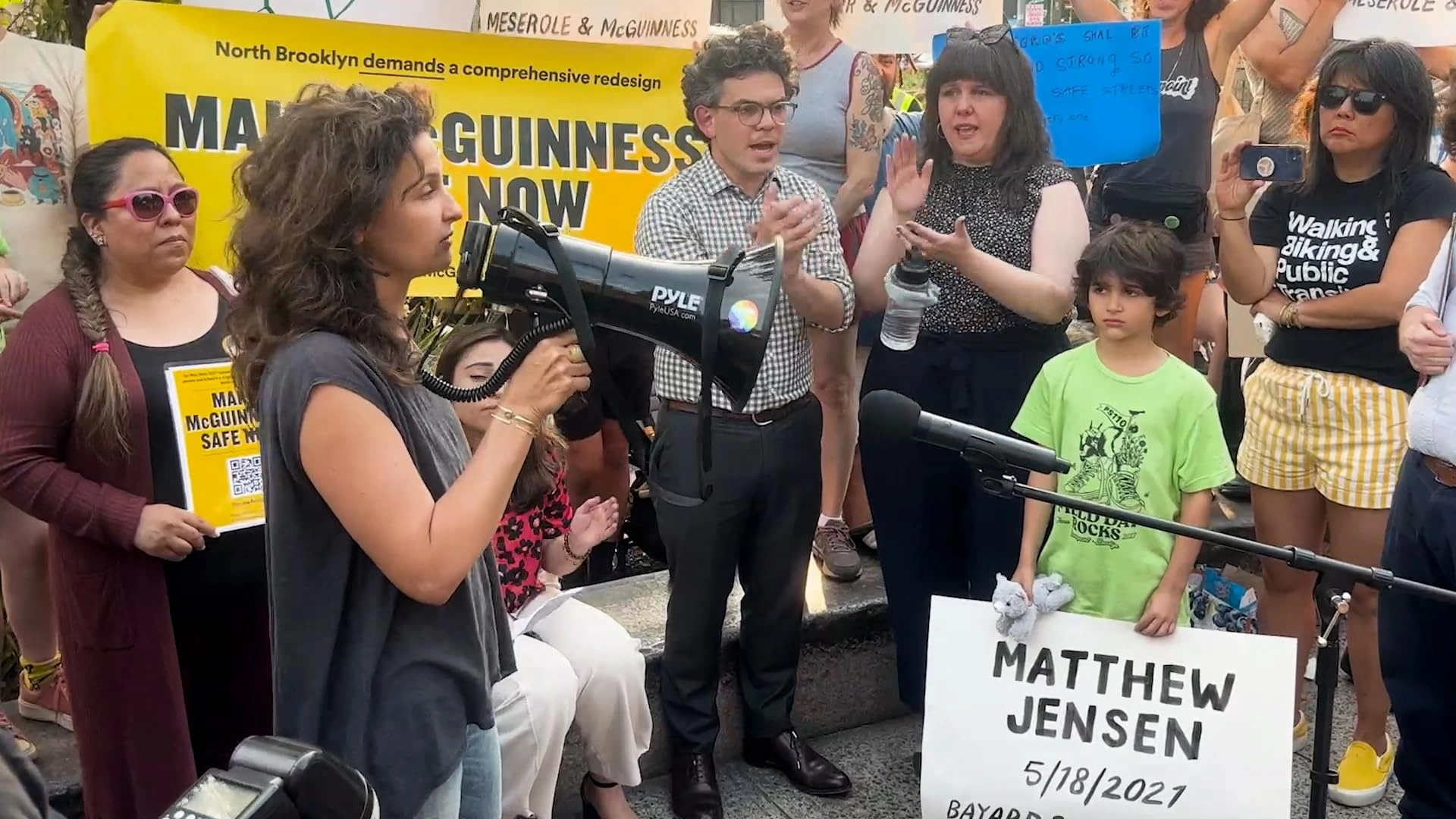
Ben Wolf’s Changing Lanes turns McGuinness Boulevard in Greenpoint, Brooklyn, into a charged piece of civic storytelling. The documentary follows the fight to redesign the street after the hit-and-run death of teacher Matthew Jensen, a tragedy that pushes residents into action and turns a familiar urban argument into something painfully specific. Safer streets sound agreeable in theory. Then someone has to lose a traffic lane, and suddenly democracy becomes a group chat with zoning maps.
Wolf makes his position clear from the start. The film was shot with gear transported by bicycle, a production choice that doubles as a thesis statement. Before anyone speaks, the movie has already chosen its mode of travel.
The central question is simple: who gets priority in a city? Drivers, cyclists, pedestrians, businesses, property owners, delivery workers, politicians, or the people who have to cross the street without feeling like they are auditioning for a disaster film? Through David Byrne, Janette Sadik-Khan, Assemblyperson Emily Gallagher, Make McGuinness Safe organizers, and local opponents, Wolf frames one boulevard as a test case for urban values.
Grief, Policy, and the Shape of a Story
The film’s strongest narrative decision is to begin with loss, then refuse to stay there. Matthew Jensen’s death is the spark, but Changing Lanes does not treat grief as a decorative emotional device. It becomes the force that moves the story from mourning to meetings, from memorial language to street design.
Wolf structures the film as a gradual widening of perspective. McGuinness Boulevard first appears as a dangerous road where one death joins a longer record of crashes and near misses. From there, the documentary expands into public hearings, protest organizing, government hesitation, and the proposed “road diet” that would reduce car lanes and add protected bike lanes. The phrase sounds like something invented by a transportation planner with a gym membership, but the stakes are clear. A road diet can change how a street behaves.
The film is especially sharp in showing how safety debates become battles between data and anecdote. Advocates cite fatality patterns and design research. Opponents worry about congestion, lost access, and business disruption. Wolf is much stronger on the former than the latter, and that imbalance gives the film momentum while narrowing its dramatic field. The opposing side often functions less as a fully examined perspective and more as a wall the activists must push against.
The historical material gives the story needed depth. The film links McGuinness to a larger transformation in American urban life, where streets once shared by pedestrians, carts, children, cyclists, and commerce were reimagined as corridors for cars. Robert Moses looms over this history, as do earlier images of Park Avenue and the rise of automobile-first planning. Bike messengers, pandemic delivery workers, and shifting city populations bring the story closer to the present. Wolf’s argument is clean: the built environment tells us whose movement matters.
A Human-Powered Film With a Motor
As director, producer, and cinematographer, Wolf gives Changing Lanes a visual method that matches its argument. The bicycle-transported gear rule could have felt gimmicky, but it works because the film never treats it as a cute stunt. It turns production into participation. The camera arrives the same way many of the film’s subjects move through the city: exposed, alert, and close to the street.
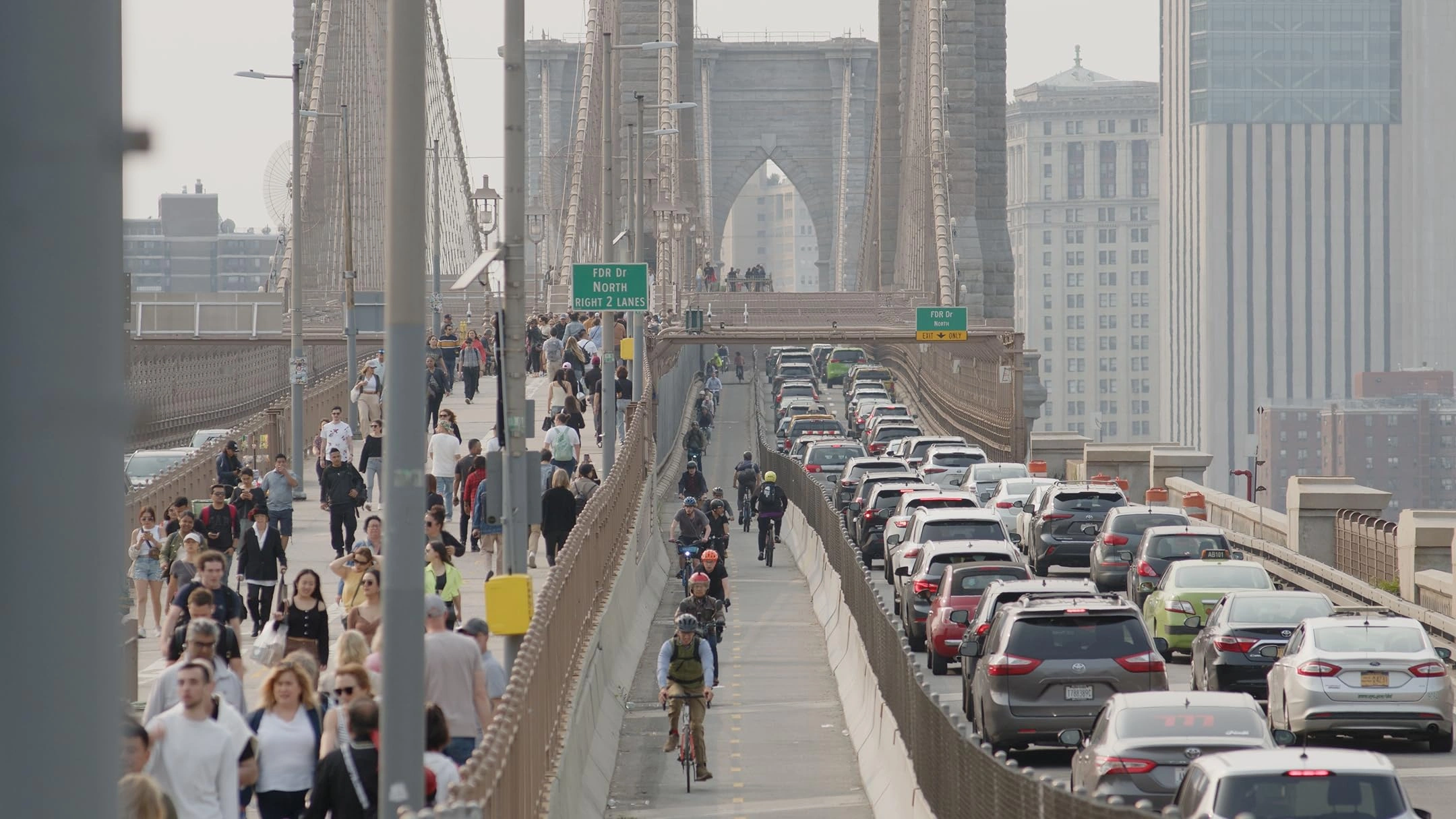
Wolf uses overhead shots to clarify geography, archival footage to trace historical shifts, street-level images to capture danger, and public-meeting footage to bring out the strange theater of local politics. The editing by Kristin Bye keeps the policy material from hardening into a lecture. This matters, since municipal procedure can drain energy from almost any subject. Here, it has rhythm. A Zoom meeting can become a pressure cooker. A painted lane can feel like a plot point.
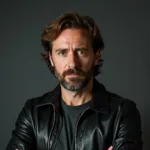
David Byrne provides the film with its most inviting entryway. His presence could have been a celebrity garnish, but Wolf uses him sensibly. Byrne’s memories of cycling in older New York, along with his reflections on cities such as Copenhagen, Istanbul, and Rome, help give the film cultural range without pulling attention from Greenpoint. Janette Sadik-Khan offers a firmer policy spine, connecting street design to public safety with crisp authority.
The film’s tone is persuasive, impatient, and frequently angry. It can also be funny in the dry way civic dysfunction often is funny, right up until someone gets hurt. Wolf understands that a local street fight has characters, reversals, pressure points, and villains, or at least people the movie is very comfortable treating that way.
Power, Bias, and the Meaning of the Lane
Changing Lanes is plainly an advocacy documentary, and pretending otherwise would be pointless. Its deeper subject is power: residents against property owners, crash data against political caution, cyclists against car dominance, and grassroots organizing against moneyed resistance.
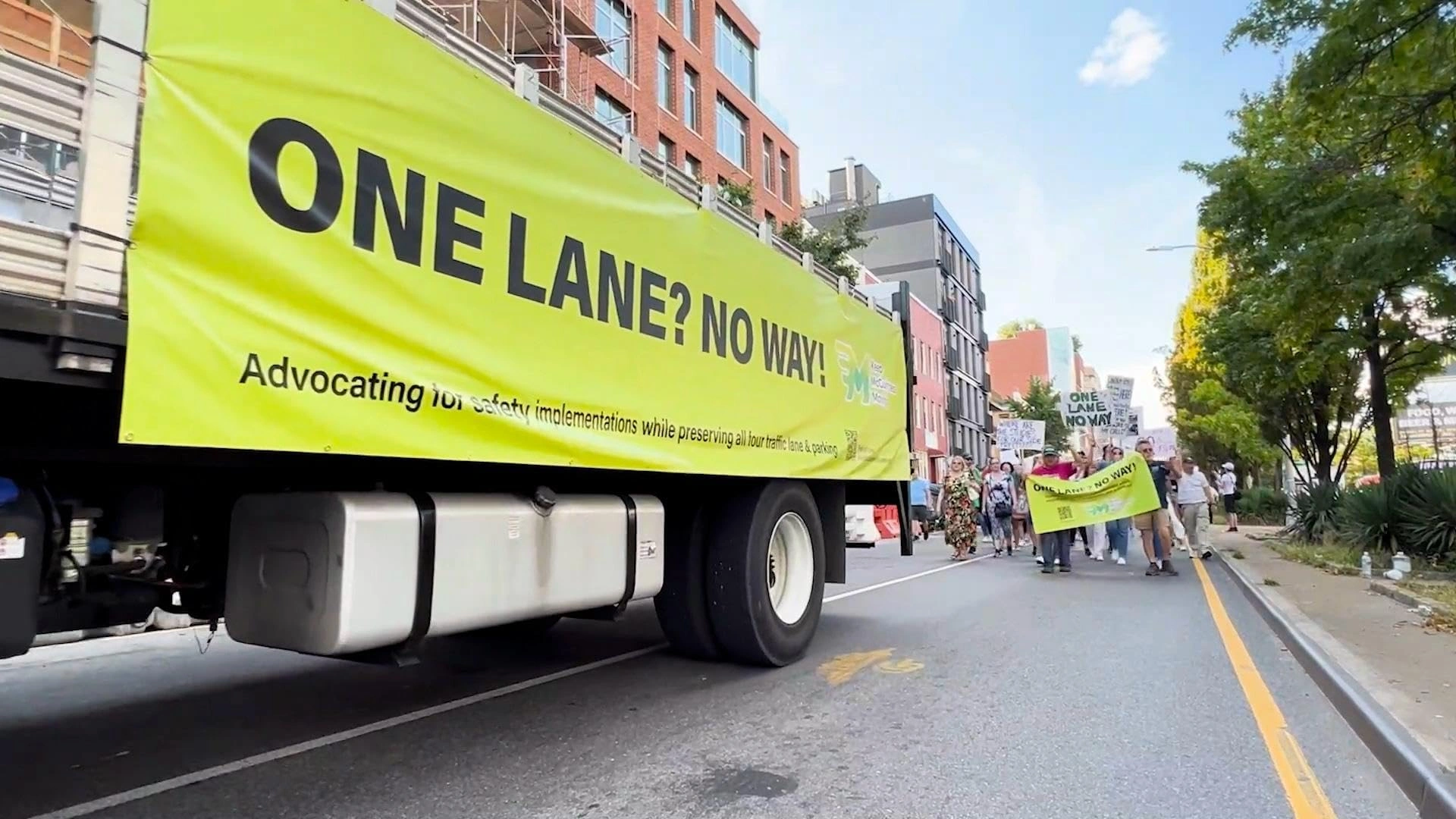
The conflict involving the Argento family and Broadway Stages gives the film a sharper antagonist structure. Wolf presents them as symbols of local influence fighting to preserve a car-oriented status quo. The public Zoom meeting, with its loud minority pressure and procedural chaos, becomes one of the film’s clearest examples of how civic process can be bent by volume and access. Democracy, in this telling, does not always fail quietly. Sometimes it unmutes itself and starts yelling.
The film’s larger political frame is ambitious. It connects car culture to class, suburbanization, race, policing, and urban planning history. Some viewers will find those links persuasive, especially given the way infrastructure has long mirrored inequality. Others may feel the film moves too quickly from street safety to ideological diagnosis, leaving driver concerns sketched rather than fully tested. That is the tradeoff. Wolf wants urgency, and urgency rarely pauses to give every objection equal screen time.
Still, Changing Lanes works because its best scenes bring the debate back to physical reality. A lane is never only a lane here. It is space, power, habit, fear, convenience, and risk compressed into asphalt. The film’s advocacy is clear, sometimes blunt, but its central insight lands: street design is storytelling by other means, and cities reveal their priorities through the bodies they protect.
Changing Lanes is a 2025 American documentary film that follows a grassroots community movement in Greenpoint, Brooklyn. The struggle begins when a beloved neighborhood teacher is killed in a hit-and-run crash on McGuinness Boulevard, prompting local activists to demand a “road diet” to convert the dangerous four-lane roadway into a safer street with protected bike lanes. The narrative captures the neighborhood friction that follows, tracking the political backlash led by a powerful local business owner and the shifting responses of city government officials. Featuring interviews with urban planners, local politicians, and cultural icons, the film serves as a localized study of urban transportation politics and street-level democracy. The documentary has been presented at specialized screening series, such as DCTV’s Data Docs program and the Architecture & Design Film Festival. Distributed by First Run Features, the film is presently streaming on Amazon and Kanopy.
Where to Watch Changing Lanes (2025) Online
Full Credits
Title: Changing Lanes
Distributor: First Run Features (presently streaming on Amazon and Kanopy)
Release date: October 2025
Running time: 73 minutes (also listed as 75 minutes in select festival blocks)
Director: Ben Wolf
Writers: Ben Wolf
Producers and Executive Producers: Ben Wolf
Cast: David Byrne, Janette Sadik-Khan, Lincoln Restler, Emily Gallagher, Elizabeth Adams
Director of Photography (Cinematographer): Ben Wolf
Editors: Kristin Bye
Composer: Andrew Maroko
The Review
Changing Lanes
Changing Lanes is a sharp, angry, and engaging civic documentary that turns one Brooklyn street into a broader argument about safety, power, and who cities are built to serve. Ben Wolf’s advocacy is unmistakable, which gives the film force while limiting its treatment of opposing views. Still, its storytelling is clear, its visual method is smart, and its best moments make asphalt feel like a moral battlefield.
PROS
- Strong narrative focus built around McGuinness Boulevard
- Smart use of archival footage and overhead street views
- David Byrne and Janette Sadik-Khan add personality and clarity
- Brisk editing keeps policy material lively
- Powerful sense of grassroots activism
CONS
- Opposing viewpoints feel underdeveloped
- Political framing may feel too blunt for some viewers
- Advocacy tone leaves little room for ambiguity