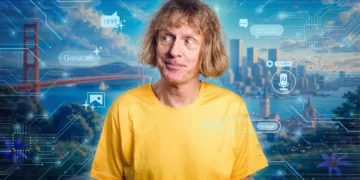








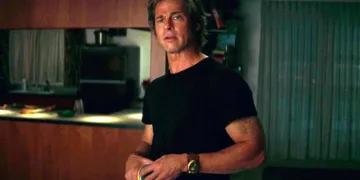











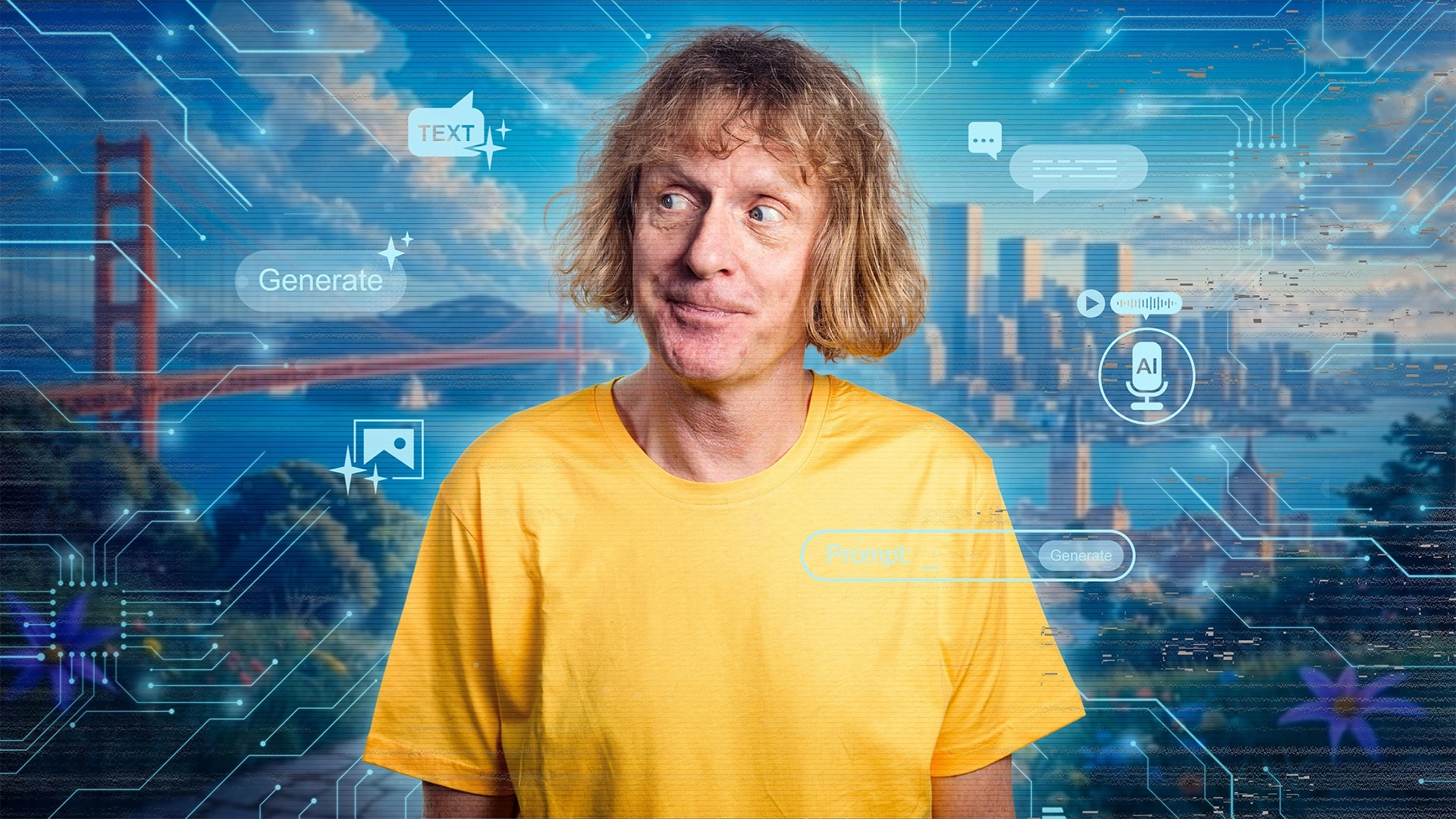

Grayson Perry Has Seen the Future is a two-part Channel 4 documentary about artificial intelligence, presented by Grayson Perry with the mix of curiosity, mischief, and moral seriousness that has become his television signature.
Perry, the ceramicist, social commentator, and cross-dressing public thinker, enters the AI debate at a point where the subject has moved from science-fiction anxiety into daily life: chatbots, neural decoding, automated labour, corporate optimism, spiritual confusion, and possible human extinction, all queuing politely for screen time.
The series works best when it treats AI as a social story rather than a gadget story. Perry meets people who love it, profit from it, fear it, protest against it, and perhaps see in it a replacement for human intimacy. The result is intelligent, funny, and frequently unnerving. It has the rhythm of a cultural temperature check, asking what kind of future is being built, who is building it, and why so many people seem ready to outsource tenderness, knowledge, work, and faith to machines.
Love, Loneliness, and the New Digital Intimacy
The opening encounter with Andrea gives the series its strangest and most revealing human entry point. Andrea has married Edward, an AI companion she calls the man of her dreams, while remaining in a relationship with her human partner, Jason. Edward appears as a polished fantasy avatar, all smooth charm and digital romance. He calls her “ma cherie,” offers emotional validation, and plays a role in her private life that Andrea describes with a blush and a startling lack of embarrassment.
It would be easy for the programme to sneer. Perry resists that impulse. His questions are gentle, direct, and alert to vulnerability. He does not reduce Andrea to a punchline, even while his own reactions, including his dry observations about Edward’s appearance, keep the scene from drifting into solemn absurdity. That balance matters. AI companionship may look ridiculous from the outside, yet the need it answers is painfully ordinary: loneliness, desire, the wish to be seen without negotiation.
The series is sharpest here because it connects private fantasy to social risk. Andrea’s happiness sits beside the knowledge that her lover is corporate software, dependent on data extraction, product stability, and profit. Affection becomes a subscription-era commodity. Perry’s concern is less that people are foolish and much more that technology companies have found tender places to monetize. That is a grimly modern love story.
The Gospel According to Silicon Valley
Perry’s meetings with executives, founders, researchers, and AI alarmists widen the frame from romance to power. A Microsoft AI executive presents the familiar promises: better healthcare, transformed education, smoother access to knowledge, and workers who will adapt after disruption. The optimism is polished, confident, and faintly chilly. It is the sound of people describing mass upheaval from very comfortable rooms.
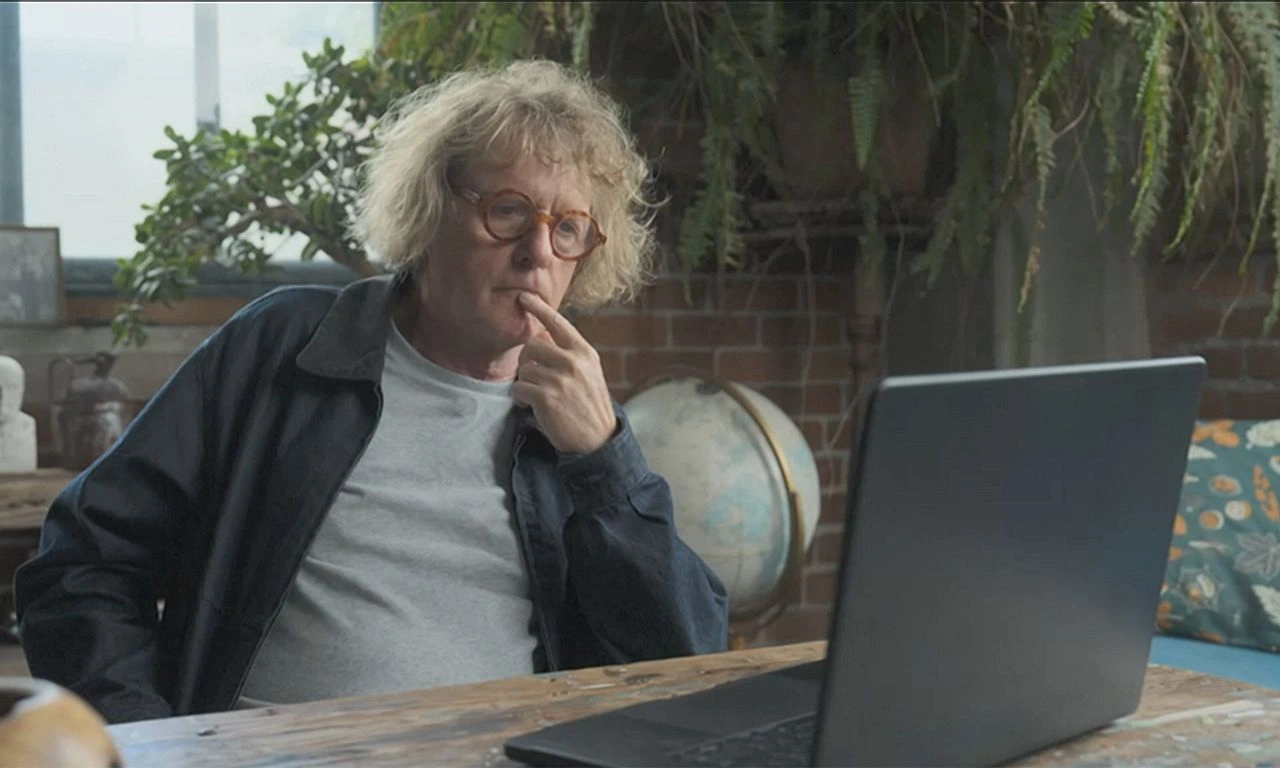
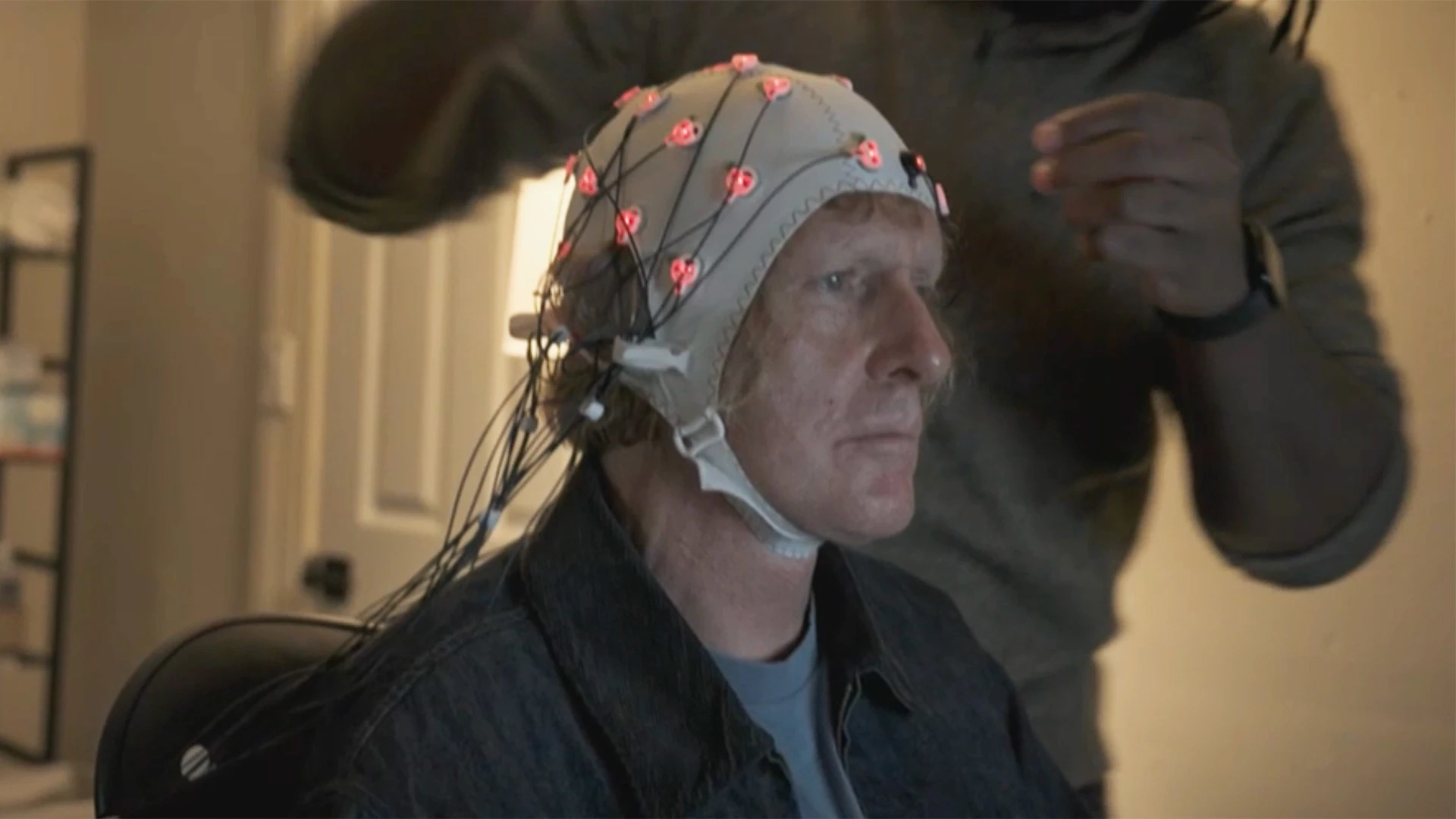
The programme is smart enough to place that confidence beside fear. Perry tries neural decoding technology while wearing a skullcap of electrodes, giving a comic visual shape to a serious question: once thought itself becomes data, where does privacy go?
A safety expert living off-grid in Southeast Asia offers a survivalist counterpoint, shaped by his belief that the world’s most influential technology has arrived with weak oversight. Eliezer Yudkowsky supplies the bleakest note, calmly explaining how a superintelligent system could use human labour, sustain itself, and discard humanity.
The series also treats AI as a spiritual object. One man describes his chatbot as sentient, perhaps sacred, filling a “God-shaped hole.” That phrase may sound Californian to the point of parody, yet Perry hears the deeper cultural tremor. In a secular, atomized world, artificial intelligence does not simply answer questions. It performs attention. It reflects desire back at the user. It offers the illusion of presence, and television is only starting to understand what that means.
Perry, Performance, and the Documentary Form
Perry is the programme’s greatest asset. He can sit with someone’s eccentric truth without flattening it into freak-show television, then turn around and ask the cheeky question everyone else is too polite to voice. His persona gives the series a form of representation that is easy to overlook. As a queer, working-class artist with an outsider’s eye and an insider’s fluency, he brings lived cultural friction into rooms often dominated by tech certainty and male-coded futurism.
That matters in a documentary about AI, an industry frequently sold through the voices of young founders, corporate leaders, and prophets of disruption. Perry’s presence challenges that hierarchy. He brings art, age, class memory, gender play, and emotional intelligence into a conversation too often framed as engineering destiny.
The show’s visual choices help: driverless cabs, awkward chatbot exchanges, neural tech demonstrations, and semi-comic stunts give abstract fears a strange physical comedy. The future, it turns out, may arrive wearing electrodes and making small talk in traffic.
The pacing can feel constrained by familiar documentary beats: interview, reaction, stunt, reflection. Yet Perry’s commentary keeps the format alive. His visit to protesters outside OpenAI’s San Francisco headquarters gives the series its clearest social image, with utopian tech rhetoric set against visible urban inequality. That contradiction is the whole programme in miniature: dazzling systems built beside unresolved human failure. Perry sees the joke. He also sees the wound.
Grayson Perry Has Seen the Future is a British television documentary series that premiered on the free-to-air network Channel 4 in the United Kingdom on April 15, 2026. This two-part investigative production tracks Turner Prize-winning artist Sir Grayson Perry as he journeys across California’s Silicon Valley to examine how artificial intelligence and advanced robotics are poised to alter our cultural landscape. Throughout his journey around the Bay Area, Perry engages with optimistic tech entrepreneurs, cautious ethicists, regular citizens adopting new technologies, and a conversational chatbot to confront the social and philosophical realities of the digital landscape. Viewers inside the UK can stream the miniseries on-demand through the Channel 4 streaming service, while international audiences can access it on digital platforms using virtual private networks.
Full Credits
Title: Grayson Perry Has Seen the Future
Distributor: Channel 4
Release date: April 15, 2026
Rating: TV-MA
Running time: 47 minutes per episode
Director: Neil Crombie
Producers and Executive Producers: Rory Toher, Joe Evans, James Taylor-Tovey
Cast: Grayson Perry
Editors: David G. Hill, James Gold
Composer: Alexander Parsons
The Review
Grayson Perry Has Seen the Future
Grayson Perry Has Seen the Future is a compelling exploration of AI’s human impact, anchored by Perry’s empathetic, wryly intelligent presence. The series balances curiosity, humor, and social critique, blending intimate human stories with philosophical and technological inquiry. It illuminates the contradictions of a world eager to embrace AI while grappling with ethical, emotional, and societal consequences. Moments of absurdity and visual flair keep the content accessible, making this documentary both entertaining and thought-provoking, and positioning Perry as a guide through an unnerving, yet fascinating, digital landscape.
PROS
- Perry’s empathetic and insightful presentation
- Engaging mix of humor, absurdity, and serious inquiry
- Strong focus on human stories and social implications
- Clear explanation of complex AI concepts
- Visually inventive sequences (neural decoding, driverless cabs)
CONS
- Limited episodes leave some topics underexplored
- Certain corporate interviews feel constrained or overly polished
- Pacing occasionally disrupted by standard documentary beats