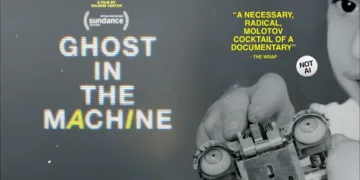




























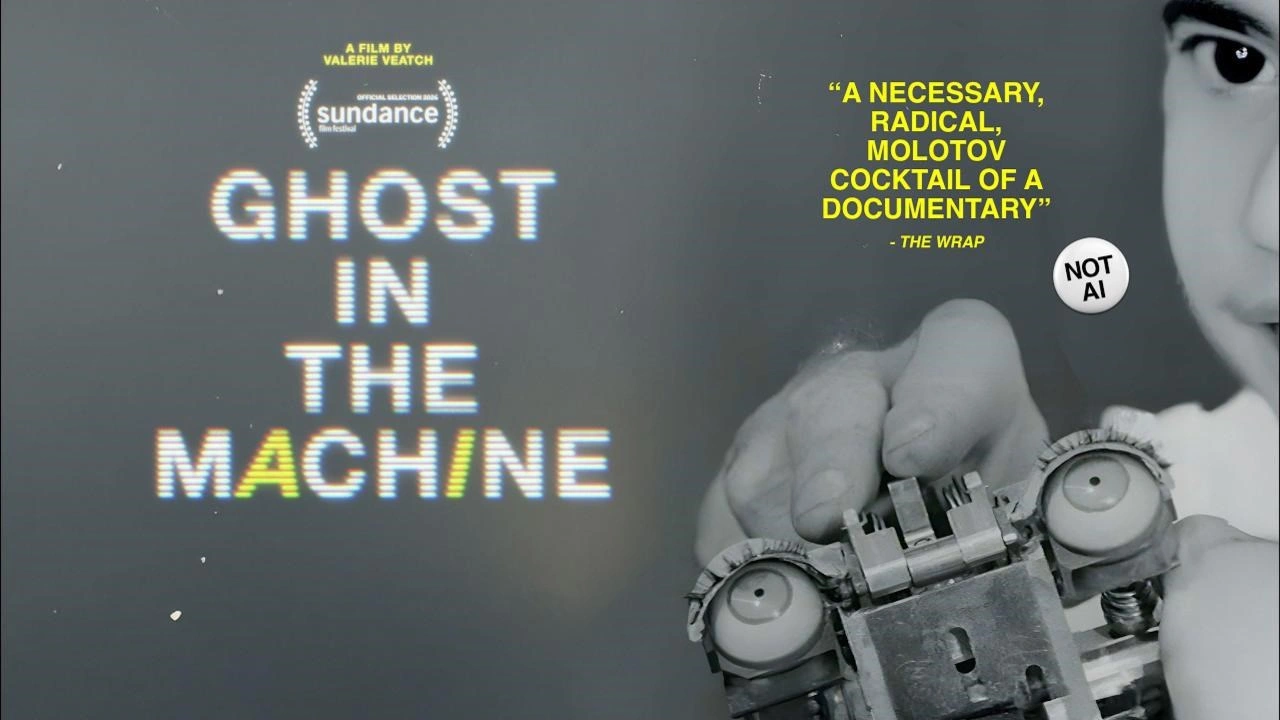

Ghost in the Machine arrives with the chill of something already inside the room. Artificial intelligence no longer sits in the realm of speculative promise or distant panic. It writes emails, answers questions, sorts images, shapes labor, drains water, imitates faces, and whispers the old fantasy of frictionless command. Valerie Veatch’s documentary steps into that atmosphere with a clear refusal: this technology cannot be understood through shiny demos or corporate prophecy alone.
The film treats AI as a historical symptom. Its concern is not the machine dreaming in silicon, but the human appetite that built the machine and named the dream intelligence. Veatch connects the current AI boom to eugenics, colonial measurement, Silicon Valley mythology, militarized ambition, and venture-capital fever. The result is a severe, often angry film about hierarchy wearing the mask of progress.
Its central claim is stark. AI is not neutral machinery awaiting moral use. It carries the fingerprints of human prejudice, extraction, and power. The ghost inside this machine is old. It has been counting, sorting, ranking, and discarding people for centuries.
The Arithmetic of Domination
Veatch builds her argument by moving backward, away from the breathless language of innovation and into the colder rooms where intelligence became a measurable object. Francis Galton, Charles Spearman, Karl Pearson, William Shockley, John McCarthy, and the Microsoft Tay incident become stations in a grim intellectual lineage. The film suggests that modern AI did not appear from a clean mathematical dawn. It grew from methods designed to classify human beings, to assign value, to make domination appear rational.
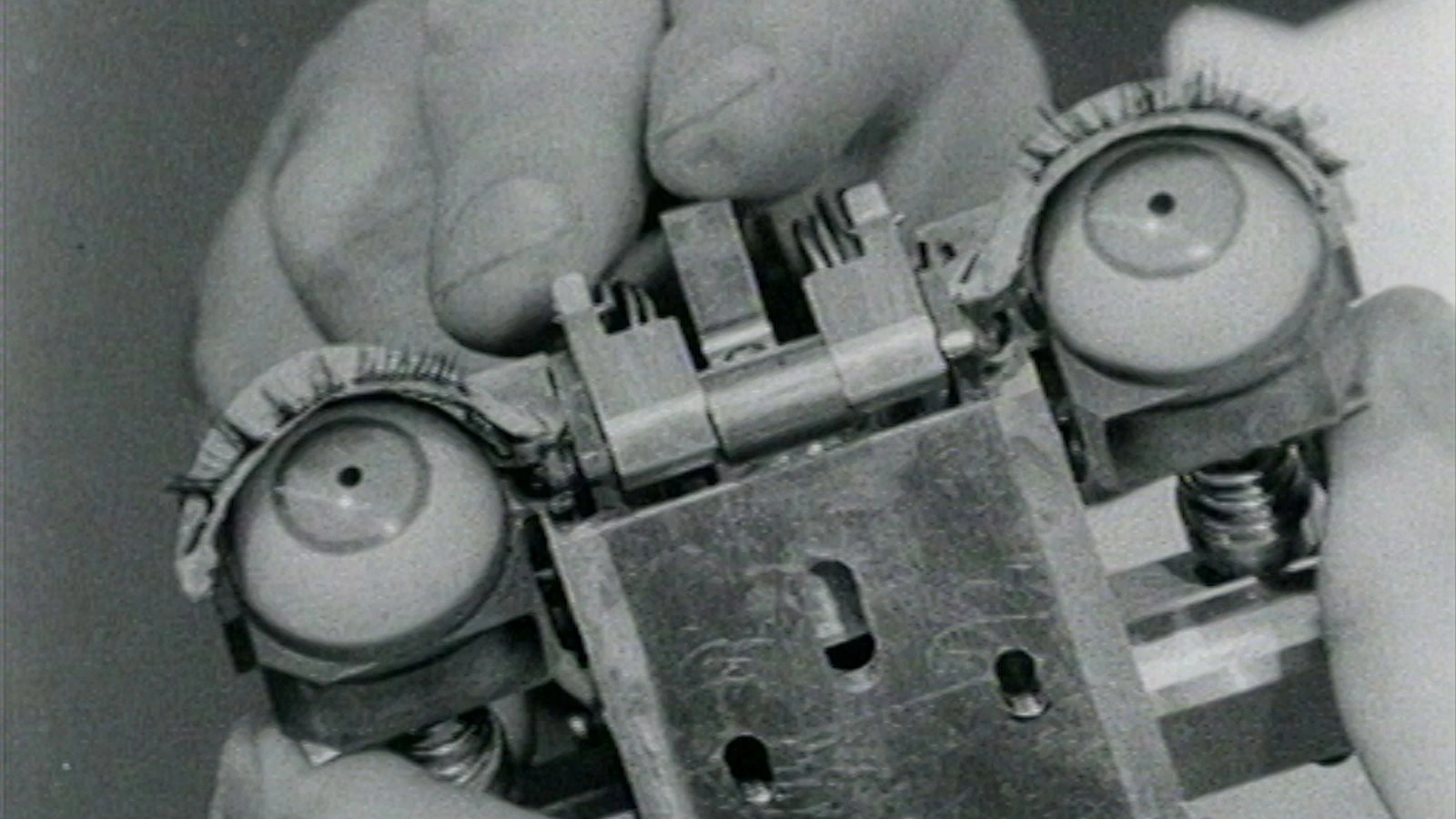
This is where Ghost in the Machine feels most forceful. It reframes AI hype as the latest expression of an older desire: to measure life until it becomes manageable. The documentary’s philosophical weight rests on a simple, disturbing idea. Once a society decides that intelligence can be reduced to ranking, the machine becomes a perfect servant for that moral error. It has no conscience to interrupt the process. It simply extends the hand that programmed it.
Veatch connects this history to present-day Silicon Valley leaders, AGI rhetoric, military interest, and fantasies of superintelligence. The film is skeptical of the priestly tone surrounding tech executives who speak about the future as if they are receiving weather reports from God. Its strongest passages strip away that mystique and show AI as a political structure, built from capital, labor, data, energy, and obedience.
The film’s attention to hidden workers in Kenya gives the phrase “artificial intelligence” a cruel irony. Human labor hides beneath the product, often poorly paid and emotionally costly. The environmental concerns deepen that sense of theft. Data centers require water, land, and power. The cloud is not weightless. It has pipes, fences, heat, and sacrifice zones.
A Lecture with Sparks in the Wires
The documentary’s form is direct and crowded. Veatch builds the film through interviews with historians, philosophers, sociologists, journalists, technologists, and critics of AI culture. Emily M. Bender, Johnathan Flowers, Becca Lewis, Dan McQuillan, Lucy Suchman, and others help give shape to a subject that can easily dissolve into jargon. Their presence gives the film intellectual range, and at its best, the documentary feels like a map drawn quickly in a burning house.
That urgency also creates strain. Ghost in the Machine can feel dense, overpacked, and lecture-like. It moves from eugenics to science fiction, from data labor to AGI, from Silicon Valley ideology to ecological damage, sometimes with little breathing room. A viewer may admire the sweep while still wishing for a sharper rhythm, a tighter dramatic line, a deeper pause after each major claim.
Some ideas receive only a brief charge before the film races forward. The material about workers behind AI systems, for instance, deserves greater space and emotional texture. Veatch understands that exploitation is central to the story, yet the film sometimes treats those workers as evidence within an argument rather than full human presences.
Still, the moral clarity carries power. The film’s academic density can be tiring, but its anger has purpose. It wants to wake viewers from the narcotic language of inevitability.
The Uncanny Surface
Visually, Ghost in the Machine is rough, uneven, and occasionally fascinating in its ugliness. Zoom interviews, archival clips, cell-phone footage, tech talks, video podcasts, licensed B-roll, and AI-generated imagery sit beside one another like mismatched artifacts from a collapsing archive. The film does not possess a polished cinematic surface. At times, that lack of polish weakens its momentum. At other moments, it feels strangely honest.
The “AI” and “NOT AI” labels create one of the film’s bluntest and most effective devices. They turn perception into a running question. Can we still trust the image? Can we trust our own recognition? The labels also carry a faint absurdity, as if cinema itself now needs warning signs on reality.
The film’s use of AI-generated visuals is its most uncomfortable choice. Veatch uses synthetic images to expose their dead sheen, their glossy inhuman texture, their algorithmic wrongness. Yet the decision also muddies the film’s ethical position. A documentary urging resistance to AI weakens its stance by relying on the very tool it distrusts. That contradiction may be deliberate, or it may be compromise. Either way, it leaves a bruise.
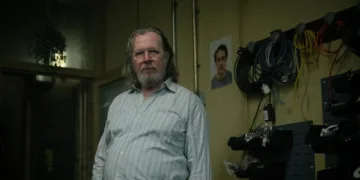
The rougher human textures often speak louder. Bookshelves, plants, posters, family photos, dim rooms, and imperfect webcams give the interviews a fragile warmth. They remind us that a human mind leaves traces no prompt can fully predict.
Ghost in the Machine is strongest as a warning and historical argument, less assured as cinema. It feels overstuffed, sometimes ungainly, but its central fear remains sharp: the danger is not that machines will become human. The danger is that powerful humans will make the world colder through machines.
Ghost in the Machine is a 2026 American documentary written, directed, produced, and edited by Valerie Veatch. The film examines artificial intelligence through its buried links to power, eugenics, race science, labor exploitation, environmental cost, and Silicon Valley ideology. It premiered at the 2026 Sundance Film Festival and has since screened at festivals and select theaters. As of June 1, 2026, the film is listed as now in theaters and available through Kinema, with a PBS Documentaries release planned for September 2026.
Full Credits
- Title: Ghost in the Machine
- Distributor: ITVS, Independent Lens, PBS Documentaries, Kinema
- Release date: January 26, 2026 at the Sundance Film Festival, with theatrical screenings in 2026 and a PBS Documentaries release planned for September 2026
- Running time: 1 hour 50 minutes
- Director: Valerie Veatch
- Writers: Valerie Veatch
- Producers and Executive Producers: Valerie Veatch, Sue Campbell, Kevin Veatch, Neerja Narayanan
- Cast: Shazeda Ahmed, Adam Becker, Emily M. Bender, Abeba Birhane, Dan McQuillan, David Gerard, Paris Marx, Johnathan Flowers
- Director of Photography / Cinematographer: Sean Solomon, additional cinematography
- Editors: Valerie Veatch
- Composer: Morgan Doctor
The Review
Ghost in the Machine
Ghost in the Machine is a sharp, angry, intellectually loaded documentary that treats artificial intelligence as a symptom of older systems of control. Valerie Veatch’s argument has real force, especially in its links between AI, eugenics, labor exploitation, and environmental cost. The film can feel crowded and visually uneven, with its use of AI imagery creating a thorny contradiction. Still, its warning cuts deep. This is imperfect cinema, but potent nonfiction.
PROS
- Strong historical argument about AI and systems of power
- Clear political urgency
- Thought-provoking interviews
- Effective use of “AI” and “NOT AI” labels
- Powerful focus on labor, extraction, and environmental cost
CONS
- Dense and lecture-like in stretches
- Some topics feel underdeveloped
- Visual style can be uneven
- AI-generated imagery weakens the film’s ethical stance
- Pacing may feel heavy for some viewers