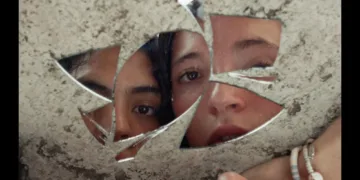




























Sad Girlz watches adolescence before it knows it has been wounded. Fernanda Tovar’s sensitive feature debut centers on Paula and La Maestra, two 16-year-old best friends in Mexico City whose lives move through school, parties, swimming practice, gossip, private jokes, and the strange holiness of being understood by one person before the sentence is finished. They are training to represent Mexico at the Junior Pan American Swimming Championship in Brazil, a goal that gives their friendship direction while quietly placing pressure on their bodies, time, and future.
The film first feels like a loose portrait of youth. Its power sits in texture: chlorine, laughter, rooftops, glances, music, limbs in motion. Then Paula’s traumatic experience with fellow swimmer Daniel changes the air. Tovar does not turn the film into spectacle. She studies the aftermath, the terrible interval after harm, when language fails and the self becomes unfamiliar. What remains is a quiet, observant drama about loyalty under strain, and about the loneliness that can exist inside the closest bond.
The Fracture Between Silence and Fury
Paula and La Maestra’s friendship feels almost bodily. They lean, touch, tease, and communicate through looks that seem older than speech. Their bond has its own grammar, one built from laughter, rhythm, and shared impatience with the adult world. That intimacy gives Sad Girlz its emotional foundation, since the film needs us to understand what existed before the rupture. Without that early warmth, the later pain would feel theoretical. Here, it feels lived in.
Paula’s response to Daniel is inward. She withdraws into silence, confusion, and self-doubt. She wanted intimacy, yet not in that place, not under those conditions. That distinction becomes the wound she cannot easily name. Daniel’s casual behavior deepens the horror, since he keeps acting like the world remains intact. He asks if she is fine. He asks her out. He behaves with the blank ease of someone who has no interest in seeing the damage he caused.
La Maestra moves in the opposite direction. Her love turns sharp, restless, almost combustible. She wants action. She wants truth spoken aloud. She wants the moral universe to correct itself, which is a very teenage hope, and perhaps a very human one. Yet Paula’s silence is also a form of survival. Tovar lets both girls be right and wrong in shifting measures. The film understands how care can become pressure, how protection can bruise, how friendship can be strained by the very desire to save it.
Water, Sunlight, and the Shape of Aftermath
Tovar directs with patience, shaping the film through fragments rather than heavy plot machinery. Training sessions, rooftop lounging, whispered conversations, dance rehearsals, laughter, and silence gather like pieces of memory. Adolescence appears as a state of perception, not a clean sequence of events. The girls live inside sensation before they live inside explanation.
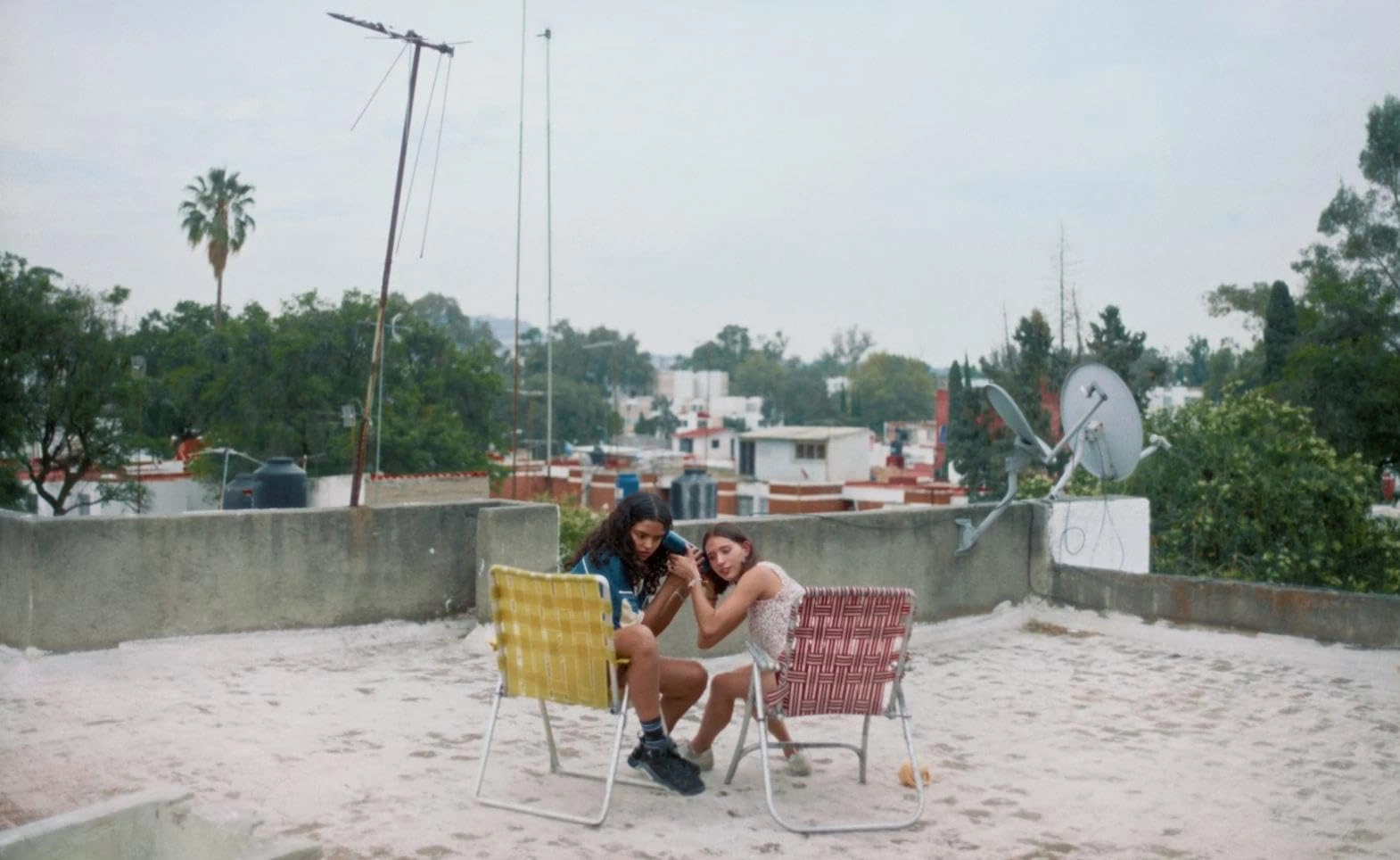
The visual design carries this idea beautifully. Mexico City’s sunlit spaces give the early scenes a looseness that borders on dream. Rooftops and open air suggest a world still available to the girls, still large enough for fantasy. The swimming pool spaces feel different: enclosed, shadowed, disciplined by tile, echo, and routine.
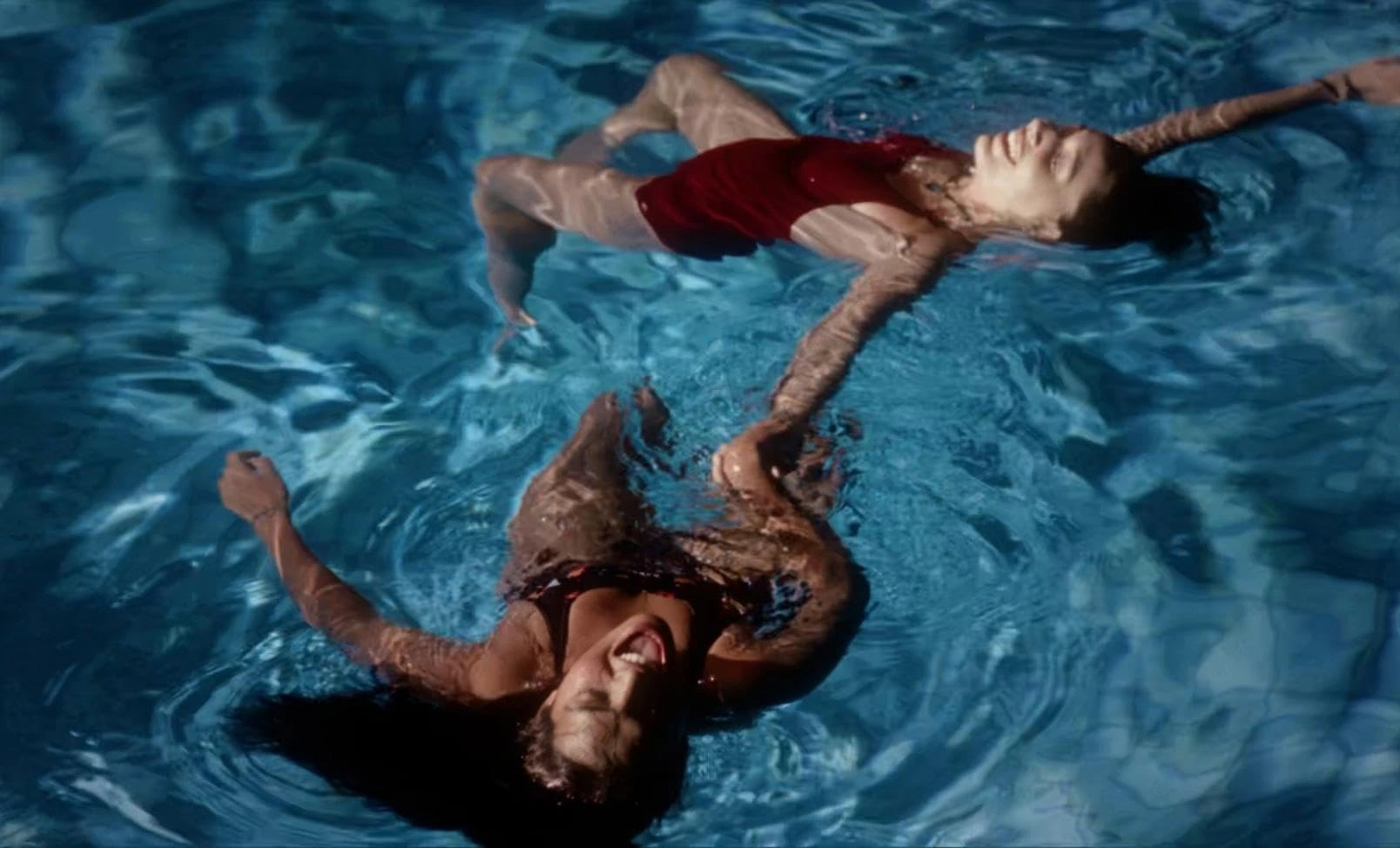
Changing rooms gain a claustrophobic charge. Underwater images become both refuge and trap. Beneath the surface, sound dulls, bodies float, and time seems briefly suspended. For Paula and La Maestra, water can mean control, training, escape, and emotional burial.
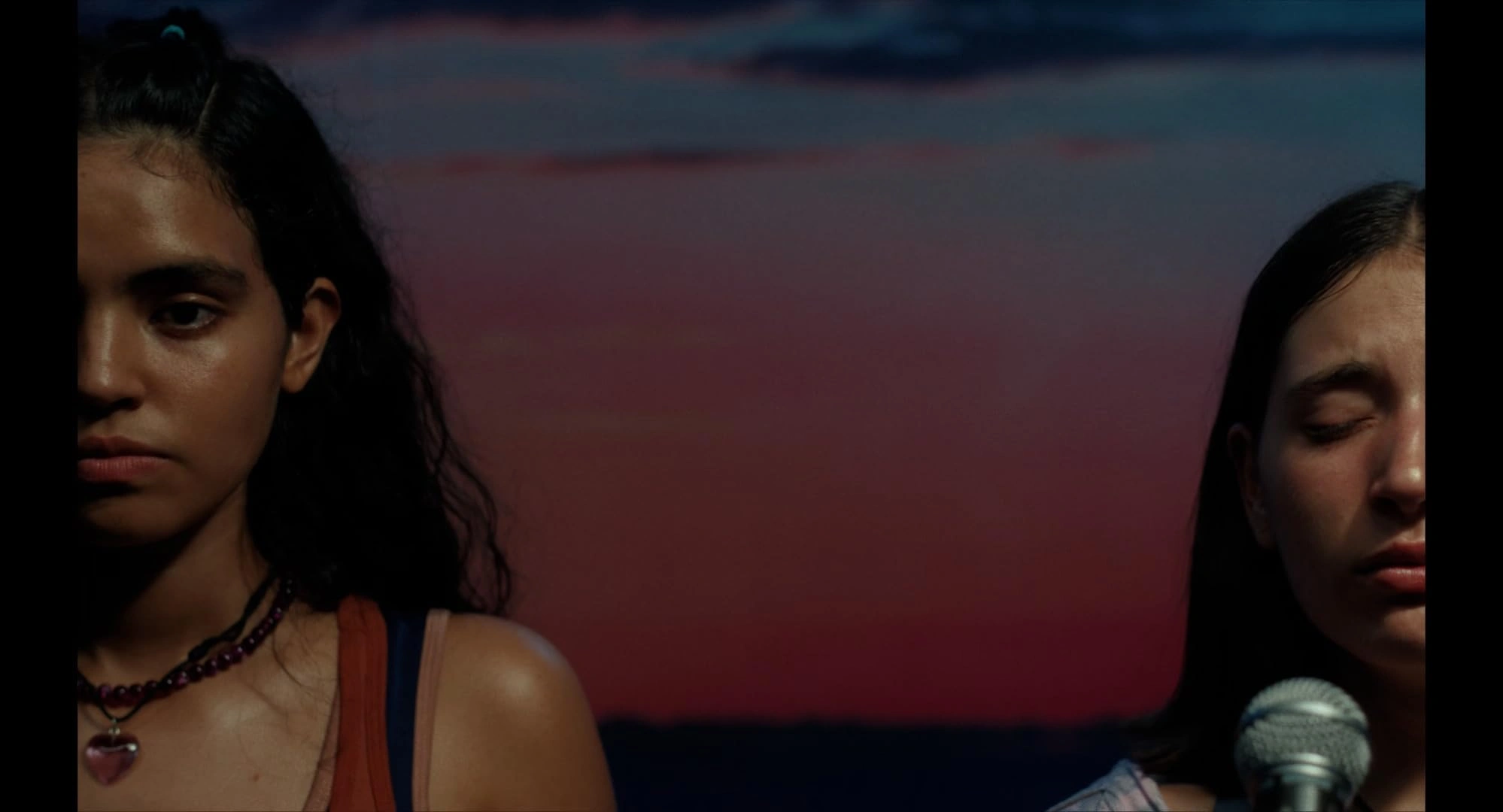
The choice to keep the assault off-screen is one of the film’s strongest ethical decisions. Tovar refuses voyeurism and directs attention toward what follows: the altered posture, the pauses, the inability to return to ordinary conversation. Her close-ups are intimate without feeling invasive. A glance carries accusation. A shoulder shift carries fear. A silence can feel like a room with no exit.
Two Performances Caught Between Care and Collapse
Darana Álvarez gives Paula a devastating restraint. Her performance registers trauma through small adjustments: lowered energy, softened speech, a body that seems to have lost trust in its own movement. She never lets Paula become a symbol. The character still laughs, still reaches toward La Maestra, still contains traces of the girl we met before the harm. That complexity matters. Pain changes her, yet it does not consume every part of her.
Rocío Guzmán brings a raw, searching force to La Maestra. She plays anger as a mask for helplessness, and helplessness as something close to terror. La Maestra wants to be the friend who knows what to do, yet the situation exceeds her age, her tools, and her imagination. Guzmán captures the awful panic of loving someone through an experience you cannot undo.
Adults remain largely distant, which gives the film a bleak social clarity. The girls look for answers through online searches, ChatGPT, tarot cards, and peer conversation. That detail feels painfully modern: young people forced to define harm through screens and rituals because authority offers little comfort. The film touches the wider reality of gender-based violence and institutional silence without turning Paula into a case study.
Sad Girlz leaves its friendship shaken, not erased. Its final emotional space holds pain, care, confusion, and resilience together, like bodies floating under dark water, still moving, still searching for air.
Sad Girlz (originally titled Chicas tristes) is a Mexican-Spanish-French co-production that made its official world premiere on February 14, 2026, at the 76th Berlin International Film Festival. Featured in the Generation 14plus competition, the coming-of-age drama follows two inseparable sixteen-year-old competitive swimmers training to represent Mexico on an international level. Their fierce bond is deeply tested following a traumatic incident at a summer party, forcing both girls to navigate complex landscapes of guilt, silence, and healing. Audiences can currently view the award-winning feature film as it makes its rounds through premier international film festivals, including the Transilvania International Film Festival and Tribeca Festival, ahead of its global theatrical rollout.
Full Credits
Title: Sad Girlz (Chicas tristes)
Distributor: Alpha Violet
Release date: February 14, 2026
Running time: 91 minutes
Director: Fernanda Tovar
Writers: Fernanda Tovar
Producers and Executive Producers: Daniel Loustaunau, Araceli Velázquez, Carlo D’Ursi, Samuel Chauvin
Cast: Rocio Guzmán, Darana Álvarez, Tatsumi Milori, Tomás García-Agraz, Mónica del Carmen, Raúl Villegas, Lucio Lemus, Andrea Camacho
Director of Photography (Cinematographer): Rosa Hadit Hernández
Editors: José Pablo Escamilla
Composer: Wissam Hojeij
The Review
Sad Girlz
Sad Girlz is a tender, unsettling debut that studies trauma through silence, gesture, and the fragile physics of friendship. Fernanda Tovar treats Paula and La Maestra with rare patience, letting their pain remain messy, unresolved, and human. The film’s quiet style, strong lead performances, and ethical restraint make its emotional impact linger like breath held underwater.
PROS
- Sensitive handling of sexual violence
- Excellent lead performances
- Intimate visual style
- Strong portrait of teenage friendship
- Quiet emotional power
CONS
- Slow pacing may test some viewers
- Ambiguity may frustrate viewers seeking closure
- Minimal adult presence can feel slightly schematic