

























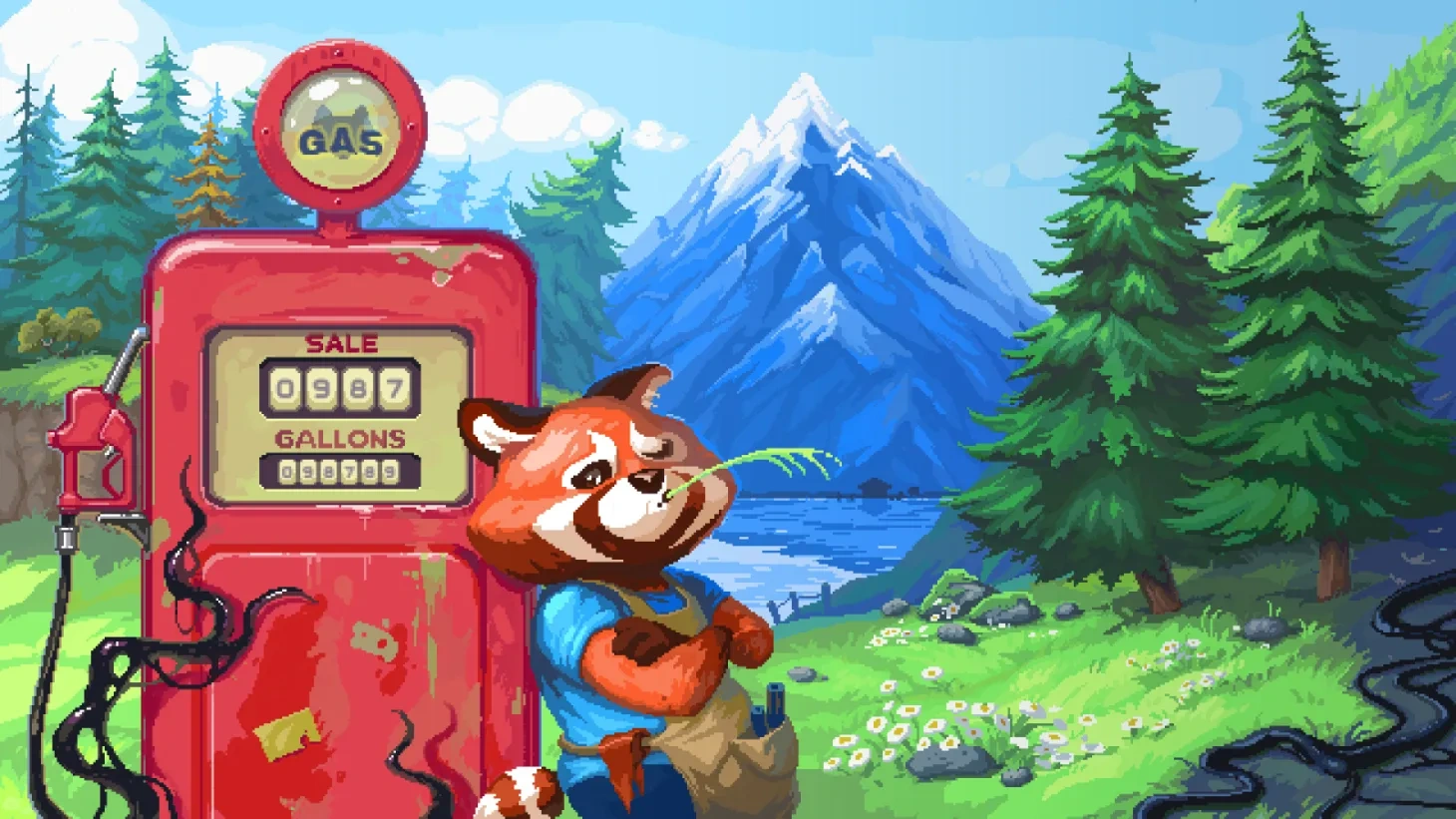

The Last Gas Station situates players in a near-future landscape where electric vehicles have largely supplanted petrol, leaving a single neglected gas station as one of the last vestiges of a fading culture. You step into the role of a raccoon lady tasked with revitalizing this forgotten outpost, blending routine management with subtle narrative threads. The game unfolds in a 2D side-scrolling format, presented in cozy, expressive pixel art that balances charm with a slightly uncanny undertone.
From the first moments, players are drawn into hands-on activity: fueling vehicles, restocking shelves, cleaning the station, and eventually upgrading facilities with a repair garage or car wash. Each task contributes to a larger rhythm of upkeep and progression. Beyond the operational loop, the environment hints at mysteries, from missing previous owners to whispered local legends, suggesting a depth beneath the everyday work.
The world shifts perceptibly between day and night. Daytime operations feel grounded and functional, with sunlight illuminating the station and natural surroundings. Night transforms the environment into a quieter, more isolating space, amplifying curiosity about the station’s history and the oddities of the region. Overall, the game fuses tactile simulation with atmosphere, encouraging players to become invested in routine tasks while gradually unveiling the subtler layers of story and intrigue embedded in Cloven Peak.
Gameplay Mechanics and Player Interaction
Players navigate a hands-on routine where each interaction matters. Cars pull up to the pumps, requiring the player to connect nozzles, monitor fuel flow, and release at the correct moment to avoid overfill. Inside, customers browse a stocked store, prompting inventory management that balances product placement, supply limitations, and fluctuating prices. Trash accumulation adds another layer of upkeep, forcing attention to hygiene and station popularity.
Mini-games punctuate the day: washing vehicles, repairing tires, changing oil, or charging batteries. Each activity is simple but tactile, creating a rhythm of engagement reminiscent of other management sims such as Car Mechanic Simulator, but distilled into bite-sized, stylized interactions. Early gameplay emphasizes manual control, gradually unlocking automation for pumps, repairs, and the car wash, which shifts the challenge from repetitive mechanics to strategic coordination.
Time management is subtle yet crucial. Tasks overlap, requiring the player to prioritize fueling, stocking, and cleaning while keeping meters for popularity, mystery, and civilization in mind. Upgrade progression intertwines with aesthetics and functional improvements: lamp posts, facades, shelves, and decorations are purchased not only to enhance efficiency but also to unlock local legends and secret objectives. Optional puzzles, hidden codes, and lore-based decorations add depth for players who explore beyond routine tasks.
The result is a layered simulation loop where efficiency, observation, and planning are rewarded. Compared to more abstract management titles, The Last Gas Station foregrounds tactile engagement and environmental responsiveness, creating a sense of place and consequence with each decision.
Story, Atmosphere, and Narrative Elements
Cloven Peak is a quiet, time-warped environment, sparsely populated with anthropomorphic customers and occasionally unusual vehicles. The game’s narrative is woven subtly through environmental storytelling, passing dialogue, and the artifacts of the station itself.
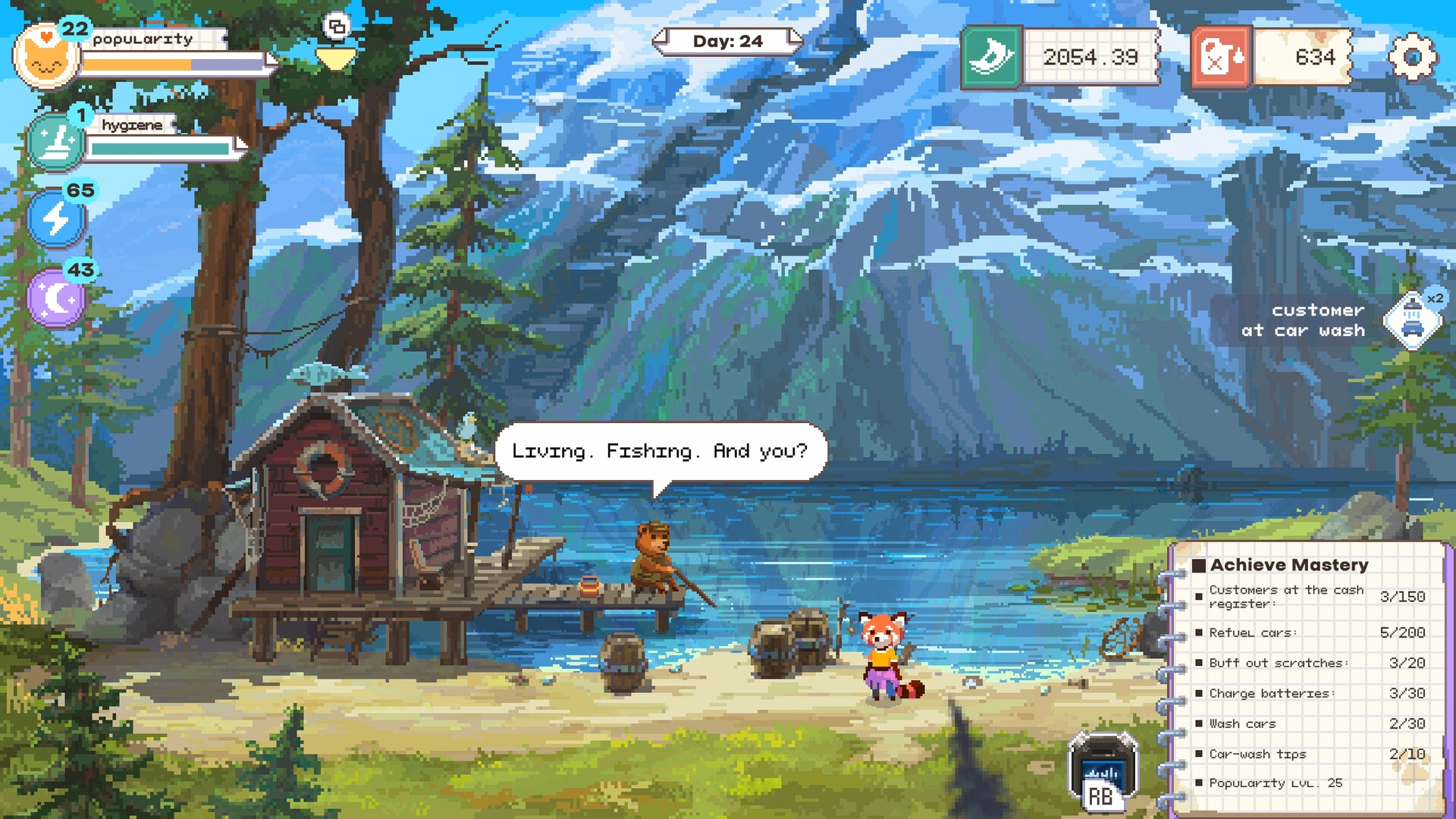
The previous owner’s mysterious disappearance emerges gradually, layered alongside hints of local conspiracies, ranging from Bigfoot sightings to secret bunkers and Area 23 anomalies. These elements integrate seamlessly with gameplay, as decorations and meter progression unlock further story threads without interrupting the player’s flow.
The day-night cycle underscores narrative tone. Daytime operations feel orderly and inviting, with sunlight highlighting the station’s slowly improving infrastructure. Night brings a shift: reduced activity, deeper shadows, and an air of quiet unease that amplifies curiosity about the surrounding mysteries. This contrast extends to gameplay priorities; daytime focuses on active service, while nighttime encourages preparation and reflection.
Environmental commentary surfaces subtly, framing modernization and the decline of petrol culture as thematic undercurrents. The narrative does not rely on high-stakes conflict or combat, instead using routine, repetition, and observation to cultivate tension and curiosity.
Sound design reinforces the story: the quiet hum of daily tasks punctuates ambient music during the day, while nighttime brings muted tones that heighten isolation. The game rewards attentiveness, and its narrative emerges organically from the interplay between mechanical engagement and environmental cues.
Visual and Audio Design
The Last Gas Station employs pixel art with clarity and personality. Characters and vehicles are stylized, balancing charm with slight eccentricity. The station visually evolves through upgrades: repaired pumps, cleaned floors, and newly stocked shelves visibly convey progress. Surrounding environments—mountains, forests, and lakes—shift with the day-night cycle, maintaining readability while reflecting mood.
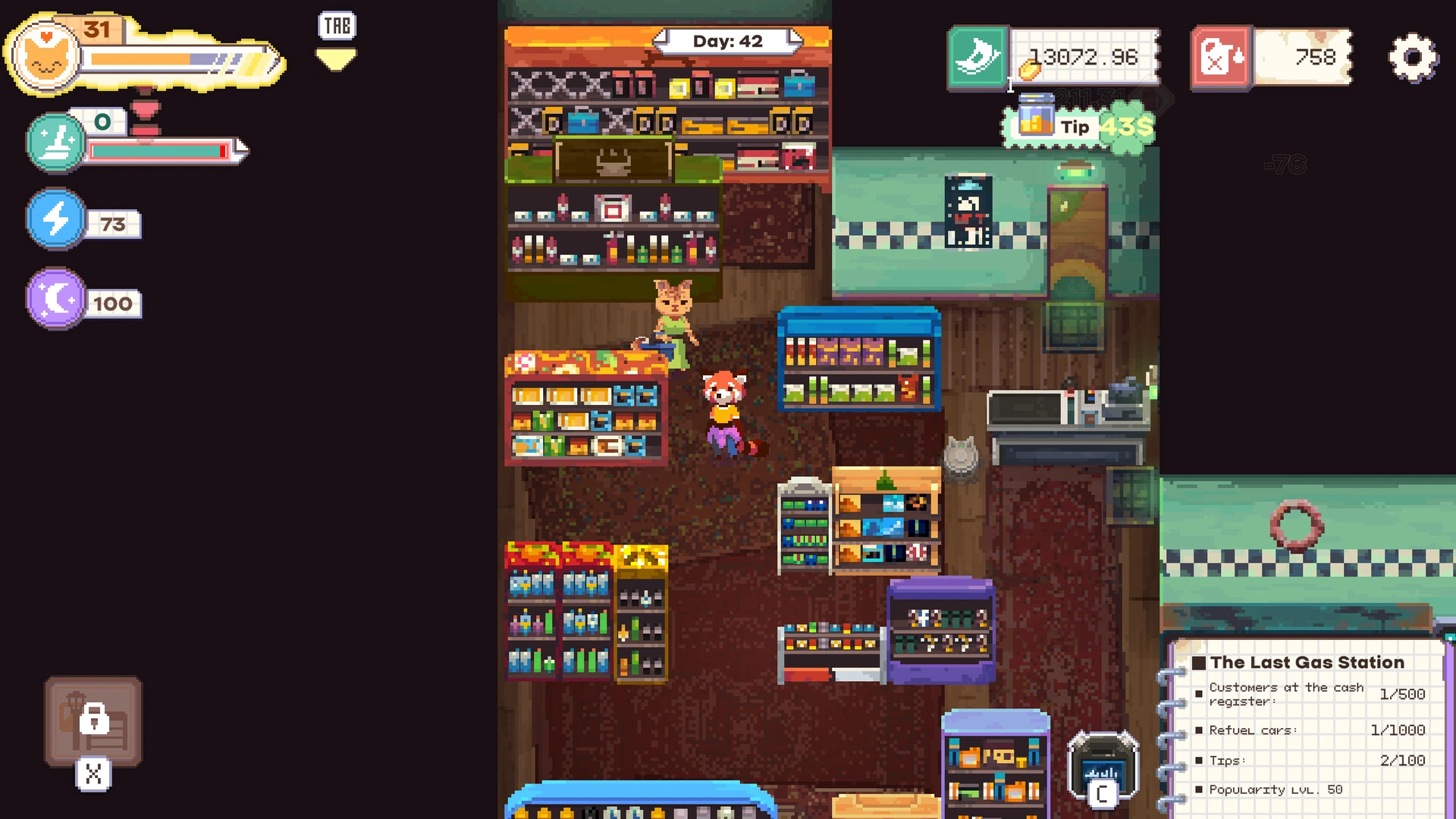
Animations are fluid. Customers move purposefully through the store, cars respond to fueling and repair actions, and every interaction generates visible feedback. Interface elements such as meters, inventory screens, and upgrade indicators provide immediate clarity on task completion and resource management, reinforcing the simulation loop.
Lighting plays a central role. Daylight illuminates the station and surroundings, supporting calm, measured gameplay. Night introduces deep shadows and localized lighting that focuses attention on interior tasks, subtly enhancing the tension and intrigue of the environment.
Audio design complements the visuals. Filling a tank, scanning items, and cleaning generates satisfying, weighted sound cues. Music adapts to context: soft, upbeat tracks during the day shift to subdued, slightly eerie tones at night. Silence becomes part of the atmosphere, emphasizing isolation and directing focus to the subtle mysteries of the station. Controller and keyboard/mouse inputs are equally responsive, providing accessibility without compromising tactile engagement.
Together, these elements ensure that visual and audio design not only convey information but also reinforce narrative tone, gameplay rhythm, and environmental immersion, creating a cohesive and engaging simulation experience.
The Review
The Last Gas Station
The Last Gas Station turns routine labor into an appealing management loop, supported by charming pixel art, tactile mini-games, and a strange local mystery that gives its petrol-stained world personality. Its biggest weakness is late-game repetition, where upgrade objectives drag longer than the systems can comfortably support. Still, its cozy atmosphere, smart progression, and oddball folklore make it a memorable sim for players who enjoy rebuilding neglected spaces.
PROS
- Satisfying management loop
- Excellent pixel art
- Strong day-night atmosphere
- Fun local legends and secrets
- Good controller support
CONS
- Late-game grind
- Repetitive mini-games
- Automation arrives slowly
- Dialogue can interrupt work