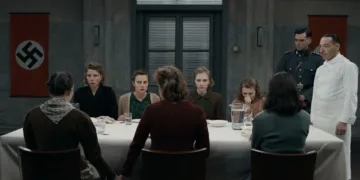






















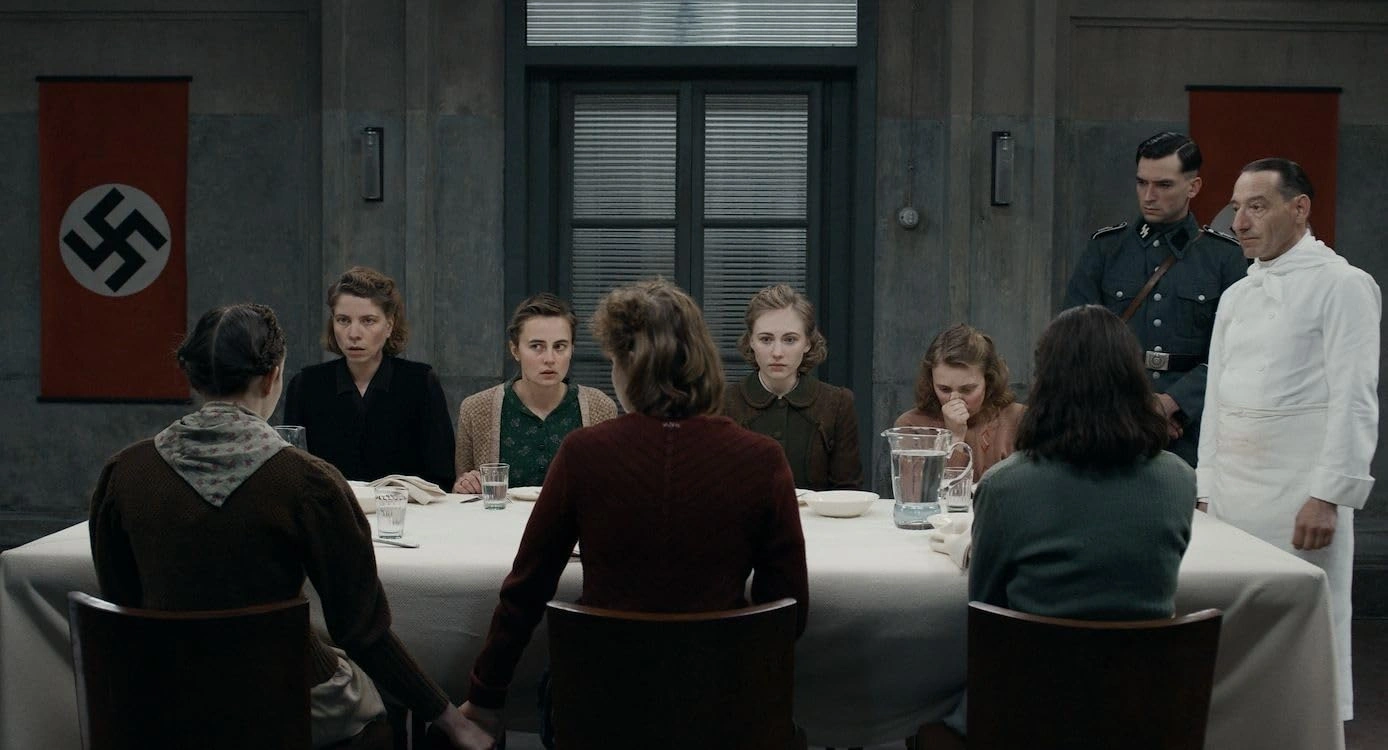

Hunger makes the first meal obscene before fear has time to do the work. Rosa Sauer and six other women have been collected by SS soldiers, examined like livestock, and seated before a vegetarian banquet whose abundance feels miraculous after years of rationing. They eat quickly. The chef describes the dishes with professional pride. Only after the plates are cleared does Lieutenant Albert Ziegler explain that they have sampled Adolf Hitler’s food for poison.
Silvio Soldini builds The Tasters around this perverse exchange: the state feeds women generously because it considers their lives expendable. Adapted from Rosella Postorino’s novel At the Wolf’s Table, the film draws from Margot Wölk’s disputed account of serving as one of Hitler’s food tasters near the Wolf’s Lair. Historical certainty remains elusive, yet the premise carries its own artistic obligation. Fiction must locate a human truth inside the anecdote.
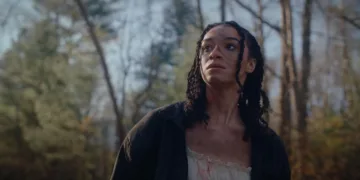
Elisa Schlott’s Rosa arrives in East Prussia after fleeing bombed Berlin. Her husband Gregor is fighting on the Eastern Front, and his parents offer the promise of rural shelter. Their village sits close to Hitler’s military headquarters, where security has turned paranoia into daily administration. Rosa has escaped one instrument of war and entered another, quieter machine.
The Politics of Appetite
The repeated tastings contain the film’s clearest ideas. Seven women sit around a table while armed men watch for signs of death. Boris Aljinović’s chef serves each course like a host seeking approval, discussing Hitler’s fondness for chocolate and his rejection of meat after witnessing an abattoir. His geniality makes the room uglier. Bureaucratic violence often arrives without shouting; sometimes it arrives with garnish.
Renato Berta photographs these interiors in muted browns, giving the dining room the faded severity of a 1970s European war drama. Soldini rarely moves the camera with aggression. He studies hands lifting spoons, glances passing between women, and the pause after the final bite. One taster prays. Another eats with determined speed. The women wait to learn what the meal has done to them.
Their predicament condenses the gender politics of the regime. These women belong to the racial category Nazism claims to protect, yet their bodies remain tools available for state use. They must eat for Hitler, bear children for Germany, and accept male authority as the natural shape of public life. An episode involving a secret abortion gives this theme physical urgency. The women cooperate because the law has made ordinary care a criminal act.
Soldini’s restraint suits these scenes, though it also limits them. The threat becomes familiar too quickly. Once the table’s ritual has been established, the direction struggles to deepen its psychological pressure. Terror settles into routine, which is historically plausible and dramatically difficult. The film observes that routine with care, then waits for the observation to become tension.
Women Under Surveillance
Rosa initially enters the group as an outsider, marked as “the Berliner” among village women who have already learned the value of suspicion. Shared danger gradually alters their relationships. They exchange food, conceal private crises, and test each other’s loyalties. Sabine’s devotion to Hitler ensures that solidarity can never become complete. Every confession carries the possibility of betrayal.
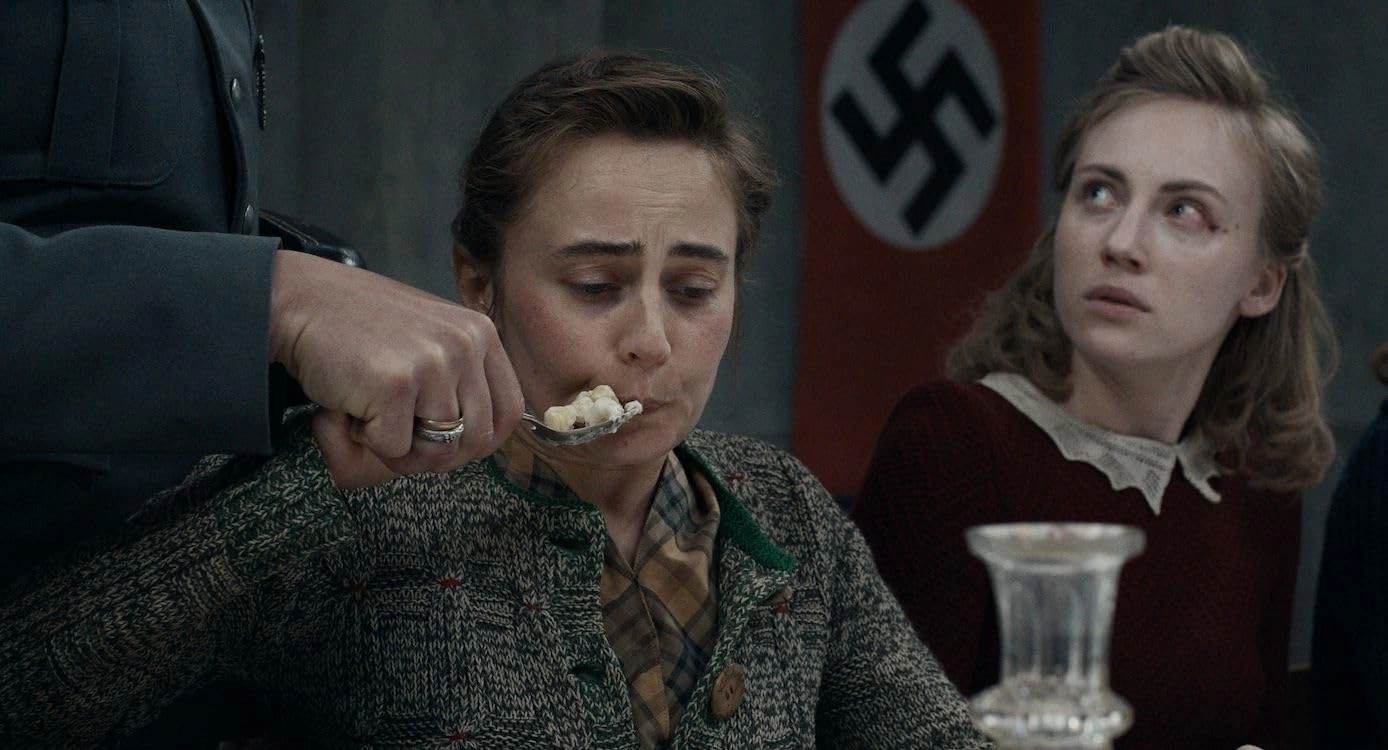
Rosa’s friendship with Elfriede, played by Alma Hasun, gives the ensemble its most delicate connection. Elfriede’s distance first reads as timidity, then acquires greater meaning as the risks surrounding her identity become visible. Her guarded silence is a survival strategy, one that Rosa slowly learns to read without demanding explanation.
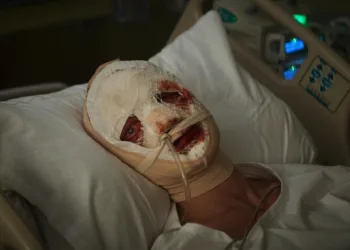
The film is strongest when sisterhood remains conditional. These women do not become symbols of pure resistance. They quarrel, submit, hide information, and calculate the cost of helping one another. Their lives depend on compromise, yet compromise never guarantees safety. When contaminated honey makes Rosa ill, Ziegler permits doctors to use her as a test subject. Any tenderness he has shown collapses at the precise moment institutional duty requires cruelty.
A recurring image of blood on Rosa’s hands gestures toward complicity, though the film handles the question cautiously. The tasters act under coercion, but proximity to power stains everyone differently. Soldini touches this moral problem without granting it enough space to become fully disruptive.
The Wrong Story Takes Over
Rosa’s affair with Ziegler shifts the film away from its rarest material. Gregor has been declared missing in Ukraine, and Rosa responds by abandoning any investment in her own future. Ziegler, played by Max Riemelt, suffers nightmares and speaks of the violence he has carried out under orders. Their encounters are staged as exchanges between two isolated people seeking temporary shelter in each other.
Schlott and Riemelt give the relationship a strained physicality. There is little romance in their gestures. Rosa often looks less seduced than absent, while Ziegler treats confession as a form of self-pardon. He wants to speak about brutality without surrendering the authority that permits it.
The screenplay offers too little preparation for Rosa’s attraction to the officer supervising her captivity. A shared appreciation of Schumann cannot bridge the political and emotional distance between them. Ziegler’s remorse also remains shallow, reduced to several speeches and troubled expressions. The film asks the women to carry the consequences of fascism while allowing one of its agents to approach moral complexity through insomnia.
This affair consumes time that could have developed the tasters as individuals or examined their responses to the regime’s collapse. The chapter-based structure jumps across pregnancies, illnesses, betrayals, and the July 1944 attempt on Hitler’s life, often resolving one crisis before its emotional consequences can settle. A late revelation concerning Elfriede arrives with the weight of a final-act mechanism rather than the force of a relationship patiently understood.
Soldini discovers a striking setting for examining how authoritarian systems consume women while claiming to preserve them. Each return to the dining table restores that clarity. Each detour into familiar wartime melodrama makes the film seem less certain of what it has found.
The Tasters is a historical drama film that premiered in Italy on March 27, 2025. Set in autumn 1943, the film follows a group of young women forced to taste meals for Adolf Hitler to check for poison at his secret headquarters. Audiences can watch the film through selected regional theatrical distributors and digital streaming platforms like Amazon Prime Video.
Where to Watch The Tasters (2025) Online
Full Credits
Title: The Tasters
Distributor: Vision Distribution, Paradiso Films, Morandini Film Distribution
Release date: March 27, 2025
Rating: 15
Running time: 123 minutes
Director: Silvio Soldini
Writers: Rosella Postorino, Doriana Leondeff, Silvio Soldini, Cristina Comencini, Giulia Calenda, Ilaria Macchia, Lucio Ricca
Producers and Executive Producers: Lionello Cerri, Stefan Jäger, Cristiana Mainardi, Katrin Renz, Joseph Rouschop
Cast: Elisa Schlott, Max Riemelt, Alma Hasun, Emma Falck, Olga von Luckwald, Thea Rasche, Berit Vander, Kriemhild Hamann, Nicolò Pasetti, Esther Gemsch, Jürgen Wink
Director of Photography (Cinematographer): Renato Berta
Editors: Carlotta Cristiani, Giorgio Garini
Composer: Mauro Pagani
The Review
The Tasters
The Tasters finds its sharpest truth at the dining table, where hunger, terror, and state power occupy the same plate. Soldini’s controlled direction and Elisa Schlott’s guarded performance give these scenes a quiet moral force. The film weakens once Rosa’s affair with Ziegler takes priority, replacing institutional violence with an underwritten romantic crisis. Its women deserve a drama as rigorous as its premise. They receive one in fragments.
PROS
- Disturbing tasting sequences
- Strong central performance
- Effective ensemble tension
- Thoughtful female perspective
CONS
- Unconvincing romantic subplot
- Underdeveloped supporting characters
- Uneven episodic structure
- Rushed late revelations