



















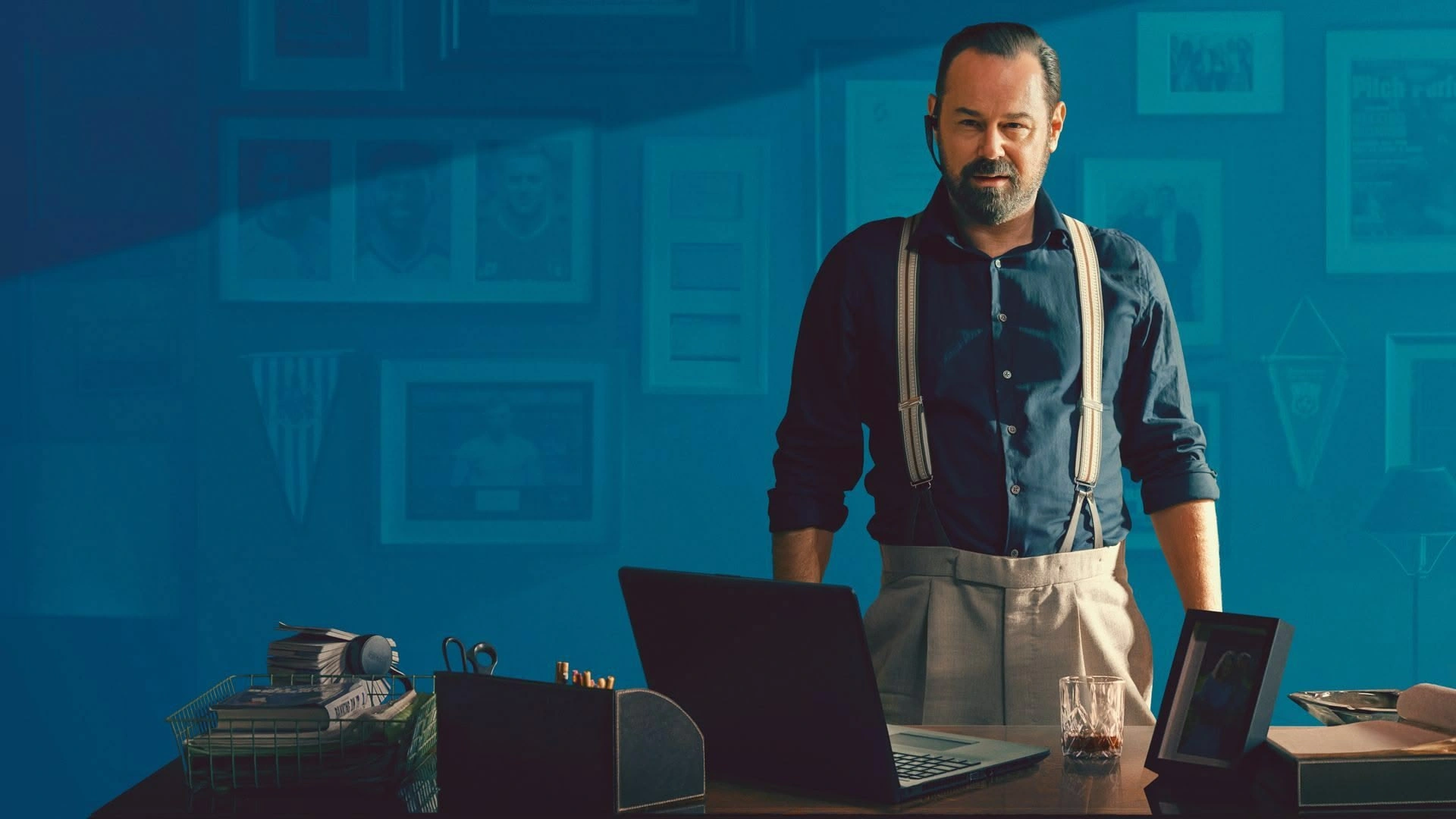

Jimmy Banks takes three quick breaths before making an important call. It is a small ritual, almost invisible beneath the Bluetooth earpiece, tailored suit, and stream of creative profanity. Yet those breaths expose the work behind his confidence. Jimmy does not enter negotiations feeling powerful. He manufactures power seconds before speaking.
One Last Deal, directed by Brendan Muldowney and written by Peter Howlett, traps Danny Dyer inside a London office for one sweltering day. Jimmy is a recently rehabilitated football agent whose only major client, Matt Gravish, is awaiting the verdict in a rape trial.
A lucrative transfer depends on an acquittal. Jimmy also hopes to recruit young prospect Jerome Sweet, using his estranged daughter’s friendship with the player to reach him. Then a caller with a distorted voice claims to possess recordings that implicate Gravish and Jimmy. The office remains the same size. Jimmy’s world does not.
Danny Dyer Holds the Room
Single-location films place unusual pressure on performance. The actor cannot rely on a change of scenery, a large supporting cast, or an action sequence to restore momentum. Every shift must register through voice, posture, rhythm, or silence. Dyer understands that demand from the first phone call.
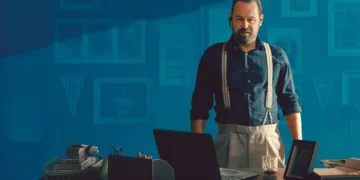
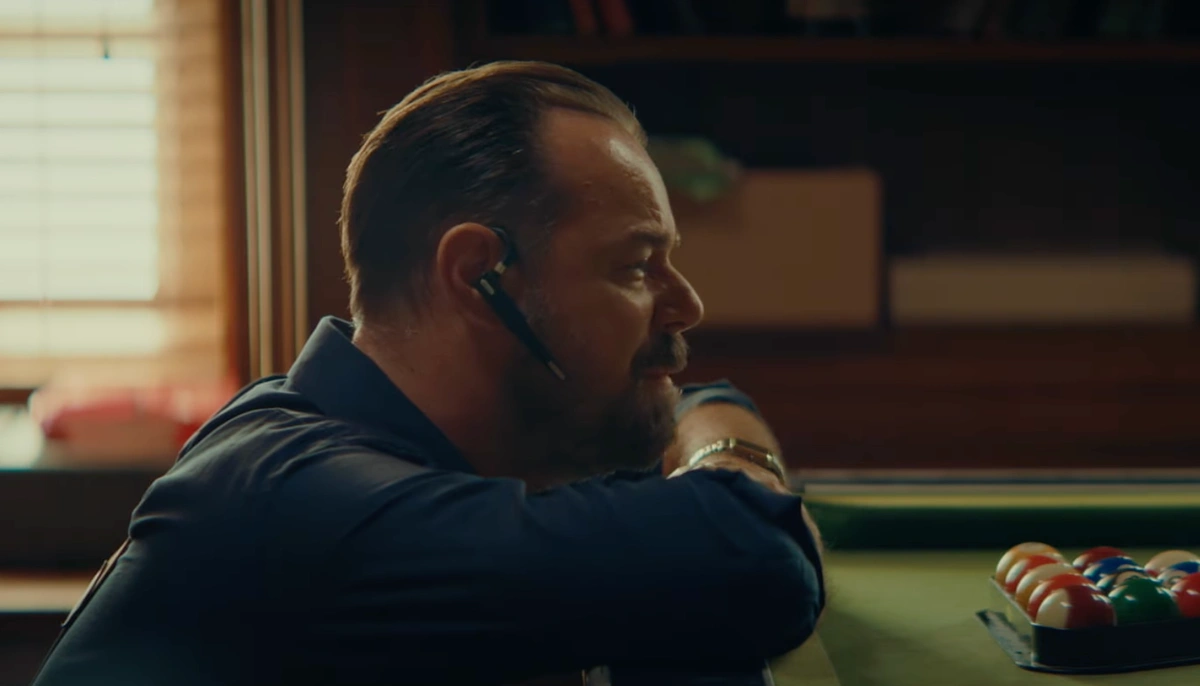
Jimmy tailors himself to each person on the line. He flatters executives, threatens colleagues, charms potential clients, and snaps at family members. Dyer makes those transitions fast enough to show Jimmy’s skill while leaving tiny cracks between them. Watch his face after a call ends. The smile vanishes before the next performance has been selected.
His manic dance to “Three Lions” captures the character beautifully. Jimmy pumps his fists around the office as if a deal has already been secured, transforming private space into a victory parade for one. The scene is funny, but the exaggeration matters. He needs the song, the movement, and the noise to drown out the possibility that his career has narrowed to one client and one verdict.
Dyer’s physical collapse is equally precise. Once the blackmailer takes control, Jimmy’s movements become less purposeful. He drinks. He paces without destination. His aggressive vocabulary remains intact, yet the words no longer seem capable of changing the room. Dyer’s familiar Cockney swagger gives the film an immediate surface energy, then becomes the material he strips away.
People as Assets
Jimmy’s moral code follows market value. He insists Gravish is innocent while the player can still earn him millions. When the recordings threaten Jimmy directly, loyalty becomes negotiable. He begins considering how quickly Gravish can be discarded and replaced by Jerome.
Howlett’s script is sharpest when it connects this professional opportunism to Jimmy’s family life. His ex-wife has discovered that the house she received in their divorce is a financial burden, while Jimmy has hidden money elsewhere. His daughter’s birthday has slipped his mind. An unopened handmade canvas sits near the office window, quietly recording a failure that cannot be solved through a better commission percentage.
Jimmy then uses his daughter’s connection to Jerome to obtain the young player’s number. The act is revealing because he treats access to his child as another professional resource. Affection may exist, but it has become tangled with leverage so tightly that Jimmy appears unable to separate the two.
The film runs into trouble when it turns sexual abuse into the engine for Jimmy’s reckoning. Gravish’s alleged victims remain distant from the drama, heard about rather than meaningfully represented. Their suffering becomes evidence, blackmail material, and a route toward Jimmy’s punishment. The script wants to interrogate complicity, yet it keeps its emotional attention fixed on the man who helped protect the accused.
Jimmy’s access to corrupt legal and police contacts also stretches credibility. He appears powerful enough to arrange a cover-up, yet professionally fragile enough to depend on one footballer. The contradiction could have exposed how influence works through informal networks. The screenplay mostly asks us to accept it.
The Office Tightens
Muldowney and cinematographer Narayan Van Maele find several smart ways to keep the setting active. Early camera movements follow Jimmy as he crosses the office, reinforcing his belief that he commands the space. Later compositions grow tighter, with desks, screens, and doorframes hemming him in.
A static shot of the phone during an awaited call shows how little is needed to create tension. The object does nothing. Silence lengthens. Jimmy’s need for the ring gives the frame its charge. Television reports, laptop conversations, and incoming messages bring the outside world into the office without breaking the film’s formal rule.
The jazz percussion works in a similar fashion. Its restless drumming supplies motion when Jimmy is physically still, suggesting a nervous system racing beneath the polished room. At times, the score presses too hard, instructing us to feel pressure that Dyer has already made clear.
The middle section also repeats its pattern. Jimmy negotiates, receives bad news, swears, recalculates, and makes another call. Some exchanges change the balance of power. Others deliver history that both speakers plainly know, a common problem in telephone dramas where the audience needs information but the characters have no natural reason to repeat it.
The final twist is signalled through the personal nature of the threats, Jimmy’s hidden money, and his neglect of his daughter. By the time he understands who has been shaping the day, the audience has likely arrived first. The revelation then pushes the film away from acidic football-agent comedy and toward solemn tragedy.
Dyer remains convincing during that tonal shift, especially when Jimmy’s rehearsed breathing can no longer steady him. The screenplay raises its voice. He lowers his.
One Last Deal is a drama thriller film that premiered in cinemas across the United Kingdom and Ireland on March 13, 2026, following its festival debut in late February. The film follows a veteran football agent racing against the clock to secure a final lucrative contract for his star client while managing mounting professional chaos. Viewers can find the movie available via select regional theatrical releases and digital video-on-demand platforms.
Full Credits
Title: One Last Deal
Distributor: Wildcard Distribution, Vertigo Releasing
Release date: March 13, 2026
Rating: 18
Running time: 89 minutes
Director: Brendan Muldowney
Writers: Peter Howlett
Producers and Executive Producers: Paul Kennedy, Richard Bolger, Patrick O’Neill
Cast: Danny Dyer, Elliott Rogers, Carlos Bardem, Katy Cavanagh-Jupe, Dagmar Döring, Sophie Doran, Penelope Gavin, Demetri Goritsas
Director of Photography (Cinematographer): Narayan Van Maele
Editors: Tony Cranstoun
Composer: Stephen McKeon
The Review
One Last Deal
One Last Deal gives Danny Dyer the kind of contained dramatic showcase that exposes both his strengths and the script’s limitations. His three-breath ritual, manic “Three Lions” celebration, and slow collapse after the blackmailer’s calls create a convincing portrait of swagger turning into panic. Brendan Muldowney keeps the single office visually active through tightening compositions, screens, and a restless jazz score. Peter Howlett’s dialogue can crackle, yet the predictable twist and heavy treatment of sexual abuse weaken the final movement. Dyer keeps the deal alive longer than the screenplay does.
PROS
- Danny Dyer’s committed solo performance
- Effective three-breath character ritual
- Fluid single-location camerawork
- Restless, pressure-building jazz score
- Sharp flashes of football-agent comedy
CONS
- Heavily signalled final twist
- Repetitive middle-section calls
- Exposition disguised as conversation
- Victims reduced to plot functions
- Overstated final emotional turn