




















Amanda Kernell films a near drowning with unnerving composure. Ejva’s snowmobile breaks through thin ice while she is chasing reindeer, and the freezing water leaves her helpless until Nejla pulls her out. Sophia Olsson’s camera gives the accident its danger without treating it as a grand turning point. Ejva has to dry off and return to the herd. The sequence teaches us how to watch the film: a catastrophe can occupy only a few minutes of a working day.
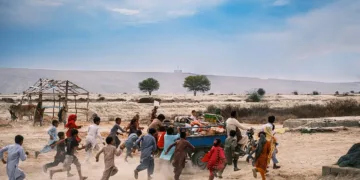
That calm grows less reassuring when the danger comes from other people. Olsson often places Ejva at the edge of the herders’ activity or reduces her to a small figure against the snow. She is capable of doing the work, yet the men can make her place among them precarious. “I can drive even though I menstruate,” she tells them. Their judgment has little to do with driving. The wide frames allow us to see the space around her while making it painfully clear how little room the group has given her.
Ejva (Elli Sara Valkeapää) is 20 when her father dies and leaves her his reindeer herd. Her family wants her to succeed, but encouragement cannot replace help in the mountains. Heaika (Andte Gaup-Juuso), an influential herder who wants a relationship with her, appears able to offer that help.
Her decision to draw close to him is partly practical, which makes the romance uncomfortable before his behavior turns harmful. A sauna encounter carries a different weight for each of them: Ejva has an attraction she can explore without promising her future, while Heaika seems to assume a claim upon it. Kernell lets affection, desire, and professional dependence occupy the same situation.
The story risks simplifying that situation when Heaika’s gentler cousin Nejla (Vincent Niia) arrives. He rescues Ejva from the lake, offers her warmth, and becomes someone with whom she can imagine another kind of intimacy. Set beside Heaika, he can seem almost too neatly placed to clarify her choices. Yet the ice rescue gives their closeness a history rooted in the work, while Ejva’s need for Heaika’s standing among the herders prevents the two relationships from functioning as a simple choice between men. The film is most perceptive when it attends to what either choice might cost her beyond romance.
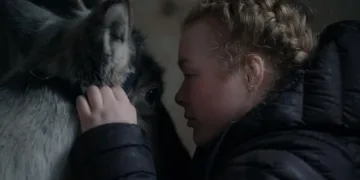
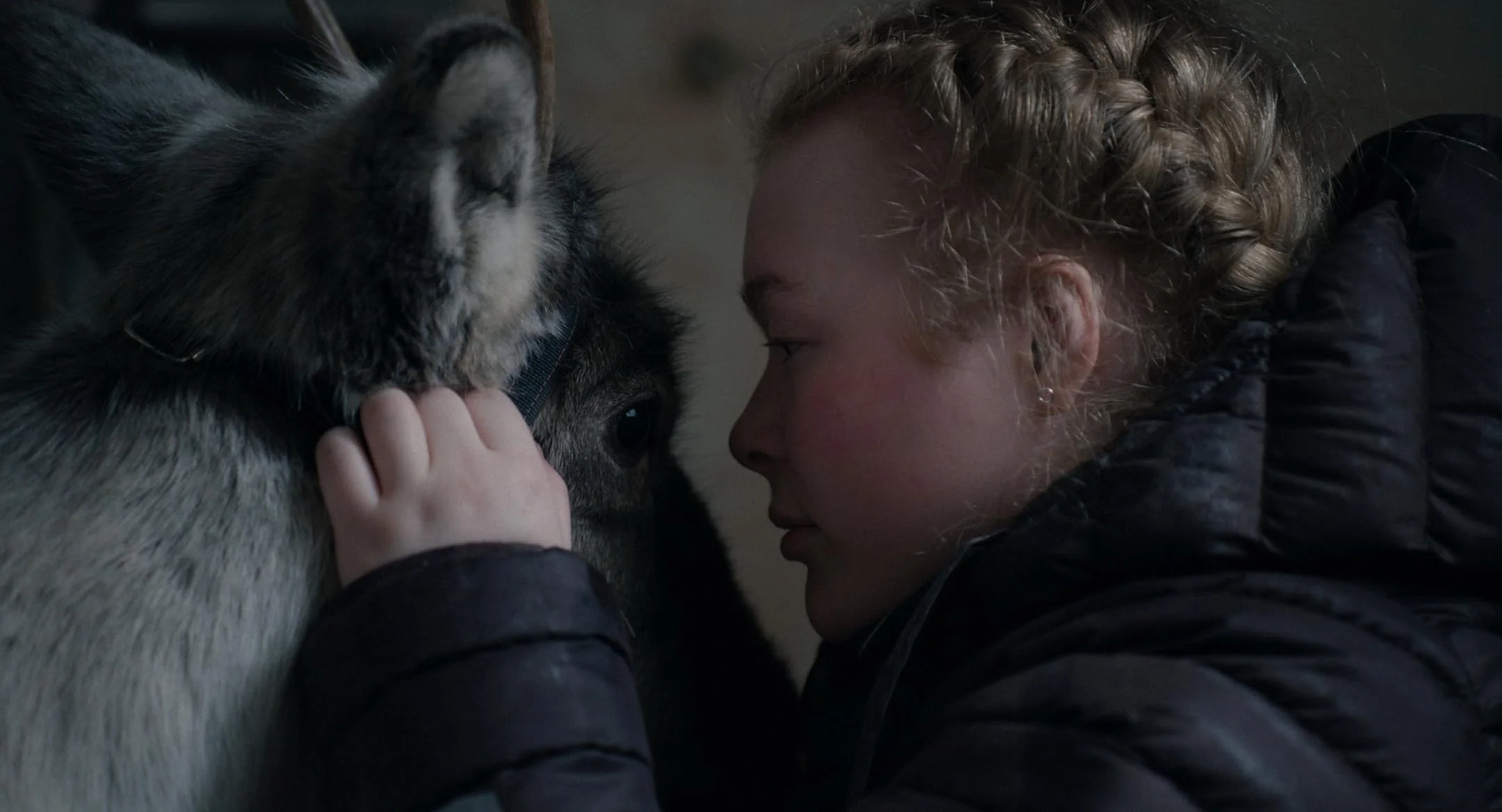
After Heaika harms Ejva, Olsson holds close to her shocked face. Valkeapää has already established a woman who speaks sparingly and listens with care, so the fixed expression asks us to stay with an experience she cannot readily put into words. It is a severe change from the wide views of herding.
Out on the snow, the camera can show the group that excludes her; here, it gives us little beyond Ejva’s response. Valkeapää keeps that response specific through the effort of holding herself still. Later glances and pauses suggest someone measuring what it would take to work alongside people who expect her to carry on.

Those expectations give the film its hardest moral question. The community depends on cooperation, and Ejva depends on it too. When forgiveness is presented as the way forward, it would restore an order from which she has never enjoyed equal protection. Kernell does not need to make every herder an accomplice for that demand to feel coercive.
The earlier images of Ejva standing apart do some of the work: the group has long had the power to decide how fully she belongs. Rebekka Karijord and Kristian Eidnes Andersen’s a cappella passages give collective voices an emotional presence. Their harmonies can sound welcoming even as Ejva’s place within that collective becomes uncertain.
Kernell follows Ejva away from herding and into an underground mine. The contrast with Olsson’s open snowfields is striking, though neither workplace offers an easy picture of freedom. The mountains expose Ejva to ice, weather, and Heaika’s influence; the mine takes her away from the animals and the family livelihood she inherited. Olsson’s earlier close-ups have made room for Ejva to think before acting, and Valkeapää resists turning those decisions into a sudden, triumphant change of character.
The screenplay occasionally presses its social conflict into an orderly sequence of romantic and personal crises. The patient attention to work and consequence keeps that order from settling the question for her. Ejva can leave the herders, but her father’s herd remains with the community that has asked her to forgive Heaika.
Brace Your Heart had its world premiere in the Platform Competition at the Toronto International Film Festival on September 15, 2026. Set in a remote mountain village, the drama follows a young Sámi woman who inherits her father’s reindeer herd and struggles to preserve her independence and ancestral traditions.
Full Credits
Title: Brace Your Heart
Distributor: TrustNordisk, Nordisk Film
Release date: September 15, 2026 (Toronto International Film Festival)
Running time: 1 hour 37 minutes (97 minutes)
Director: Amanda Kernell
Writers: Amanda Kernell
Producers and Executive Producers: Eva Åkergren
Cast: Elli-Sara Valkeapää, Andte Gaup-Juuso, Vincent Niia
Director of Photography (Cinematographer): Sophia Olsson
Composer: Rebekka Karijord, Kristian Eidnes Andersen
The Review
Brace Your Heart
Kernell and cinematographer Sophia Olsson make distance a moral question: Ejva can be seen across the snow yet remain unheard by the people beside her. Elli Sara Valkeapää gives that silence weight without turning it into passivity. The contrast between Heaika and Nejla occasionally makes the conflict too orderly, but the film remains clear-eyed about the cost of belonging to a community that asks Ejva to forgive harm.
PROS
- Olsson’s framing gives Ejva’s isolation a concrete shape
- Valkeapää’s controlled, expressive performance
- An unsparing question about forgiveness and belonging
CONS
- The two suitors are drawn in overly clear opposition
- Some social pressures fit too neatly into Ejva’s romantic choices