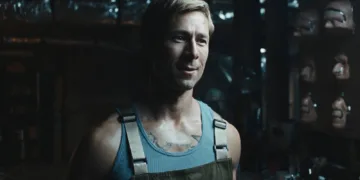




























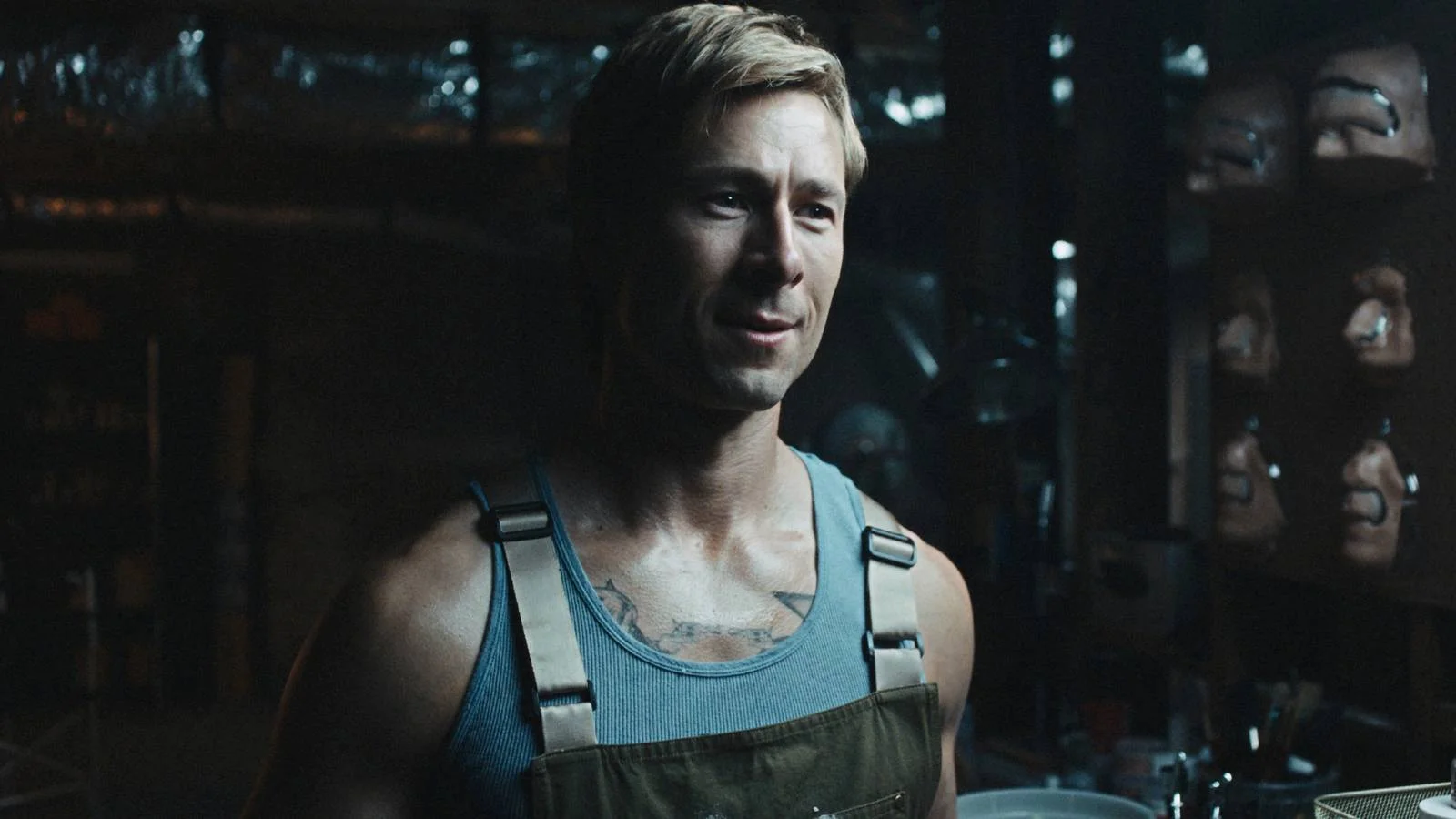

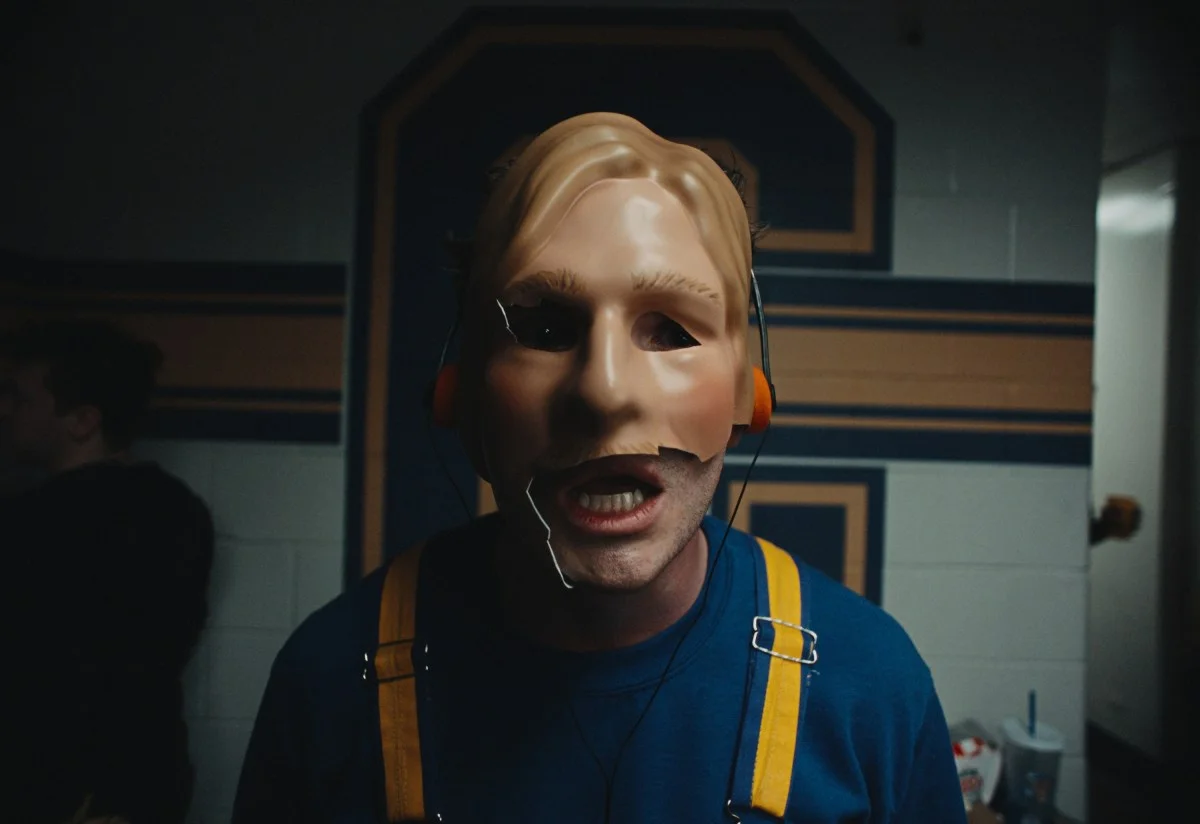
The most revealing choice in Chad Powers Season 2 is that the series stops treating its central disguise as the entire joke. A college quarterback hiding behind a ridiculous wig and prosthetic face remains an absurd foundation for a television comedy, yet Hulu’s series increasingly uses that absurdity to examine the systems that reward reinvention, forgive public failure, and turn personal transformation into entertainment.
Created by Glen Powell and Michael Waldron from the character introduced through Eli Manning’s Eli’s Places, the series began as a satire of sports culture’s obsession with second chances. Russ Holliday was a disgraced quarterback searching for a way back after arrogance destroyed his first opportunity. Becoming Chad Powers gave him access to a new team, a new reputation, and a version of himself that people could actually tolerate.
Season 2 changes the terms of that fantasy. The secret is no longer hidden from everyone. Ricky Hudson (Perry Mattfeld) knows Chad is Russ, and her decision to protect him turns her into another participant in the deception. The question shifts from “Can Russ fool the world?” to “What happens when an entire community starts protecting the lie?”
Streaming television has spent years building around recognizable brands, familiar characters, and concepts that can be explained in a sentence. Chad Powers arrives from that environment, born from a short comedy sketch and expanded into a full series. The surprise is that the show’s most interesting material appears once it moves away from the original gimmick and starts examining what happens after the joke lands.
A Second Chance Built on a False Identity
Russ Holliday remains an uncomfortable protagonist because his growth never erases the person he was. Glen Powell continues to make that contradiction work. His Russ is still vain, insecure, and capable of making selfish choices, yet Season 2 spends time showing why the Chad identity matters to him.
Football gave Russ validation, and losing that world left him with nothing that could replace it. Chad becomes a strange emotional shelter. The fake personality allows Russ to experience friendship with Danny (Frankie A. Rodriguez), trust from Coach Jake Hudson (Steve Zahn), and affection from Ricky without carrying the reputation attached to his real name.
That idea places the show in an interesting place for modern television. The series asks how much a person can change when the version of themselves they present to others is technically a performance. The answer remains uncertain. Russ does become kinder, but he also continues building relationships through deception.
Powell’s performance works because he understands the difference between the two identities. Chad is built through exaggerated movements, strange vocal choices, and awkward confidence. Russ is quieter, more defensive, and far less comfortable with himself. The costume creates comedy, yet the person underneath creates the drama.
Ricky’s position becomes the season’s clearest example of the moral complications created by Russ’s transformation. She knows exactly who he is and still chooses to protect him. Her decision threatens her career because exposing Russ could damage the South Georgia Catfish, ruin Jake’s coaching legacy, and destroy the team’s season.
Perry Mattfeld gives Ricky frustration beneath her loyalty. She is often the person who understands how ridiculous everything has become, trapped inside a situation where doing the sensible thing could hurt everyone around her. The series understands that attraction can make people accept choices they would criticize from a distance. Television has explored this dynamic countless times, yet Ricky’s connection to Russ works because the show allows her to see both the person he was and the person he is trying to become.
The Team Around the Disguise
Season 2 benefits from expanding the world beyond Russ’s secret. The Catfish are no longer simply the backdrop for Chad’s comeback. They become a collection of people dealing with their own fears about identity, success, and relevance.
Steve Zahn’s Jake Hudson receives some of the season’s strongest dramatic material. After suffering a heart attack, Jake faces the possibility that football may no longer have room for him. His struggle is less about winning games and more about accepting that the role defining his life could disappear. Zahn brings warmth to those scenes, grounding a series built around impossible circumstances.
Frankie A. Rodriguez also receives stronger material as Danny. The character begins as Russ’s partner in maintaining the Chad illusion, yet Season 2 gives him greater confidence and independence. Danny’s relationship with Russ works because he is not simply there to support the lead character. He has his own place within the team.
The series still leaves some opportunities untouched. Characters reference Danny’s sexuality, yet the show avoids giving him the romantic storyline that other characters receive. That feels strange in a comedy willing to spend so much time on crude humor surrounding Russ’s disguise. A series that understands identity so well in one storyline seems hesitant in another.
Wynn Everett’s Tricia Yeager remains one of the show’s funniest additions. Her commitment to the Catfish’s success creates a dry contrast against the chaos surrounding Russ. Her scenes work because Everett plays Tricia’s extreme decisions with complete seriousness.
The subplot involving a wealthy alum, played by Colin Woodell, feels less effective. It introduces additional pressure around the team, yet it does not carry the same emotional weight as Russ’s relationships with Ricky, Danny, and Jake.
When the Comedy Starts Feeling Dangerous
The biggest change in Season 2 arrives through Gerry Dougan (Colton Ryan). The backup quarterback begins as a familiar sports comedy rival: talented, frustrated, and jealous of the attention Chad receives. The character then grows into something far more obsessive.
Ryan commits fully to Gerry’s paranoia. Early scenes use his suspicion for laughs, especially as he struggles to understand why everyone suddenly believes Chad is the answer to the Catfish’s problems. The problem arrives when that suspicion becomes the season’s main engine.
The shift creates an unusual hybrid. Chad Powers starts as a sports comedy about a ridiculous disguise and gradually becomes a story about protecting evidence, controlling information, and managing the consequences of a secret. The change gives the season momentum, yet it also reduces some of the playful energy that made the first season appealing.
The comedy works best when the characters are forced to respond to the impossible situation around them. Powell improvising as Chad, Danny trying to keep Russ grounded, or Jake reacting to another absurd development all feel natural because the humor comes from personality.
The season struggles when it places jokes inside scenes that require emotional tension. The balance between comedy and drama is delicate, and several moments feel like they belong to different versions of the series.
The disguise itself remains the show’s largest practical problem. Chad’s makeup survives football games, physical contact, and situations where any normal person would be exposed. The series rarely spends time explaining how Russ manages the logistics anymore because examining those details too closely would collapse the premise.
That choice works as long as the emotional questions remain stronger than the practical ones. The audience accepts the impossible disguise because Russ’s personal transformation becomes the real experiment.
Television’s Endless Search for Reinvention
Chad Powers Season 2 reflects a familiar modern television pattern: a simple idea is stretched into a larger examination of identity and belonging. The series comes from the same industry environment that turns viral concepts into franchises, yet it finds value by questioning the very idea of reinvention it sells.
Russ Holliday wants a second chance, and the show understands why people are drawn to that fantasy. The problem is that second chances often require confronting the person who needed one in the first place.
The season’s strongest moments come from that tension. Russ is becoming someone worth supporting while still relying on a lie that could destroy everything. The Catfish protect him because they believe in the person they see, even when the foundation underneath is unstable.
Season 2 does not solve the contradiction. It builds around it. The result is a comedy that becomes stranger, darker, and more interested in the uncomfortable space between who people are and who they want others to believe they are. The disguise may eventually fail. The more interesting question is what remains when it does.
Chad Powers Season 2 premieres on Hulu on September 3, 2026. The comedy series follows a disgraced college quarterback who adopts an elaborate prosthetic disguise to play under an alias for a struggling football team.
Where to Watch Chad Powers Season 2 Online


Full Credits
Title: Chad Powers Season 2
Distributor: Hulu
Release date: September 3, 2026
Rating: TV-MA
Running time: 30 minutes
Director: Michael Waldron
Writers: Michael Waldron, Glen Powell
Producers and Executive Producers: Glen Powell, Michael Waldron, Eli Manning, Peyton Manning, Dan Cohen, Jamie Horowitz, Ben Brown, Burke Magnus, Brian Lockhart, Craig Lazarus
Cast: Glen Powell, Perry Mattfeld, Steve Zahn, Frankie A. Rodriguez, Colton Ryan, Wynn Everett, Clayne Crawford, Quentin Plair
The Review
Chad Powers Season 2
Chad Powers Season 2 finds stronger television inside a premise that should have collapsed under the weight of its own prosthetics. Russ Holliday’s slow movement toward empathy gives Glen Powell richer material, while Ricky, Jake, Danny, and even Gerry turn the Catfish into a community with stakes beyond football. The darker back half sometimes squeezes out the comedy that made Season 1 click, and Ricky’s loyalty occasionally feels dictated by the need to preserve the premise. Still, the season proves this joke has surprising dramatic mileage.
PROS
- Glen Powell’s layered Russ/Chad performance
- Stronger Russ and Ricky dynamic
- Steve Zahn’s emotional material
- Expanded supporting cast
- Sharper ensemble comedy
CONS
- Gerry’s arc becomes overly extreme
- Thriller turn crowds out comedy
- Ricky’s choices strain credibility
- Disguise logic grows harder to ignore