














![Kingdom Hearts Collection [I-III] Review](https://gazettely.com/wp-content/uploads/2026/10/Kingdom-Hearts-Collection-I-III-1-360x180.webp "Kingdom Hearts Collection [I-III] Review: KHII Holds Steady as Newer Entries Fluctuate 40")
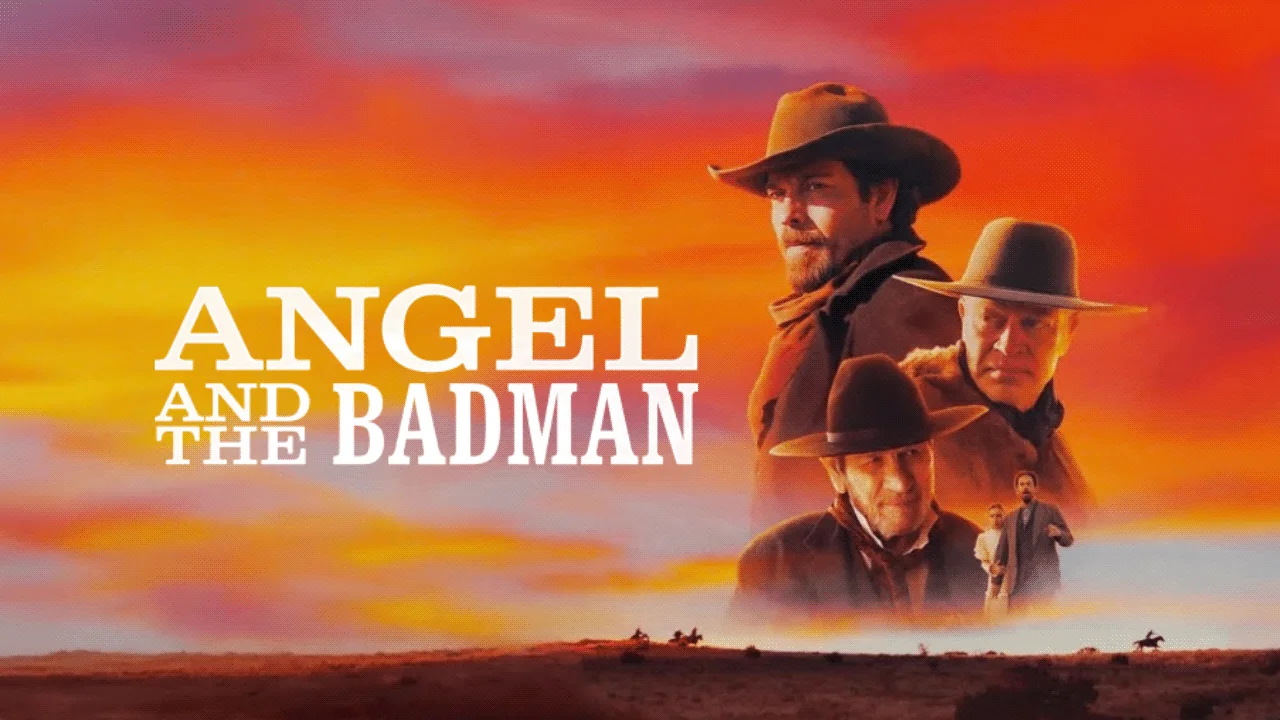

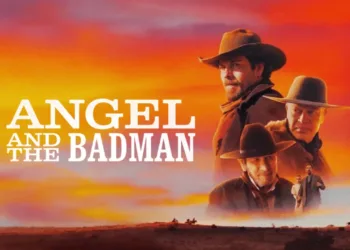
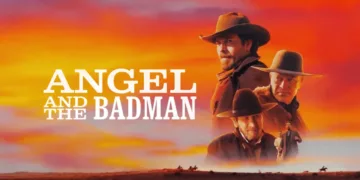
The gunshots arrive before their source can be seen. Far off, a rider crosses the horizon, small enough for the surrounding country to seem indifferent to his survival; then other horsemen appear, and the open space becomes a place through which he can be hunted. Julio Quintana gives this first image of Angel and the Badman a patient clarity. For a few seconds, distance offers no comfort. A man can ride into all that emptiness and still bring his pursuers with him.
The settled places have a different texture. Fresh paint, clean clothing, bright buckles, and newly finished-looking signs give the frontier an appearance of having scarcely been used. The New Mexico scenery remains pleasing, and the classical staging lets the eye rest, but there is little friction between human habitation and the country surrounding it. Dirt would prove nothing by itself. Still, these surfaces make it difficult to feel the years of hardship through which the characters are supposed to have arrived here. The landscape holds danger more persuasively than the buildings hold a past.
Quirt Evans, played by Zachary Levi, carries stolen Confederate gold and a reputation that makes his name useful long after his strength fails him. After hiding the gold at an abandoned mission, he collapses near the Worth family’s home. Penny Worth, her mother Irene, grandmother Harriet, and younger brother Johnny take him in. The family’s care offers a temporary release from the calculations of his former life: he can be helpless without being abandoned. Laredo, the gang leader pursuing the gold, will eventually test the security of that arrangement.
There is genuine pleasure in the household’s welcome. Melissa Chambers gives Harriet’s sarcasm enough bite to keep goodness from becoming entirely solemn, and Quirt’s appetite for company and flirtation makes the prospect of staying understandable. The film is comfortable with these small domestic attractions. Its trouble lies in making comfort feel unfamiliar to him. Levi slips so readily into amiability that the family often appears to be accommodating a charming guest whose dangerous reputation belongs to someone elsewhere.
His account of his father’s brutality suggests a harsher inheritance, one that should trouble the ease with which he occupies this home. Yet the performance moves between that damage and casual wisecracking without finding much emotional passage between them.
His remarks about avoiding goodbyes, and his joking arrival during a rescue, keep returning him to a sociability that danger barely interrupts. Levi can make Quirt likable. He has less success making kindness feel like something Quirt has difficulty accepting. The wound brings him indoors, while the harder injury remains largely in the explanation.
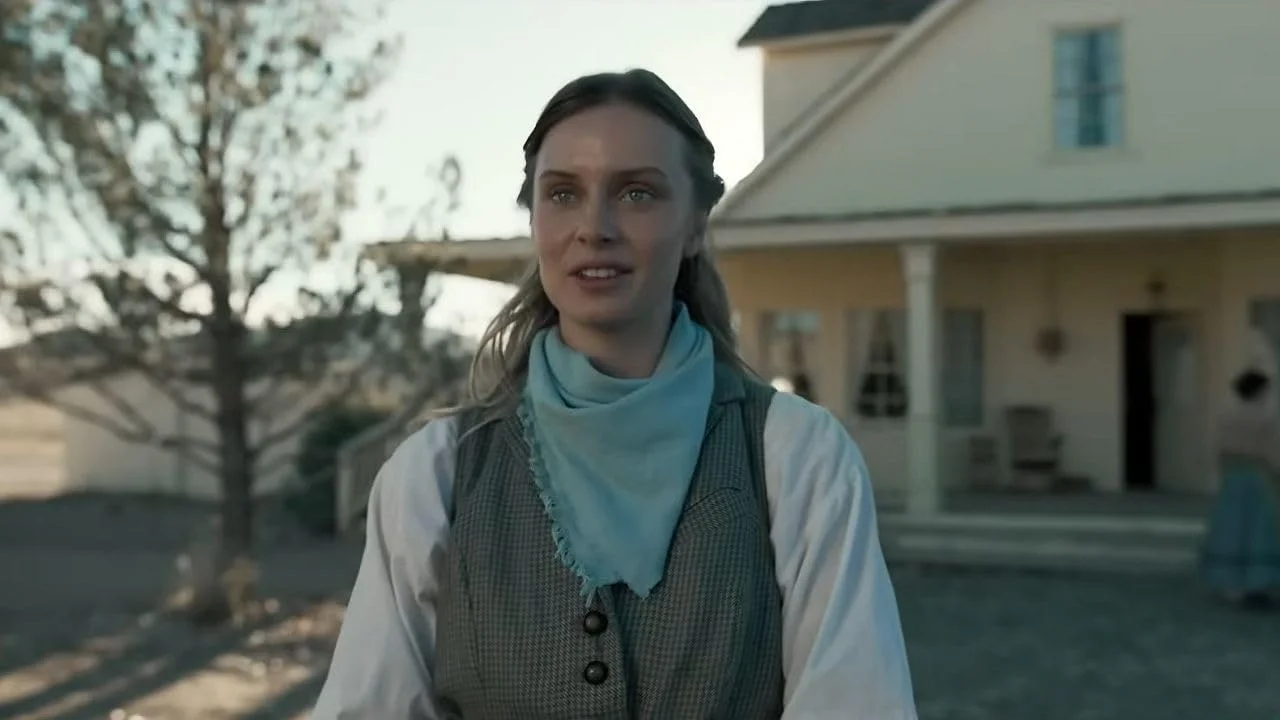
Meg Fraser’s Penny has firmer ground in her actions. Nursing Quirt and declining to serve as the marshal’s informant give her affection a practical shape: she chooses his care and then his confidence. Those choices deserve attention, even when the romance lacks sufficient charge. Her attraction is clear enough; the exchange through which two people might discover something unsettling or unexpected in each other is less developed. The film allows love to offer Quirt a destination before it has fully made us feel the distance he must cross to reach her.
That distance becomes briefly sharper in the dispute over water. Mr. Carson has dammed the supply on which his neighbors depend, and Quirt’s intimidating reputation helps persuade him to release it. Here the outlaw’s past acquires immediate value for the people sheltering him. Their decent life needs water, and his capacity to inspire fear secures it. The episode unsettles the promise that entering this household means leaving his former identity behind. Its benefits have already reached the family’s land.
Later, attending church does not prevent Quirt from encountering Randy McCall and the invitation to return to cattle theft. Quirt’s departure, bar fight, and imprisonment suggest the persistence of a life that remains easier to recognize than the one Penny offers. These interruptions could give his recovery an uneven, credible rhythm. Randy’s disappearance from the later story, however, weakens that competing attachment. The old life arrives with an invitation and then loses its human representative, leaving Laredo’s threat to carry much of the pressure.
Neal McDonough gives that threat a welcome severity. Laredo’s return to the ranch while Quirt is absent makes the household’s vulnerability tangible, bringing a hostile will into a film often inclined to reassure. Tommy Lee Jones supplies another kind of weight as Marshal McClintock, whose effort to recruit Penny as an informant turns the family’s hospitality into an opportunity for surveillance. Yet the marshal’s conveniently timed interventions also shorten the family’s encounter with consequences. The abrupt finish leaves little room for fear, rescue, and changed allegiance to settle into experience.
The remake’s Christian assurances are less demanding than the explicitly Quaker opposition to violence in the 1947 film. That distinction matters because a belief becomes dramatically alive through the things it makes difficult. The earlier film’s pacifism is itself complicated by the marshal’s armed intervention; its peace has help from someone still carrying a weapon. Here, however, Johnny’s gun instruction and eventual lethal defense move the contradiction inside the family. Quirt receives their hospitality while teaching the youngest member how to answer danger in the language he already knows.
Protecting a household under attack is an understandable act, and the film need not condemn Johnny to acknowledge what has happened to him. But it presents his killing as a moment of heroic competence, hurrying past the child who must remain after the danger is over. Quirt’s father’s brutality belongs to the history offered to explain an adult. Johnny’s first killing enters the story as a solution. I wanted the film to stay with him a little longer, after his usefulness to the rescue had ended, while the people who welcomed Quirt began living with what he had taught their boy.
Angel and the Badman was released in theaters by Angel Studios on October 9, 2026. Reimagining the classic Western film, the story follows a severely wounded outlaw who finds mercy in the care of a rancher’s daughter, forcing him to choose between a life of violence and a chance at redemption as his past catches up to him.
Where to Watch Angel and the Badman (2026) Online
Full Credits
Title: Angel and the Badman
Distributor: Angel Studios
Release date: October 9, 2026
Rating: PG-13
Running time: 1 hour 45 minutes (105 minutes)
Director: Julio Quintana
Writers: Julio Quintana, Christopher Tuffin, Jaime Hernandez
Producers and Executive Producers: Jaime Hernandez, Christopher Tuffin, Kevin M. Townsend, Amanda Delaplaine, David E. Fischer, David Henrie, Lorenzo James Henrie
Cast: Zachary Levi, Meg Fraser, Neal McDonough, Tommy Lee Jones, Jean Louisa Kelly, Peter Marmentini, Mélida Saviz
Director of Photography (Cinematographer): Alex Quintana, Julio Quintana
Editors: Julio Quintana
Composer: Hanan Townshend
The Review
Angel and the Badman
Angel and the Badman offers an inviting household and an opening image that makes the frontier feel perilously empty. Its promise of redemption remains less persuasive. Levi’s easy charm leaves Quirt’s damage at a distance, while the family’s growing reliance on violence receives too little reflection. The warmth is real, but the hurried finish leaves Johnny carrying a consequence the film scarcely pauses to examine.
PROS
- Evocative opening shot and pleasing New Mexico scenery.
- Domestic warmth sharpened by Harriet’s sarcasm.
- McDonough gives Laredo convincing menace.
CONS
- Levi’s genial performance weakens Quirt’s transformation.
- Romance lacks emotional depth.
- Pristine surroundings diminish the frontier’s lived texture.
- Abrupt ending neglects the consequences of Johnny’s violence.