






















![Kingdom Hearts Collection [I-III] Review](https://gazettely.com/wp-content/uploads/2026/10/Kingdom-Hearts-Collection-I-III-1-360x180.webp "Kingdom Hearts Collection [I-III] Review: KHII Holds Steady as Newer Entries Fluctuate 40")
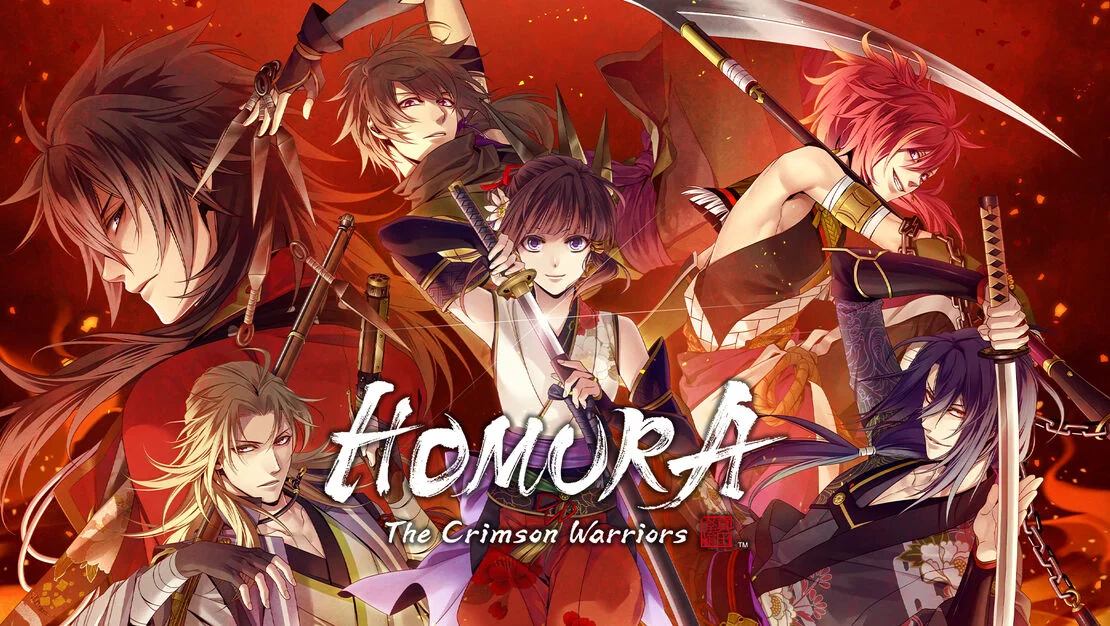

Choosing to rush forward during ninja training sounds like a decision that should teach you something about your abilities. Homura: The Crimson Warriors can leave that lesson pending for hours. Training choices feed into later mission scenes, but the connection between an answer and its eventual consequence is not always clear. You select an option, read the response, and continue without necessarily knowing what you should carry into the next encounter. The game remembers enough to alter parts of Mutsumi’s performance. It is less reliable at helping the player understand that performance.
Affection receives much clearer feedback. A flower appears after a successful romantic response, while the Energy Reading display tracks relationships through blooming flowers and illuminated lanterns. Mutsumi’s ability to perceive energy gives this information a basis within the story: the heroine can sense something the player is being shown. These signals make individual exchanges satisfying because the response is legible. Tactical decisions, by comparison, ask you to keep investing in a skill-development process whose lessons can be difficult to identify.
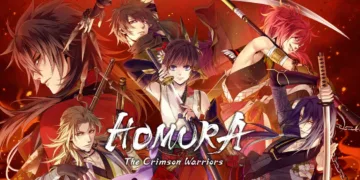
That distinction matters for a heroine trying to earn her position. Mutsumi Mochizuki is a young ninja sent by her teacher, Hakuunsai Tozawa, to deliver a letter to Nobushige Sanada. Fourteen years after Sekigahara, the Toyotomi clan is gathering support at Osaka Castle against Tokugawa power, and Nobushige is preparing to leave his confinement at Mt. Kudo. Mutsumi joins his ninja companions with training behind her and considerable work ahead. She acknowledges her limitations, asks for assistance, and keeps practicing. Her development has a convincing narrative foundation even when directing it feels uncertain.
The mission segments remain binary decisions within a visual novel, with effects concentrated in particular scenes and performance assessed at a route’s end. They do not provide a combat system that can be mastered through repeated execution. Their value lies in making Mutsumi’s work part of the reading experience, giving the player some responsibility for her conduct.
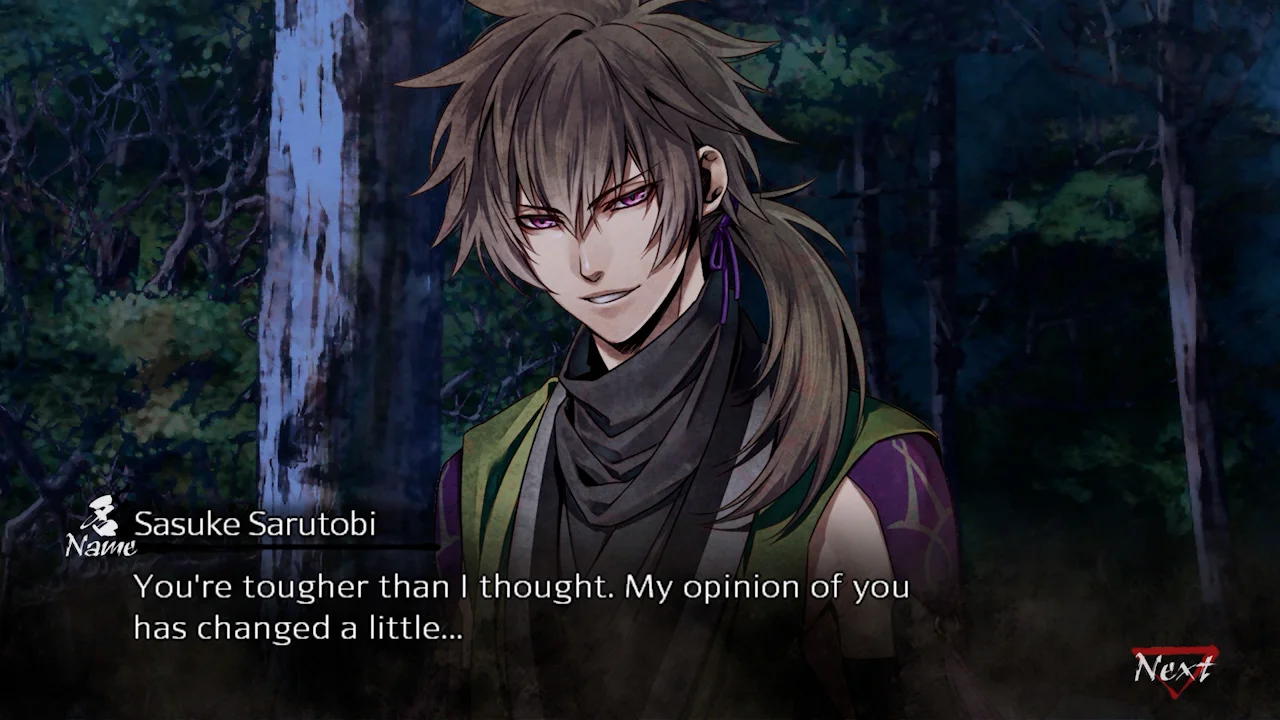
The relationships do stronger work with Mutsumi’s pursuit of competence. Five routes are accessible without unlock requirements, following a shared opening that establishes the group. Sasuke initially doubts her despite their training under the same teacher; his eventual encouragement matters because it changes how her effort is recognized.
Kamanosuke supports her entry into the group and offers practical advice, while his own desire to deserve his place complicates his confident manner. Their appeal grows through different forms of recognition. Sasuke’s support has to be earned, while Kamanosuke offers understanding from someone with pressures of his own.
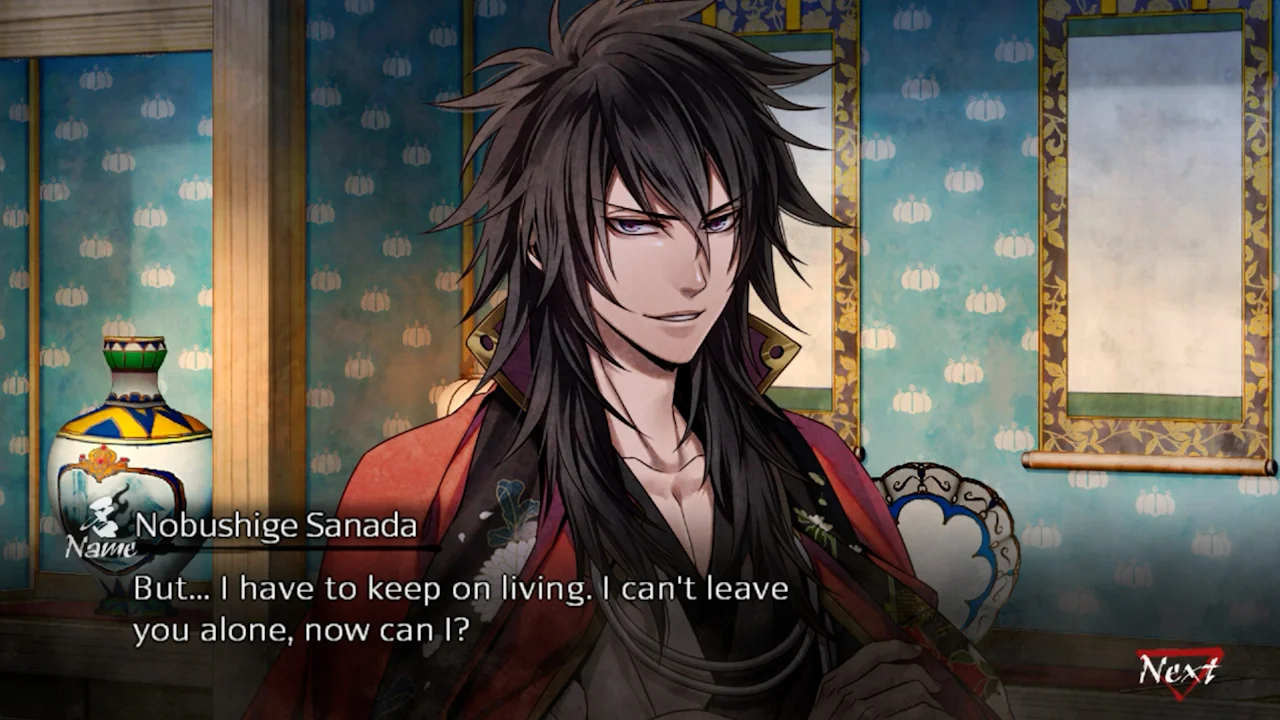
Juzo gives trust a different shape. His calm judgment under pressure makes him someone Mutsumi consults when difficult decisions arise, and his reluctance to date a colleague introduces an obstacle that affection alone cannot immediately solve. Respect develops through their working relationship before it can become something intimate. These connections give the routes substance beyond their visible meters. The flower indicator can confirm that a response succeeded, but consulting Juzo or receiving encouragement from Sasuke explains why that success might matter to Mutsumi.
Homura sometimes leaves too much space between those exchanges. Military discussion, political explanation, and preparations for conflict can occupy long stretches before the next opportunity to develop a relationship. Training encounters that turn intimate help connect courtship to the characters’ daily work, avoiding the sense that romance belongs in a separate story. The longer interruptions are harder to absorb. They can make the next affection choice feel like resuming a conversation whose emotional direction has grown faint, even with the relationship display available.
The war does give those relationships stakes worth retaining. The Ura Yagyu and their reanimated Onibi warriors turn political conflict into a struggle against enemies who violate the natural limits of battle. Mutsumi and her companions train, prepare, and depend on one another while facing opponents who can put the dead back into service. That supernatural threat makes their practical trust consequential. Homura shares Hakuoki’s attraction to romance under the pressure of supernatural warfare, and its strongest character material benefits from affection developing among people whose cooperation also affects their survival.
Understanding the conflict requires considerable effort early on. Names, clans, territories, and political relationships arrive densely enough that the glossary becomes a frequent companion. Highlighted terms make explanations accessible, while the Atlas maps locations and camps that would otherwise remain a procession of place names. These are useful tools with different jobs: the map establishes position, and the glossary supplies background. Neither eliminates the work of connecting allegiances and motives. Repeated consultation interrupts reading precisely when the opening needs to establish momentum, though the information gains purpose as the conflict develops.
Replaying is easier than making a first pass fully informed. Quick saving and loading allow experimentation around choices; skipping read text and moving to decision points reduce repeated material. Later story-access features let players revisit seen passages and adjust relationship settings. These conveniences suit a game whose five routes reward further reading, but their timing matters. They help reconstruct a path after it has been experienced. Sudden bad endings make frequent saving sensible.
The illustrations provide a stronger reward than the limited animation might suggest. Sprites and backgrounds are largely static, with blurred backgrounds occasionally implying rapid movement. Romantic CGs use sunset and moonlight to concentrate attention on the characters, giving particular encounters a visual presence that ordinary dialogue lacks. Costume patterns and personal accessories keep the ensemble distinct between those illustrations. The presentation directs anticipation toward selected images, so a small branch in conversation can lead to a substantial visual payoff.
Japanese voice performances carry expression through the passages where the artwork remains still. Music shifts from romantic accompaniment to heavier tension, although it occasionally obscures dialogue, weakening the delivery the presentation depends upon. Mutsumi is unvoiced, creating a noticeable imbalance beside such an expressive ensemble. Her willingness to ask for help gives her a defined personality on the page, but those exchanges grant the other person an audible response while leaving her own tone to the reader.
The Review
Homura: The Crimson Warriors
Homura: The Crimson Warriors builds its strongest relationships around Mutsumi earning trust, with clear affection feedback and routes that connect intimacy to shared responsibilities. Its tactical choices offer less reliable guidance, while dense political exposition and long romantic interruptions slow the experience. The cast, illustrations, and supernatural conflict reward patient reading, though Mutsumi’s development is easier to understand than the decisions shaping her mission performance.
PROS
- Relationships develop through competence and mutual trust.
- Affection feedback fits Mutsumi’s energy-reading ability.
- Supernatural warfare gives cooperation meaningful stakes.
- Detailed illustrations and expressive Japanese voices.
CONS
- Tactical choices provide unclear, delayed feedback.
- Dense early exposition interrupts momentum.
- Long gaps weaken romantic continuity.