


























![Kingdom Hearts Collection [I-III] Review](https://gazettely.com/wp-content/uploads/2026/10/Kingdom-Hearts-Collection-I-III-1-360x180.webp "Kingdom Hearts Collection [I-III] Review: KHII Holds Steady as Newer Entries Fluctuate 40")
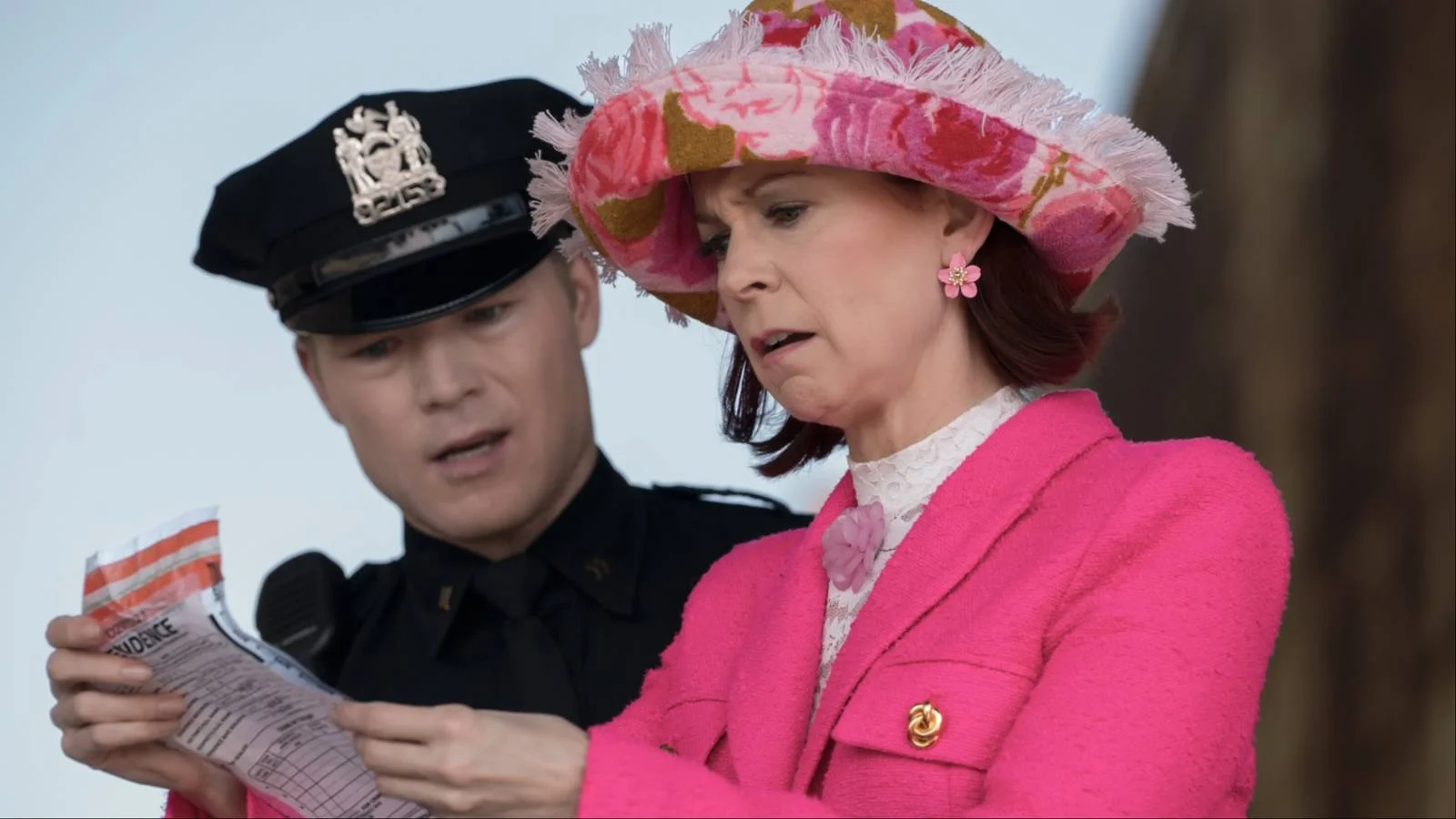

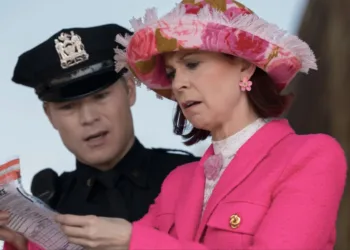
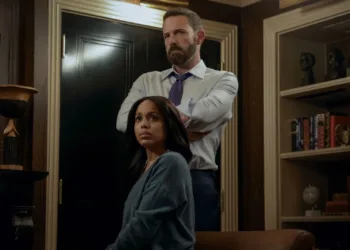
Luke Prescott leaves bloody fingerprints on a door and a badly beaten man inside the apartment. He has committed an assault, which makes him a convenient murder suspect once Casey Arthurs is found shot dead. The gun, however, has been wiped clean. That gap between evidence of one crime and proof of another gives “Crazy in Love,” the fourth-season premiere of Elsbeth, its investigative footing. Detective Bobby Smullen sees a case ready to close. Elsbeth Tascioni sees an explanation that stops short of accounting for the weapon.
The person exploiting that gap is couples therapist Serena Collyer, who knows Luke’s jealousy well enough to direct it toward a stranger. She sends him a message from Casey’s phone claiming that Casey is sleeping with his wife, Lauren, then shoots Casey after Luke’s attack. Her professional knowledge gives the frame-up its credibility: she understands the response she can provoke and has an established account of Luke’s temper to offer the police. Showing us her actions in advance makes the investigation a test of how that account can be dismantled.
Serena’s motive is established with similar economy, though considerably less subtlety. Her seminar advice about trust alternates with scenes of her affair with Casey, a musician whose attention remains on his video game while she tries to attract it.
The editing supplies the contradiction immediately, leaving little uncertainty about the distance between her public authority and private behavior. Casey’s announcement that he intends to stay in New York supplies the necessary escalation. An affair she has kept apart from her marriage threatens to become a permanent intrusion. The opening does its work briskly, but the hypocrisy is fully legible before Serena finishes selling her expertise.
The investigation improves on that broad introduction by separating inconsistencies that initially seem to belong to the same story. Lauren is having an affair, but her lover is Steve. Luke’s anger therefore has a real cause attached to a false target. Serena’s defense of Casey when Smullen dismisses him exposes an attachment her explanation cannot comfortably accommodate, while her number survives in Casey’s phone under another name. These discoveries progressively restrict what she can plausibly deny. Elsbeth’s suspicions develop through the relationships between details, rather than through an intuition the episode asks everyone else to accept.
Serena’s book is the most useful piece of construction. She has turned troubled relationships into professional success stories, including Luke and Lauren’s, but the account of “Sam and Diane” preserves details of her own involvement with Casey. Publication gives Elsbeth access to material Serena would otherwise control during questioning. The eventual physical connection also follows an established trail: the expensive wine at Casey’s apartment leads Officer Grace Hackett to shop surveillance, which draws attention to Casey’s gift of keepsake jewelry. The purchase alone cannot prove murder; the blood and gunshot residue on the jewelry complete the connection. Hackett’s follow-up gives Elsbeth’s observation a practical investigative consequence.
Nicole Scherzinger makes Serena’s loss of control entertaining without erasing the dependency that motivated her. Her polished therapeutic manner initially lets her redirect questions and interpret other people’s behavior for them. Defending Casey interrupts that composure, and her final outburst reveals how little emotional control accompanied the planning. Even when exposed, she wants to know if Casey called her his girlfriend. That concern usefully complicates the calculation we watched earlier. She can organize an assault, manipulate a client, and clean a crime scene while remaining desperate for reassurance from the man she has killed.

Smullen’s part in the episode benefits from a different kind of explanation. The skeptical detective who resists Elsbeth’s observations is familiar procedural machinery, and repeated resistance can become a means of delaying an arrest everyone watching expects.
Here, his reactions to infidelity and marital conflict have an immediate personal source. His wife has left him. The discovery of his dating profile first produces the wrong interpretation, then the separation puts his irritability into focus. Danny Mastrogiorgio’s abrasive responses acquire a context beyond professional annoyance, although that context does nothing to repair the gaps in his case against Luke.
The couples workshop makes productive use of the overlap. Elsbeth and Smullen’s disagreement is mistaken for marital friction, so an investigative visit becomes an occasion for their working relationship to be examined in public. The comic setup is obvious, but it carries existing tension into a setting designed to expose it.
The laundry-instructions joke takes a cheaper route, reducing Smullen’s disrupted domestic life to a familiar helpless-husband gag. Apparently the separation papers also revoked his washing-machine privileges. His later willingness to accept Elsbeth’s offer of a sympathetic ear supplies the more credible development: he permits a conversation he has spent the episode resisting.
Carrie Preston’s Elsbeth remains effective because her openness can change the direction of an exchange. Admiration for Serena’s work does not prevent scrutiny, and concern for Smullen survives his dismissiveness. Captain Wagner’s insistence on privacy, followed by his discussion of Smullen with Claudia, gives that concern a comic detour through precinct gossip. The episode eventually returns it to the person concerned. Elsbeth’s offer to listen establishes a small change in their relationship, with no need to treat the workshop’s mistaken-couple premise as evidence of an impending romance.
Her own family supplies a less easily managed conversation. Teddy and Roy’s May 1 wedding date gives her enthusiasm a practical outlet, complete with a mood board. Teddy’s reminder that her mother has been trying to reach her then interrupts that buoyancy. Preston’s change of register gives this brief setup weight without explaining away the discomfort. The wedding remains an ongoing thread, and the unanswered calls remain unresolved. After spending the episode questioning other people’s accounts and encouraging Smullen to speak, Elsbeth avoids the subject her son has brought to her.
Elsbeth Season 4 premiered on CBS on October 8, 2026, with next-day streaming available on Paramount+. Spin-off to The Good Wife, the comedic police procedural drama follows the unconventional, highly astute attorney Elsbeth Tascioni as she uses her unique observational skills to assist the NYPD in cornering brilliant criminals across New York City.
Where to Watch Elsbeth Season 4 Online










Full Credits
Title: Elsbeth Season 4
Distributor: CBS, Paramount+
Release date: October 8, 2026
Rating: TV-14
Running time: 42–45 minutes per episode
Director: Robert King, Rosemary Rodriguez, Robin Givens
Writers: Robert King, Michelle King, Jonathan Tolins
Producers and Executive Producers: Robert King, Michelle King, Liz Glotzer, Jonathan Tolins, Erica Shelton Kodish, Bryan Goluboff
Cast: Carrie Preston, Wendell Pierce, Carra Patterson, Nicole Scherzinger, Nicholas Braun, John Doman, Jemima Kirke
Director of Photography (Cinematographer): Fred Murphy
Editors: Matthew Kregor, David Leonard
Composer: Siddhartha Khosla, Garrett Gonzales
The Review
Elsbeth Season 4
“Crazy in Love” gives Season 4 an assured opening, with Serena’s professional knowledge shaping the frame-up and the evidence that dismantles it. Scherzinger supplies both calculation and emotional dependence, while Smullen’s separation gives his resistance a credible personal cause. Broad hypocrisy and an easy domestic gag limit the subtlety, but the investigation earns its resolution. Elsbeth’s family tensions remain productively unresolved.
PROS
- Clear distinction between assault evidence and murder proof.
- Serena’s book serves the investigation effectively.
- Scherzinger preserves the killer’s emotional dependency.
- Smullen’s personal troubles strengthen his role.
CONS
- The opening establishes Serena’s hypocrisy too bluntly.
- The laundry gag reduces separation to familiar domestic helplessness.