












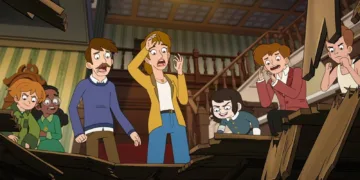










I distrusted the heroic education awaiting Curtis. The awkward tabletop RPG enthusiast in Wildwood enters a fantasy realm where power can look like the cure for being overlooked. Alexandra, its grieving Dowager Governess, offers him the attractions of violence and authority. A familiar bargain seems available: give the gentle boy a weapon, teach him to use it, call the improvement maturity. His kindness becomes something the adventure must overcome.
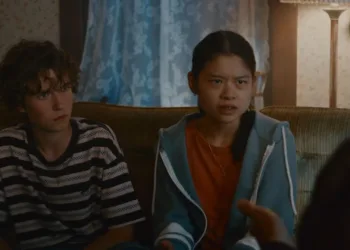
Then Curtis saves Prue with a sword and catches his own stricken reflection in the blade. That expression changes the bargain. He has acted courageously, but courage has brought him into conflict with something he valued about himself. I had mistaken the destination for the argument. Director Travis Knight allows the boy to become capable without making capability feel innocent.
The rescue that brings these children into the woods begins with a smaller breach of responsibility. Prue McKeel takes her infant brother Mac out despite their parents’ prohibition. Their bicycle excursion through Portland has the exhilaration of borrowed freedom, with Mac bouncing along in a trailer behind her.
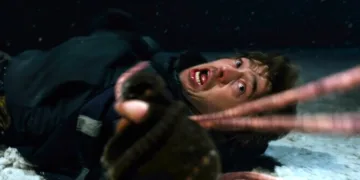
Then crows snatch him from a playground. The sky fills with the creatures carrying him away, and the ordinary geography of childhood abruptly becomes hostile. Prue and her classmate Curtis pursue them into the Impassable Wilderness, where talking animals have organized themselves into communities, governments, and armies.
Adulthood, apparently, has reached the forest first. Knight’s film, adapted by Chris Butler from Colin Meloy’s novel illustrated by Carson Ellis, keeps returning to the demands affection makes on other people. Prue wants to recover the brother she endangered. Alexandra wants to recover the son she lost. Both act from an attachment they cannot set aside, yet the obligations they impose spread in different directions. Prue must seek help. Alexandra can command it.
Her attempt to replace her dead child with a mechanical replica gives that distinction a disturbing physical form. A replica promises a relationship without the intolerable independence of another living person: no unpredictable future, no new accident, no further loss.
Alexandra’s grief seeks relief through control, and when the imitation fails to answer her need, dark magic offers another possibility. Mac becomes material for someone else’s restoration. The coyote soldiers in their uniforms make the expansion visible. One household’s bereavement has acquired military capacity.
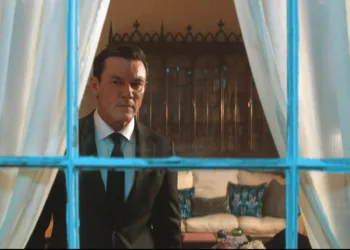
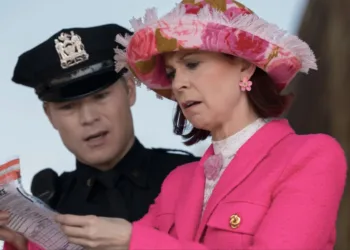
Carey Mulligan’s tense, trembling delivery keeps Alexandra’s pain perceptible beneath these decisions. The performance matters because it prevents an easy dismissal of her as a monster, while her treatment of Mac prevents sympathy from becoming absolution. Her loss explains the hunger. It cannot give her a claim on somebody else’s child.
I am less comfortable, though, with making Prue’s family the uncomplicated opposite. Her parents’ insistence that Mac remain indoors already imagines safety as containment. The film later draws connections between them and Alexandra, suggesting that protective love can share some of possession’s instincts.
That is a useful complication, insufficiently prepared. The parents receive too little dramatic attention for the comparison to develop much force; a strict instruction cannot bear the whole weight of a philosophy of parenting. Alexandra’s anguish feels lived through, while this parallel arrives closer to an explanation supplied after the fact.

Prue’s characterization has a related limitation. Peyton Elizabeth Lee gives her determination energy, and the movement from disobedience to guilt to persistent action is clear. Her growing respect for Curtis also lets her revise a judgment about another person. Still, the rescue supplies so much of her identity that the surrounding world often seems better specified than its visitor. We know what she must correct. We have fewer opportunities to discover what would occupy her if nothing needed correcting.
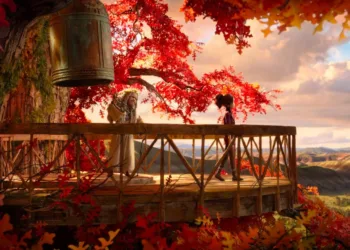
That world earns its hold on the attention. Portland’s densely detailed streets establish a particular place before the fantasy opens outward, and recognizable geography survives the crossing. Forest Park becomes enchanted wilderness; Pittock Mansion becomes a seat of government. Magic does not abolish civic life. The animals have retained authority, factional loyalties, and the capacity to make collective existence difficult (a fairly thorough inheritance).
Prue’s attempt to save one child eventually requires cooperation among the Avian Principality, bandits, South Wood’s animals, and tree-worshipping seers. This gives the familiar rescue plot a political dimension without requiring a coded historical allegory. Individual determination proves inadequate. She must bring separate groups into a shared effort, while Alexandra turns her own need into an order others must obey. The difference emerges through the organization of action, rather than a speech about good leadership.
The climactic battle also leaves that distinction under pressure. Cooperation becomes an army, and the rescue depends on the violent capacities Curtis has reason to fear. Wildwood permits this discomfort without finding a way around the fantasy epic’s expected resolution. Its characters can question force while the story still needs them to deploy it.
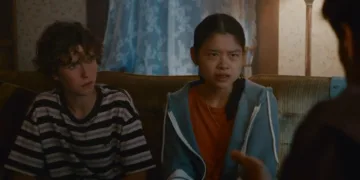
Laika’s animation makes that contradiction physically absorbing. Numerous figures act across ground and air, giving the conflict density and the sense that danger can arrive from several directions. Yet the smaller movements do equally important work. Toes curl at a balcony edge; two children reassure each other through a squeeze of the fingers. These gestures give the bodies vulnerability amid the enormous machinery of battle. The puppets communicate what the characters cannot pause to explain.
Admiration for such work can become its own trap. The production’s difficulty is extraordinary, but difficulty does not settle every question of dramatic value. At just over two hours, the film sometimes gives its inhabitants space at the expense of the rescue’s momentum. Returns to Curtis and the bandits enrich the forest while making the central pursuit feel suspended. The eye remains occupied when the story loses urgency. Both experiences can be true at once.
The familiar portal-fantasy construction survives these reservations because its most troubling details resist the reassurance built into the form. Curtis’s sword reflection interrupts the satisfaction of a successful rescue. The reassuring hand squeeze offers a different kind of response to danger: contact between children who cannot make the world safe for each other. They can remain frightened and still help. For Curtis, that leaves room to carry his gentleness into the life his courage has complicated.
Wildwood is scheduled to release in theaters on October 23, 2026, distributed domestically by Fathom Entertainment. Based on the 2011 novel, the stop-motion animated fantasy adventure follows a young girl who journeys into the forbidden, magical woods outside Portland to rescue her kidnapped baby brother.
Where to Watch Wildwood (2026) Online
Full Credits
Title: Wildwood
Distributor: Fathom Entertainment, FilmNation Entertainment
Release date: October 23, 2026
Rating: Not publicly specified
Running time: Not publicly specified
Director: Travis Knight
Writers: Chris Butler
Producers and Executive Producers: Travis Knight, Arianne Sutner
Cast: Peyton Elizabeth Lee, Jacob Tremblay, Carey Mulligan, Mahershala Ali, Awkwafina, Angela Bassett, Jake Johnson, Charlie Day
Composer: Dario Marianelli
The Review
Wildwood Review
Wildwood finds its richest ideas in the discomfort of caring for someone: Curtis must protect Prue through violence he fears, while Alexandra makes others pay for her refusal of loss. Laika’s extraordinary animation gives those tensions physical weight, from crowded battles to a frightened face reflected in a blade. Prue’s limited characterization, a weakly prepared parental parallel, and leisurely detours leave the storytelling less precise than the craft. Still, this is fantasy willing to let courage carry a troubled conscience.
PROS
- Remarkable animation at epic and intimate scales.
- Curtis’s heroism preserves his moral discomfort.
- Mulligan gives Alexandra’s grief emotional credibility.
- Divided forest communities give the rescue political substance.
CONS
- Prue’s identity remains closely confined to her rescue mission.
- The parental parallel lacks sufficient preparation.
- Curtis’s bandit detours weaken the rescue’s momentum.