


























In La Palisiada, 1996 Ukraine exists as a contradiction—a nation on the brink of transformation yet burdened by its haunting past. The year, defined by the elimination of the death penalty and the country’s commitment to the European Convention on Human Rights, represents not a peak moment but a period of reflection.
This is a Ukraine in flux, its identity fractured between remnants of Soviet influence and aspirations for Western modernity. Inflation rises, justice hangs precariously, and the atmosphere is thick with moral uncertainty—a reality both grounded and lost in confusion.
Amid this grim scene, Sotnychenko’s perspective reveals a landscape laden with corruption and stagnation, a bureaucratic maze where clarity is neither pursued nor attained. From this obscurity emerges the duality of time: the harsh, grainy visuals of 1996 contrast with the sleek clarity of the present.
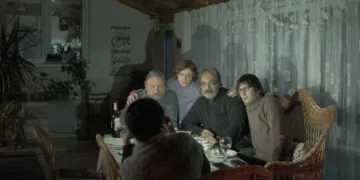
The prologue’s discontented family dynamic in modern Ukraine serves as a symbol, connecting current frustrations to the chaos of the past. Corruption becomes a recurring theme, with history’s shadows emerging in real time, refusing to be cast aside.
Corruption and survival intertwine throughout the film’s narrative structure. The pervasive decay feels less like a plot twist and more like an ever-present influence—a character in its own right. The murder of a colonel, the recorded witness statements, and the investigative façade are not just occurrences but echoes of a society grappling with its identity. As Sotnychenko invites us to observe, one might question whether the past is genuinely behind us or simply disguised as the present.
Fragments of Truth in a World of Shadows
In La Palisiada, the story unfolds like a tangled thread, stretching and looping back on itself, inviting the viewer to trace its form through the haze. The opening shot—a sudden, jarring gunshot—shatters the facade of contemporary Ukraine, plunging the narrative into the murky depths of 1996.
Also Read




Time here does not progress in a straight line but swirls in confused eddies, reflecting the disorder of the investigation it depicts. This fragmented narrative, a deliberate puzzle of flashbacks and abrupt shifts, mirrors the very nature of justice in the story: complicated, unclear, and fundamentally flawed.
The modern prologue establishes a backdrop of unsettling domestic tension, where family ties appear strained under the burden of national and personal dissatisfaction. The past is evoked not as a stable reference but as a turbulent current pulling everything into its depths.
The main investigation, seemingly a search for a murderer, transforms into an examination of systemic stagnation. Facts blur into fictions, and certainty crumbles as Oleksandr and Ilhar navigate through testimonies and reenactments. Each effort to piece together events amplifies the confusion, reflecting justice itself—arbitrary, performative, and blind to its own shortcomings.
The film grapples with profound inquiries about justice and truth. What constitutes justice in a system prioritizing expediency over accuracy, appearances over substance? Sotnychenko’s universe portrays truth as elusive, a presence felt but never fully captured. As the investigators close in on a suspect, the narrative emphasizes the precariousness of their conclusions.
Guilt and innocence become indistinct, leaving a hollow representation of resolution that cannot erase the deep scars of systemic corruption. This pursuit becomes a metaphor for a nation confronting its own history—how can one extract truth from a past so entwined with violence and deceit?
Beneath the surface of procedural elements lies a deep reflection on generational burdens. The Ukraine of La Palisiada is a nation in conflict with itself, caught between the oppressive legacy of Soviet domination and the fragile hope of European integration.
The cyclical nature of history looms large as systemic violence endures, resonating through the decades with unsettling familiarity. The disjointed storytelling is not merely a narrative choice but a thematic strategy, underscoring the idea that no past can be entirely separated from the present. In its fragmented chaos, the film poses the question: Is progress a straight path or a series of concentric circles, endlessly returning to the same dark inquiries?
Silent Bonds, Fractured Lives
The characters of La Palisiada function not as mere protagonists but as haunting figures, ensnared in the machinery of an unjust world. Oleksandr, the forensic psychiatrist played by Andrii Zhurba, carries a heavy burden—a man bound to the cold mechanisms of state justice yet acutely aware of its inherent ineffectiveness.

He is less a seeker of truth and more a mourner at the grave of reason, his professional exterior masking a growing discomfort. His role demands emotional distance, yet it gradually erodes his humanity, serving as a harsh reminder of his involvement in a system oblivious to the very principles it claims to uphold.
Ilhar, portrayed by Novruz Pashayev, is a detective characterized by contrasting energies—a man navigating both the debris of the investigation and his own ethical dilemmas. While Oleksandr is reflective, Ilhar embodies action, though his movements are similarly constrained by unseen forces. Together, they create a dichotomy of thought and action, yet their partnership does not signify resolution but rather mirrors the turmoil surrounding them. They seem to operate in parallel, their personal battles seldom intersecting but always resonating, like the mournful echo of distant church bells.
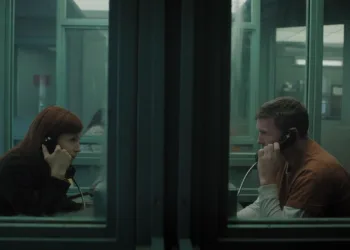
Interwoven into their lives is the widow of the murdered officer, a woman whose presence alters the film’s equilibrium with a subtle, almost spectral influence. She serves less as a femme fatale and more as a trigger for unresolved tensions, her history with both men forming an unspoken triangle of grief, guilt, and perhaps longing. This dynamic remains delicately unexpressed, a silent storm that shadows the course of the investigation.
In these relationships, the personal and political intersect, each character carrying the scars of a society in flux. Their interactions, charged with the unsaid, reveal the fragility of human connection as well as the burden of history pressing down on the individual. The murder they investigate represents not merely a singular event but a manifestation of these forces—a wound that refuses to heal.
Fragments of Memory in Grain and Shadow
In La Palisiada, the visual style is as fragmented and restless as the story it conveys. Sotnychenko utilizes a distinctly grainy, VHS-like aesthetic that immerses the viewer in a tactile experience of the past.
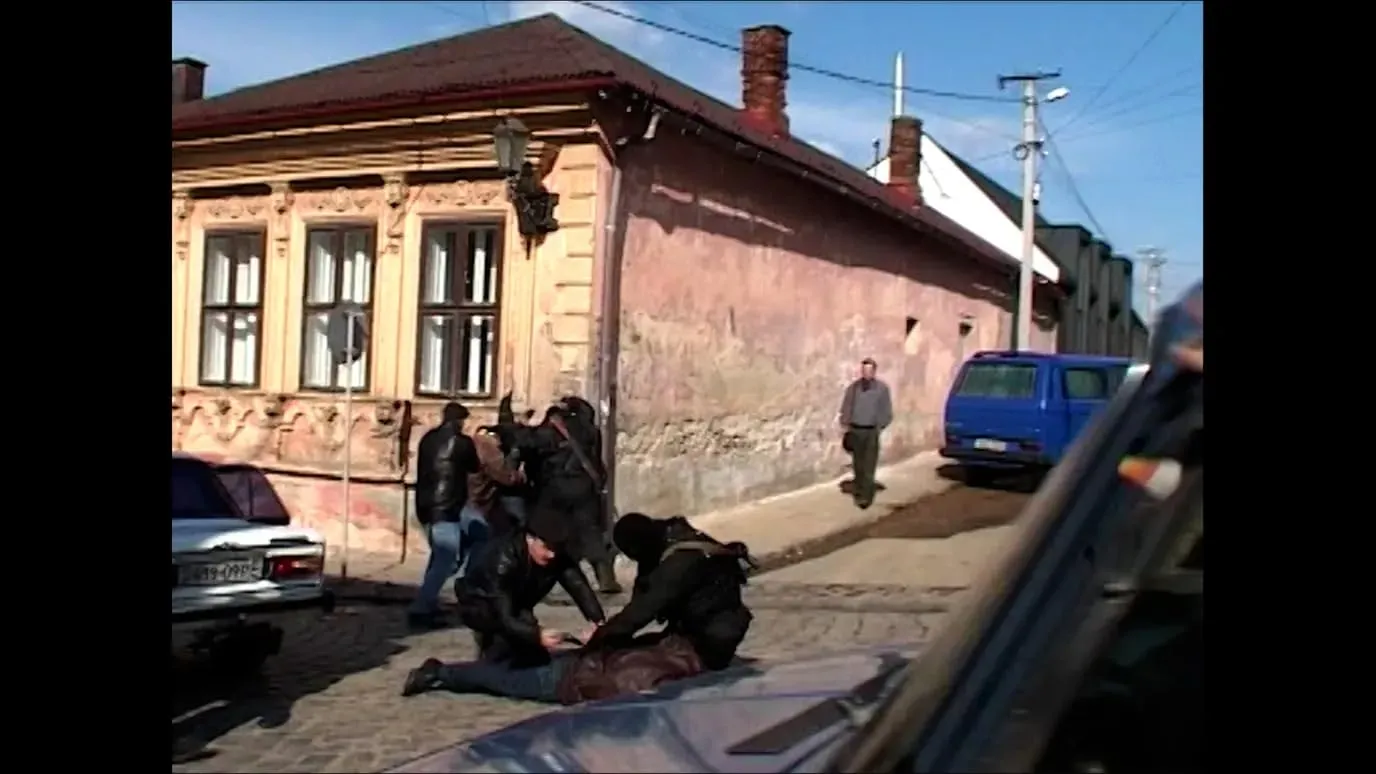
The rough texture of these visuals, with their muted colors and flickering flaws, feels less like a deliberate choice and more like an artifact uncovered from history’s cluttered archives. Each frame seems to breathe the stale air of 1996 Ukraine, drawing the audience into a realm where the passage of time weighs heavily on every surface.
The handheld camerawork enhances this immersion, creating a voyeuristic closeness that borders on discomfort. The camera acts not as a passive observer but as an active participant, navigating through dimly lit corridors and lingering on faces as if it were a silent witness to their unraveling.
This unsteady lens reflects the instability of the narrative, presenting the story not as a unified whole but as fragments of memory, disjointed and incomplete. The result is both unsettling and immediate, collapsing the distance between viewer and subject.
Within this visual composition lies a powerful interplay of symbols. The contrast between home-video aesthetics and overtly surveillant imagery highlights the tension between personal and institutional memory. The camera becomes a contradictory figure: both a keeper of truth and a manipulator of perception.
Moments captured in its view oscillate between raw authenticity and cold documentation, blurring the lines between fiction and reality. Amid this visual uncertainty, La Palisiada raises a quietly devastating question: Can we rely on the images we see, or are they simply phantoms, haunting us with their flaws and unreliability?
A Symphony of Unease and Ironic Laughter
The tone of La Palisiada is a complex interplay of shadows, where ambiguity is less a theme than a fundamental state. Disorientation permeates every frame, crafting a world that feels untethered, its foundations shifting under the burden of its own contradictions.
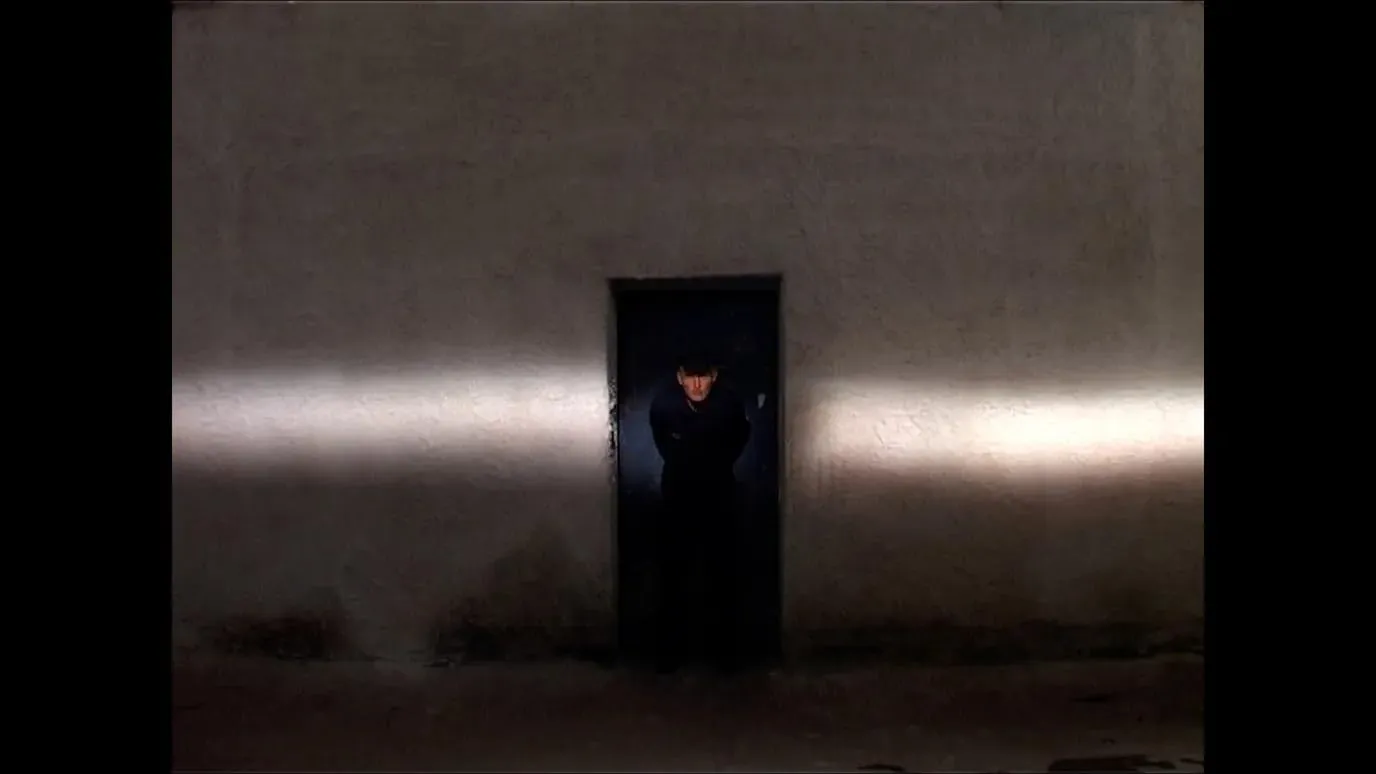
Silence takes on a role of its own, filling the void where answers might otherwise reside. The lack of a musical score heightens the quiet terror, leaving only the rhythmic echo of prolonged takes that stretch time to its limits. This silence exudes discomfort, as if the world itself were holding its breath in fear.
Amid this grim setting, dark humor emerges like a toxic bloom. The Slavic tradition of discovering absurdity in despair punctuates the narrative, with moments of dry wit breaking through the gloom like shards of sunlight. This humor does not provide relief; instead, it intensifies the fatalistic atmosphere, offering not lightness but a stark acknowledgment of life’s harsh ironies.
It is laughter born from resignation, a knowing smirk in the face of inevitable decline. The cynicism reflects both cultural and existential themes, acting as a mirror to a nation contending with the burden of history and the futility of its aspirations. Through this tonal interplay, La Palisiada crafts a fabric of unease, where even laughter carries an undercurrent of foreboding.
The Labyrinth of Truth: Sotnychenko’s Vision and the Enigma of the Title
Philip Sotnychenko’s La Palisiada unfolds as an exploration of duality, a film where reality blends with fiction and history serves as a mirror for the present. His aim is not simply to narrate but to unravel, exposing the frayed threads of justice and identity in a society marked by its past.
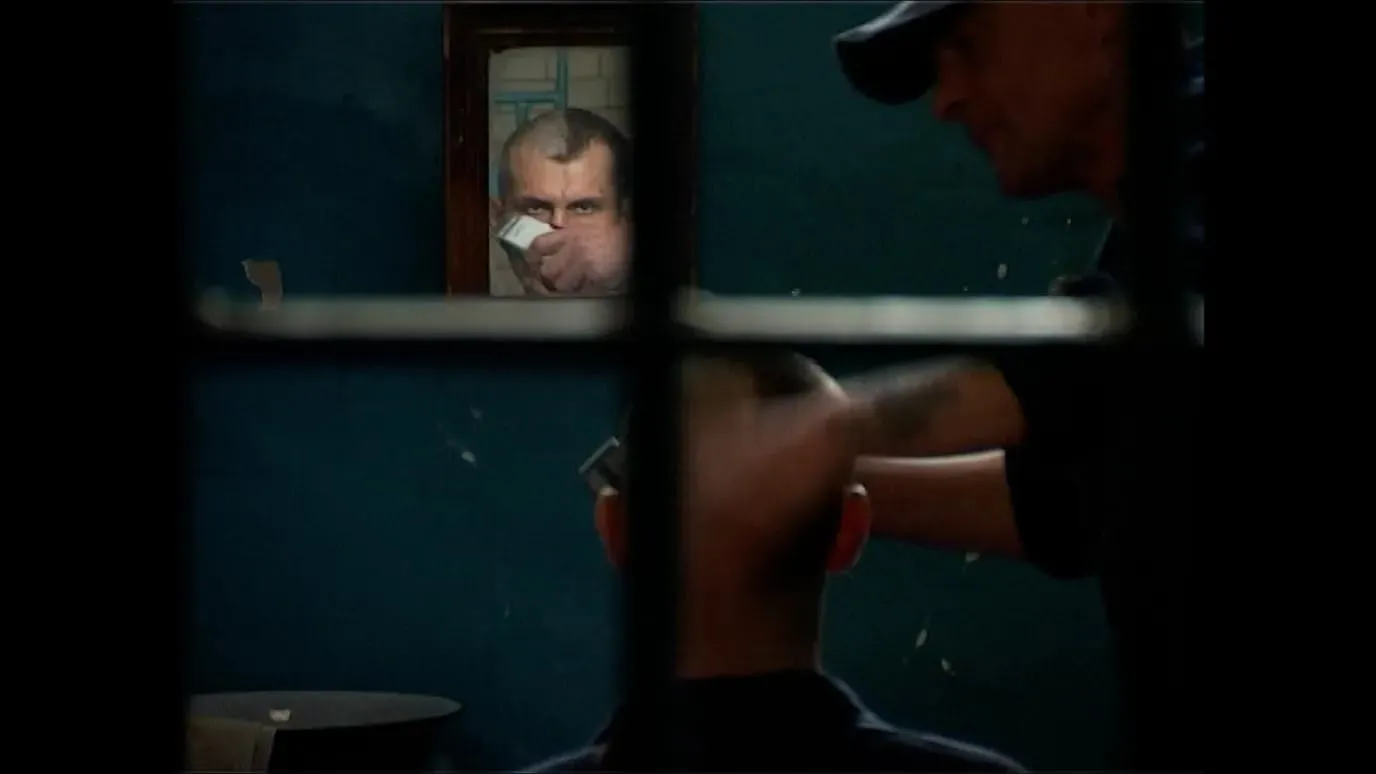
By combining archival aesthetics with a fragmented narrative, Sotnychenko critiques the futility of seeking truth within systems founded on power and expediency. The film’s broken structure reflects generational trauma, each frame resonating with the cyclical nature of societal failures and the challenge of fully separating oneself from history.
The title, La Palisiada, enhances the film’s thematic depth, serving as a linguistic fusion that encapsulates its philosophical critique. Drawing from “lapalissade,” a statement so obvious it approaches absurdity, and “policiada,” a police narrative, the title offers a paradoxical commentary on the workings of justice.
It mirrors a system where repetitive truths and performative actions sustain rather than resolve injustice. In this interplay of language, the film critiques the ineffectiveness of legal frameworks and the human inclination to obscure clarity with rituals of authority. Sotnychenko employs his title as a code, urging viewers to question not only the narrative on screen but also the stories we accept in our own lives.
Echoes Beyond the Frame: The Legacy of La Palisiada
La Palisiada is less a film and more a haunting echo, a spectral reflection on identity that transcends its narrative limits. As an expression of Ukrainian cinema’s emerging voice, it vibrates with the urgency of a nation grappling with its fragmented past and uncertain future.

Sotnychenko captures the essence of a time and place while also conveying the existential burden carried by a society in transition. Through its disjointed storytelling and grainy visual style, the film acts as a mirror for Ukraine’s complexities—a nation caught between the remnants of Soviet influence and the fragile promise of European modernity.
This work is not simply a film for Ukraine; it serves as a global parable, exploring the universal struggle to reconcile history with advancement. By rejecting linear narratives and tidy resolutions, La Palisiada urges audiences to embrace discomfort and linger in ambiguity.
Sotnychenko’s debut marks a bold new voice in European cinema, a director unafraid to blur lines and challenge expectations. His work stands as a testament to the ability of experimental storytelling to provoke, unsettle, and enlighten.
Through its fragmented structure and philosophical depth, La Palisiada invites a reevaluation of what cinema can accomplish. It points to a future where art does not merely entertain but questions, where narrative conventions yield to a raw, unfiltered exploration of human truths. Sotnychenko’s journey is just beginning, but his work already resonates as a declaration—a quiet yet resolute act of cinematic defiance.
The Review
La Palisiada
La Palisiada is a captivating, unsettling examination of justice, memory, and identity. Through its fragmented narrative and haunting visuals, Sotnychenko creates a meditation on the cyclical nature of history and the indistinct boundaries between truth and fiction. Although its ambiguity and experimental style may distance some viewers, it offers rich philosophical insights to those ready to accept its dissonance. Serving as both a reflection of Ukraine’s history and a daring statement in international cinema, it invites reflection and consideration—a ghost story of a nation and its unresolved traumas.
PROS
- Innovative use of vintage VHS-style cinematography that immerses viewers in the 1996 setting.
- Philosophically rich themes exploring justice, generational trauma, and societal identity.
- Bold narrative structure that challenges conventional storytelling.
- Haunting tone with minimal score and powerful visual symbolism.
- A culturally significant reflection on Ukraine's history and identity.
CONS
- Disjointed narrative may confuse or alienate viewers seeking clarity.
- Ambiguity in character relationships and plot connections may feel unresolved.