




























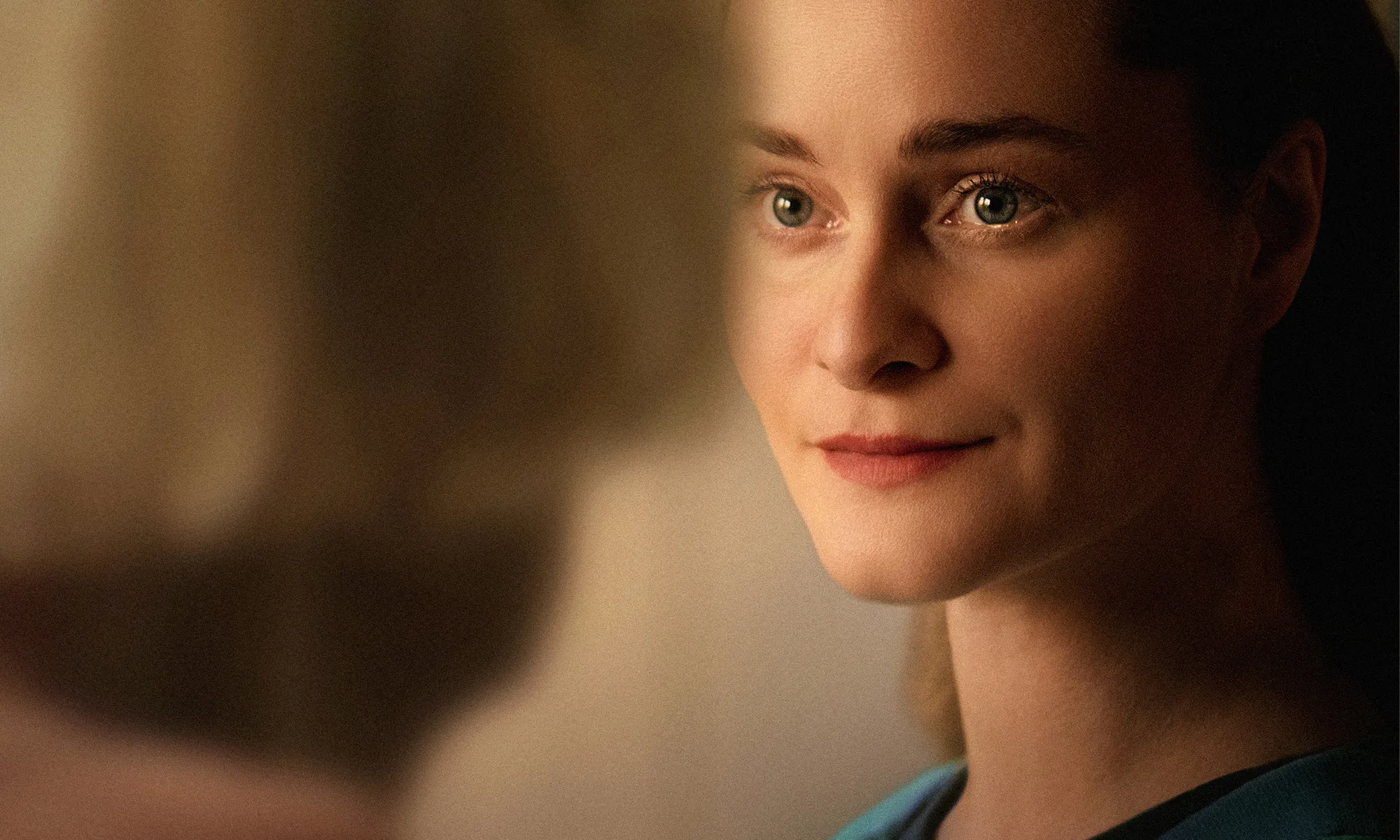

When Sofie pauses in the dim hallway of her first home‑care appointment—coat collar turned up against a chill she barely feels—the camera lingers on her uncertain grip of the doorframe. Home Sweet Home (2025), written and directed by Frelle Petersen, places us in rural Southern Jutland just as a new single mother, Sofie (Jette Søndergaard), takes her first hesitant steps into a profession that demands both precision and compassion. Her ten‑year‑old daughter, Clara (Mimi Bræmer Dueholm), waits at home for a mother who is already half‑gone.
Petersen’s film unfolds through long, observational takes that treat domestic interiors as stages for emotional shifts. Sofie’s world, at once orderly and fragile, is defined by the modest buildings she enters and exits—each visit a micro‑drama in itself. These early scenes establish the tight rhythm of her routine: through door clicks and careful medical checks, we feel the gentle pull of purpose alongside the tug of personal obligation.
In introducing Home Sweet Home, this review will trace how Petersen constructs his narrative architecture, examines Sofie’s evolving character arc, and situates the film within a growing trend of intimate, character‑driven dramas that refuse grand gestures yet reveal profound human truths.
Mapping the Story’s Arc
Petersen lays the groundwork with a carefully measured exposition. Sofie’s life beyond work is sketched in brief but telling strokes: a recently finalized divorce, the unsteady handshake of shared custody, and Clara’s hopeful glance at the breakfast table.
Transitioning to her first day at the agency, we move through a concise training montage—far from Rocky’s triumphant music, this one hums with the quiet buzz of fluorescent lights and clipped instructions from a no‑nonsense supervisor. By funneling us through protocols and wardrobe fittings, Petersen both orients us and hints at the regimented world Sofie is stepping into.
As the narrative gains momentum, early successes double as character beats. Sofie’s gentle rapport with clients—tending to a dementia patient’s jigsaw puzzle or sharing a stolen slice of cake—feels earned, thanks to Søndergaard’s warm yet focused performance. But the story doesn’t shy away from its grittier side: a stoma change, a shift ending in soiled linens, and a formal complaint from a client’s daughter. These moments—presented without melodrama—escalate the stakes by contrasting the dignity Sofie strives to preserve with the indignities she must absorb.
At the midpoint, physical markers of strain emerge: pale skin, dark circles, hands that hesitate before they help. Simultaneously, Clara’s resentment surfaces in terse exchanges at the school gate, exposing fault lines in their co‑parenting arrangement. The film’s structure here mirrors Sofie’s unravelling focus, crosscutting domestic tension with company memos demanding efficiency.
The climax arrives in a terse office showdown, where Sofie’s supervisor urges her to drop the complaint. A subsequent emotional confrontation—this time with a colleague whose sloppiness jeopardizes a patient—serves as her breaking point. In the falling action, Sofie reframes “home sweet home” during one final visit, offering a quiet gesture of understanding that resonates beyond the frame, suggesting both small solace and lingering uncertainty.
Empathy, Isolation, and the Machinery of Care
Petersen stages a quiet tug‑of‑war between empathy and exhaustion. Sofie’s early visits brim with small kindnesses—a gentle hand on an arthritic shoulder, a shared smile over tea—but each act of warmth deposits a small toll. Repeatedly dressing a stoma or changing soiled linens, she absorbs indignities that erode her reserve. These sequences register less as shock moments and more as incremental wear, tracing the arc from compassion to fatigue.
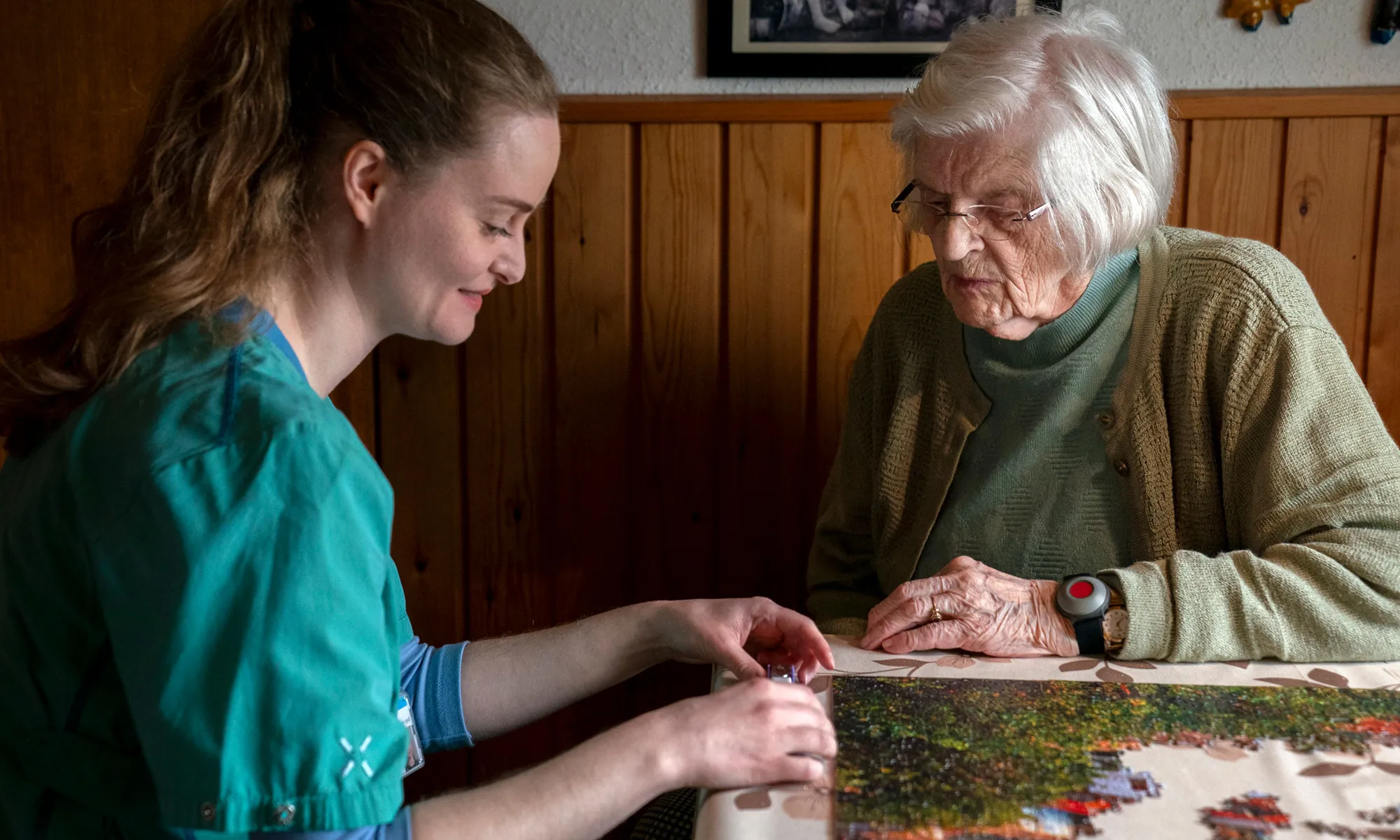
Loneliness threads through both ends of the age spectrum. Sofie, a single mother balancing shifts and custody exchanges, drifts through her days in near‑parallel solitude to her clients, who fill hours with jigsaw puzzles and unanswered calls. Petersen cuts between a silent Clara at the breakfast table and an elderly patient’s half‑completed puzzle, underscoring how separation manifests in different forms—abandonment at home and social invisibility in old age.
The film’s title takes on ironic weight. Interiors that promise comfort morph into cages: narrow hallways of client homes, corridors of bureaucracy. A family kitchen feels as forbidding as a care‑agency office when Sofie’s guilt over missed school events crashes into her next appointment. “Home” becomes a shifting concept, an emotional territory rather than a fixed address.
Beneath these personal dramas lies a critique of systems designed to squeeze time and budget. Agency memos demand efficiency, while administrators shrug off staff shortages with a shrug: “We take who we can get.” That offhand line crystallizes a broader malaise, where human need is measured in minutes per visit.
Through routine and rupture, Petersen reflects on caregiving’s double edge. Daily rounds ground the story in familiar rhythms, only to be shattered by a complaint or emergency. Sofie collects fragments of her clients’ lives—stories of abandonment, fleeting joy—in a role that turns her into witness and recorder. In the final scene, those collected testimonies echo back, reminding us that small gestures can offer brief reprieve, even when system‑wide change remains out of reach.
Mapping the Players
At the film’s heart is Sofie, brought to life by Jette Søndergaard with a precision that feels unforced. Her compassion reads in small gestures—a gentle touch on a client’s hand—while her dedication shows in the way she memorizes medical protocols. Yet Petersen’s script grants her room to falter.
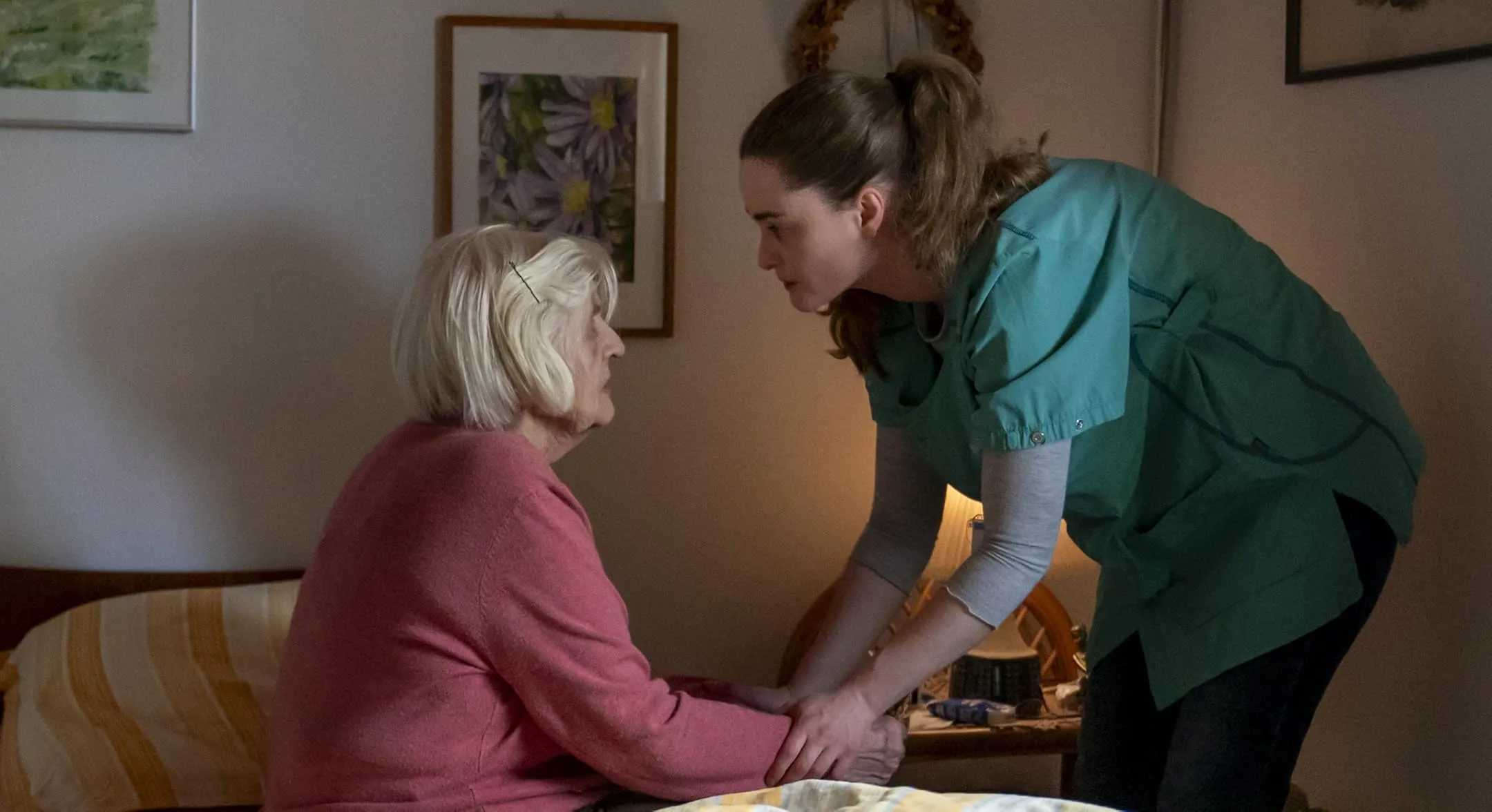
Perfectionism becomes a quiet vice: Sofie replays every misstep in her mind, unable to switch off even after clocking out. Visually, Søndergaard tracks this slide into fatigue: pallid complexion, dark circles that deepen with each scene. It’s a subtle gradation rather than a sudden crash, underscoring the film’s realism.
Opposite her is Clara, a ten‑year‑old rendered with surprising nuance by Mimi Bræmer Dueholm. Clara’s longing for maternal presence takes shape in stilted dinners and sharp glances before bedtime. A scene at the gymnastics tournament captures her conflict perfectly: she craves her mother’s cheer but recoils at the exhaustion etched on Sofie’s face. These moments anchor the emotional stakes, revealing co‑parenting as its own form of care work.
Beyond the central duo, Petersen populates his story with clients who rarely feel like props. Else, the dementia patient with her half‑finished jigsaw, becomes a metaphor for memory’s fragmentation—each missing piece echoing a life once whole. A lonely wife’s ritual of tea and sponge cake offers a brief tableau of joy amid hardship. And the TV‑lover, ever eager to discuss his favorite programs, injects levity without undercutting the patient’s vulnerability.
Antagonists arrive not as cartoon villains but as systemic irritants. Othea, the client’s daughter, wields her complaint like a scalpel, exposing the agency’s apathy. A coworker who cuts corners stands in stark moral contrast to Sofie’s ethic, amplifying her isolation when solidarity would serve her better.
Finally, supporting characters—fellow carers and a supervisor with the motto “we take who we can get”—embody the industry’s shifting landscape. As treatments and budgets tighten, team dynamics fray. Petersen’s ensemble reflects a broader trend in modern storytelling: ensemble casts that reveal systemic pressures through interpersonal friction rather than explicit commentary.
Direction and Visual Craft
Frelle Petersen treats the camera as a silent partner—inviting us to observe rather than judge. Scenes unfold in extended takes that give small interactions room to resonate. When sudden conflict erupts, it feels more jolting because it disrupts a measured rhythm.
He zeroes in on the mundane: a caregiver’s fingers easing a patient’s blanket, scissors trimming a bandage. These close‑ups turn routine tasks into moments of intimacy. At times, the stillness feels self‑aware, teetering between cinema vérité and polished drama.
Interiors double as emotional terrain. A client’s low‑ceilinged living room can feel snug at first, then claustrophobic as Sofie’s weariness builds. Wide shots of empty corridors—doors left ajar—highlight the drift between her private anxieties and professional demands.
The film’s palette leans toward slate and steel: walls, uniforms, even skin tones seem leeched of warmth. Occasional bursts of amber light—sunshine slanting through a kitchen window, the glow of a lamp over a tea tray—register as fleeting reminders of domestic comfort.
Pacing mirrors Sofie’s state of mind. Early sequences unfold with patient restraint; later scenes adopt choppier cuts, echoing her frayed focus. Transitions snap when emergencies intrude, underlining how thin the divide is between routine and crisis.
Sound design anchors us in the present. We hear a kettle’s whistle, puzzle pieces clicking together, the soft tread of slippers on linoleum. Moments of silence carry weight—every creak or sigh lands like a deliberate punctuation, emphasizing the film’s belief that the most powerful drama often resides in stillness.
Technical Precision and Performances
Jette Søndergaard anchors the film with a performance built on nuance. A raised eyebrow here, a tightening jaw there—she conveys Sofie’s inner turmoil without grand gestures. Her shoulders slump as exhaustion sets in, and her measured pauses speak volumes. Opposite her, Mimi Bræmer Dueholm captures Clara’s shifting loyalty with quiet realism. A simple glance at her mother over cereal carries the weight of unmet expectations.
The supporting ensemble adds texture. Non‑professional elder actors bring unscripted immediacy—fingers trembling over a jigsaw piece, a spontaneous laugh at an old joke. These moments feel lived‑in, grounding the narrative world. By contrast, Othea’s daughter, with her cold formality, injects a note of tension that unsettles without turning melodramatic.
Music appears sparingly: a solitary piano motif for solitude, then silence. Petersen lets ambient noise—coffee brewing, slippers on linoleum—fill the void. This choice amplifies the film’s realism and keeps us tuned to Sofie’s perspective.
Editing and sound mixing underscore the emotional bleed‑through between work and home. Crosscutting links a client’s lonely evening to Clara’s solitary homework. Wide, empty corridors emphasize isolation, while tight interiors heighten pressure. Together, these technical choices reflect Sofie’s fractured focus, reinforcing that in this world, every echo matters.
Resonance and Legacy
Petersen delivers a measured, empathetic portrait that sidesteps melodrama without losing its emotional core. The film’s strength lies in its steady observation of everyday moments—each act of care and each lapse into fatigue feels earned, thanks to a script that trusts both its characters and its audience. Rather than constructing a spectacle, Home Sweet Home invites us into quiet corners of life where dignity is both upheld and challenged.
By focusing on the micro‑conflicts of home care, the film sheds light on broader realities: the unseen labor that supports our aging population and the toll it takes on those who shoulder it. It prompts us to consider how policies and schedules shape human relationships, and how a single complaint can ripple through both professional standings and personal bonds.
Within Petersen’s body of work—following the intimate familial dramas of Uncle and Forever—this latest effort deepens his exploration of sacrifice and resilience. He continues to favor restrained storytelling over grand arcs, trusting that subtle shifts in character and setting can convey profound change.
This is a picture for anyone drawn to cinema that privileges lived experience over contrived twists. It speaks to viewers who appreciate character‑driven narratives and social realism, without demanding spectacle.
What does it mean to call a place home when the line between work and sanctuary blurs? How do we sustain compassion without losing ourselves in the process? Petersen leaves these questions open, inviting each of us to weigh the cost of care—in our communities and within ourselves.
Full Credits
Director: Frelle Petersen
Writer: Frelle Petersen
Producer: Jonas Bagger
Cast: Jette Søndergaard (Sofie), Karen Tygesen (Else), Mimi Bræmer Dueholm (Clara), Hanne Knudsen (Katrine), Finn Nissen (Jarl), Esther Muthoni Njogu (Zola)
Director of Photography (Cinematographer): Jørgen Johansson
Editor: Frelle Petersen
Composer: Flemming Berg
The Review
Home Sweet Home
Home Sweet Home succeeds as a quietly powerful character study, illuminating the hidden toll of home care through understated storytelling and authentic performances. Petersen’s deliberate pacing and Søndergaard’s nuanced portrayal combine to create an intimate, thought‑provoking experience that lingers long after the credits roll.
PROS
- Authentic performances that anchor the film’s emotional core
- Observational direction highlighting small, meaningful details
- Sound design and score that enhance realism without intruding
- Thoughtful exploration of caregiving’s systemic pressures
- Nuanced pacing that mirrors the protagonist’s mental state
CONS
- Tempo can feel uneven, especially in quieter stretches
- Limited dramatic escalation may not satisfy those seeking high stakes
- Understated tone risks slipping into subdued territory
- Secondary characters receive minimal development