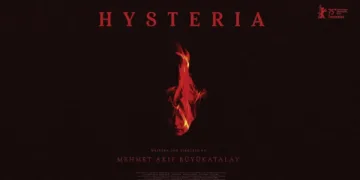
























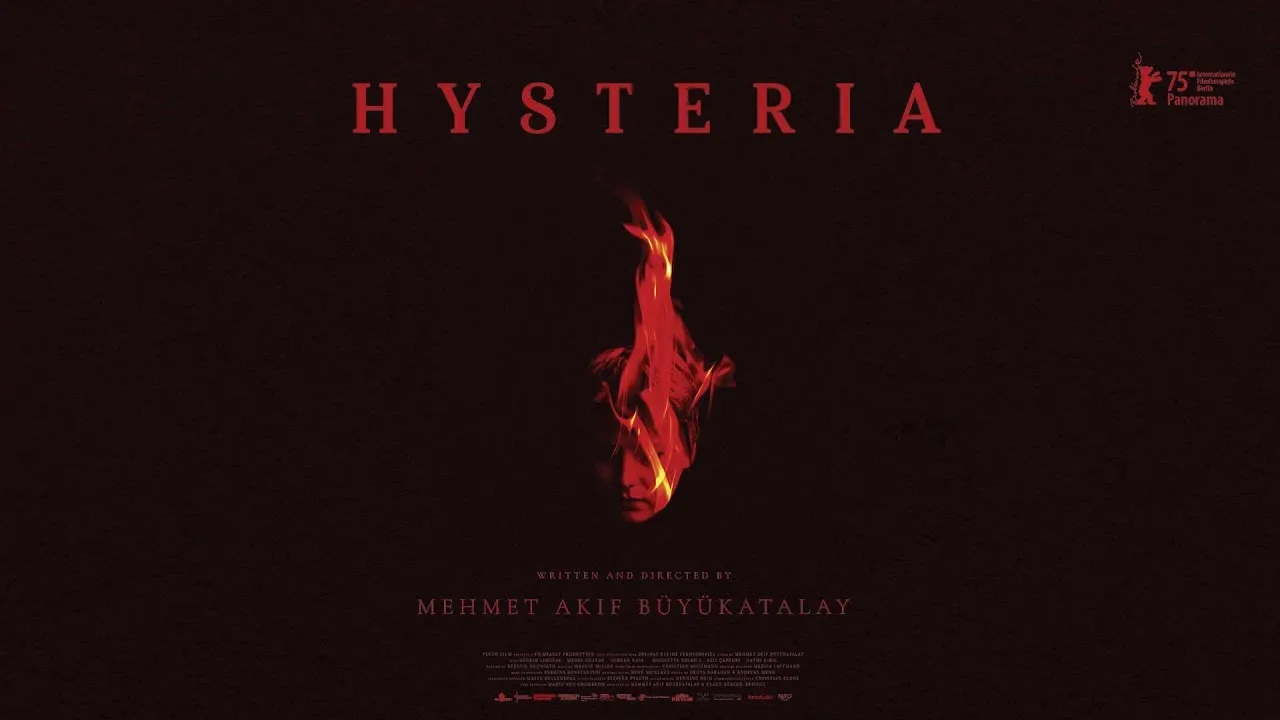

Mehmet Akif Büyükatalay’s Hysteria unfolds in a Berlin soundstage and a claustrophobic apartment, weaving Germany’s ongoing dialogue about migration into a self‑reflexive thriller. The film follows a crew shooting a reenactment of the tragic 1993 Solingen arson, when far‑right extremists set fire to a Turkish family’s home. After a charred copy of the Koran turns up among the props, extras recruited from a nearby refugee center voice their outrage, forcing the secular filmmakers to confront the ethics of staging sacred trauma.
At the center of this cultural fault line is Elif, a Turkish‑German intern whose career aspirations collide with mounting suspicion when she misplaces the apartment keys—and then discovers the master footage has vanished. By intercutting CCTV, Hi8 video and smartphone clips, the film shifts perspectives between director’s monitor, extras’ testimony and Elif’s panicked point of view, heightening a sense of moral ambiguity.
Moments of dark humor—crew members bickering over festival buzz—sit alongside sequences of silent dread, reflecting both German arthouse rigor and a global appetite for puzzle‑driven narratives. As Hysteria positions viewers in multiple roles—observer, suspect, outsider—it raises questions about who gets to tell these stories, and how cinematic form can both expose and obscure the legacies of history and faith.
Plot Mechanics: A Cross‑Cultural Narrative Blueprint
The opening of Hysteria feels almost interactive, laying out a “film‑within‑a‑film” scenario that recalls the modular mission design of a narrative adventure game. On a Berlin soundstage, a life‑sized charred house stands in for the 1993 Solingen arson, inviting viewers to inspect every soot‑blackened beam much like players examining environmental clues.
Key figures populate this staged world: Yigit, the director whose political lineage mirrors the moral choice systems in titles like Life Is Strange; Lilith, the producer whose bottom‑line focus echoes resource‑management mechanics; Elif, the intern caught between cultural identity and professional ambition; and the Muslim extras—Mustafa, Majid and Said—whose lived experiences serve as poignant side‑quests unaccounted for by the crew.
The inciting incident—the discovery of a burned Koran—functions as a narrative checkpoint that forces competing worldviews into sharp relief. Majid delivers a concise lecture on proper disposal rituals, an exposition beat reminiscent of lore entries in role‑playing games, while Mustafa frames the act as a “clean conscience” gambit by Western storytellers. Their theological reactions become branching dialogue trees, each response shaping the crew’s next move.
As Elif misplaces Lilith’s apartment keys and then the film’s master tapes, the plot shifts into a dual‑objective structure: recover the keys and locate the footage. Posting a “Lost Keys” flyer at a refugee center triggers a tense side‑mission when a stranger replies, turning Elif’s panic into a time‑sensitive stealth sequence. Suspicion mounts; Yigit’s accusing glances and Lilith’s terse phone calls play like enemy AI scripts adapting to player missteps.
Scattered CCTV snippets and halting smartphone voice notes function as collectible data logs, offering fragments that point toward multiple suspects. Elif’s career drive, Yigit’s performative activism, Lilith’s profit motive and the extras’ trauma all register as plausible “skill trees” for culpability.
In the apartment’s final showdown—where every character converges and motivations are laid bare—the structure mirrors multiplayer reveal moments in cooperative mystery games. Elif’s confession triggers a cutscene‑style reckoning, but questions linger: which cultural lens truly decoded the clues, and whose narrative remains untold?
Otherness, Identity, and the Politics of Memory
In Hysteria the burned Koran serves as a lens on who controls immigrant narratives. When extras like Mustafa object to its casual destruction, the film highlights conflicts between Western production values and those of displaced communities. Yigit’s decision to stage sacred trauma recalls debates in journalism over voice appropriation. Those exchanges expose imbalances in which stories reach international festivals.
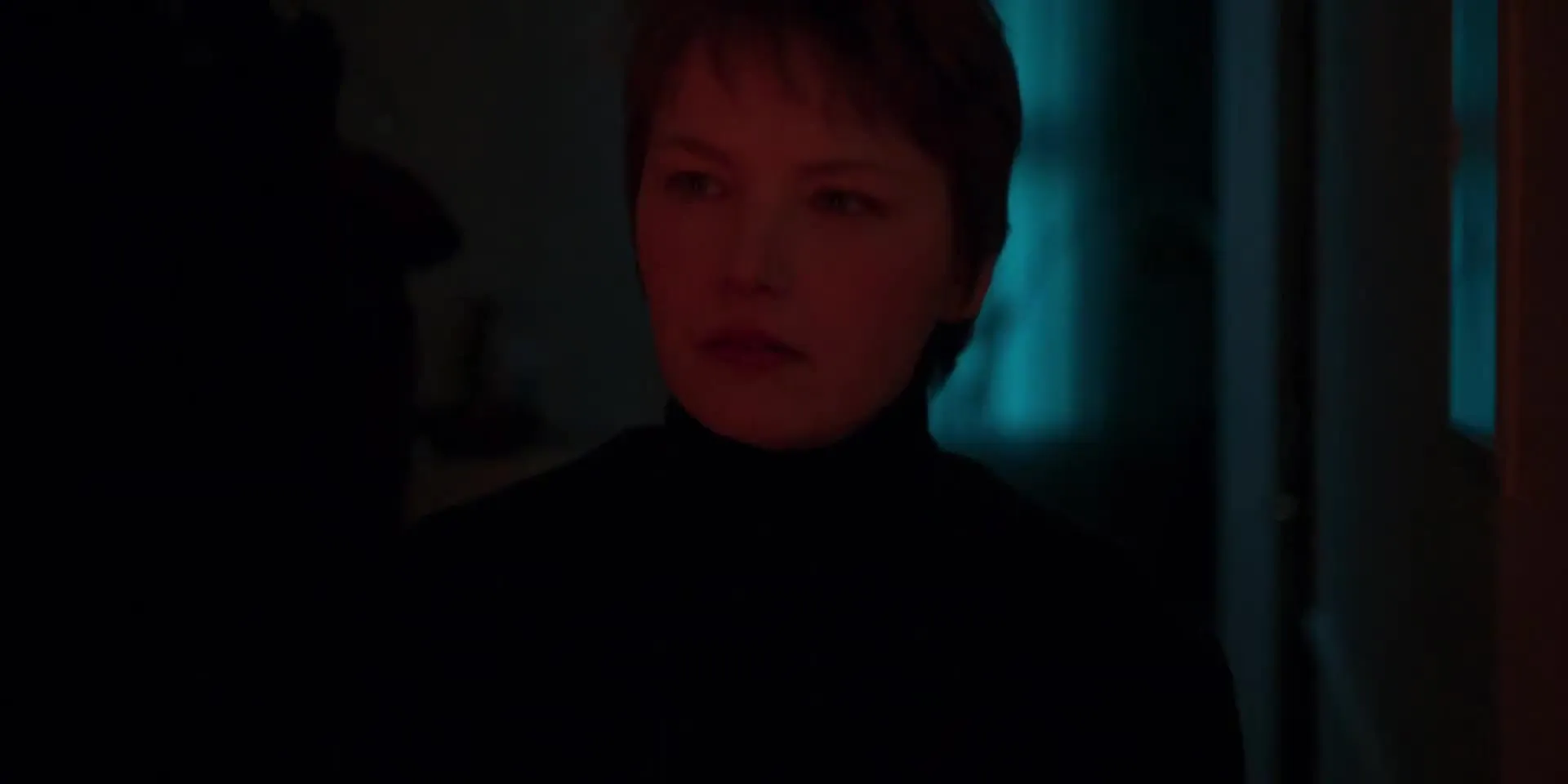
Ritual rules around disposing of holy texts come into direct conflict with the crew’s need for dramatic imagery. Majid’s insistence on proper rites reads like an ethical checkpoint system, insisting that cinematic license cannot overwrite belief. This tension echoes the reverence-versus-art clashes in Haifaa al‑Mansour’s Wadjda, where cultural codes resist purely aesthetic aims.
Elif’s ability to move between German mainstream and Turkish roots mirrors gamer avatars toggling between divergent skill trees. Her white-passing appearance grants her on-set access, yet her heritage continually places her under suspicion. Each lie she tells signals shifting alliances, and prompts questions about who can claim authenticity.
Lilith’s demand for festival-ready footage reduces extras to resource tokens, as though they were assets in a management sim. Yigit frames political protest as auteur signature, prompting suspicion that his convictions may serve personal branding. These creative hierarchies recall meta-narratives in Kojima Productions’ titles, where corporate demands clash with individual expression.
By reviving the 1993 Solingen arson, Hysteria unearths Germany’s still‑smoldering xenophobia. The missing tapes become an archive at risk, much like endangered oral histories. In this way the film asks who preserves collective pain—and who profits when that archive disappears.
Playable Personas: Character Dynamics and Cultural Codes
Elif emerges as a protagonist whose arc mirrors a player thrust from a tutorial phase into an unforeseen endgame. At first, her wide-eyed ambition and polished European veneer grant her on-set mobility, yet every misstep—losing keys, misplacing tapes—unlocks guilt-driven side quests that expose her hidden Turkish heritage. Her portrayal balances innocent desperation with a calculated will to survive, inviting viewers to track her choices much like branching dialogue trees in story-driven games.

Yigit occupies a liminal space between principled auteur and opportunist. As a director of Turkish descent, he codes scenes with political gravitas yet frames controversy as a personal badge of honor. His duality resembles NPCs who offer moral missions but reward players with reputation points, leaving us to question whether his stances serve genuine conscience or strategic career gain.
Lilith functions as the game’s economy manager, prioritizing festival buzz and distribution deals over ethical calibration. In calm sequences she issues crisp directives; by the climax, her tone shifts to defensive authority, akin to an AI overseer recalibrating strategies under threat. Her pragmatism exposes how production imperatives can override cultural sensitivity.
Mustafa and Majid serve as narrative modifiers, each delivering critical counterpoints to the crew’s secular framework. Mustafa, the aspiring filmmaker, critiques “migrant cinema” with sharp, journalistic clarity, while Majid invokes sacred disposal rites, triggering an ethical checkpoint that the crew fails to respect. Their interventions feel like unlocking cultural lore entries that challenge player assumptions.
Together, this ensemble forms a tension web reflecting broader societal divides. Their interactions flow like a multiplayer mystery, with alliances shifting as hidden motives surface. Chemistry and conflict propel the plot forward, yet the game board remains unsettled—who truly holds narrative control?
Cinematic Interfaces: Visual and Auditory Architecture
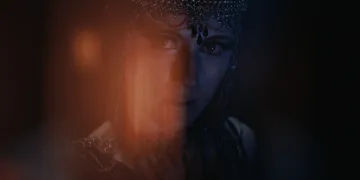
Christian Kochmann’s charcoal palette transforms the soundstage into a chiaroscuro labyrinth reminiscent of Berlin’s avant‑garde galleries and the stark lighting in Scandinavian noir. Employing Hi8 video for the Solingen reenactment not only roots the story in early ’90s analog aesthetics but also mirrors the lo‑fi textures of retro indie games, suggesting how media technology shapes collective memory. Integrated CCTV and webcam angles act like in‑game surveillance cams, granting multiple perspectives that fuse intimacy with unease—viewers become both observer and potential suspect.
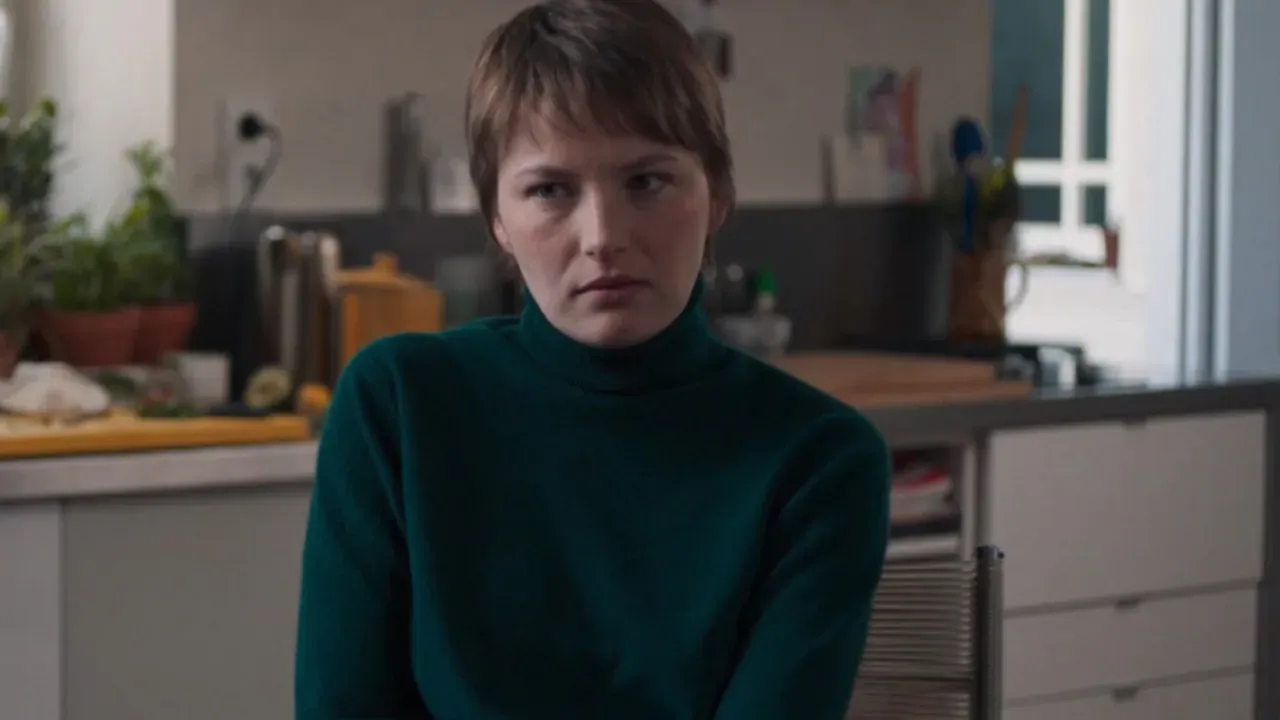
The editing stitches together surveillance snippets, phone‑screen captures and live apartment scenes in a rhythm that evokes quick‑time event sequences, strategically withholding full context until critical junctures. Sudden jump cuts sever continuity much like unpredictable enemy spawns, reinforcing the film’s tension by blurring scripted drama and spontaneous threat.
Marvin Miller’s plucked‑string score underpins this tense architecture, each isolated note amplifying the sense of an imminent breach. Diegetic sound—the hiss of on‑set explosions, creaking floorboards, the ping of incoming messages—underscores how technology mediates fear. Silence becomes a strategic interval, heightening every camera blink and restless shadow as though the film itself holds its breath in anticipation…
Temporal Traps: Pacing, Tension, and Genre Mechanics
Hysteria rolls out its mystery like a quest log, introducing suspects—Elif, Yigit, Lilith, Mustafa, Majid—each endowed with credible motives that echo the moral ambiguity in titles such as Disco Elysium. Clue‑dropping scenes feel like lootable evidence, from elusive Hi8 footage to overheard text exchanges, while red herrings—faulty CCTV loops, conflicting alibis—keep viewers guessing as if navigating a branching investigation tree.
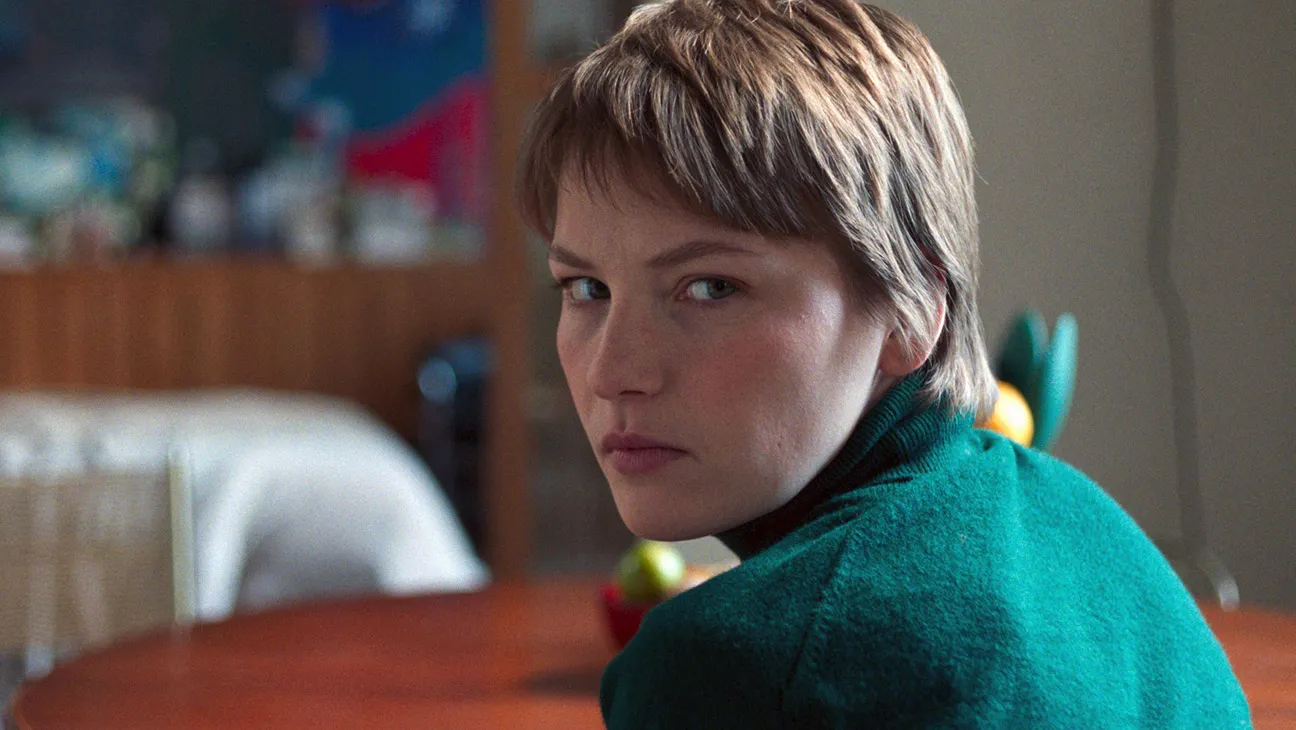
The apartment’s sealed‑in layout mirrors survival‑horror maps, where every locked door raises the stakes. Moments of implied terror—shadows slipping beyond frame, off‑screen voices—invoke real‑world anxieties of targeted violence, recalling the political dread in City of Ghosts (2017). Charlie Hebdo allusions surface as narrative mines rather than jump scares, underscoring how cultural flashpoints can serve both as thematic undercurrent and misdirection.
Bickering over festival strategy punctuates the tension with gallows humor, akin to the black comedy of Inside (2020). Elif’s Mac‑gadget improvisations—turning her laptop into a motion sensor—play like cheeky power‑ups, lampooning tech fetishism even as they heighten suspense. Satirical jabs at liberal guilt and arthouse pretension surface in Lilith’s offhand remarks, turning industry clichés into shrewd commentary.
From laptop‑spy cam sequences to rapid‑fire social‑media snippets, technology becomes both ally and threat. Each ping of a notification or glitchy frame shifts the balance of power, transforming modern communication tools into suspense engines that blur the line between surveillance and storytelling…
After the Credits: Verdict and Viewing Context
Mehmet Akif Büyükatalay’s sophomore feature demonstrates an agile fusion of social critique and genre flair, anchored by Devrim Lingnau’s layered performance. The film excels at unearthing the tensions of immigrant representation and employing hybrid visual textures to revisit historical wounds. Occasionally, its ambitious plotting loosens the narrative grip, and the climax leans toward overt explanation at the expense of sustained mystery.
This story will appeal to arthouse audiences and festival programmers drawn to politically infused thrillers, as well as to viewers exploring postcolonial media critique or faith portrayed on screen. Its structural echoes of interactive mystery games underscore how control shifts among characters, reflecting cultural power struggles.
Some may bristle at its explicit debate sequences, while others will appreciate its refusal to sidestep thorny ethical questions. Lingnau’s Elif stands out as a moral keystone: her calculated missteps and moments of vulnerability crystallize the film’s proposition—that identity and authorship remain contested terrains within any narrative camera frame.
The Review
Hysteria
Hysteria delivers a gripping, genre‑blending thriller that tackles cultural tensions with intelligence and dark humor. Though its finale occasionally strains under explicit exposition, the film’s visual ingenuity, tense pacing, and Lingnau’s compelling lead performance make it well worth watching.
PROS
- Tense, multi‑perspective mystery structure
- Devrim Lingnau’s nuanced lead performance
- Creative use of Hi8, CCTV and webcam footage
- Sharp critique of cultural representation
- Dark humor that undercuts suspense
CONS
- Complex plot threads can become tangled
- Climax leans heavily on overt explanation
- A few supporting characters feel underwritten
- Occasional tonal shifts affect momentum