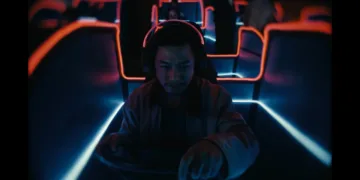









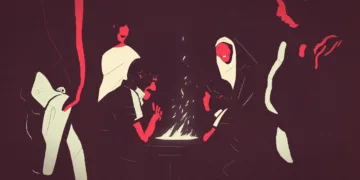
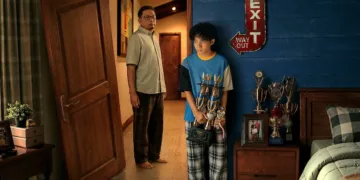





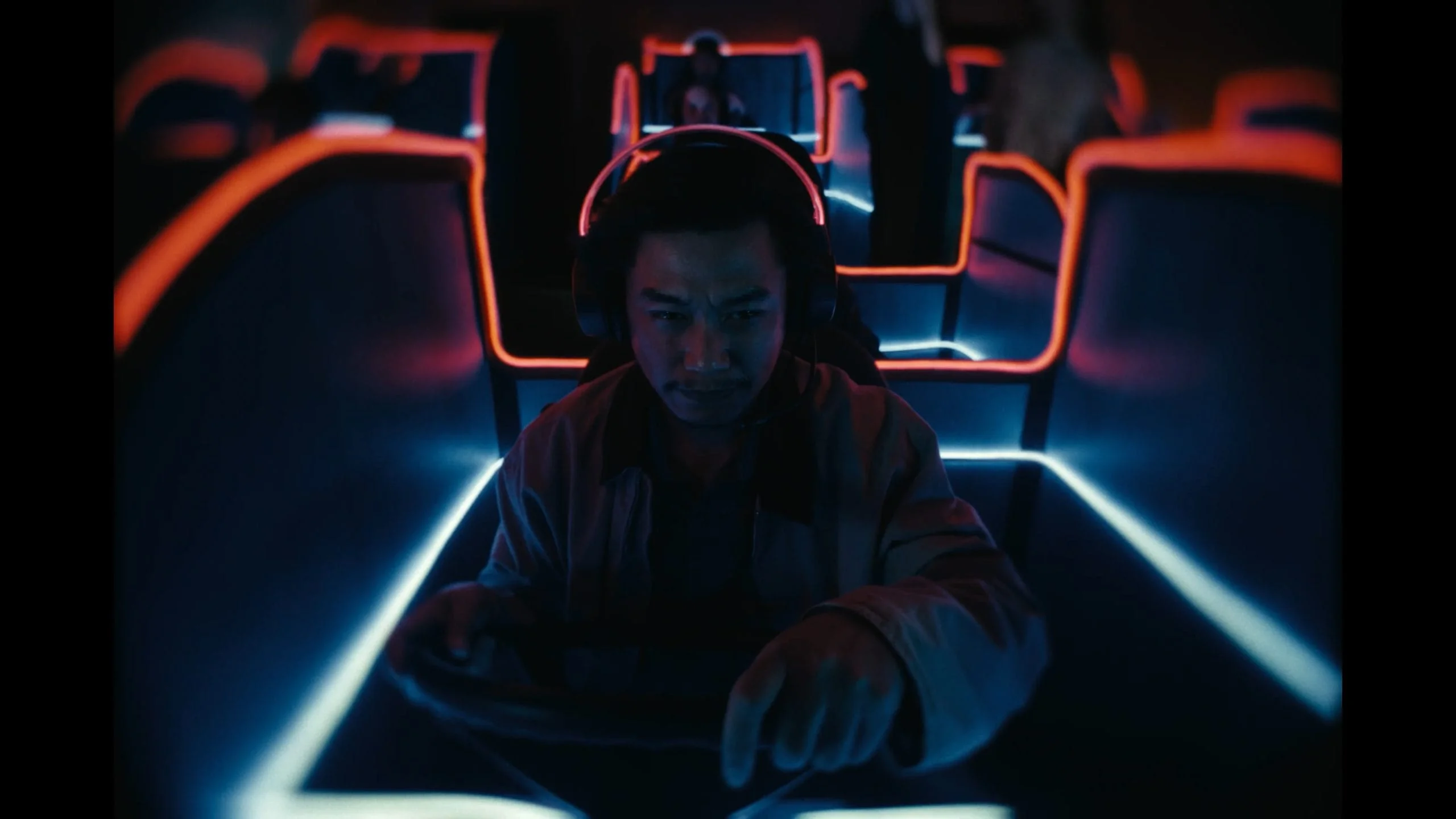

Relief is the unsettling feeling in John Torres’s The Remotes. At a seminar for reckless drivers, students sit before detached steering wheels lit like gaming equipment and listen to a voice that promises to guide them. It sounds different to each person: gentle to one, nagging to another, almost like someone they have lost. The invitation to let go of control has an obvious danger, but Torres gives it a quieter appeal first. For someone exhausted by their own thoughts, following instructions might feel wonderful.
Eva Cantero (Julia Richards) supplied the voice for the app, and her sister Gill (Gabby Padilla) knows the fear of a body that seems to act without permission. Eva’s voice also resembles that of their dead mother. Those connections make the seminar harder to dismiss as a sinister technology scheme. Comfort, memory, and control have already become tangled in this family before anyone gets behind a wheel. The app offers its users a way to stop struggling for a while; the Canteros give that promise a human sound.
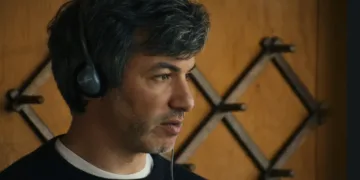
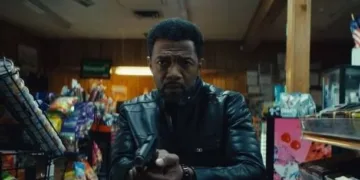
Detective Mijares (Alchris Galura) is trying to understand a series of road deaths associated with the app. His wife died in a car accident a year earlier, and he is preparing to leave the country, yet he enrolls in the seminar rather than put the case down. Galura’s subdued presence and Mijares’s weary narration make the investigation feel less like a race toward a culprit than an attempt to live with a question he cannot set aside. A conventional police story would let each lead bring him nearer to an answer. Here, an apparent connection can draw him further into the past.
 Torres makes that uncertainty something you hear. Voices recur across different people, narration drifts close to remembered speech, and at one point the people around Mijares seem to speak with traces of his dead wife’s voice. The brooding score leaves room for those sounds to trouble each other. You can understand why a clue would become irresistible to him when a stranger’s words might also feel like contact with someone he misses. The film places us near that state of mind without asking us to accept every suspicion as fact.
Its images have a similar hold. A house changes color when a phone connects to speakers in its walls, making an ordinary domestic space respond to a device as though it were listening. The illuminated driving simulators look inviting and faintly ridiculous beside the worn roads and concrete buildings outside. Torres does not build a pristine future around his dangerous app. He puts it among places already marked by use and neglect, then lets the strange light and sound make those places unfamiliar. The contrast gives the speculative idea a lived-in quality that a showroom version of this story would lose.
The film also asks us to experience some of the surrender its characters seek. Its chronology is difficult to fix at first, and repeated lines can seem to belong to different minds. Mijares gathers fragments while we work out when a scene happened or whose thought we are hearing. That approach can be absorbing: an image or sound lingers because its place in the story remains uncertain. Torres trusts viewers to stay with a feeling before they can name its cause, a generous demand for a film that moves at this unhurried pace.
Over more than two and a half hours, though, that trust is strained. The uncertainty surrounding Mijares’s investigation is often fruitful because it lets grief interfere with detection. Later passages can leave an emotional development waiting while we sort out the order and ownership of what we have seen.
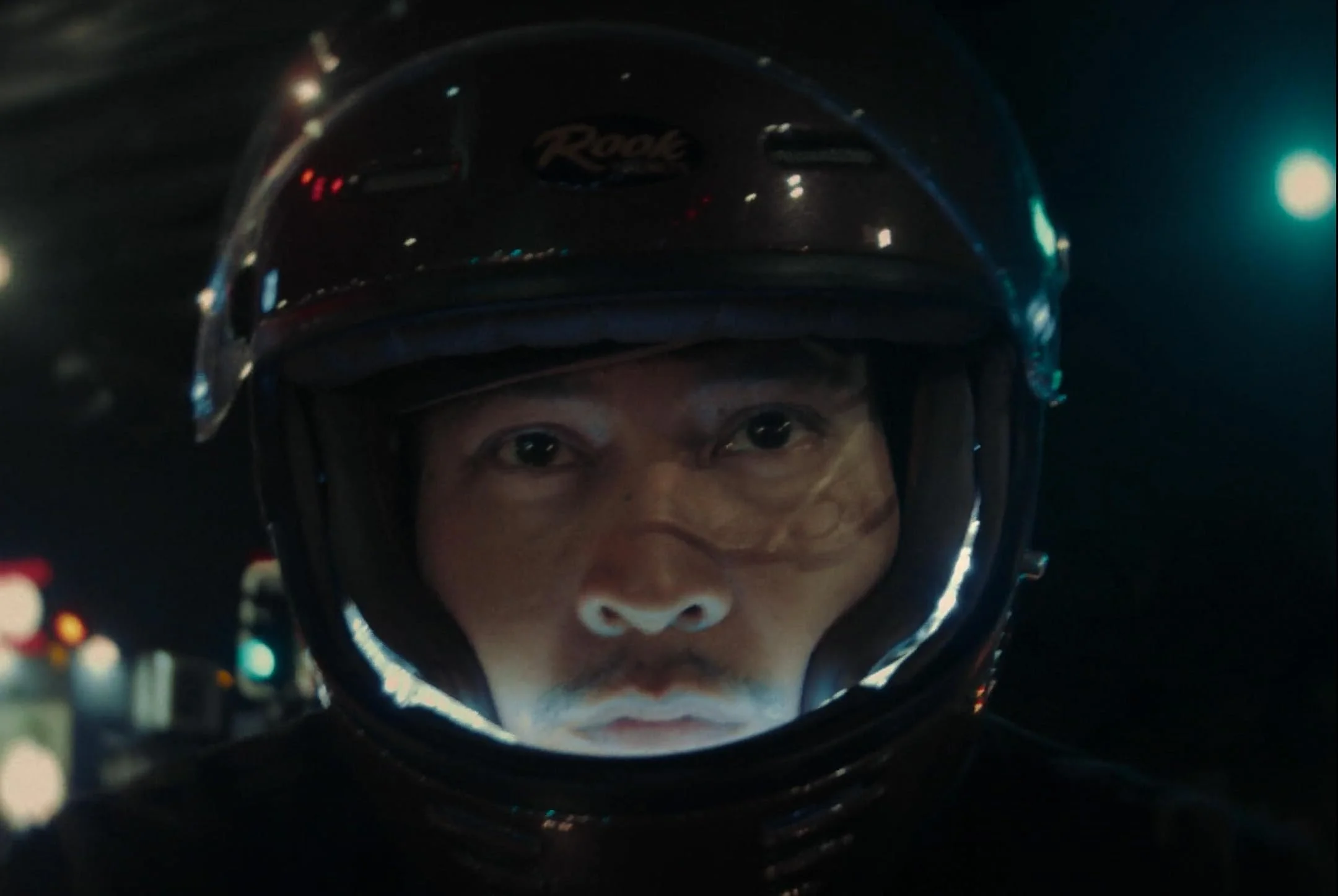
Donnie (Enchong Dee), a motorcyclist drawn toward dangerous rides and entangled with Eva, gives the film another person who finds an allure in surrender. Yet the late movement involving him and Eva brings some of the mystery into plainer focus while the film continues to circle it. The explanation and the lingering disorientation do not always strengthen each other.
I would still make time for The Remotes, especially for viewers who like a genre film willing to let its atmosphere alter the way its story is understood. Its strongest stretches make it easy to feel the attraction of an app you know you should distrust. Its weaker ones ask for patience after that attraction has begun to fade. The unease that lasts comes from a smaller possibility than the mystery of what caused each crash: Mijares may recognize a voice well enough to follow it, without ever knowing whose guidance he has accepted.
The Remotes world-premiered at the Toronto International Film Festival on September 11, 2026. The surrealist neo-noir thriller follows a grieving detective investigating a string of strange accidents linked to a sinister, voice-guided navigation app.
Where to Watch The Remotes (2026) Online
Full Credits
Title: The Remotes
Distributor: Los Otros Films, Project 8 Projects, This Side Up
Release date: September 11, 2026 (Toronto International Film Festival)
Running time: 2 hours 33 minutes (153 minutes)
Director: John Torres
Writers: John Torres, Dodo Dayao
Producers and Executive Producers: Shireen Seno, John Torres, Sherad Anthony Sanchez
Cast: Alchris Galura, Enchong Dee, Gabby Padilla, Julia Richards, Jorrybell Agoto, Jhoanna San Juan, Alcris Galura, John Torres
Director of Photography (Cinematographer): Tristan Salas
Editors: John Torres
The Review
The Remotes
The Remotes makes surrender feel tempting before it becomes frightening. Its shifting voices, worn streets, and responsive spaces draw us close to Mijares’s grief, even when his investigation loses its bearings. The long final stretch sometimes asks us to untangle events when we need to feel their impact. Still, Torres creates a film whose strange comforts are hard to shake.
PROS
- An affecting link between grief and the app’s appeal
- Distinctive sound and lived-in visual design
- - An absorbing, uncertain investigation
CONS
- The lengthy final stretch strains patience
- Disordered chronology blunts some emotional moments
- - Late explanations sit awkwardly beside lingering ambiguity