






























Hallmark’s “The Motherhood” arrives at a moment when American television seems particularly invested in redefining what support systems look like for the modern family. Host Connie Britton, drawing from her own 2011 adoption experience, positions herself as both guide and fellow traveler in this exploration of single motherhood’s complex terrain. The show gathers six Kansas City-area single mothers at a farm mixer, establishing its central premise that isolation—not inadequacy—lies at the heart of contemporary parenting struggles.
The intervention comes through “The Neighbor Ladies”: Destini Davis, a parenting coach who reframes self-care as essential rather than selfish; Taryn Hicks, who transforms personal style within realistic budgets; and Angela Rose, whose home design work carves out sacred spaces for maternal identity beyond child-rearing. Each expert represents a different facet of the show’s core argument that single mothers haven’t lost themselves—they’ve simply forgotten how to access the person beneath the parent.
This Kansas City setting isn’t incidental. The show’s location choice, tied to Hallmark’s headquarters, creates a deliberate aesthetic of heartland wholesomeness that both supports and complicates its message about modern motherhood’s challenges.
The Architecture of Transformation: Format as Cultural Commentary
The 42-minute episodic structure reveals television’s ongoing tension between authentic process and consumable entertainment. “The Motherhood” adopts the visual language of makeover television while attempting to subvert its more superficial impulses. The show’s pacing creates space for genuine community building among participants, suggesting that transformation happens not through expert intervention alone but through peer connection and shared experience.
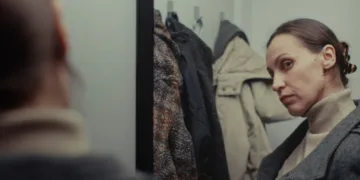
Symbolic moments like participant Tasha Riggins choosing between “Mom” and “Tasha” nameplates for her coat rack function as television shorthand for deeper identity work. These manufactured turning points serve the medium’s need for dramatic beats while pointing toward legitimate psychological processes. The show’s commitment to showing mothers supporting each other between expert sessions suggests an awareness that sustainable change requires ongoing community rather than temporary professional guidance.
The reveal format, a staple of makeover television, takes on different meaning here. Rather than dramatic before-and-after comparisons, the show presents integration—women who have found ways to honor both their maternal and individual selves. This subtle shift in presentation reflects broader cultural movements toward viewing motherhood as expansion rather than sacrifice of identity.
Surface Remedies for Systemic Challenges
The show’s treatment of single motherhood walks a precarious line between empowerment and oversimplification. While participants like Tasha Riggins receive genuine support for boundary-setting with her five-year-old daughter Busy, the program’s scope reveals the limitations of individual-focused solutions to structural problems. The emphasis on style transformation and home organization, while personally meaningful, sidesteps the economic and social policies that would more substantially improve single mothers’ daily realities.
The “it takes a village” philosophy sounds progressive until examined against the show’s actual implementation. True village-building requires sustained community investment, not temporary television intervention. The program’s strength lies in demonstrating how women can support each other through shared experience, yet its format prevents exploration of how such support systems might be built and maintained outside the artificial construct of reality television.
The show’s handling of co-dependency issues between mothers and children reveals both insight and limitation. While experts correctly identify patterns that serve neither parent nor child, the solutions offered—better organization, clearer boundaries, personal style updates—address symptoms rather than the underlying exhaustion and isolation that create these dynamics. The question of sustainability looms large: can these transformations withstand the return to pre-show circumstances?
The Hallmark Paradox: Sincerity Within Commercial Constraints
Connie Britton’s presence brings gravitas to material that could easily drift toward exploitation. Her own experience with single motherhood provides authenticity that transcends the show’s occasionally stilted production values. The “Neighbor Ladies” demonstrate genuine expertise and emotional intelligence, though their interventions remain bounded by television’s time constraints and commercial imperatives.

The Kansas City setting creates visual warmth that supports the show’s message about community and connection. Yet this same aesthetic choices mask the economic realities facing many single mothers—the participants featured appear to have achieved middle-class stability that isn’t representative of single motherhood’s broader demographics. This selective representation limits the show’s cultural impact while making it more palatable to Hallmark’s target audience.
Product placement, particularly around clothing and home goods, threatens to undermine the show’s sincerity. When transformation becomes tied to consumption, the message shifts from internal empowerment to external solutions. The show succeeds most when it focuses on relationships and self-perception rather than material transformation.
“The Motherhood” represents television’s attempt to address contemporary social issues through the familiar framework of makeover programming. Its success lies in demonstrating that single mothers deserve support and community recognition. Its limitations reflect the medium’s inability to address the structural changes that would most meaningfully improve their lives. For viewers seeking representation of single motherhood’s challenges, the show offers validation. For those hoping television might catalyze broader social change, it provides a starting point rather than a solution.
The Motherhood explores the lives of single mothers, focusing on the challenges they face while balancing work, family, and self-care. Hosted by Connie Britton, who is also a single mother, the show aims to provide support and guidance to these women through expert coaches specializing in areas like home design, parenting, and style. The Motherhood premiered on May 5, 2025, with two episodes, followed by weekly episodes through June 2nd, airing on Hallmark Channel.
Full Credits
Host and Executive Producer: Connie Britton
Executive Producers: David Collins, Rob Eric, Renata Lombardo, Michael Williams, Larissa A.K. Matsson
Head of Production: Rita Doumar
Associate Producer: Amber Sammet
Director of Photography: Peter Horn
Editors: Jason S. Berlin
Casting Director: Goloka Bolte
Art Director: Tom Wyman
Makeup Artist: Staci Broski
Sound Department: Ty Higgins
Visual Effects: Robert Uncles, Thomas Uncles
Costume Department: Lauren O’Bannon
Colorist: Cory McMahan
Cast: Connie Britton, Angela Rose, Destini Ann, Taryn Hicks
The Review
The Motherhood
"The Motherhood" succeeds as sincere representation of single motherhood's emotional challenges while failing to address its structural realities. Britton's authentic hosting and genuine community building between participants elevate material that could easily become exploitative. The show's heart is in the right place, but its solutions remain frustratingly surface-level. Worth watching for its compassionate portrayal of maternal struggle, less valuable as a blueprint for meaningful change.
PROS
- Authentic representation of single motherhood challenges
- Genuine community building between participants
- Connie Britton's credible, empathetic hosting
- Focus on identity beyond motherhood
- Warm, inviting production values
CONS
- Superficial solutions to systemic problems
- Limited demographic representation
- Commercial constraints undermine sincerity
- Sustainability of transformations questionable
- Avoids addressing economic realities