























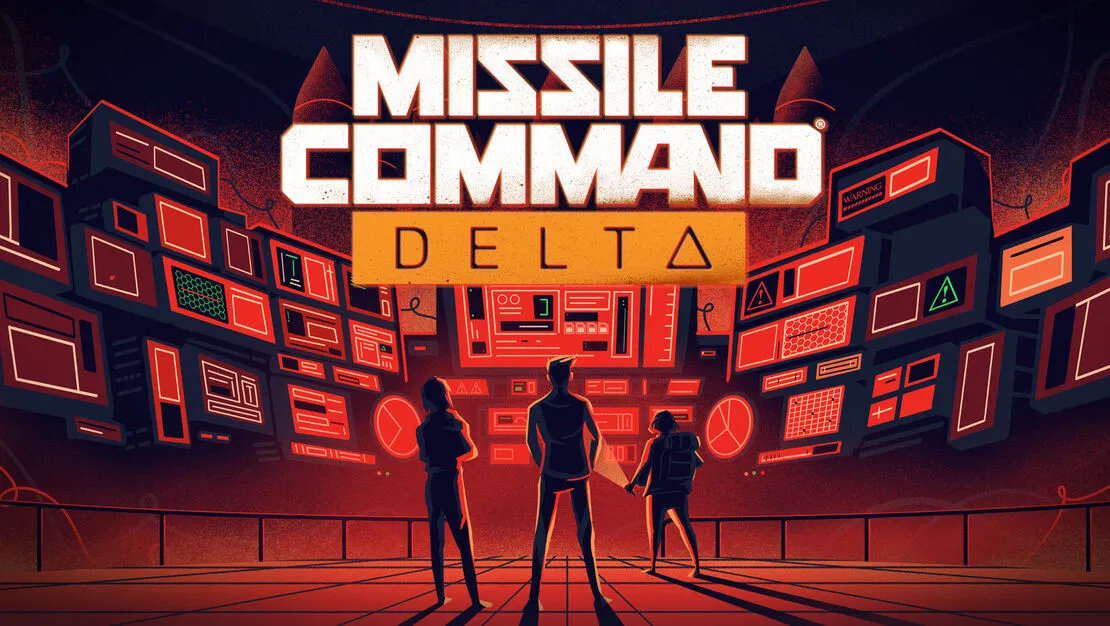

The specter of the Cold War has haunted global cinema and games for decades, a source of stark, existential dread. The original 1980 arcade classic Missile Command was a direct product of that anxiety, a frantic ballet of panicked defense against inevitable annihilation.
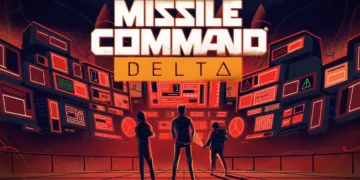
Missile Command Delta revisits this artifact not as a faithful restoration, but as a peculiar cultural translation. It splits its identity down the middle, creating a curious hybrid. One half is a coolly methodical, turn-based strategy game. The other is a first-person narrative adventure, filtering the apocalypse through a contemporary young-adult lens.
We are introduced to teenagers who, on a dare, find themselves trapped in a relic of a past conflict. As alarms blare, they are thrust into the role of defenders, operating the bunker’s archaic terminals to fend off a modern attack. The premise immediately recasts a historical fear within a familiar, globalized storytelling trope.
The Geometry of Paranoia
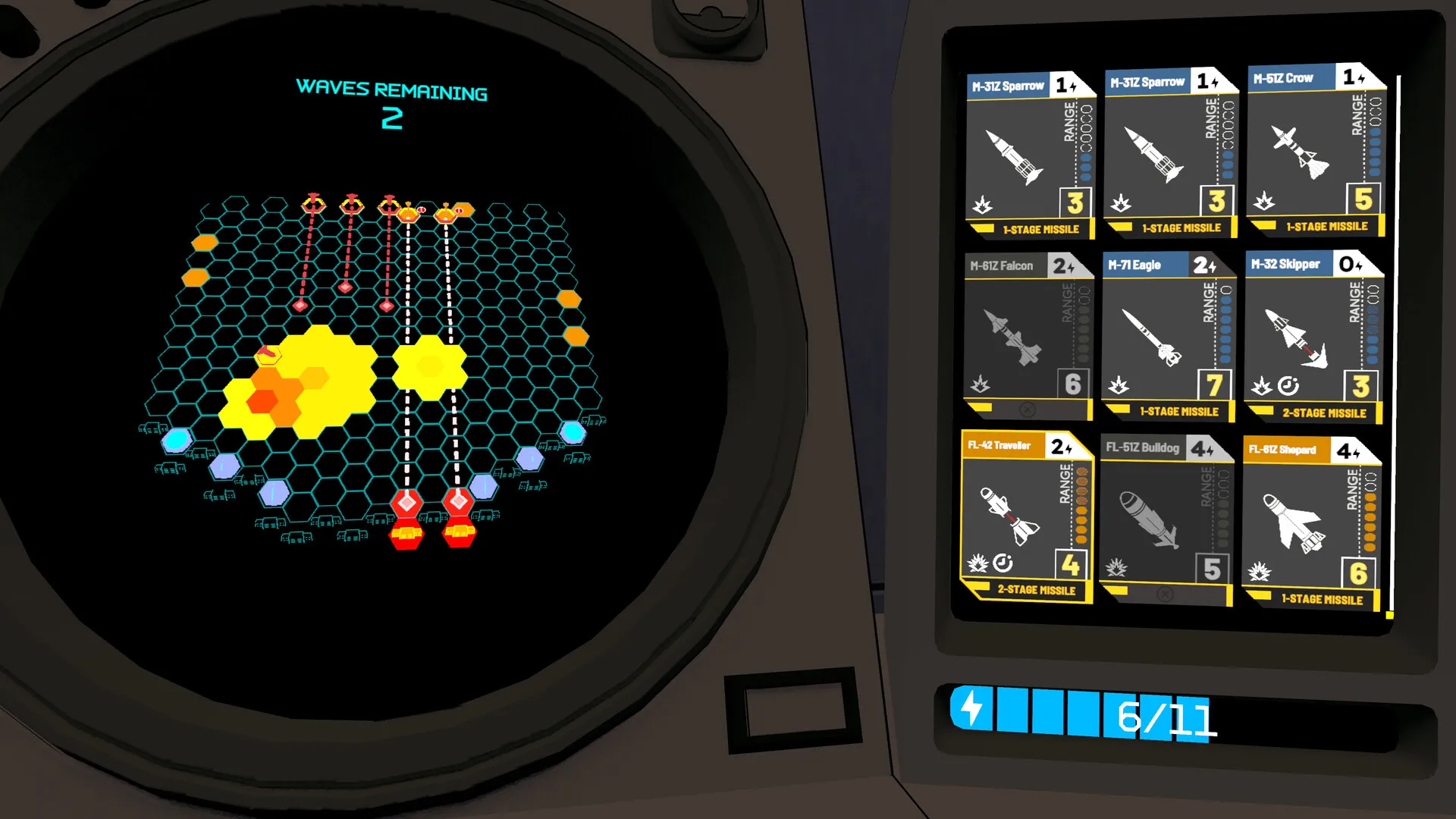
The game’s strategic core abandons the twitchy, reactive gameplay of its ancestor. Here, the defense of civilization is not a matter of panic but of intellect, played out on a hexagonal grid. Action is turn-based, and defenses are deployed via a card system, each missile type possessing a specific cost drawn from a shared energy pool.
This transforms the experience from a desperate scream into a quiet calculation. The objective is to intercept incoming warheads, but the true challenge lies in optimization. Successfully “acing” a level requires meeting a strict energy budget, turning each encounter into a cerebral puzzle of resource management. The player has access to an expanding arsenal of shields, lasers, and missiles with varying blast radii, demanding foresight and planning as enemy attack patterns grow in complexity.
This mechanical shift is significant; it reflects a contemporary fascination with gamified systems over visceral experience. The raw fear of the original is abstracted into a slower, more detached problem-solving exercise, though the visual clutter in later stages can sometimes obscure the elegant geometry of the puzzles, occasionally forcing a trial-and-error approach.
Also Read






A Story Out of Place
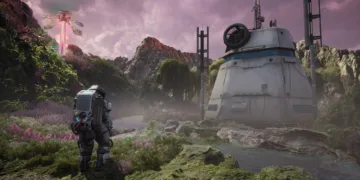
Wrapped around this strategic puzzle box is a first-person narrative that feels imported from another genre entirely. The player navigates the bunker’s corridors, solving simple environmental puzzles by finding key cards and flipping switches to progress.
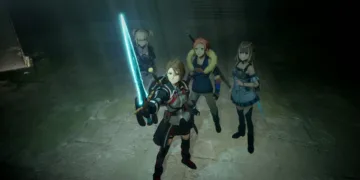
This exploration is the vessel for the game’s story and its cast of teenage friends. The narrative attempts to graft a personal, character-driven drama onto the impersonal threat of nuclear war. This is a common device in modern storytelling, seen in everything from television to film, but its effectiveness here is questionable. The dialogue and interactions often feel generic, failing to create a genuine sense of peril.
Instead of heightening the stakes of the missile defense segments, the narrative often feels like a disconnected interlude. The physical act of moving through the world can feel clunky and imprecise, undermining any atmospheric tension the setting might have offered.
The puzzles themselves are rudimentary, functioning less as engaging challenges and more as simple gates to the next plot point, making this entire half of the experience feel like a chore rather than a compelling mystery.
A Fractured Identity
The two halves of Missile Command Delta exist in an uneasy relationship. The game asks you to alternate between a sophisticated, almost meditative tactical game and a simplistic narrative adventure. The bunker exploration rarely feels like it provides meaningful context for the strategic challenges; it is a structure that feels bolted on, hindering the flow of the game’s stronger component.
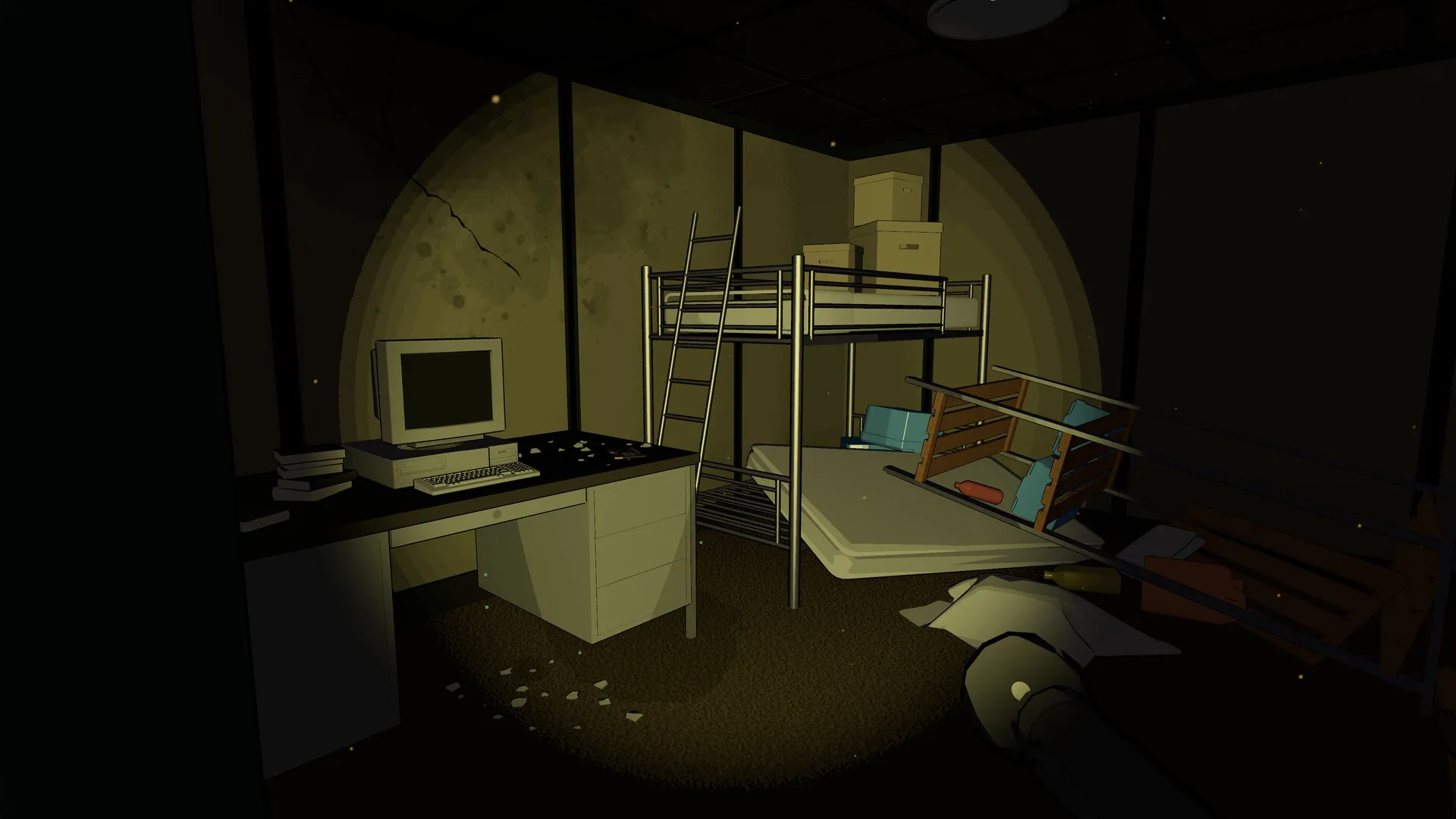
The presentation further highlights this disconnect. Visually, the world is stylized and flat, lacking the detail to make the bunker feel like a real, lived-in space. Yet, the audio design is magnificent. The ethereal, retro-inspired score successfully generates a potent sense of mystery and place, accomplishing what the visuals and narrative cannot.
Performance is stable, but this technical solidity cannot mend the game’s core schism. The experience is ultimately one of a brilliant mechanical idea burdened by a narrative framework that does not suit it. It is a bold experiment in reimagining a classic, but one that feels like two different games fighting for control.
The Review
Missile Command Delta
Missile Command Delta is a game of two warring identities. Its core, a clever and deeply satisfying turn-based puzzle game, is a brilliant evolution of the classic formula. This cerebral experience is unfortunately shackled to a clunky and uninspired first-person narrative that feels more like a chore than a compelling mystery. The game’s potential is held back by this structural schism, resulting in a fractured experience where a fantastic idea is burdened by a weak framework.
PROS
- Intelligent and deep turn-based tactical gameplay.
- Excellent, atmospheric soundtrack.
- Satisfying and challenging strategic puzzles.
CONS
- The narrative frame feels weak and disconnected.
- Exploration puzzles are rudimentary and simple.
- The two distinct gameplay styles do not mesh well.