


























There are moments in recent history that feel less like actual events and more like cultural fever dreams, strange blips that reveal more about the era than we were prepared to admit. The 2009 “Balloon Boy” incident is one such artifact.
The Netflix documentary Trainwreck: Balloon Boy exhumes this bizarre episode, not merely to rehash the facts but to anatomize the peculiar intersection of ambition, media, and a uniquely American brand of backyard myth-making. We are introduced to the Heene family, a unit operating on a different wavelength from the rest of suburban Colorado.
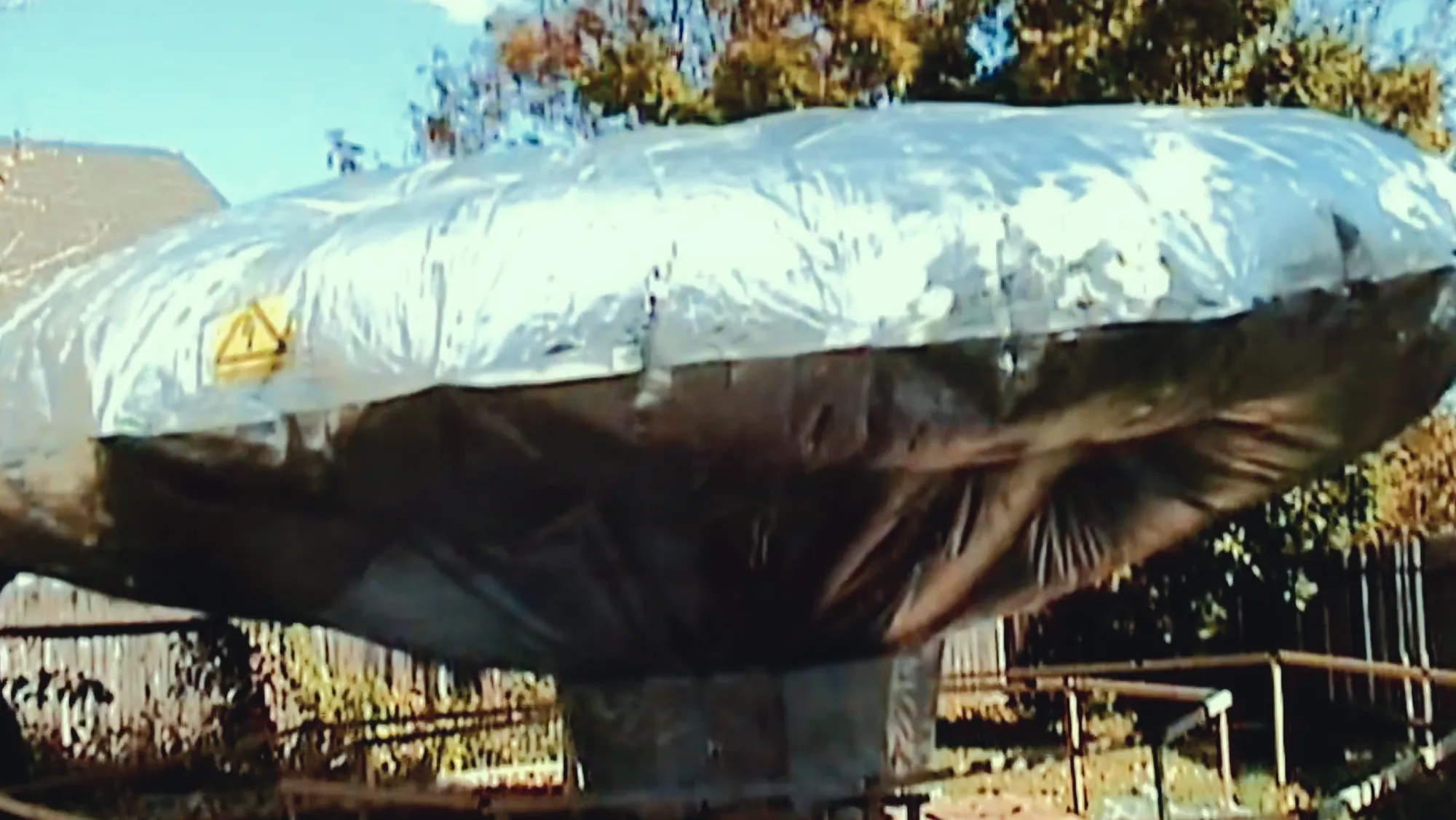
At its center is Richard Heene, a man of relentless, if scattered, energy—a storm chaser, an aspiring inventor, a father who treated science experiments as high family drama. His magnum opus, at least for that week, was a homemade flying saucer.
Pieced together from tarps and foil, it looked like a Jiffy Pop container that had aspirations of space travel. The family’s life was a constant performance for their own video camera, with their youngest son, six-year-old Falcon, serving as the story’s resident agent of chaos. The stage was perfectly set for something to go wrong.
The Spectacle: Panic in the Skies
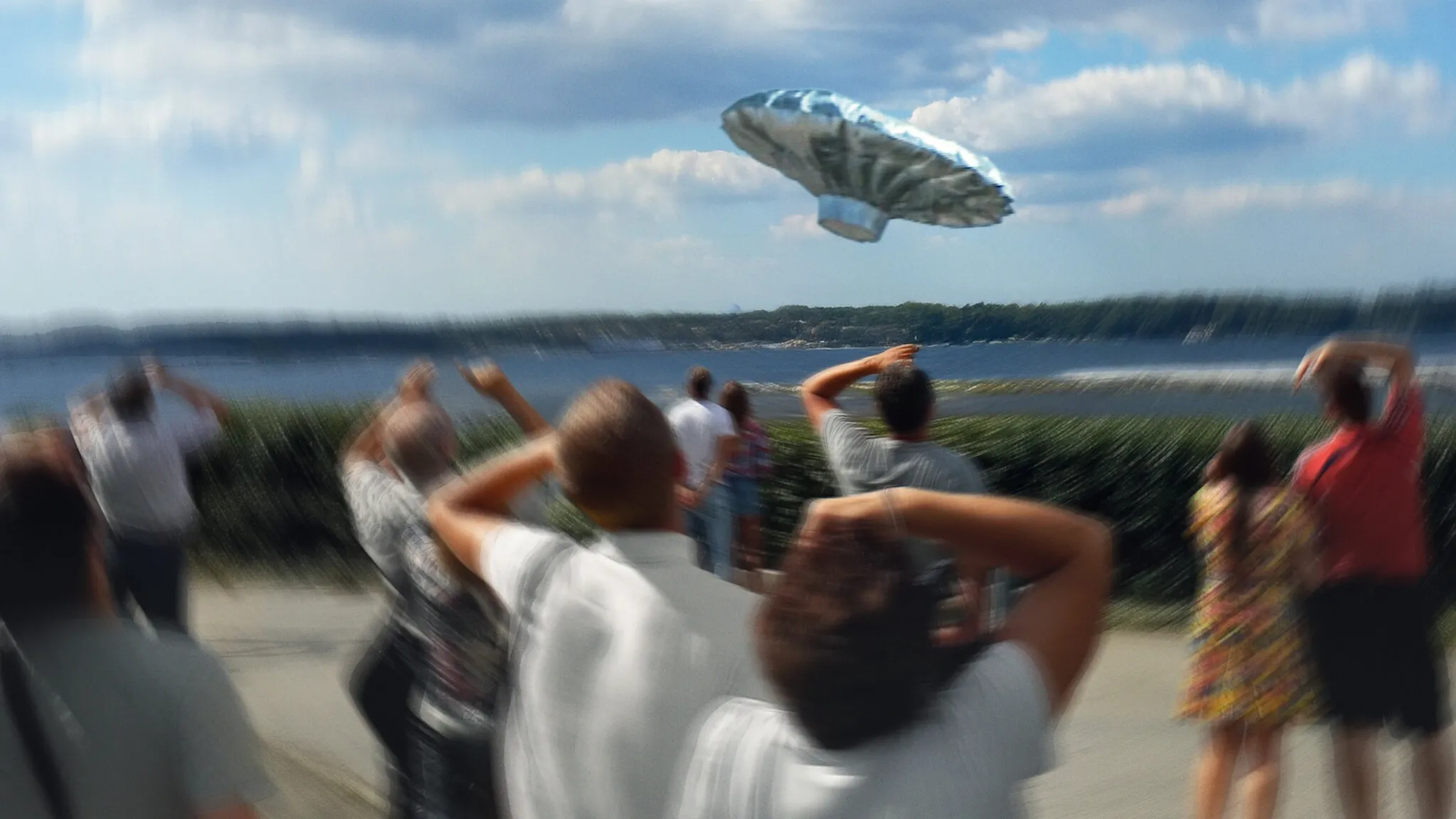
When the tether snaps, the silver craft doesn’t just rise; it ascends into legend. The film captures the immediate domestic panic: Richard’s fury at his wife Mayumi gives way to a frantic realization that Falcon is missing, presumably inside the rapidly shrinking dot in the sky.
This is the moment a private fiasco becomes public property. In a move that speaks volumes, a call is placed not just to 911 but also to a local news station, a tacit invitation for the world to watch. And watch, it did. For two hours, the nation was held captive by a single, terrifying narrative broadcast from news helicopters—a tiny boy in a makeshift balloon, a live-action tragedy waiting to happen.
It was perfect television, a contained spectacle of fear and hope. The story became a sort of national prayer circle, a shared anxiety projected onto the Colorado sky. Then, the anti-climax, which was itself a new kind of climax.
The balloon drifts gently to the ground, its 50-mile journey complete. Authorities approach. It’s empty. The collective gasp was almost audible. The question was no longer where the balloon was going, but a far more dreadful one: where was the boy?
The Unraveling: From Concern to Suspicion
Relief, when it came, was laced with confusion. Falcon was found, not fallen from the sky, but asleep in the garage attic, a hiding spot somehow missed by multiple police searches. This miraculous return should have ended the story. Instead, it was the beginning of the real drama.
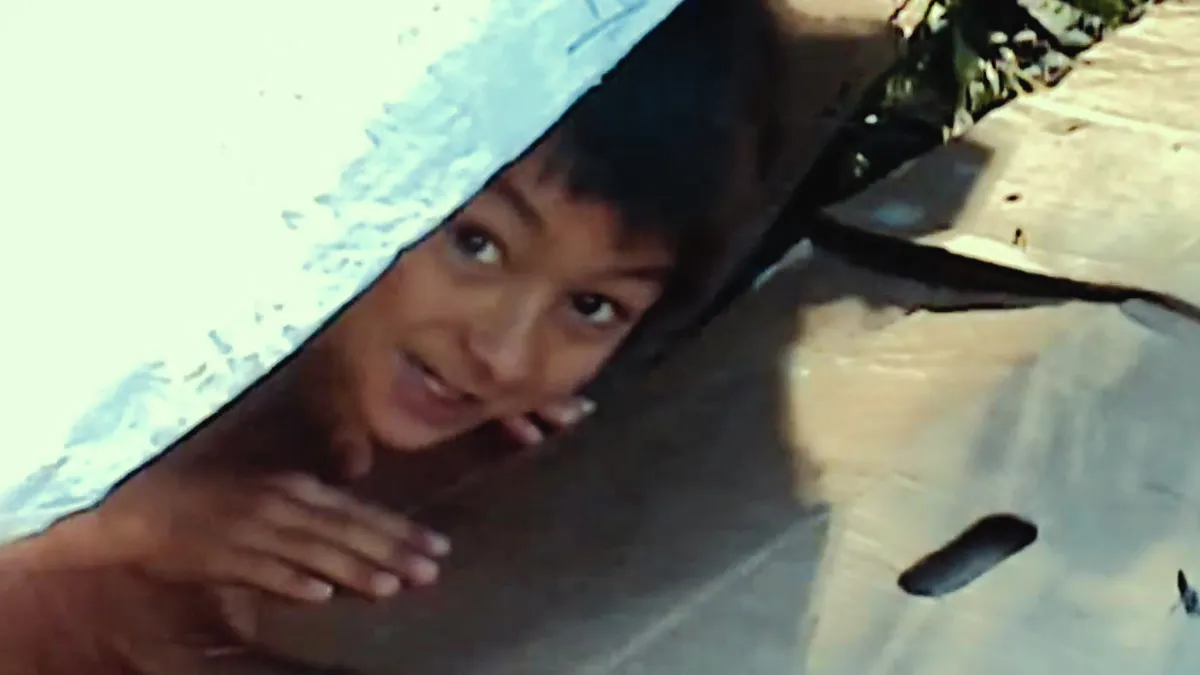
The Heenes, inexplicably, embarked on a media tour, a decision that proved to be a spectacular act of self-immolation. The pivotal moment arrived during an interview on Larry King Live. When asked why he didn’t come out of hiding, young Falcon, with the unsparing honesty of a six-year-old, mumbled the line that would detonate his family’s narrative: “You guys said that we did this for a show.”
In that instant, the entire affair pivoted. The parents’ panicked faces, their frantic attempts at damage control, were futile. The lens of public perception shifted, recasting a story of parental anguish into one of manipulative performance.
The revelation that the Heenes had previously appeared on the reality show Wife Swap no longer seemed like trivia; it felt like a motive. They weren’t just a family; they were a family accustomed to being on camera, comfortable with the mediated reality that fame requires.
The Murky Aftermath: A Legacy of Doubt
The legal system’s attempt to bring clarity only produced more fog. The documentary shows us a coerced-feeling confession from Mayumi, a plea deal from Richard designed to prevent his wife’s deportation, and a comically unreadable polygraph test where Richard appeared to be actively thwarting the machine. What Trainwreck: Balloon Boy does so well is refuse to offer a simple verdict.
It presents a gallery of unreliable narrators—the police, the Heenes, their lawyer, even a self-proclaimed psychic from their reality TV past—and allows their conflicting accounts to hang in the air. The film understands that the search for a definitive truth is a fool’s errand. The story became a canvas onto which a nation projected its own beliefs about fame-seeking, media ethics, and parental responsibility.
The Heenes are left as Schrödinger’s family, simultaneously victims of a runaway story and perpetrators of a cynical hoax. The final, perfect absurdity? A full pardon from the governor of Colorado in 2020. This was not an exoneration; it was an official seal of strangeness, cementing the Balloon Boy incident as a permanent and wonderfully unresolved piece of American folklore.
Trainwreck: Balloon Boy premiered on July 15, 2025 and is available to stream on Netflix as part of the Trainwreck documentary series.
Full Credits
Director: Gillian Pachter
Writers: Gillian Pachter
Producers: Ben Rumney, Sheun Adelasoye De Nicola, Alexander Marengo, Tim Wardle, Casey Feldman, Erica Roberts, William Swann
Cast: Richard Heene, Mayumi Heene, Bradford Heene
The Review
Trainwreck: Balloon Boy
Trainwreck: Balloon Boy is a sharp and surprisingly thoughtful examination of a bizarre cultural moment. It wisely avoids easy answers, instead using the Heene saga as a lens to inspect our societal obsession with spectacle and the pliable nature of truth in the media age. A fascinating portrait of a story that was, perhaps, too weird not to be true.
PROS
- An inherently fascinating and bizarre true story.
- Intelligently explores ambiguity without forcing a simple conclusion.
- Provides a sharp critique of 24-hour news cycles and reality-TV culture.
- Excellent use of archival footage to build tension and sow doubt.
CONS
- Viewers seeking a definitive answer on the hoax will be left wanting.
- Assumes some background knowledge of the 2009 media environment.
- Spends little time on the long-term psychological effects on the children.