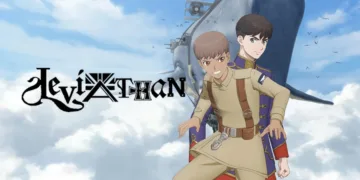





















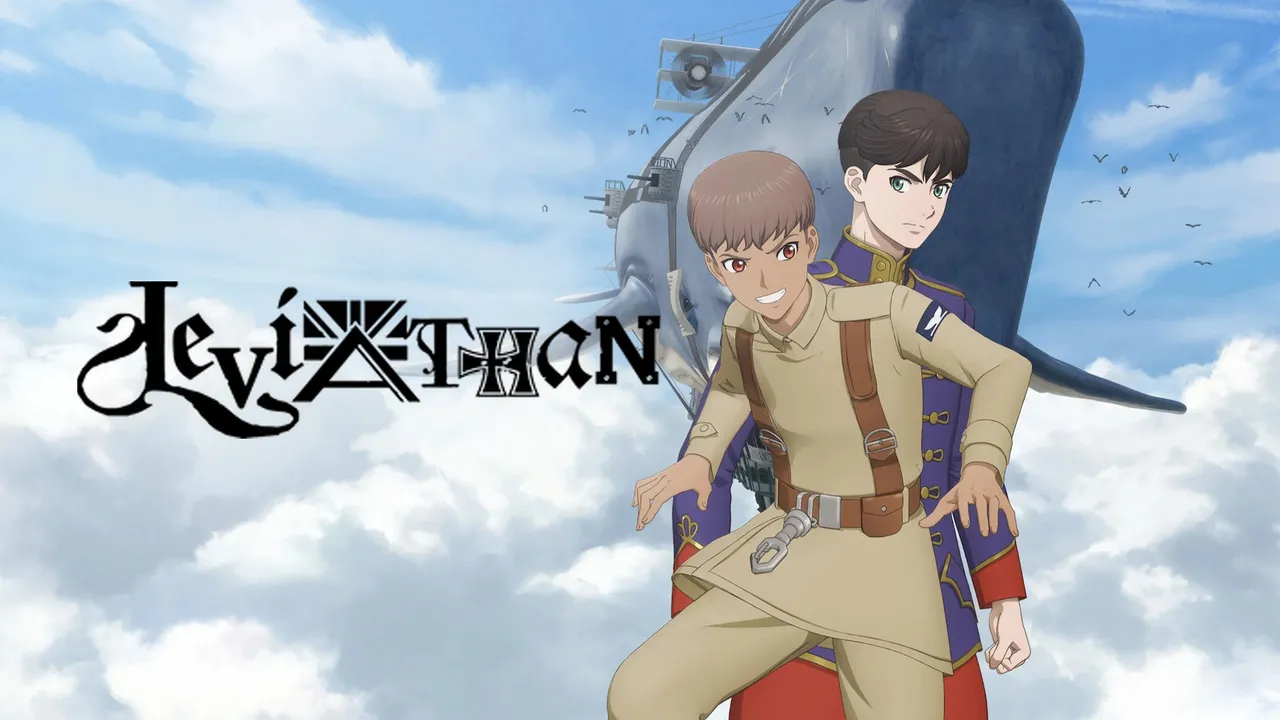

Forget what you remember from history class. Leviathan tears up the textbook for World War I, trading muddy trenches for a far more spectacular conflict where hulking, diesel-powered walkers clash with a menagerie of weaponized, bio-engineered beasts.
It’s a full-blown steampunk versus biopunk showdown for the soul of Europe. In this alternate 1914, the two factions are clear: the German and Austro-Hungarian “Clankers” build their might from iron and oil, while the Allied “Darwinists” have spliced their way to a formidable, living arsenal.
Caught in the middle are two teenagers whose destinies are set to collide. We meet Alek, the fugitive prince of the Clanker empire, on the run after his parents’ assassination triggers the war. Across the continent, Deryn Sharp, a resourceful commoner, disguises herself as a boy to earn a spot in the British Air Service. Their inevitable meeting aboard the titular whale-ship promises a clash of worlds.
Of Walking Tanks and Whale Zeppelins
The series draws its battle lines with spectacular visual flair. On one side, you have the Clankers, a faction whose entire philosophy seems to be “put legs on it.” Their Austro-Hungarian empire is a steampunk fantasy of soot and steel, fielding massive bipedal walkers that stomp across Europe like ED-209’s angrier, more punctual ancestors.
The design is all cold, hard machinery—a testament to a culture that solves its problems with overwhelming, impersonal force. It’s industrial might rendered as a two-legged war crime, and it looks fantastic.
Then there are the Darwinists, who counter the Clankers’ industrial might with what can only be described as weaponized biology. Their pride is the Leviathan itself, a majestic whale airship that serves as a living aircraft carrier, buoyed by jellyfish-like floaters. It’s a striking biopunk aesthetic, but one that raises uncomfortable questions the show mostly ignores.
The Darwinists claim a closer connection to nature, yet their “beasties” are genetically twisted tools of war that barely behave like animals. They feel less like living creatures and more like organic machines built to suffer and die on command. Is a fabricated whale that eats sky-krill really a more ethical weapon than a tank?
The show seems to think so, but the logic is as thin as the mountain air. This globe-trotting conflict, from the Swiss Alps to the shores of America, constantly pits these two clashing ideologies against each other. But you have to wonder, when one side’s war machine can feel pain, who are the real monsters?
The Prince, the Pretender, and the Pointy End of War
At the heart of this sprawling conflict are two teenagers who couldn’t be more different. Alek is the fugitive prince, a sheltered idealist whose pacifist leanings are a terrible fit for a guy whose family basically started the war.
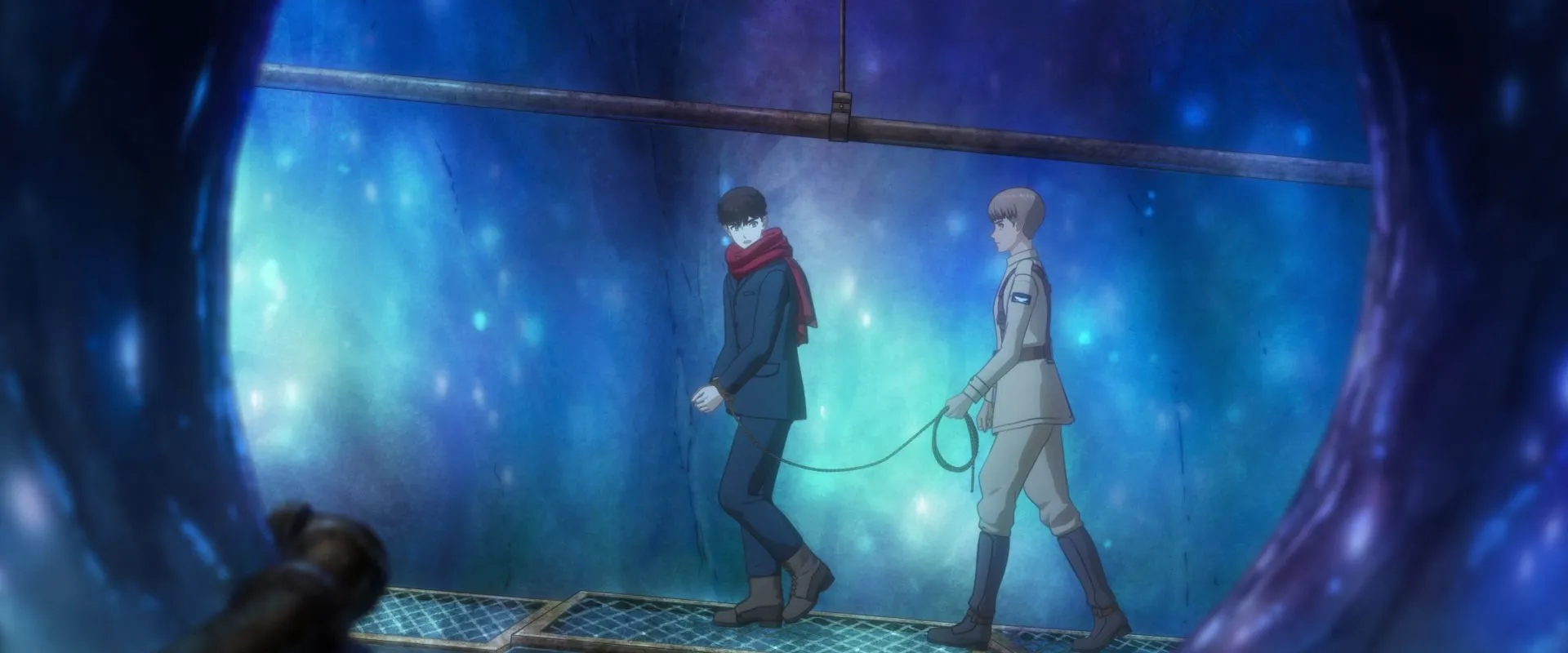
Burdened by the assassination of his parents, he’s the story’s resident moral compass, constantly questioning the Clanker cause even as he runs for his life. He can veer toward whiny, but his disillusionment provides a necessary counterpoint to the jingoism surrounding him. He’s the kid who wants peace while riding in a death machine.
His counterpart is Deryn Sharp, a brash, pragmatic commoner who wants nothing more than to fly. To do so, she pulls a Mulan, disguising herself as “Dylan” to join the British Air Service. Refreshingly, the show sidesteps the usual comedic cross-dressing tropes.
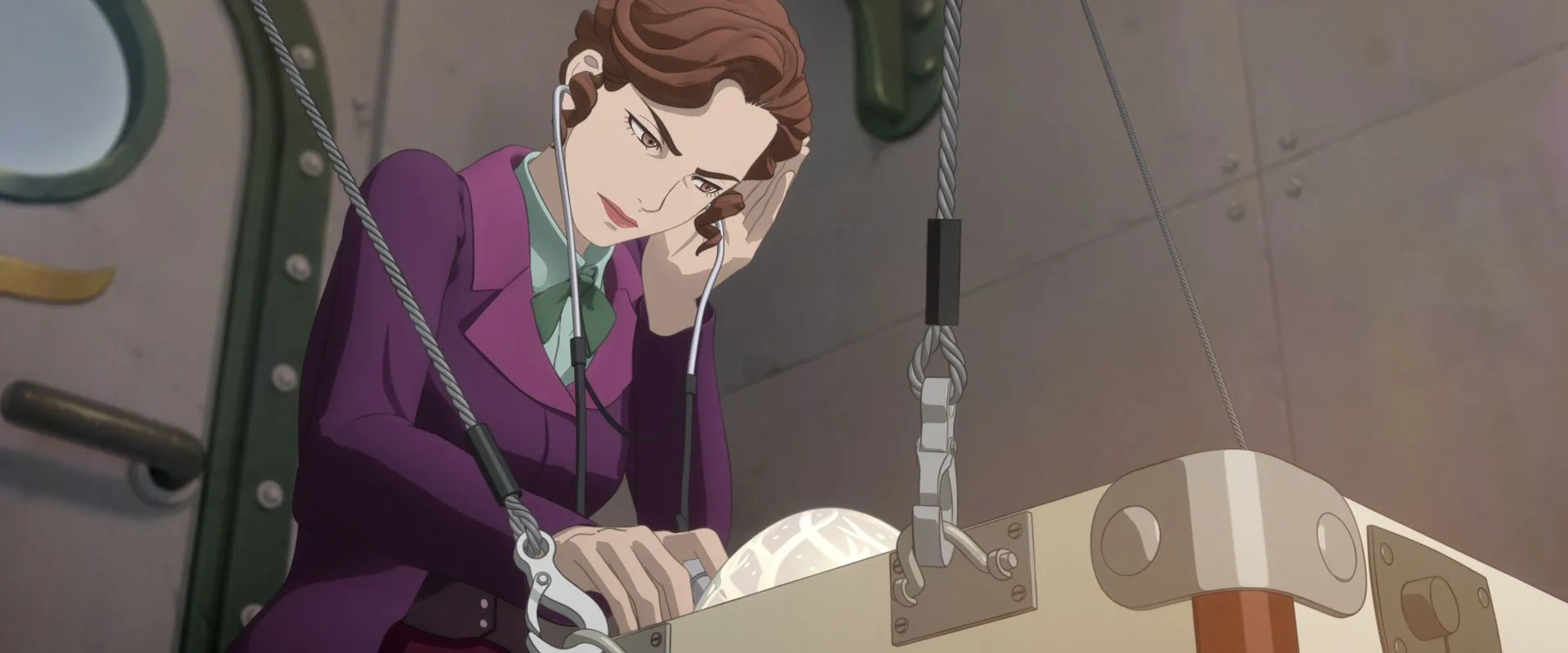
Deryn’s disguise is a matter of survival and ambition, and her sheer competence makes it believable. She’s not just playing a soldier; she’s often better than the boys around her, driven by a fierce sense of duty and a love for the skies.
Naturally, their paths collide, sparking a classic opposites-attract dynamic built on a foundation of mutual deception. He’s hiding his crown; she’s hiding her gender. This dramatic irony fuels their entire relationship, transforming it from a simple clash of enemy combatants into a fragile friendship forged in secret.
Guided by mentors like Alek’s gruff protector, Count Volger, and Deryn’s champion, the feminist scientist Dr. Barlow, their bond becomes the anchor in a story that often threatens to fly off in a dozen different directions. Their connection is the engine of the narrative, but can a friendship built on lies survive the truth?
A Gorgeous Machine with a Few Loose Screws
Visually, Leviathan is a stunner. The collaboration between studios Qubic Pictures and Orange, the latter known for its mastery of CGI anime like BEASTARS, pays off handsomely. This is what modern 3D animation was built for: rendering the intricate gears of a Clanker walker or the immense, organic scale of a flying whale.
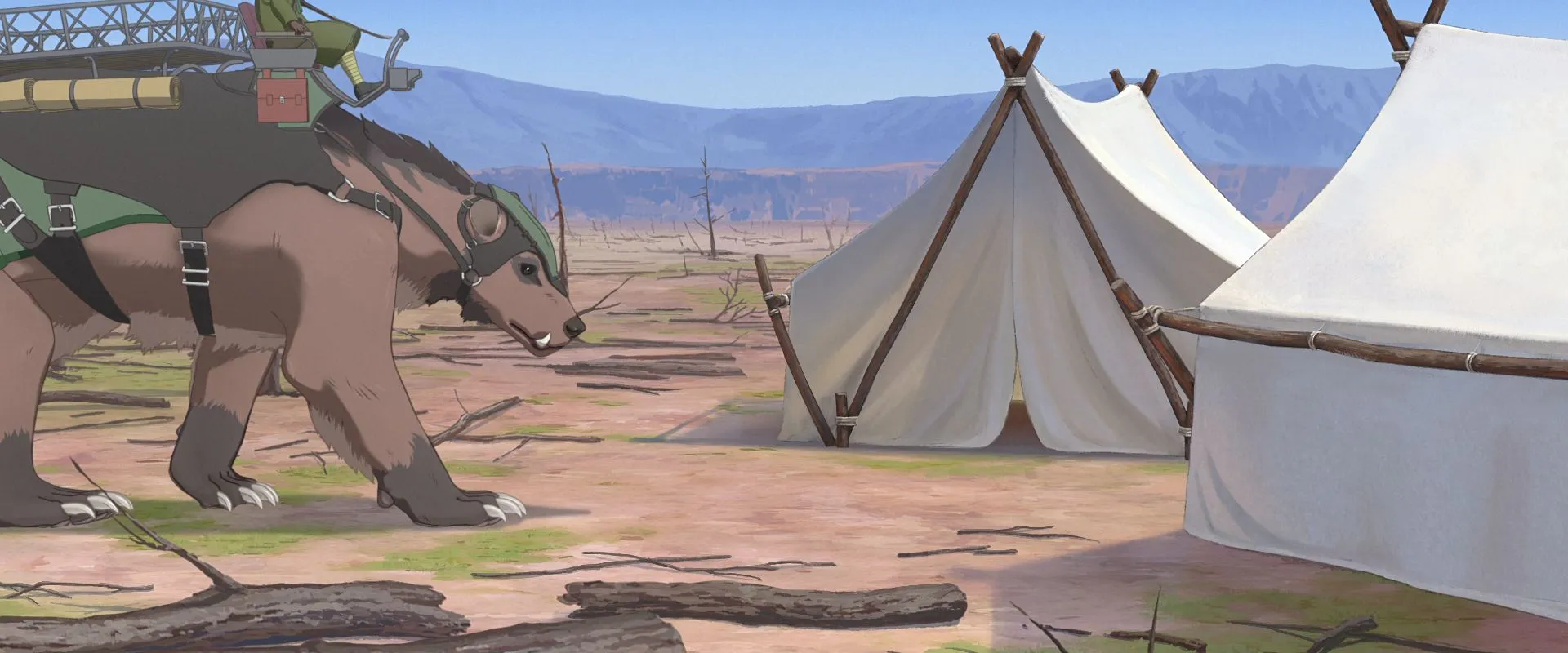
The action scenes pop with a clarity and weight that traditional 2D might struggle to achieve. While the human characters lack the wild expressiveness of Orange’s other works, displaying a more subtle, sometimes stiff, range of emotion, the sheer artistry of the machines and creatures is undeniable. The art direction is a feast, taking us across gorgeous European landscapes, and the choice to feature concept art in each episode’s end credits is a classy touch that highlights the immense effort involved.
The sound design, however, is a more mixed bag. Having Studio Ghibli legend Joe Hisaishi compose your closing theme is a serious power move, but the in-episode score often fails to make a similar impact. It’s frequently buried under long stretches of dialogue, a pleasant but forgettable hum in the background.
The voice work fares better, particularly in the English dub where Broghanne Jessamine’s authentic Scottish accent gives Deryn a grounded, fiery personality that cuts through the noise. Ultimately, the series looks and feels expensive, a beautifully crafted vessel with impressive engineering. But is a pristine engine enough when the journey itself feels unsteady?
A Three-Book Sprint in a Twelve-Episode Bag
Herein lies the series’ most significant problem: its frantic attempt to cram a trilogy of novels into a single 12-episode season. This decision creates a strange narrative paradox. Individual scenes can drag, bogged down by exposition-heavy dialogue, yet the overarching plot moves with the breathless, unearned urgency of a season finale from the very first episode. Major character beats and world-altering events fly by without the necessary space to make an impact.
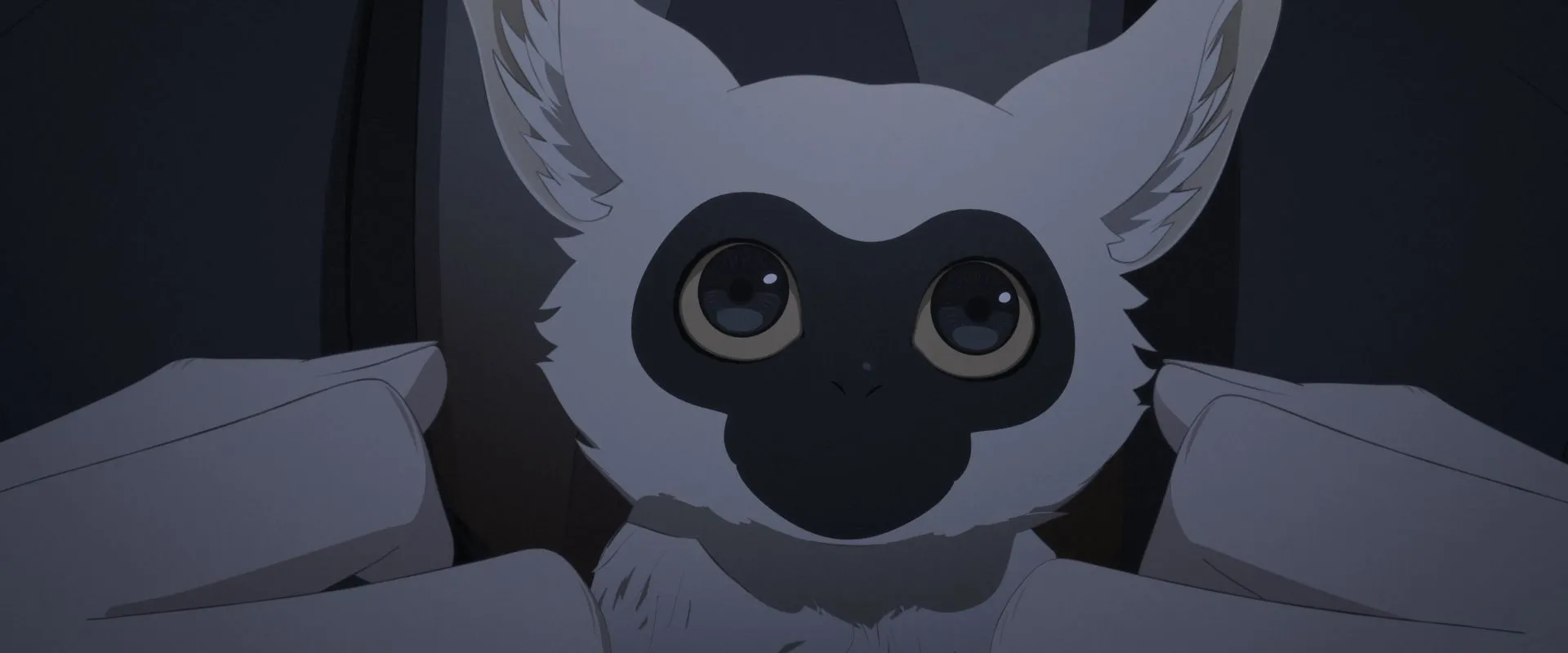
It’s a story that feels simultaneously slow and rushed, a common ailment in the age of binge-model adaptations where “more plot” is mistaken for better pacing. The narrative zips from Switzerland to the Ottoman Empire and on to New York, but these globe-trotting adventures often feel like compulsory checklist items rather than organic story developments.
A revolutionary subplot in Istanbul, for instance, introduces new characters and conflicts that are interesting on their own but ultimately splinter the focus from Alek and Deryn’s central journey. The show has grand, epic ambitions, but not nearly enough runway to land them effectively, leaving multiple intriguing threads to dangle.
This breakneck pace unfortunately flattens the story’s potent themes. Ideas about the morality of war, the foolishness of prejudice, and the clashing ideologies of technology and nature are all present. They are talked about, frequently.
But the narrative rarely has time to stop and explore them with any real depth, reducing them to signposts the characters read aloud as they race by. Leviathan has all the components of a rich, thoughtful adventure, but what’s the point of a detailed map when you’re forced to sprint through the entire world?
Peace Through Superior Firepower
The series hurtles to a climax that introduces Nikola Tesla as a megalomaniacal peacenik armed with a doomsday weapon, the Goliath. It’s a wild, almost farcical turn that presents our heroes with a grim choice. Tesla’s plan is simple: demonstrate the Goliath’s power by obliterating Berlin, thereby frightening the world into peace.
Alek is faced with the ultimate utilitarian dilemma—is he willing to sacrifice millions to save millions more? In a moment that defines his character, he refuses, choosing to destroy the weapon rather than use it. Deryn, ever the pragmatist, swoops in with a wingsuit to make sure he survives his heroic stand. It’s a resolution that’s both absurdly convenient and thematically sound.
And so, Leviathan ends its run as a beautiful, ambitious, and deeply flawed machine. Its strengths are undeniable: a brilliantly imagined world, stunning animation that brings its clashing aesthetics to life, and an engaging dynamic between its two leads.
Yet its weaknesses are just as apparent—the frantic pacing of a story gasping for air, a narrative that splinters in too many directions, and questionable world-building logic that is never fully addressed. The finale leaves the door wide open, with Tesla escaping to Antarctica to presumably build Goliath 2.0. The show offers a thoroughly entertaining spectacle, but one can’t help but wonder if a second season would be a chance to steady the ship or just another gorgeous, chaotic voyage.
Leviathan is a Japanese animated series which premiered on July 10, 2025, exclusively on Netflix.
Full Credits
Director: Christophe Ferreira
Writers: Yuichiro Kido, Yukata Yasunaga
Producers: Katrina Minett, Yoshihiro Watanabe
Cast: Ayumu Murase, Natsumi Fujiwara, Shunsuke Sakuya, Yasuhiro Mamiya, Mie Sonozaki, Ivan Shibata, Fairouz Ai, Hiroki Touchi, Ikuko Tani, Genta Nakamura
Composer: Nobuko Toda, Kazuma Jinnouchi
The Review
Leviathan
Leviathan is a visual feast, an ambitious steampunk adventure powered by breathtaking animation and an engaging pair of protagonists. Its world of walking tanks and whale airships is a triumph of imagination. However, the spectacle is undermined by a rushed narrative that crams an entire trilogy into one season, leaving key plot points and themes underdeveloped. It’s a gorgeous machine with a sputtering engine, recommended for viewers who prioritize style over narrative substance and for fans of the original novels curious to see their world brought to life.
PROS
- Stunning 3D animation and imaginative visual design.
- Rich steampunk versus biopunk world-building.
- An engaging dynamic between the two lead characters.
CONS
- The narrative feels rushed due to condensing three books into one season.
- Plot points and themes can feel underdeveloped.
- The logic behind the "Darwinist" biology is sometimes inconsistent.