





















A distance of 2000 meters can be covered in minutes. In Mstyslav Chernov’s latest documentary, that same distance represents an impassable gulf, a journey measured in months, bullets, and lives. 2000 Meters to Andriivka places its audience directly into the mud and chaos of a Ukrainian assault brigade’s attempt to reclaim a small village.
The film abandons any pretense of detached observation. Through a combination of soldier-worn body cameras and his own lens, Chernov constructs a story from the first-person perspective. The effect is immediate and suffocating. This is not a battlefield romanticized for cinema; it is a desolate, alien landscape of charred trees and churned earth where survival is a moment-to-moment calculation.
The director himself is not a disembodied voice but a physical presence, an embedded journalist sharing the foxholes and the risks. This decision grounds the film’s narrative in a stark authenticity, making it clear that the stakes are not merely journalistic but existential.
The Architecture of Loss
The film’s most potent narrative device is its calculated shift in focus from the cacophony of combat to the quiet spaces between firefights. Here, the machinery of war recedes, and we are left with the men tasked with operating it. Their conversations about cigarettes, university rivalries, or fixing plumbing back home are not filler; they are the architectural pillars of the story.
These fragments of mundane life create a powerful narrative friction against the violence, reminding us of the civilian worlds these men were abruptly forced to leave behind. In these moments, Chernov’s camera acts as a silent confidant, capturing a vulnerability that makes their circumstance all the more poignant.
He then employs a devastating storytelling choice that weaponizes the conventions of documentary filmmaking. His solemn voiceover often follows these moments of connection, informing us that a soldier we just met will be dead in a few months, his body never recovered.
Also Read





The technique is cruel in its effectiveness. It transforms the abstract statistics of war into specific, personal tragedies, forcing the audience to grapple with the human cost in real time. This structure reframes the conflict through the lens of one soldier’s assertion: “I came to fight, not to serve.”
The film takes great care to show this is not a conscript army executing orders. It is a volunteer force built from ordinary individuals, and the narrative ensures we understand precisely what is being lost with each casualty.
The Landscape of Destruction
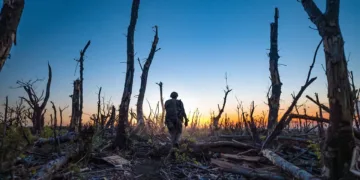
The primary setting for this struggle is a narrow strip of forest, a path that has been stripped of all life. It is less a location than a state of being—a perilous corridor of blasted tree trunks and shallow craters that offers the only cover. Every meter of progress is earned through a grueling process of attrition that feels closer to World War I trench warfare than modern combat.
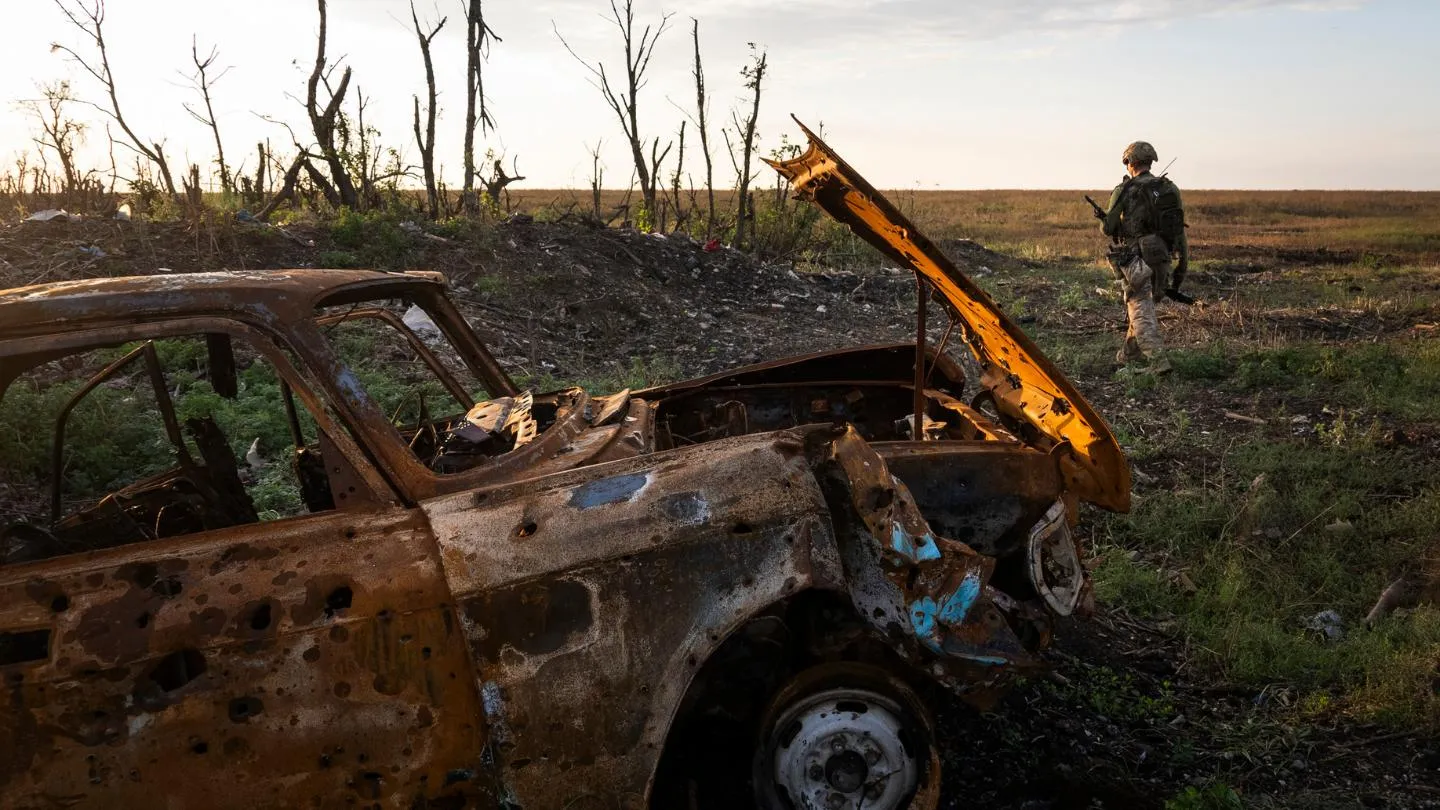
The firefights, captured through the jarring perspective of helmet cameras, have the aesthetic of a first-person shooter game, yet they are stripped of any sense of heroic accomplishment or clear objectives. The action is repetitive, confusing, and numbing, a perfect reflection of the soldiers’ own experience. There are no clear shots of the enemy, only the muzzle flashes and the incoming explosions, heightening the sense of a random, impersonal threat.
Sam Slater’s low, rumbling score amplifies the unrelenting dread without telling the audience how to feel. Chernov masterfully contrasts the claustrophobic, ground-level footage with cold, expansive drone shots. One perspective traps us in the soldier’s immediate, terrifying reality; the other reveals the chilling scale of the devastation, a geometric pattern of ruin seen from a god’s-eye view.
This duality is critical: the drone is both a cinematic tool for the director and a weapon of war for the combatants. The edit relentlessly cuts between these views, constructing a complete sensory experience of the war’s oppressive physical and psychological weight.
The Currency of Hope
When the Ukrainian flag is finally raised in Andriivka, the moment carries no triumph. The village is a shell, a testament to the destructive cost of its liberation. The film reveals in an epilogue that this hard-won ground will be lost again, a structural choice that functions as a sharp critique of how war is often reported—as a simple tally of gains and losses on a map.

The film asks what it truly means to “win” a pile of rubble. It operates as a study in paradox: it documents a fight that feels essential for national survival while simultaneously exposing the sheer futility and horror of the combat itself. Its narrative logic is not built toward a satisfying resolution or a clear moral.
Instead, its meaning is found in small, defiant acts of humanity. In one remarkable sequence, soldiers find a stray cat in the rubble and carefully secure it for evacuation. This small gesture, a simple preservation of one innocent life amid total destruction, becomes a powerful symbol of their underlying mission. When strategic purpose becomes abstract, protecting the vulnerable provides a tangible one.
The film’s achievement is not to chart a course for military victory but to create an indelible record of sacrifice, ensuring the men who fought for these 2000 meters are remembered as more than names on a casualty list.
Full Credits
Director: Mstyslav Chernov
Writers: Mstyslav Chernov
Producers: Mstyslav Chernov, Michelle Mizner, Raney Aronson-Rath, Alex Babenko (co-producer), Lindsey Schneider (archival producer)
Executive Producers: There is no information available about Executive Producers, PBS/Associated Press/Frontline Features
Cast: There is no traditional cast in this documentary as it follows real soldiers and a journalist.
Director of Photography (Cinematographer): Mstyslav Chernov, Alex Babenko (additional cinematography)
Editors: Michelle Mizner
Composer: Sam Slater
The Review
2000 Meters to Andriivka
2000 Meters to Andriivka is a masterclass in subjective documentary filmmaking. By embedding the viewer directly into the chaos and the quiet moments of a single, grueling operation, Mstyslav Chernov crafts an unforgettable and deeply human record of war's true cost. It moves beyond reportage into a profound meditation on sacrifice and the hollow nature of victory in a landscape of total destruction. A necessary, unflinching, and brilliantly constructed piece of cinema.
PROS
- An exceptionally immersive and visceral first-person perspective that puts the viewer directly on the frontline.
- Masterful narrative structure that humanizes soldiers through intimate conversations before revealing their fates, creating profound emotional weight.
- An unflinching and realistic depiction of modern warfare that avoids glorification, focusing instead on its repetitive horror and futility.
- Thought-provoking exploration of complex themes like sacrifice, the meaning of victory, and the preservation of humanity.
CONS
- The relentlessly grim and intense nature of the film can be an emotionally overwhelming and taxing experience for some viewers.
- Its tight, subjective focus on a single mission intentionally omits the broader political and strategic context of the war.