




























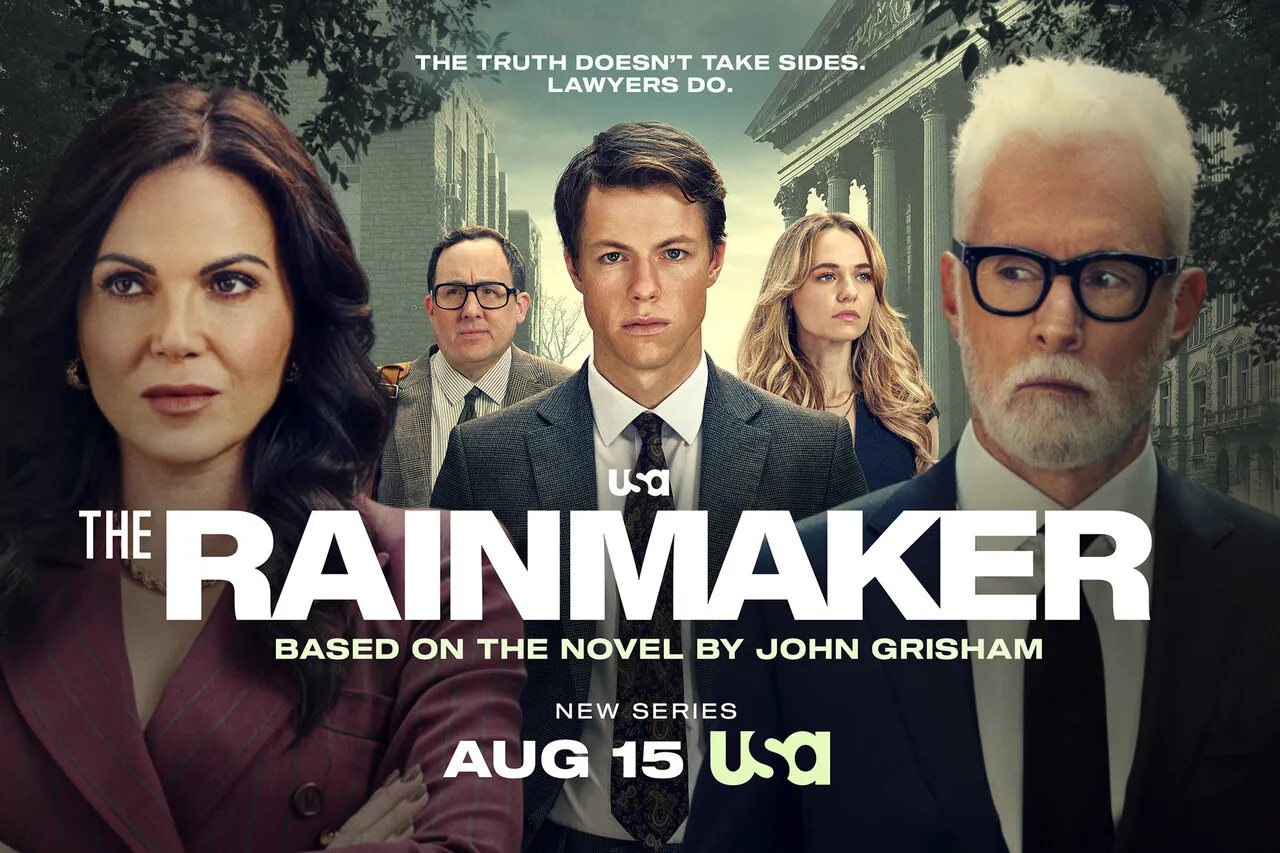

There is a comforting, almost nostalgic rhythm to the legal underdog story. We know the beats: a young, idealistic lawyer, armed with more righteousness than experience, takes on a corporate Goliath. USA Network’s The Rainmaker understands this appeal intimately.
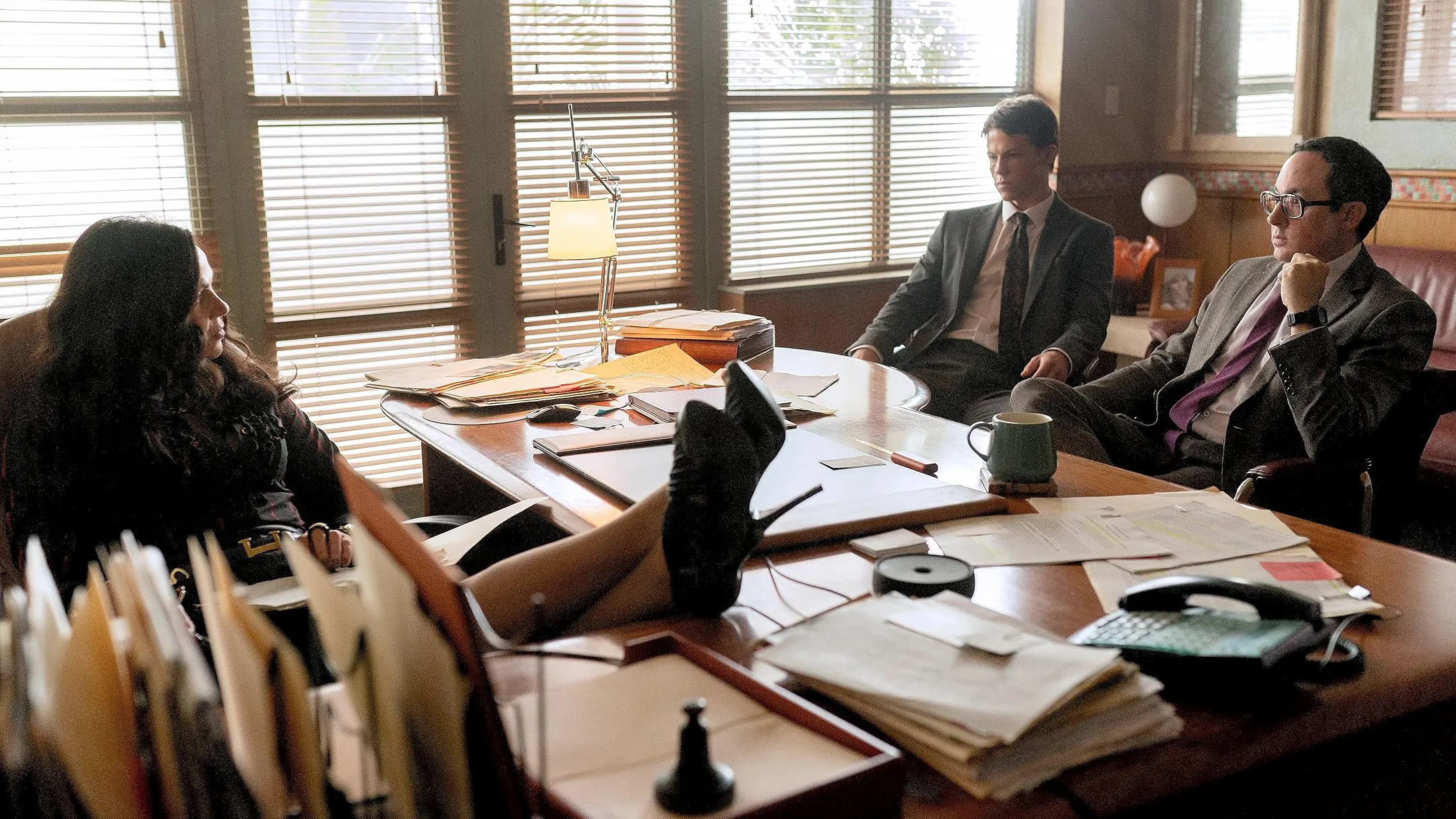
The series introduces us to Rudy Baylor, a sharp law graduate whose career at a top-tier firm lasts about as long as a free donut in the breakroom. Fired on his first day, Rudy tumbles down the professional ladder and lands in the offices of an ambulance-chasing firm run from a repurposed taco joint by the formidable Jocelyn “Bruiser” Stone.
His very first case is a doozy. A grieving mother suspects a powerful hospital is responsible for her son’s wrongful death. This premise alone is standard fare, but The Rainmaker immediately complicates things with soapy efficiency.
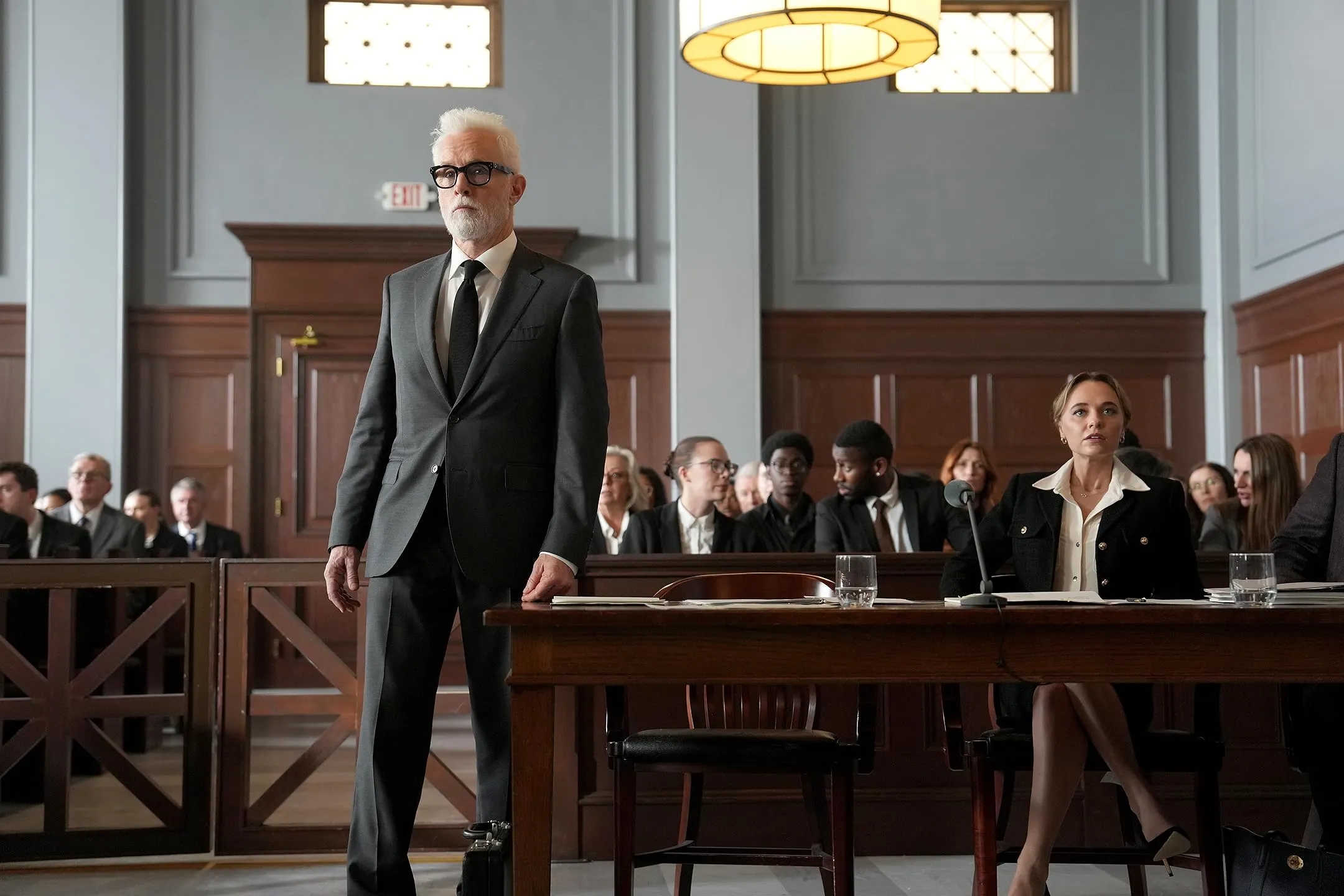
The hospital’s legal team is led by Rudy’s intimidating former boss, Leo Drummond, and includes his own girlfriend, Sarah Plankmore. This setup promises a messy blend of courtroom tension and personal betrayals, served with a side of classic underdog spirit. It is a familiar recipe, prepared for a modern palate.
This Isn’t Your Dad’s Rainmaker
Adapting a well-known John Grisham novel, especially one with a beloved 1997 film adaptation, requires some narrative invention. This series opts for a full renovation, recognizing that the stakes for a 2025 television audience are considerably higher than they were in the 90s. The most significant change is the reinvention of the central case. Gone is the straightforward, almost quaint, battle over a denied insurance claim for leukemia.
In its place is a far murkier medical mystery that feels engineered for the true-crime era. The victim, Donny Ray, is no longer just a sympathetic figure; he is a recovering drug addict whose death in the hospital is clouded by the specter of foul play and conspiracy. This shift cleverly transforms a contained moral drama into a serialized crime procedural.
It provides the season with a propulsive “whodunit” engine, giving viewers a compelling reason to tune in week after week. It is a smart, if calculated, move that trades the novel’s social commentary on healthcare bureaucracy for the more visceral thrill of a potential murder investigation.
The show also front-loads the personal drama with the subtlety of a process server. Rudy arrives complete with a tragic family backstory, revealed in gauzy, almost cloying flashbacks, and a serious, established relationship with Sarah. Placing the couple on opposite sides of the courtroom from the first episode is a classic television gambit designed for maximum conflict.
It is a narrative shortcut to creating tension, though it risks feeling more like a convenient plot device than an organic development. Another key update is the gender-swapping of Bruiser Stone, Rudy’s new boss. This reimagining gives Lana Parrilla a chance to create a fresh dynamic. The change moves beyond simple representation, altering the mentor-protégé relationship from the book’s grizzled male archetype to a sharp, confident woman whose presence inherently shifts the power dynamics within the firm and on screen.
A Case of Strong Support and a Weak Lead
A show like this lives or dies by its ensemble, and the verdict on The Rainmaker is a split decision. The series is anchored by a central romance that generates all the heat of a deposition transcript. As Rudy Baylor, Milo Callaghan has the difficult task of following Matt Damon’s charismatic turn, and he struggles to fill those shoes. His Rudy is earnest and determined, but lacks the layers of brainy bravado and inner conflict that made the character memorable.
The performance often feels stiff, as if he is reciting legal precedents rather than embodying them. Paired with Madison Iseman’s Sarah Plankmore, the effect is doubly flat. Iseman is saddled with a thinly written character whose most notable trait is a bizarre ability to recall the first line of every novel she has ever read. Their on-screen relationship, meant to be the show’s emotional core, is a void. It is a conflict built on plot necessity rather than believable human connection, leaving their scenes feeling like obligatory checkboxes in the script.
Fortunately, the show is saved by its supporting players, a murderer’s row of veteran actors who understand their assignments perfectly. John Slattery’s Leo Drummond is the show’s gravitational force. Echoing the charming amorality of his iconic Roger Sterling, Slattery infuses the corporate antagonist with such poisonous charm and cutting wit that the entire series feels more vibrant when he’s on screen.
He can make a threat sound like a compliment, and his commanding presence provides a much-needed jolt of energy. Joining him is Lana Parrilla’s Bruiser Stone, a ball-busting, noir-inspired fighter who clearly delights in the legal trenches. Her confidence is palpable; she owns every room she enters, making her a believable and compelling mentor for the fledgling Rudy.
The scrappy firm is rounded out by P.J. Byrne’s Deck Shifflet. As the fast-talking, ethically flexible paralegal, Byrne is a comedic powerhouse, providing crucial levity without ever becoming a caricature. Even Dan Fogler, known for his comedic roles, delivers a surprisingly effective performance as the creepy, menacing nurse Melvin Pritcher. His haunting stillness and unsettling line delivery make him a genuinely frightening presence, proving that casting against type can yield tremendous results.
The Case of the Overstuffed Pilot
Like many new shows conceived in the binge-watching era, The Rainmaker suffers from a frantic start. The pilot episode is a dizzying sprint, a 45-minute information dump designed to hook a viewer with a short attention span. It attempts to introduce every character, establish every personal and professional conflict, and hint at multiple tragic backstories all at once.
The result is a cluttered and breathless introduction that threatens to derail the series before it finds its footing, leaving the audience with narrative whiplash. Things improve significantly in the subsequent episodes.
The story settles into a more confident rhythm, the frenetic editing relaxes, and the show allows its stronger elements, particularly the central mystery and the supporting cast, to take center stage. The narrative finds a more assured stride, letting moments land and character arcs begin to develop.
The show quickly defines its identity as a courtroom soap opera, built with the glossy polish of the USA Network aesthetic that powered Suits to its second life as a streaming titan. This is not a gritty, realistic portrayal of the legal system. It is a world of sharp suits, dramatic confrontations, and unbelievable coincidences, where legal procedure is often secondary to personal drama.
The production design reinforces this, contrasting the sleek, cold blues and grays of Leo Drummond’s corporate firm with the warm, slightly chaotic charm of Bruiser’s repurposed taco stand. The show is effective within this framework. The procedural scenes where Rudy and Deck chase down clues are genuinely engaging, and the suspenseful sequences are directed with a competent, old-fashioned hand that effectively builds tension.
The show’s main structural weakness is its tendency to juggle too many plot threads. Rudy collects personal crises like billable hours, from his own family trauma to a neighbor’s domestic abuse situation. This narrative clutter sometimes distracts from the main legal case, making the world feel less cohesive and more like a collection of disparate TV tropes.
The Final Judgment
The Rainmaker succeeds as a comforting, low-stakes legal diversion. It is the television equivalent of comfort food: predictable, satisfying, and not particularly challenging. It is an entertaining watch that is stimulating enough to hold one’s attention without asking for much deep thought in return.

The show is carried almost entirely by the strength of its exceptional supporting cast, particularly John Slattery, who single-handedly elevates every scene he is in. They, along with the genuine intrigue of the central crime story, prop up a series that would likely collapse under the weight of its weaker elements. These strengths are just enough to balance the primary weaknesses: an unconvincing and chemistry-free central romance and a resolute refusal to explore any deeper social or systemic critique.
This is a series for viewers who enjoy character-driven procedurals with a heavy dose of soapy drama, a perfect palate cleanser between darker, more demanding series. It delivers a simple story of good versus evil, without the messy ambiguity of the real world. In an era of demanding, complex television, is there still room for a show that is simply a competent, enjoyable ride?
The Rainmaker is an upcoming legal drama series based on the best-selling novel by John Grisham. It is scheduled to premiere on USA Network on August 15, 2025, at 10 p.m. ET/PT. Episodes will be available to stream on Peacock one week after they air on the USA Network.
Full Credits
Director: Michael Seitzman
Writers: Michael Seitzman, Julia Cohen, Barbara Curry, Wendy Mericle, Johnny Richardson, Jason Richman, John Grisham
Producers & Executive Producers: Michael Seitzman, John Grisham, David Gernert, Jason Richman, Jason Blum
Cast: Milo Callaghan, John Slattery, Lana Parrilla, Madison Iseman, P.J. Byrne, Dan Fogler, Wade Briggs, Robyn Cara, Gemma-Leah Devereux, Tommie Earl Jenkins, Megan McDonnell, Jonathan Harden, Karen Bryson, Gwynne McElveen
Director of Photography (Cinematographer): Michael Amundson, Roman Coppola
The Review
The Rainmaker
The Rainmaker is a competent legal procedural carried by an exceptional supporting cast, particularly a scene-stealing John Slattery. While its central romance is lifeless and its plot overstuffed, the engaging mystery and glossy production make it an entertaining, if forgettable, watch. It’s a classic comfort-food show that succeeds on the strength of its veteran players, who manage to win the case for a series with some serious flaws.
PROS
- An outstanding supporting cast featuring John Slattery, Lana Parrilla, and P.J. Byrne.
- The central mystery is engaging and well-suited for a serialized format.
- High production value with a polished, distinct visual aesthetic.
- Sharp, witty dialogue for the veteran characters.
- Dan Fogler's surprisingly effective and menacing performance.
CONS
- Weak lead performances that lack charisma and chemistry.
- The central romantic subplot feels forced and emotionally hollow.
- An overstuffed narrative with too many unfocused subplots.
- A general lack of depth or meaningful social commentary.
- The pilot episode is poorly paced and cluttered.