





















There is a quiet intensity in the seconds before a real-time strategy match begins. The countdown appears, your heart rate quickens, and you take a final breath before your command center and workers materialize on screen.
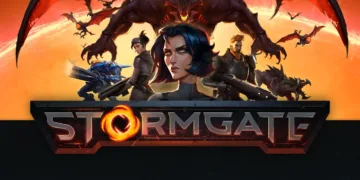
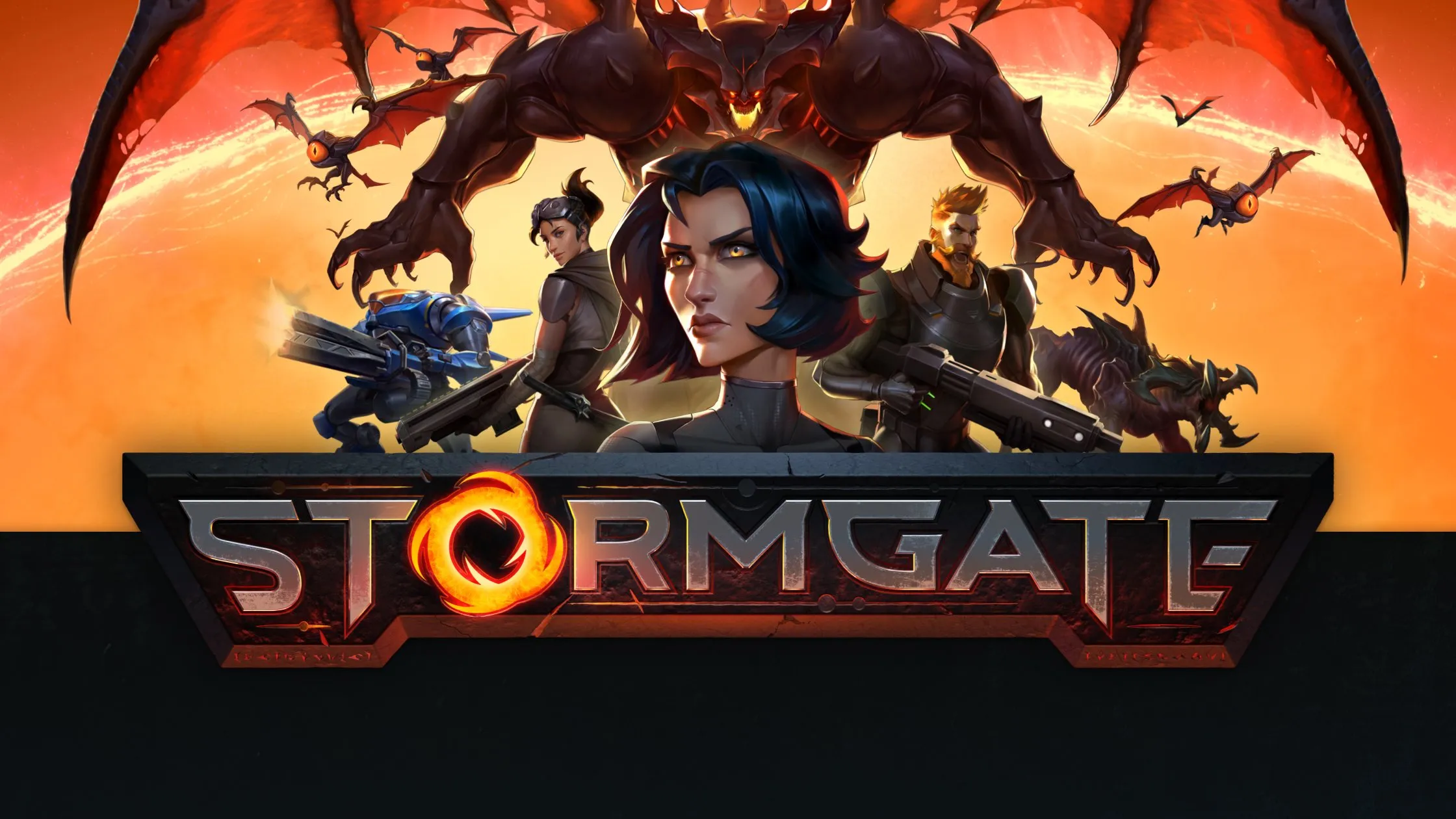
That specific thrill, a pure contest of strategy and reflexes, is the feeling Stormgate aims to recapture. Developed by Frost Giant Studios, a team of RTS veterans from StarCraft II and Warcraft III, this free-to-play title seeks to modernize a classic formula.
It takes the familiar loop of building bases, gathering resources, and commanding armies, then layers on a host of improvements for a new generation. The game’s universe sets a grand stage for this conflict, pitting the high-tech Human Vanguard against the demonic Infernal Host and the mysterious, angelic Celestials in a desperate battle for Earth.
A Polished Engine with Deliberate Pacing
At its foundation, Stormgate feels like coming home for anyone raised on Blizzard’s RTS classics. The rhythm of expanding your economy, producing units, and controlling your army is immediately recognizable. Players manage two primary resources, Luminite and Therium, which are gathered by workers in a familiar fashion to build structures and field an army.
This system effectively drives the need for territorial control and strategic expansion, forming the backbone of every match. Where the game changes the formula is in its intelligent quality-of-life enhancements. New units can be set to automatically join existing control groups, a small change that saves countless clicks over a match.
Production queues and research progress are accessible from a global interface, removing the need to constantly cycle back to your base to manage upgrades. These changes successfully lower the mechanical skill floor, reducing the amount of frantic, repetitive actions required and allowing players to dedicate more mental energy to the actual strategy of the game.
Also Read




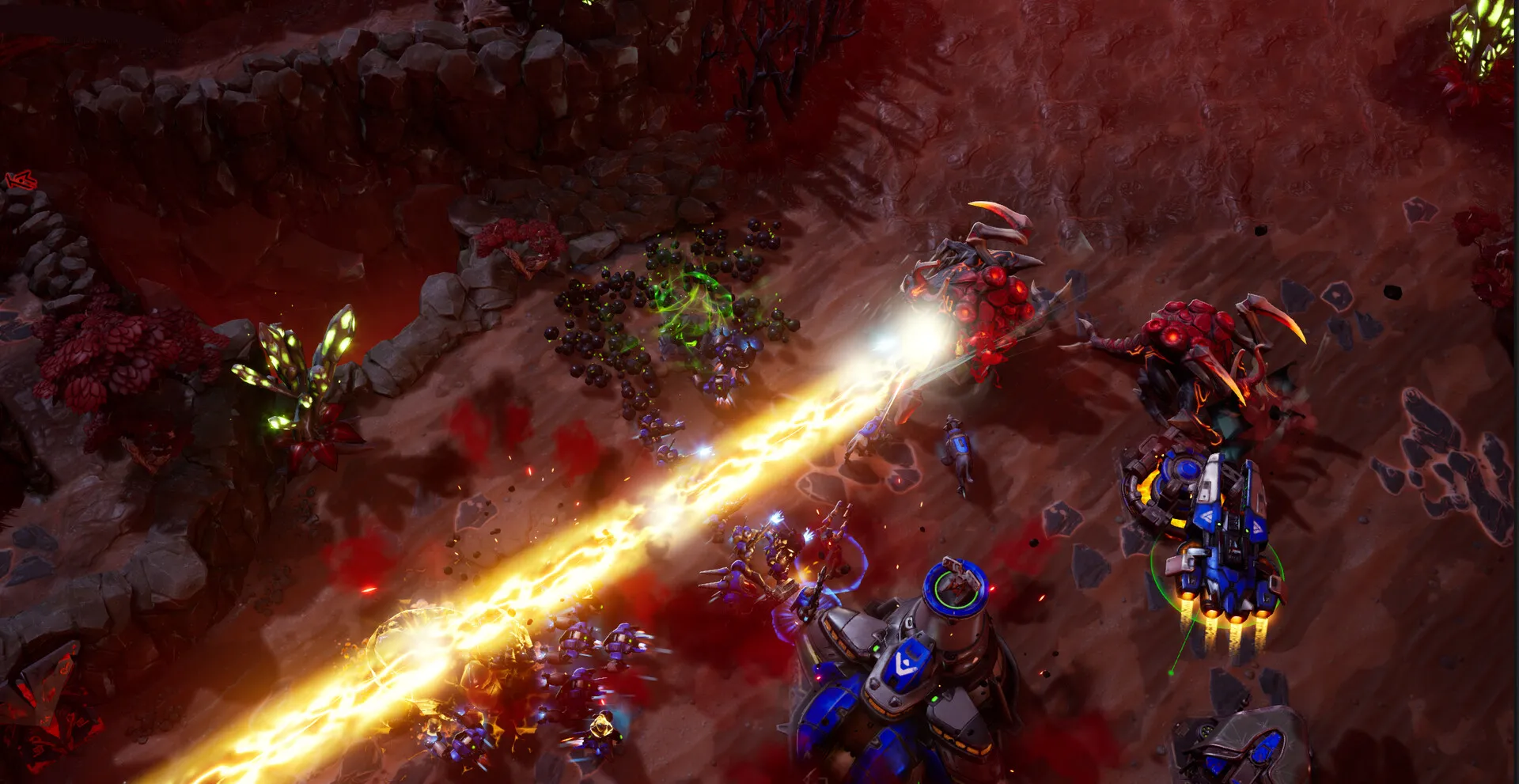
Combat itself is defined by a deliberately slow pace. Units have high durability, leading to prolonged engagements where tactical repositioning and ability usage are paramount. This high Time-To-Kill (TTK) makes battles more readable; you can clearly see how an engagement is unfolding and have time to react, pulling back weakened units or shifting focus to a priority target.
This design philosophy stands in stark contrast to the rapid, high-lethality encounters of a game like StarCraft II. The trade-off is a distinct lack of spectacle and immediate gratification. You will not find the satisfaction of a perfect Psi Storm or Siege Tank volley that evaporates an entire army in seconds.
Fights can feel like two massive blobs of units slowly chipping away at each other’s health bars. This design choice makes combat feel more like a persistent grind than a series of decisive clashes, potentially alienating players who seek those explosive, gratifying moments of power that create memorable highlights.
Three Armies, Three Philosophies
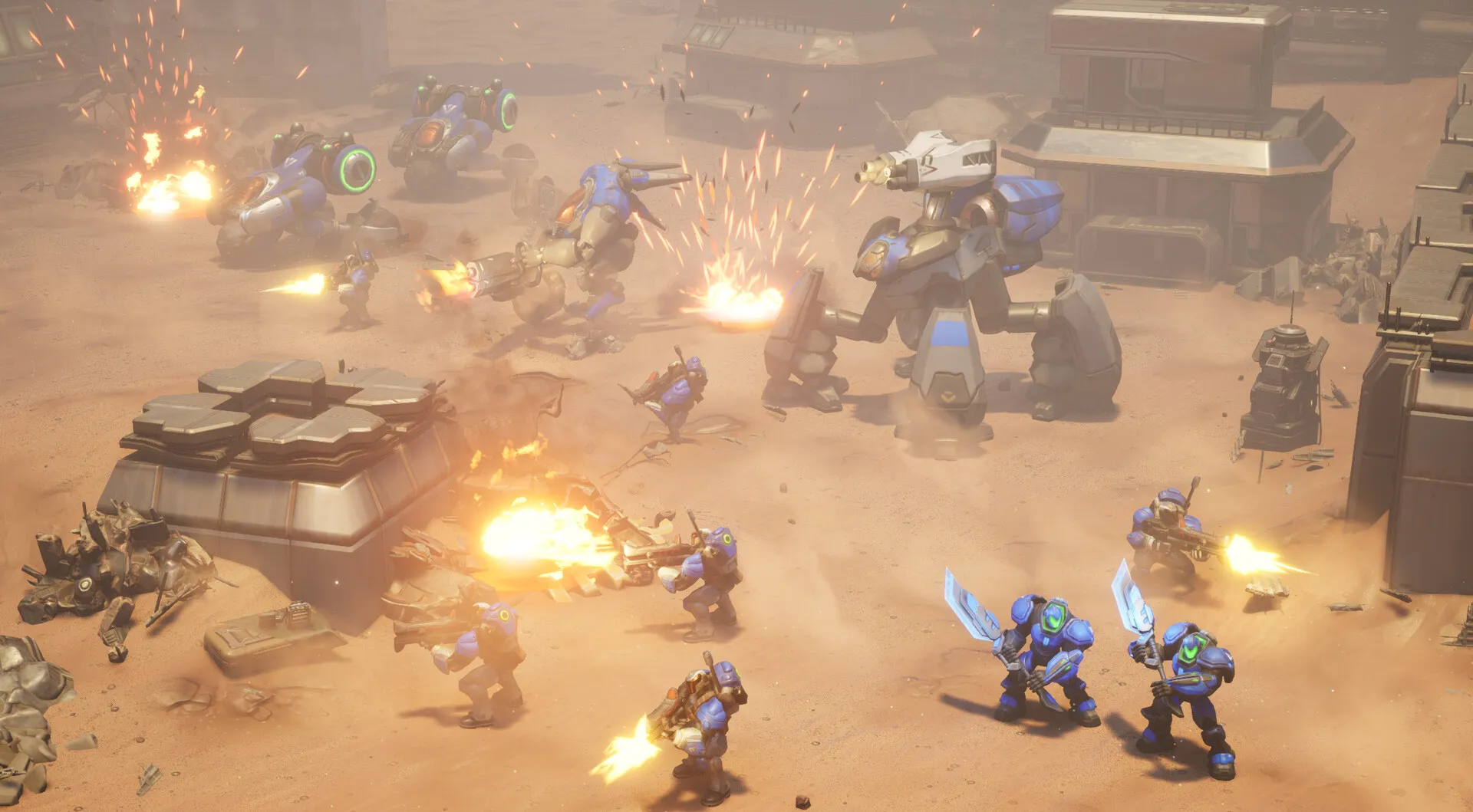
The Human Vanguard serves as the game’s accessible entry point, playing like a traditional RTS faction with familiar infantry, mech, and air units. Their defining mechanic is unit veterancy, where individual units level up and gain stats through combat experience. This system fundamentally alters how you view your army. Instead of treating units as disposable resources, you are encouraged to preserve them, especially high-level veterans who become linchpins of your force.
A fully promoted Lancer or Atlas is a significant asset, rewarding careful unit control and creating a clear priority target for opponents to focus-fire. The Infernal Host acts as a demonic swarm, using a mechanic called Shroud to enhance their map presence. This creeping influence empowers their units and structures, making their territory difficult to assail.
The faction underwent a significant rework that removed its original Animus resource, a system that generated power from unit deaths. This change streamlined their gameplay, making them easier to manage, but it also stripped away a unique part of their thematic identity, making them feel slightly more conventional.
The Celestial Armada is the high-tech, alien faction, reworked from a confusing early concept into something more intuitive. They rely on deploying mobile Arcships to project power fields that support their structures and units, a mechanic that feels like a more flexible version of the Protoss Pylon system. Their units have a sleek, alien aesthetic that stands out from the other two factions.
While the three factions feel distinct in their mechanics, the differences sometimes feel subtle. Each one encourages a different approach to expansion and army composition, with Celestials favoring a powerful central army and Infernals using their numbers to apply pressure across the map.
The game succeeds in creating asymmetry in how each army functions on a micro level. It stops short, however, of offering truly divergent strategic pathways, as the core goals of expanding, teching up, and winning a decisive battle remain largely the same for all three.
An Ambitious Campaign with Unfinished Business
The “Ashes of Earth” campaign offers a welcome variety of mission types, moving beyond the standard RTS objective of total annihilation. Players will find themselves defending key positions against waves of enemies, escorting convoys through hostile territory, and controlling powerful hero units in unique, contained scenarios.
This creativity is undermined by an inconsistent difficulty curve and questionable design choices. Some missions present a satisfying challenge, while others are trivialized by obvious exploits. One defensive mission allows the player to build up a fully upgraded, max-supply army before the first attack wave even begins, completely removing any sense of tension.
The story itself is a serviceable sci-fi plot about humanity’s last stand, but its execution falters badly. The narrative feels rushed, with underdeveloped characters introduced and then forgotten, a major betrayal that has no emotional weight, and crucial events happening off-screen.
Between missions, players can explore the Raptor 1, a dropship hub for interacting with crew and upgrading armies. The concept is strong, providing a space for progression and lore similar to the Hyperion from StarCraft II. Its systems, however, are tedious. Managing hero equipment involves a clumsy process of moving items from a stash to a character’s personal inventory, then into a separate locker.
The resources needed for unit upgrades are so scarce that players will finish the campaign with most of their arsenal untouched, a frustrating limitation that discourages experimentation. This lack of meaningful progression is matched by a startling lack of polish. The voice acting from a notable cast frequently sounds flat, disconnected, or delivered as if the actor is reading the lines for the first time.
Worse are the character portraits, which use a jarring AI animation technique. This results in uncanny, distorted facial expressions, such as the main character Amara grinning widely while screaming for her forces to fall back. The game simply cuts to a static victory screen after a mission, creating an anticlimactic feeling that breaks any narrative momentum.
A Divisive Aesthetic
Stormgate’s visual identity is clean, readable, and deeply polarizing. The art style adopts a stylized, almost cartoonish look reminiscent of games like Fortnite or modern mobile titles. While technically proficient and ensuring that units are easily distinguishable in the chaos of battle, this aesthetic may fail to connect with players expecting a grittier, more realistic sci-fi world.
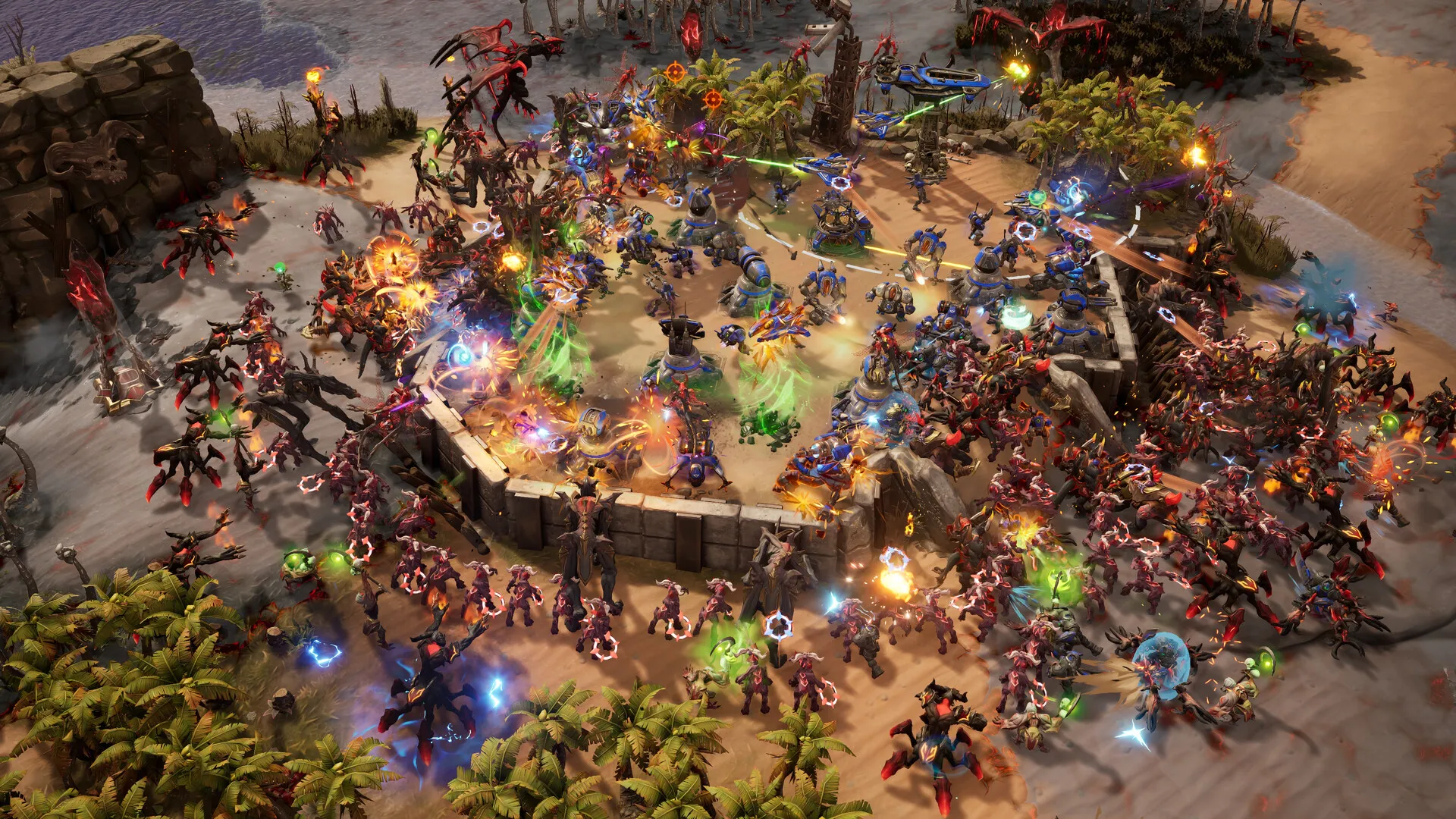
The detailed unit models look impressive in isolation but lose some of their impact when viewed from the distant, top-down perspective of gameplay. This visual choice creates a fundamental clash with the game’s theme of a brutal demonic invasion. The bright, cheerful grasslands and pleasant-looking trees feel completely at odds with the supposed post-apocalyptic setting.
This disconnect is felt in the multiplayer map design as well. Many battlefields feel more like generic fantasy environments than the war-torn landscapes of a futuristic Earth, lacking a strong sense of place or a cohesive sci-fi identity.
The sound design provides clear audio cues for most actions, with weapon fire and ability activations being distinct enough for players to process during a fight. The musical score is effective at building tension and setting a heroic tone, though it may not be as memorable as the iconic soundtracks of the games that inspired it.
Some sound effects, particularly for the Vanguard’s machine guns and mech units, lack the punch needed to make combat feel visceral. This contributes to the overall sense that battles are less impactful than they could be, making the game sometimes feel better when played on mute. The audio presentation is functional, but it rarely elevates the experience.
The Long Road Ahead
Outside of its campaign and 1v1 competitive mode, Stormgate is still very much a work in progress. A 3vAI co-op mode, which centers on powerful hero commanders, has been moved to an experimental part of the game called “Sigma Labs.” This mode shows potential for players seeking a more casual experience, yet it currently lacks the over-the-top abilities and power fantasy that made StarCraft II’s co-op so popular.
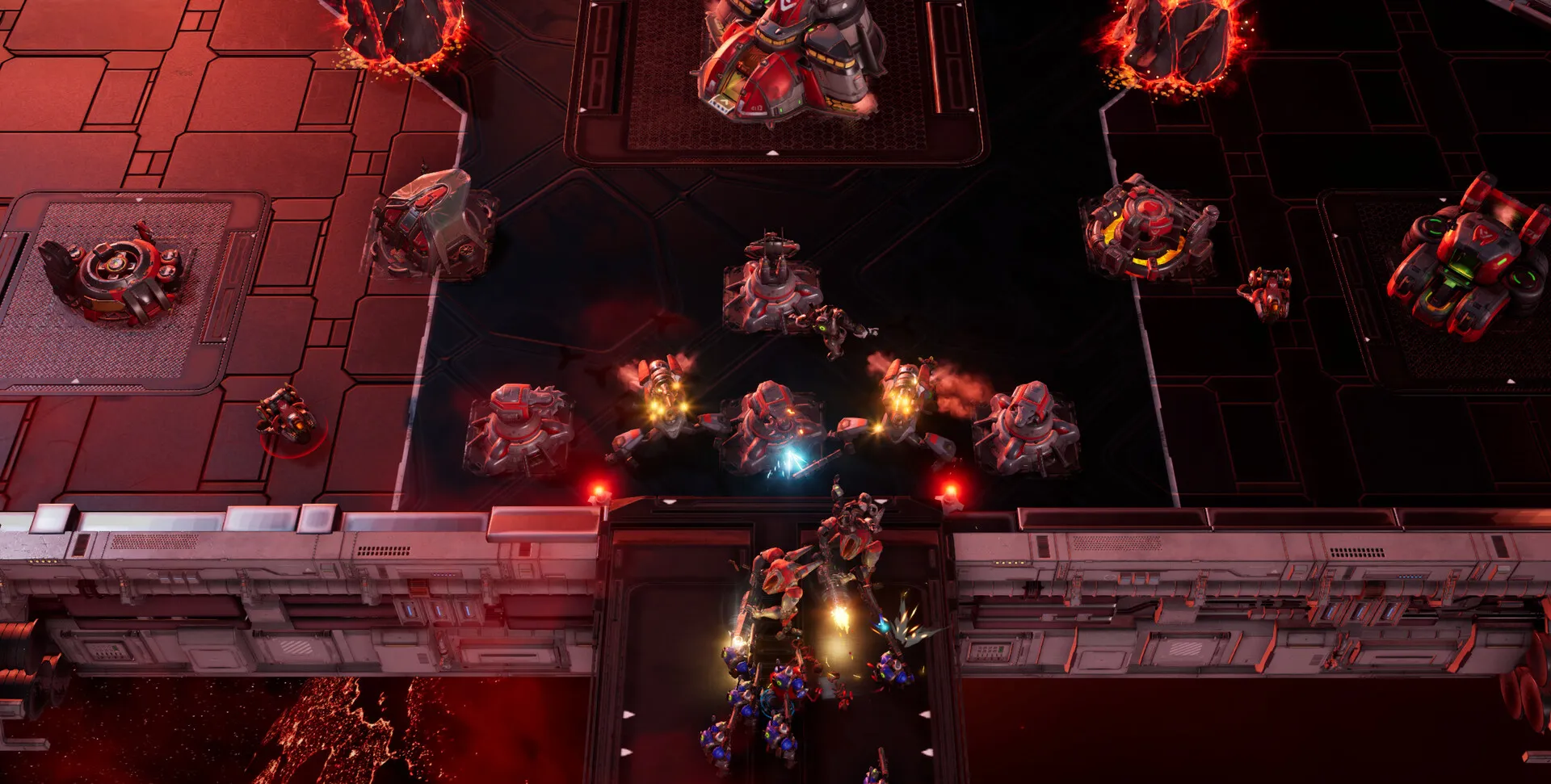
The developers have actively avoided “superpower” abilities, a decision that makes the mode feel restrained. Standard team-based PvP modes like 3v3 are available, offering an alternative for those who prefer to play with friends.
A map editor has also been included, giving the community tools to create their own content. This feature is vital for the game’s longevity, recalling the legacy of custom games in Warcraft III. It currently lacks some advanced trigger functions that would unlock its full potential for more complex creations.
The most significant failing is the new player experience. Stormgate provides almost no in-game guidance for its Infernal and Celestial factions, leaving players to figure out their complex mechanics through frustrating trial-and-error. A proper RTS tutorial eases players into faction mechanics, presents sample build orders, and explains strategic concepts.
Stormgate offers none of this. The main menu has a “Learn to Play” button, but it simply redirects to a website with videos that can become outdated with each new patch. An optional “BuddyBot” can help with basic base management, but it automates tasks without teaching the underlying strategy, making it a poor substitute for a proper tutorial system. This lack of onboarding presents a massive barrier for anyone who is not already an experienced RTS player.
The Review
Stormgate
Stormgate builds a robust RTS foundation with smart quality-of-life improvements that honor its celebrated lineage. The core gameplay is responsive and strategically sound. This strong potential is held back by a deeply unpolished campaign, a divisive art style, and combat that lacks satisfying impact. It feels like a promising framework that was released before its most ambitious parts were ready for public view. What is here is competent, but it is overshadowed by what is missing or incomplete.
PROS
- Solid and familiar core RTS gameplay mechanics.
- Excellent quality-of-life features that modernize the genre.
- Three factions with distinct mechanical identities.
- Creative and varied mission objectives in the campaign.
CONS
- Campaign story is rushed, unpolished, and poorly executed.
- Jarring AI-animated portraits and flat voice acting detract from the experience.
- Stylized art direction feels mismatched with the game's theme.
- Combat often lacks spectacle and satisfying impact.
- Poor onboarding and a lack of in-game tutorials for new players.