
























![Kingdom Hearts Collection [I-III] Review](https://gazettely.com/wp-content/uploads/2026/10/Kingdom-Hearts-Collection-I-III-1-360x180.webp "Kingdom Hearts Collection [I-III] Review: KHII Holds Steady as Newer Entries Fluctuate 37")




The fluorescent lights of the Beaujon public hospital in Paris flicker over a scene of controlled chaos. Stretchers roll past at a near run, phones ring with unanswered urgency, and the air is thick with a tension that never breaks. This is the world captured by director Nicolas Peduzzi in his documentary On the Edge, a raw and unflinching look at a public institution gasping for air.
Amidst the storm is Dr. Jamal Abdel-Kader, the hospital’s sole psychiatrist. He moves through the pandemonium with a determined calm, a solitary figure tasked with mending minds in a system that is itself broken. The film positions itself immediately as a frontline report from a healthcare crisis, chronicling the daily, near-impossible efforts of one doctor to provide humane care when the institutional support has all but vanished.
The Doctor as Narrative Center
The film’s entire structure is anchored by the character of Dr. Jamal. He is a profoundly dedicated and empathetic physician, resilient in the face of constant institutional friction. His therapeutic approach becomes the documentary’s primary narrative engine. His work is not about quick prescriptions; it is a meticulous process of building trust to forge a “non-toxic environment” for healing.
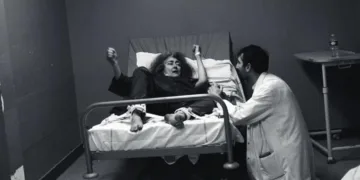
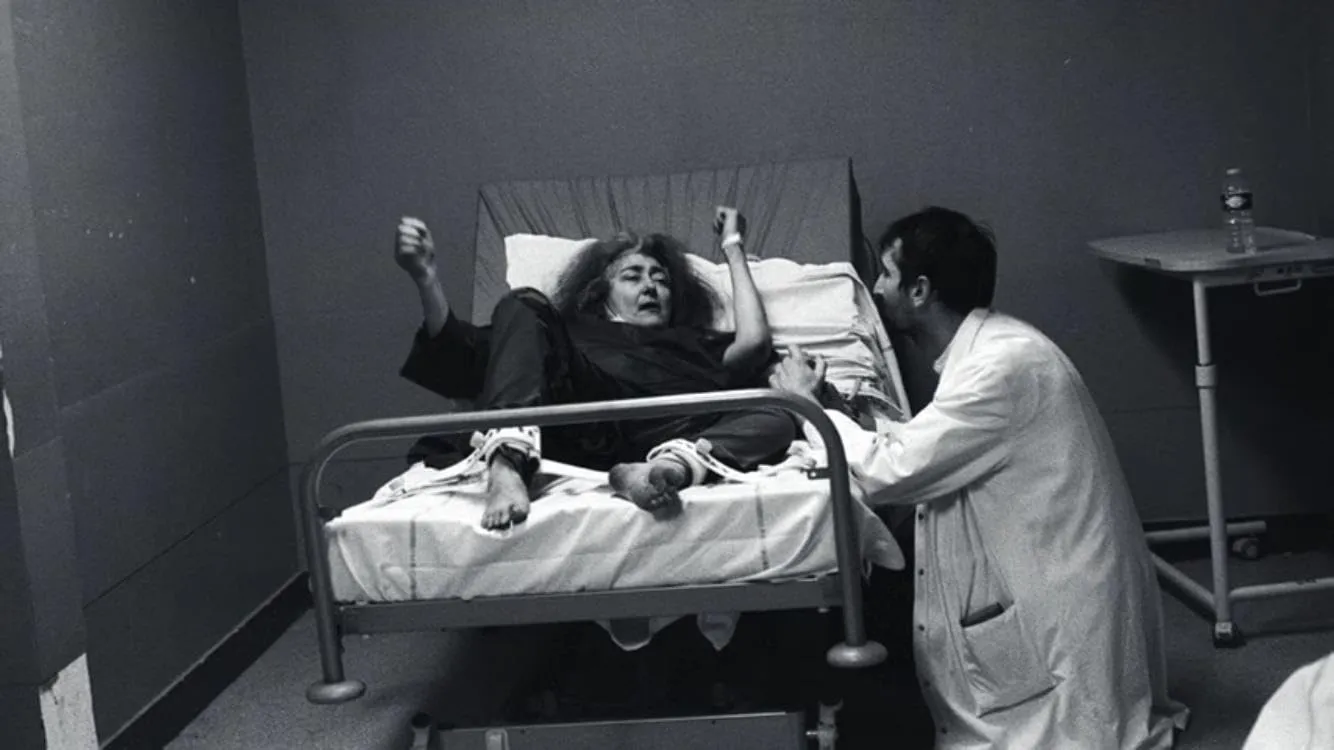
The narrative unfolds through a series of intense patient encounters that showcase his methods. We see him gently navigate the anger and shame of Aliénor, a young woman who lost three limbs after a suicide attempt, brokering a difficult conversation with her sister. He finds a way to connect with a young man terrified by a pancreatitis diagnosis by discussing medical television shows, a simple act of shared interest that pierces through the clinical fear.
These interactions are the film’s foundational scenes, each one a small story built on Jamal’s ability to see the person beyond the diagnosis. His use of creative therapies, like having patients perform Shakespeare, functions as a powerful narrative device, demonstrating a commitment to shared catharsis over sterile procedure.
The story gains its depth from his personal struggle. He is acutely aware of the strain of his work, and the film explores his fear of burnout through candid conversations with his intern, Alice, and a nurse’s aide, Romain.
These moments reveal the immense toll his work takes. He even questions if his tireless efforts make him complicit, a stopgap measure that allows a failing system to limp forward. This internal conflict elevates the story from a simple portrait of a hero to a complex study of a man trying to maintain his principles within an untenable situation.
The Camera as Participant
Peduzzi’s filmmaking is an active participant in the story, shaping the viewer’s experience of the hospital’s oppressive atmosphere. The jagged, handheld camera creates a startling sense of immediacy. It hurries to keep pace with Dr. Jamal, generating a breathless rhythm that mirrors the relentless demands of his job.
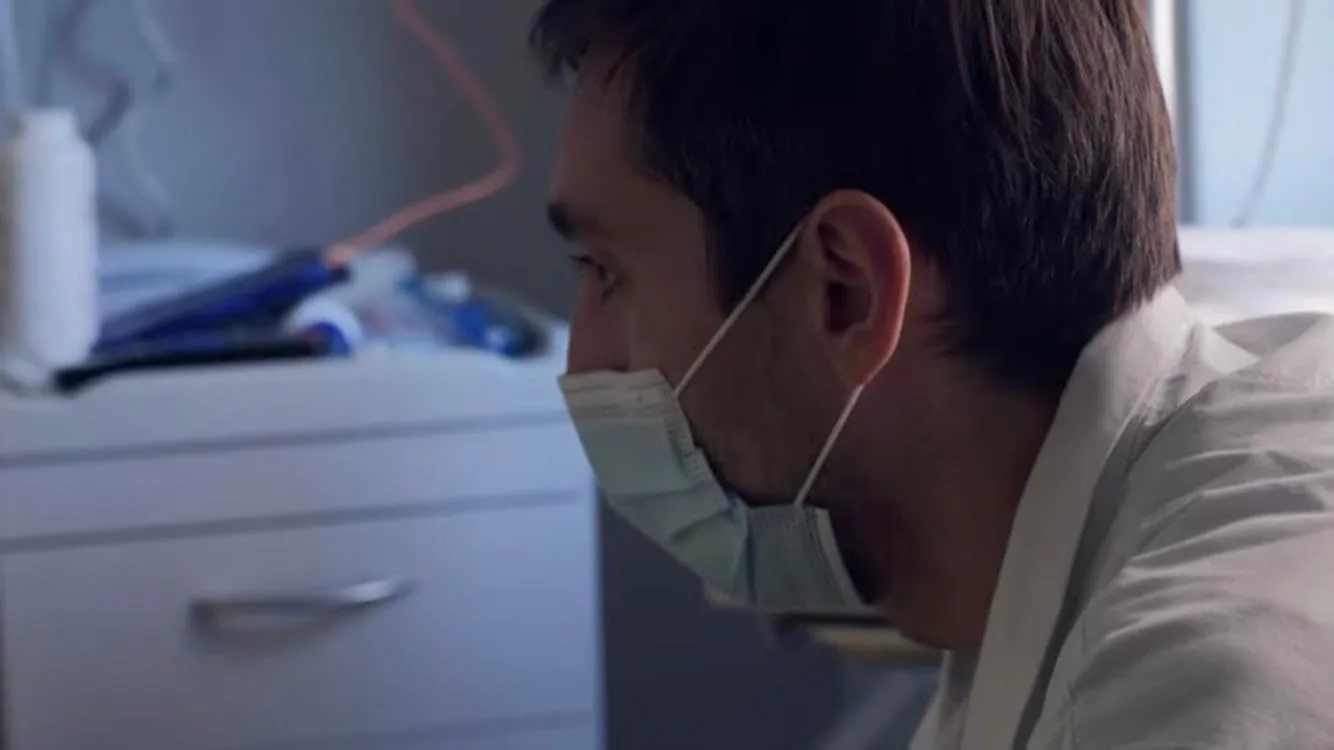
The viewer becomes a trailing intern, perpetually a few steps behind, trying to piece together the narrative from hurried conversations in hallways and glimpses into patient rooms. The cinematography is both intimate and tactful; it pushes in for close-ups that capture quiet moments of connection, then pulls back to observe difficult conversations through doorways or in reflections, respecting the privacy of the patients. This technique makes the viewer an observer who understands the need for professional distance.
The editing is dense, maintaining a fast pace that rarely allows for a reprieve. When the film does pause, it is through stylistic flourishes that punctuate the action. The insertion of black-and-white stills of doctors and patients freezes a moment of human contact, functioning like a punctuation mark in a run-on sentence.
Slow-motion sequences and split screens emphasize the disorienting pressure cooker of the environment. Gaël Rakotondrabe’s score is essential to this effect. Its dual personality, shifting between pulsating, techno-style beats and somber, classical piano melodies, captures the film’s central tension. The electronic music is the sound of the system’s greedy, pounding rhythm, while the piano is the sound of Jamal’s attempt to create melodic grace from the noise. The sound design effectively tells a story of its own.
An Uncomfortable Prescription
On the Edge uses the Beaujon hospital as a potent microcosm for a much larger societal ailment. The film presents the deeply personal stories of the patients as direct evidence of systemic neglect and a widespread indifference to mental health. Each case is a symptom of a condition affecting all of modern society.
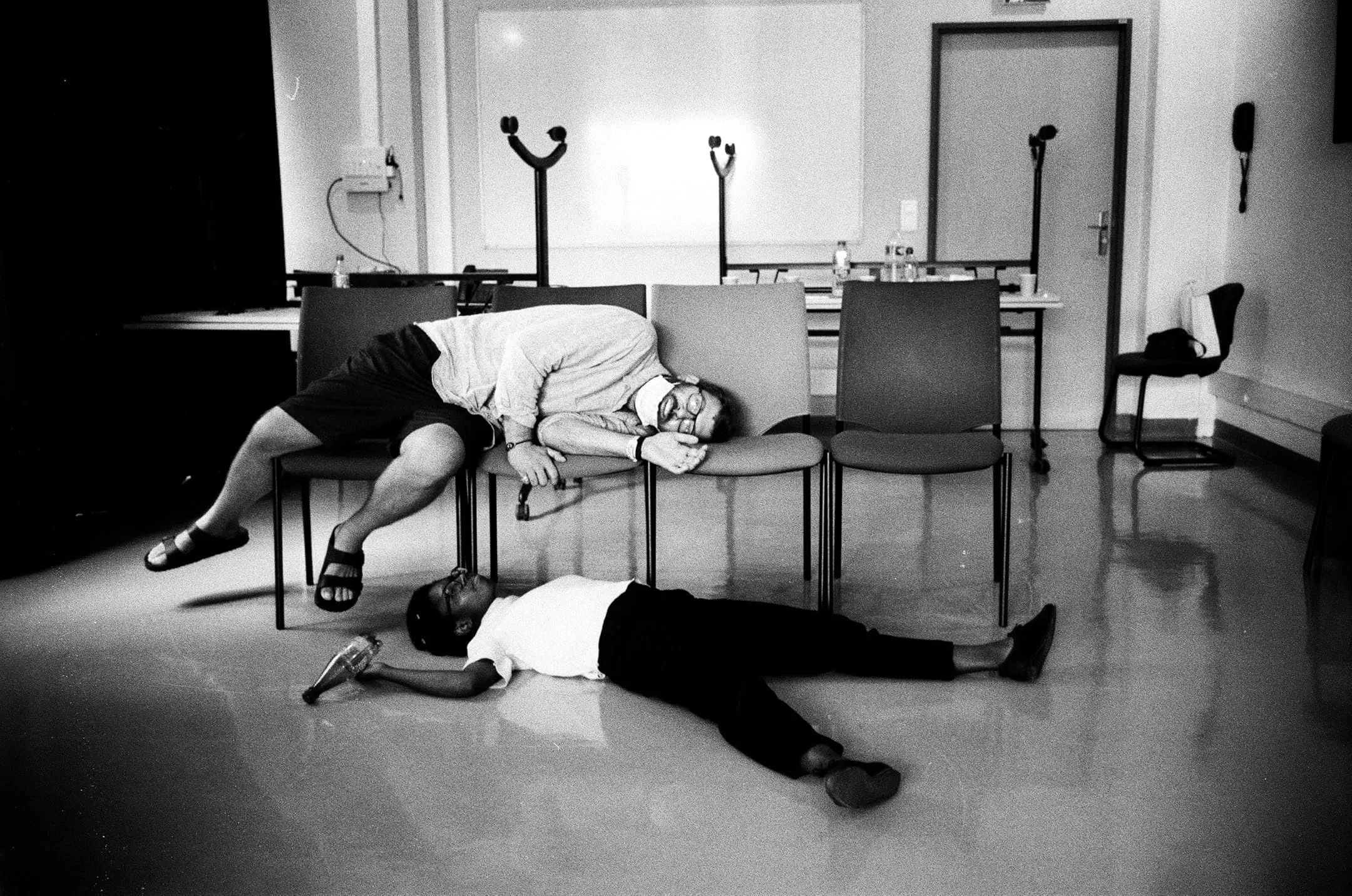
A belligerent man brought in by police, a vulnerable Dutch woman terrified of her family, an addict facing life-altering injuries—their individual narratives are woven together to form a damning indictment of a system where budget cuts and a focus on productivity have strangled the capacity for care. The film argues that these are not isolated failings but the predictable outcomes of a society that has forgotten how to care for its most vulnerable.
The documentary’s tone is a difficult balance of disheartening reality and a quiet admiration for resistance. It finds moments of light in the profound connections Dr. Jamal forges, yet it refuses to suggest that one person’s good work can fix an institution in decay. The film’s final message is a powerful and uncomfortable warning.
It demonstrates that while extraordinary individuals can provide hope, they are a fragile buffer against systemic failure. The narrative offers no neat resolution. The workday ends, but the viewer knows another one just like it will begin tomorrow. This structural choice is deliberate, leaving the audience with the acute sense that this is not a problem that can be solved by one person, but one that requires urgent and collective action.
État limite, also known as On the Edge, is a 2023 documentary film from France that explores the challenges of providing healthcare in a struggling public hospital near Paris. It follows the work of Dr. Jamal Abdel-Kader, the sole psychiatrist in the hospital, as he navigates the realities of underfunded infrastructure and overworked staff.
Full Credits
Director: Nicolas Peduzzi
Writers: Nicolas Peduzzi
Producers and Executive Producers: Carine Ruszniewski
Cast: Jamal Abdel-Kader, Alice Abbou, Romain Maronier, Lara Naturel, Ayman Zaoui
Director of Photography (Cinematographer): Nicolas Peduzzi, Laëtitia Montalembert
Editors: Nicolas Sburlati
Composer: Gaël Rakotondrabe
The Review
On the Edge
On the Edge is an urgent and masterfully constructed documentary. It functions as a compelling character study of the remarkable Dr. Jamal Abdel-Kader and a damning diagnosis of a public health system in freefall. Nicolas Peduzzi’s raw, immersive filmmaking places the viewer directly into the hospital's chaotic corridors, making the immense pressure palpable. While its intensity is demanding, the film is a vital and deeply human report from the frontline of a crisis, showcasing the profound strength of one person fighting against the tide of systemic failure.
PROS
- An unforgettable central figure in Dr. Jamal Abdel-Kader.
- Immersive, immediate handheld cinematography that creates a powerful sense of presence.
- A poignant musical score that enhances the emotional depth.
- Urgent and vital social commentary on the mental healthcare crisis.
CONS
- Its intensity and raw depiction of suffering can be overwhelming for viewers.
- The relentless, fast-paced editing may feel fatiguing.
- The narrow focus on one doctor offers a limited perspective on systemic solutions.







