












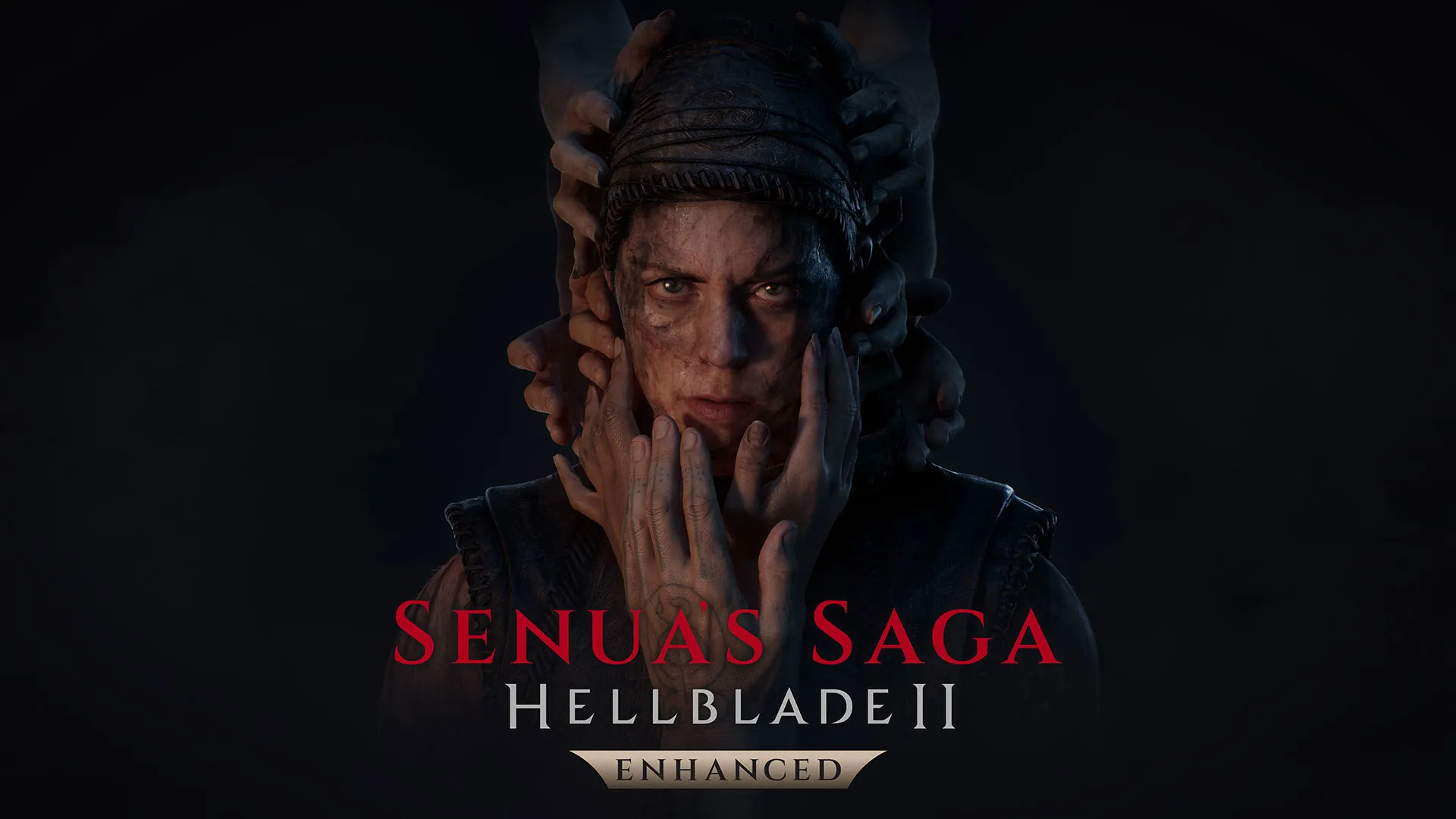

Senua’s Saga: Hellblade II picks up after the harrowing events of the first game, trading the mythological Norse underworld for the harsh, tangible reality of 10th-century Iceland. This time, Senua’s quest is one of grim purpose; she allows herself to be captured by Viking slavers, seeking to dismantle their operation from within and free her people.
A violent storm shipwrecks her on Iceland’s unforgiving shores, beginning a new ordeal that is both external and deeply internal. The game immediately establishes its intent not as a power fantasy, but as an unflinching exploration of a mind in turmoil set against a brutal landscape.
It asks the player to walk alongside Senua, to feel the weight of her psychosis, and to see the world through her fractured perception. This is an experience defined by its suffocating atmosphere and the sheer force of its audiovisual presentation, a deliberate and focused narrative that prioritizes sensory immersion above all else.
The Weight of a Voice
The narrative of Hellblade II is an intimate character study, building upon the foundations of its predecessor with newfound complexity. Senua has evolved. She is no longer purely a victim of her condition, swept away by its currents. Here, she actively attempts to harness her psychosis, channeling its painful insights to pursue a purpose greater than herself.
This is not a story of recovery, but one of adaptation, where she accepts the voices and visions as an inseparable part of her reality. Her internal world remains a storm. The Furies are a constant chorus of doubt, fear, and guidance, their whispers a permanent fixture in the soundscape. One review noted a subtle shift; the Furies are sometimes more positive, acting as a symbol of Senua’s own inner perseverance.
Her father’s abusive voice manifests as a menacing, shadowy presence, a personification of childhood trauma that haunts her moments of vulnerability. The game expertly weaves these hallucinations with Norse mythology, blurring the line between Senua’s perception and the brutal world around her. Giants rise from mountains not just as mythological beasts, but as metaphors for the insurmountable obstacles she believes she must face.
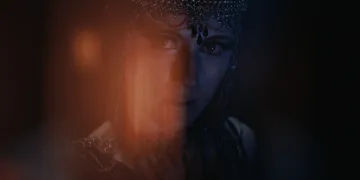
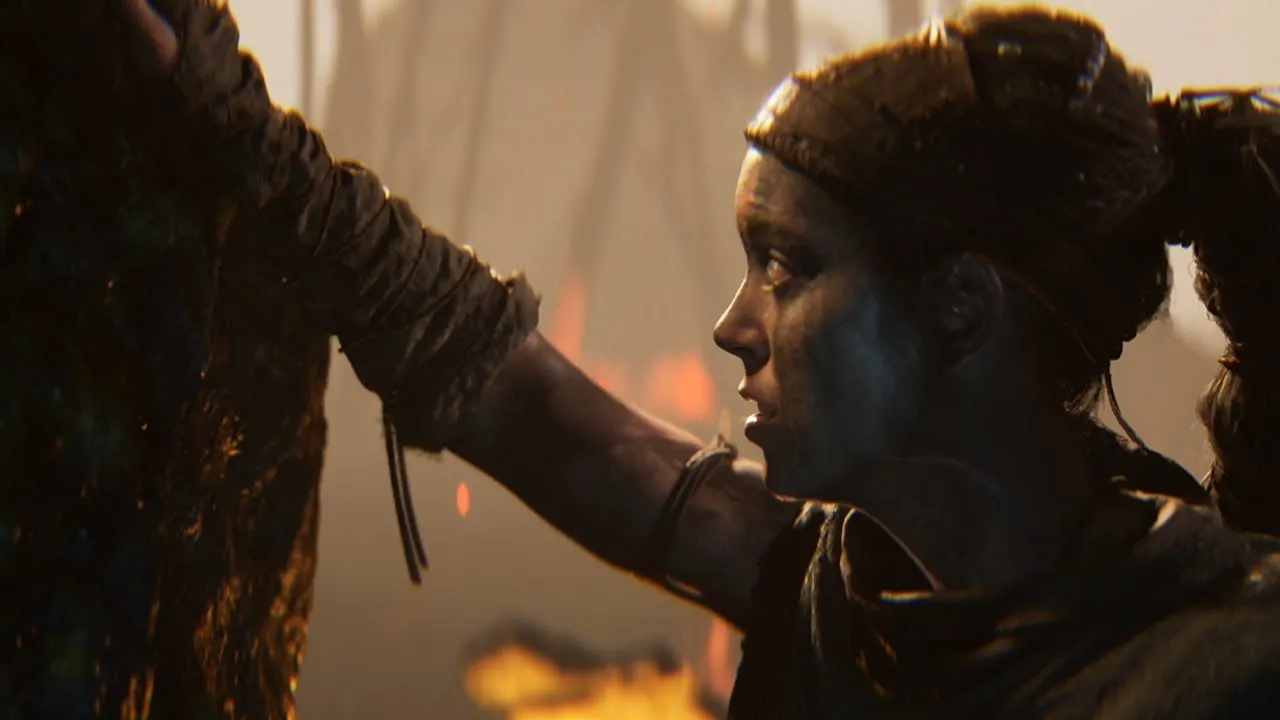
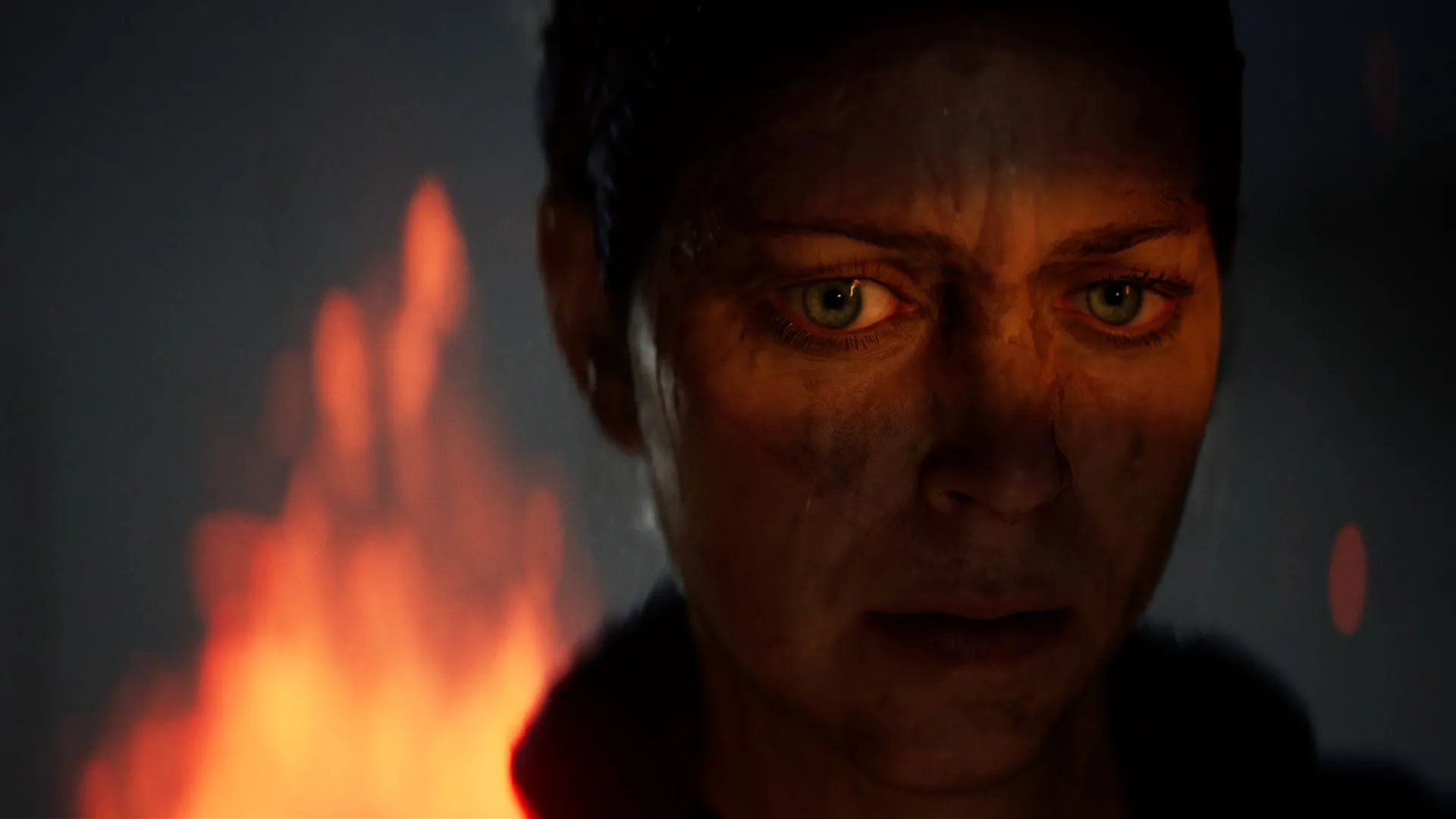
At the center of this storm is Melina Juergens’ powerful performance, brought to life with meticulous performance capture. Her portrayal of Senua’s pain and resolve is the emotional anchor that makes the experience feel authentic. Every subtle facial tic, every moment of physical tension, and every pained cry is translated directly into the game, creating a digital character with a profoundly human core.
This journey also introduces companions, a significant shift from the first game’s oppressive isolation. Thorgestr, the captured slaver; Fargrimr, a shaman she rescues; and Astrithr, a pragmatic village leader, each react to Senua differently. They see a madwoman, a seer, or a necessary ally in battle. Their presence grounds the narrative, framing Senua’s struggle within a community grappling with its own existential threats.
Their dialogue provides external perspectives that challenge and sometimes affirm Senua’s worldview, forcing her to articulate her reality to others. These interactions explore how societies interpret what they cannot understand and underscore the game’s central themes of belief, injustice, and finding strength through vulnerability. The focused eight-hour story is a relentless descent into this world, concerned less with a singular, personal vengeance and more with a collective responsibility to face the darkness.
An Audiovisual Onslaught
The presentation of Hellblade II is a technical marvel designed to serve a singular artistic vision. It is an assault on the senses, intended to overwhelm the player and foster a deep sense of empathy for its protagonist. Powered by Unreal Engine 5, the game’s depiction of Iceland is breathtakingly realistic.
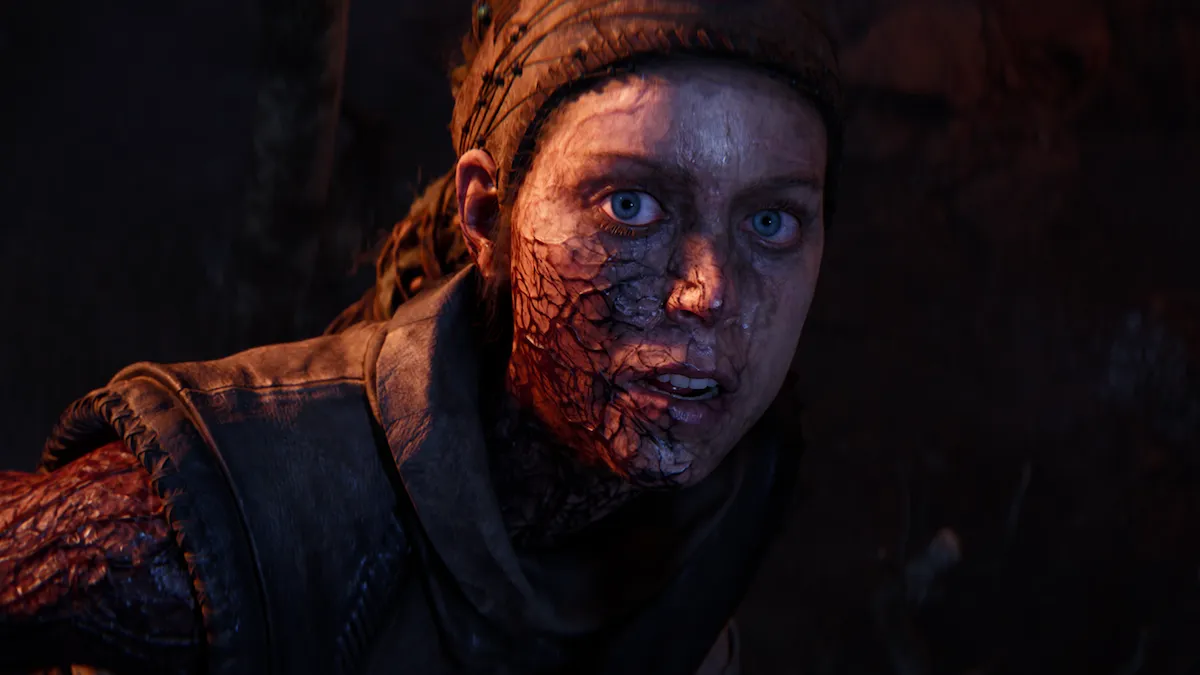
You will traverse jagged volcanic plains where steam hisses from cracks in the earth, navigate dripping and claustrophobic caves that feel genuinely suffocating, and stand on coastlines being battered by violent, churning seas. The visual language is one of oppression. The art direction commits fully to a dark, almost perpetually overcast atmosphere that directly mirrors Senua’s psychological state.
The use of light is sparse and meaningful; a rare sunbeam breaking through the clouds feels like a momentous event. This cinematic quality is heightened by a complete lack of a user interface. The deliberate decision to remove health bars, objective markers, and maps forces the player to rely on environmental cues and the guidance of the voices, aligning the act of playing with the experience of being Senua.
The sound design is arguably the game’s greatest achievement and is essential to its identity. Playing with headphones is not a recommendation; it is a requirement to fully appreciate the craftsmanship. The use of binaural 3D audio creates an unnervingly intimate soundscape that simulates three-dimensional hearing. The Furies’ voices appear to come from all around, their overlapping commentary shifting in location and intensity.
One might whisper a warning directly in your left ear while another mocks you from a distance, creating a state of constant anxiety and sensory overload. This technology is the key to the game’s immersion. Beyond the voices, the environmental audio is rich with detail.
You hear the howl of wind whipping through rock formations, the unsettling silence of an abandoned village, and the deep, guttural tones of mythological giants that resonate with physical force. The haunting musical score, a mix of folk melodies and dissonant, ambient tracks, dynamically swells and recedes to match the emotional pitch of each scene. Every sound is crafted to pull you deeper into Senua’s reality, making her ordeal feel startlingly present.
A Guided Blade
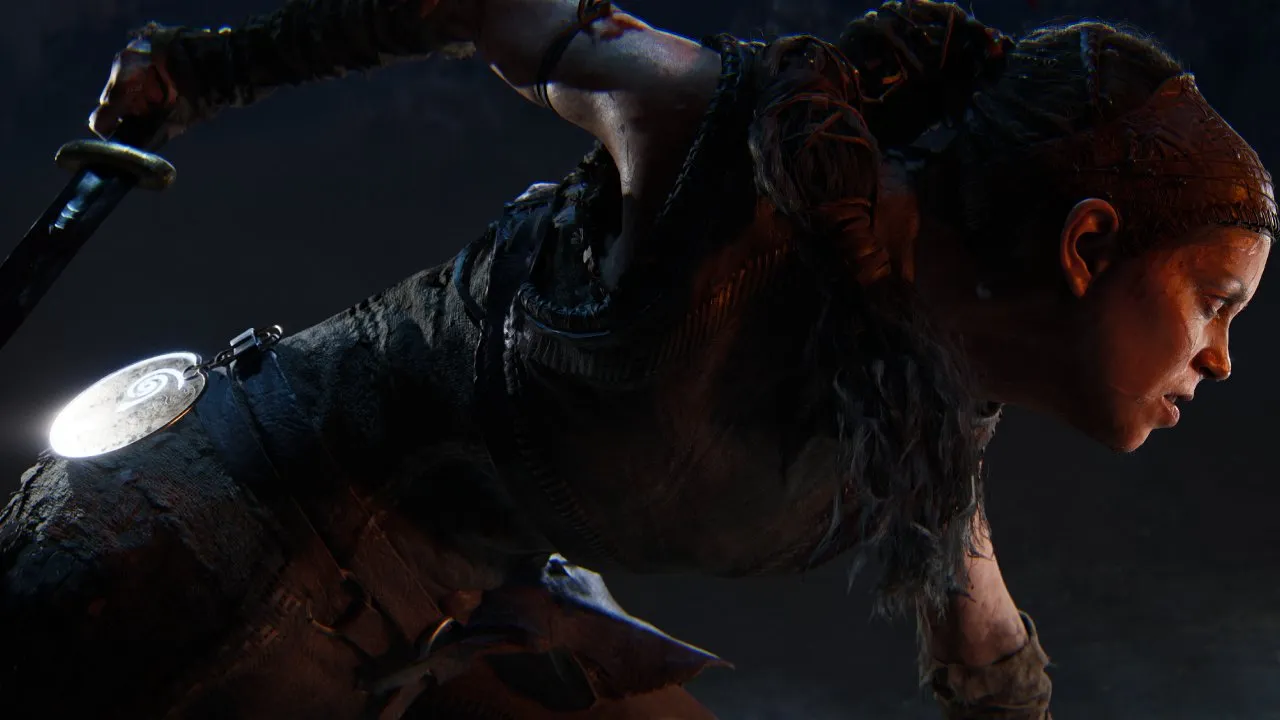
The gameplay systems in Hellblade II are purposefully lean, meticulously designed to support the narrative rather than to challenge the player with mechanical complexity. Combat is a visceral and brutal affair, built on a simple foundation of light attacks, heavy strikes, parries, and dodges. Its defining characteristic is its strict, theatrical choreography.
Fights are always framed as intense, one-on-one duels, even when Senua is surrounded by foes. This approach, a stark contrast to Ninja Theory’s work on combo-heavy titles like DmC: Devil May Cry, creates incredibly personal and cinematic encounters. The camera pulls in tight to capture every grimace, desperate block, and brutal finishing blow.
The trade-off for this cinematic flair is a significant lack of player agency. Encounters can feel more like participating in a scripted sequence than engaging in a dynamic fight. Enemy attack patterns are often predictable, and a focus ability that slows time can further reduce the challenge, making the player feel more like an actor hitting their marks than a warrior making strategic decisions.
Between these violent encounters, the game settles into a rhythm of exploration and puzzle-solving. Exploration is extremely linear; players are guided along a fixed path that feels more like a corridor than an open space. This tight control allows the developers to perfectly stage every visual and auditory moment, much like a theme park dark ride.
The freedom to roam is sacrificed for a perfectly curated experience. Small detours occasionally lead to collectibles in the form of totems, which unlock short audio narrations of Icelandic myths and provide the primary source of optional lore. The puzzles are similarly straightforward and thematically integrated. Most involve finding hidden symbols in the environment from a specific perspective to dissolve a magical barrier.
The very act of searching for the “right perspective” serves as a direct metaphor for Senua’s psychological journey. At times, she can also shift her perception to alter reality, creating paths where none existed. These sections serve as effective breathers from the narrative’s intensity, but they offer little in the way of genuine challenge, reinforcing the idea that the gameplay is a vessel for the story, not the main attraction.
A Sharper Saga
The Enhanced Edition brings several technical and content updates that meaningfully refine the experience. The most significant addition for console players is the Performance Mode, which allows the game to run at a stable 60 frames per second. The difference between this and the original 30 FPS Quality Mode is immediately apparent.
Motion is smoother, input latency is reduced, and the frenetic combat feels more responsive, making the timing for critical parries feel more intuitive. For PC players, a new graphics preset for very high settings pushes the already impressive visuals even further. Beyond performance, this version adds new ways to engage with the game after the credits roll.
Dark Rot Mode is a New Game+ option where a limited number of deaths will permanently erase your save file. This feature introduces a severe, tangible consequence for failure, transforming combat from a cinematic spectacle into a tense, high-stakes struggle for survival that better aligns the player’s fear of loss with Senua’s.
For players interested in the game’s creation, new developer commentaries and interviews offer valuable insight into the production process. They provide context for artistic decisions and detail the studio’s extensive work with mental health experts to ensure a responsible and authentic portrayal of psychosis.
The experience on the PlayStation 5 is particularly heightened by the clever implementation of the DualSense controller’s haptic feedback. This is not a simple rumble; it translates specific in-game events into tangible sensations. You can feel the subtle patter of raindrops across the surface of the controller, the rhythmic thump of Senua’s escalating heartbeat during moments of panic, and even unsettling vibrations that seem to correspond with the intensity of the voices in her head, adding another powerful layer of sensory immersion.
An Unforgettable Ordeal
Senua’s Saga: Hellblade II is an uncompromising piece of interactive art. Its greatest success lies in its masterful use of audiovisual technology to create a deeply immersive and empathetic exploration of psychosis. The game’s commitment to its artistic vision is absolute, resulting in a powerful narrative experience that lingers long after it is finished.
This singular focus, however, comes at the cost of mechanical depth. Its simple puzzles and highly controlled, restrictive combat will not appeal to players who prioritize agency, complex systems, and skill-based challenges. The game functions best when viewed as an interactive psychological horror drama, one that leverages its medium to make the player feel the suffocating weight of its protagonist’s struggle.
It is a demanding, often uncomfortable experience that succeeds completely in its mission to build a profound connection to Senua’s journey. For those who believe in the power of games to tell profound, author-driven stories, it is a monumental achievement and a benchmark for narrative immersion. This is a game to be felt and absorbed, not just played.
The Review
Senua's Saga: Hellblade II - Enhanced
An astounding technical and artistic achievement, Senua's Saga: Hellblade II - Enhanced sets a new benchmark for audiovisual immersion. Its hauntingly beautiful world, revolutionary sound design, and powerful narrative create an unforgettable, empathetic experience. This singular focus comes at a cost; the shallow, restrictive gameplay serves only the narrative's immediate needs, offering little challenge or agency. It is a stunning interactive story, but a mechanically simple game.
PROS
- Breathtaking photorealistic graphics and art direction.
- Industry-leading binaural 3D sound design creates unparalleled immersion.
- A powerful, mature narrative anchored by a masterful lead performance.
- Seamless, cinematic presentation with no HUD.
- The 60 FPS Performance Mode provides a smooth and responsive experience.
CONS
- Combat is overly simplistic and feels heavily scripted.
- Gameplay systems lack depth and player agency.
- Puzzles are simple and offer little challenge.
- Exploration is extremely linear, offering no freedom.