





























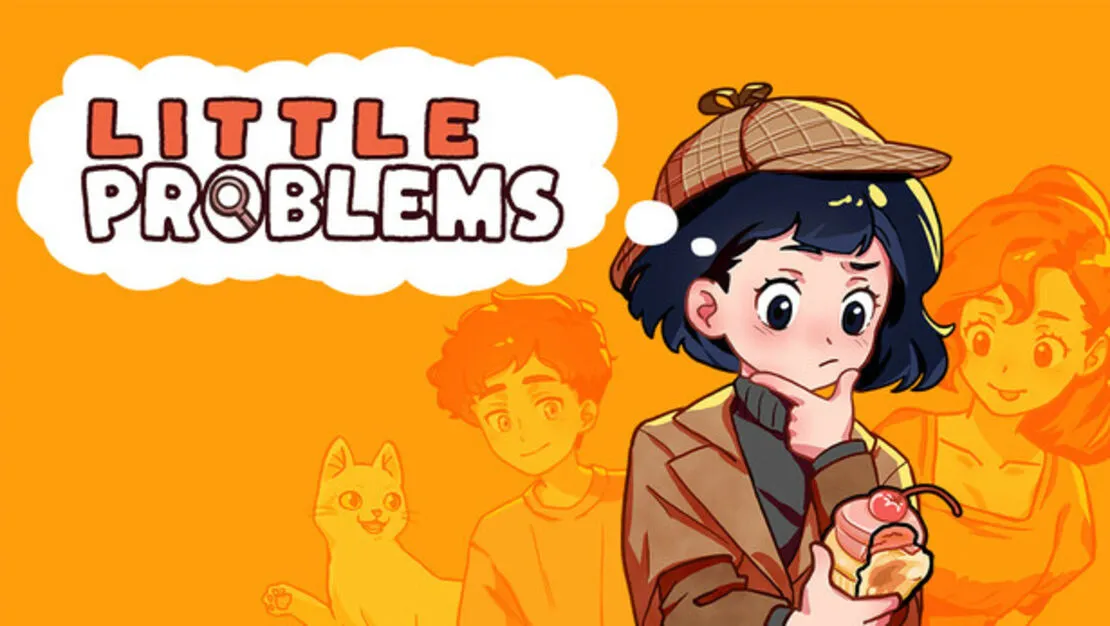

Little Problems: A Cozy Detective Game presents a refreshing take on the detective puzzle genre by focusing on the mundane mysteries that fill ordinary life. You play as Mary Grinsnow, a first-year university student whose everyday situations transform into engaging puzzle scenarios. This game deliberately sidesteps the high-stakes drama typical of detective games, choosing instead to explore the small complications that make college life memorable.
The scenarios you’ll encounter feel authentically relatable: figuring out what happened to Mary’s homework, identifying who ate the last cupcake, helping Mary find her friends at a crowded concert, or piecing together the events of a group project gone wrong. Each case presents itself as a static scene filled with contextual clues that you must observe and interpret. The game positions itself as a cozy experience, embracing the slice-of-life aesthetic through bright visuals and gentle storytelling while maintaining the core satisfaction of detective work through careful observation and logical deduction.
Mary’s diary serves as your primary tool for solving each mystery. You collect clues by examining the environment, then fill in blank spaces within diary entries to demonstrate your understanding of what transpired. This approach transforms detective work from action-oriented investigation into contemplative puzzle-solving, creating space for players who enjoy methodical analysis over dramatic confrontations.
Clue-Gathering and Deductive Reasoning
The core gameplay revolves around examining static scenes for interactive elements that reveal crucial information. Clicking on a character’s phone might show recent text messages, while examining a piece of paper could reveal part of someone’s name or important dates. The game teaches you to look for visual cues that indicate interactivity: items that seem slightly out of place, characters with distinctive expressions, or objects that appear more detailed than background elements.
Mary’s diary system provides the framework for organizing your discoveries. Each case presents diary entries with blank spaces that correspond to specific information you need to uncover: character names, locations, times, relationships, and motivations. The game divides these entries into required sections that you must complete to progress and optional sections that provide additional challenge for thorough players.
The feedback system strikes a good balance between guidance and independence. After filling in a section, the game indicates whether your answers are correct or shows how many mistakes you’ve made without immediately revealing the solutions. This allows you to revisit clues and reconsider your interpretations. A highlighting feature can point out incorrect answers, while the hint system provides multiple levels of assistance without completely solving puzzles for you.
Early cases introduce these mechanics through straightforward scenarios: identifying characters in a classroom setting or determining what beverage someone was drinking by examining discarded containers. The complexity grows substantially as you progress. Later cases require you to navigate a library’s computer system to determine who checked out which books, decode what animals at a veterinarian’s office are communicating through context clues, or locate specific individuals within large crowds using minimal identifying information.
The variety keeps the experience engaging across its ten main cases. Some scenarios function like hidden object puzzles, others resemble logic problems requiring you to match multiple variables, and a few introduce unique mechanics like translating animal communication or analyzing group presentation orders. Optional content includes hidden cupcakes scattered throughout each scene and bonus objectives that extend the challenge for completionist players. The note-taking feature proves essential for complex cases where you need to track multiple character relationships and timeline details.
Visual Design and Audio Elements
The game’s anime-inspired art style creates a distinctly cozy atmosphere through bright colors and expressive character designs. Each character possesses unique visual characteristics that aid in identification, which proves crucial when cases require you to recognize individuals across different contexts. The art style’s emphasis on distinctive features serves the gameplay well, making character recognition possible even when scenarios involve costumes or different settings.

Mary’s cat deserves particular mention for its adorable design and charming animations. The game’s animal designs generally excel, featuring expressive faces and endearing movements that contribute to the cozy aesthetic. Background art maintains consistent quality, with environments that feel lived-in and authentic to college life. The scenes contain enough detail to reward careful examination while avoiding visual clutter that might obscure important clues.
The cinematic cutscenes that appear between cases provide glimpses into Mary’s relationships and personal growth. These sequences flesh out the world beyond the puzzle scenarios and help establish emotional connections to the characters you encounter repeatedly across different cases.
The electronic, MIDI-style soundtrack complements the game’s gentle tone with pleasant melodies that evoke early video game music. However, the audio loops can become repetitive during extended puzzle-solving sessions. The relatively short musical segments repeat frequently enough that they may become distracting when you spend significant time examining a single scene. Basic audio settings allow you to adjust or mute the music as needed.
Technical performance remains solid with straightforward controls and a clean user interface that makes clue collection and diary completion intuitive. The game includes difficulty options like clue highlighting for players who prefer more guidance, while achievement integration provides additional goals for dedicated players.
Character Development and Lasting Appeal
Mary’s character development unfolds organically through the cases themselves rather than through extensive dialogue or cutscenes. You learn about her personality, relationships, and college experiences by observing how she handles various situations and by piecing together details from her interactions with friends and family. This approach requires active engagement from players, as understanding Mary’s character becomes part of the puzzle-solving process.

The supporting cast gains depth through repeated appearances across cases. Friends who appear in early scenarios become familiar faces whose personalities you can recognize in later, more complex situations. This familiarity becomes mechanically useful as you learn to identify characters by their behavior patterns, preferred activities, or relationship dynamics. A romantic subplot allows you to choose between potential partners for Mary, adding personal stakes to some scenarios while maintaining the game’s gentle tone.
The game’s structure divides its ten cases into interconnected groups that follow Mary through different periods of her first college year. This organization creates narrative flow while allowing each case to function as a self-contained puzzle. The slice-of-life approach means that major dramatic events remain absent, keeping the focus on the small moments that define daily experience.
Replay value comes primarily from optional content and completionist challenges. Hidden cupcakes provide reason to revisit completed cases, while bonus puzzles and achievements offer additional objectives. However, the story choices have limited replay impact since you cannot easily replay scenarios with different decisions without restarting the entire game.
The approximately five to six-hour completion time makes Little Problems accessible for both marathon sessions and episodic play. The game succeeds in appealing to detective puzzle newcomers through its approachable difficulty options while providing enough complexity in later cases to challenge experienced players. The emphasis on observation skills over genre knowledge means that anyone familiar with college life can engage with the scenarios effectively.
The cozy atmosphere remains consistent throughout, avoiding the dramatic tension spikes that characterize traditional mystery games. This approach may limit emotional investment for players seeking deeper character development or higher stakes, but it successfully delivers on its promise of gentle, contemplative puzzle-solving within a warm, familiar setting.
The Review
Little Problems: A Cozy Detective Game
Little Problems succeeds in creating a genuinely cozy detective experience that prioritizes thoughtful observation over dramatic stakes. The progression from simple scenarios to complex multi-layered puzzles demonstrates solid design, while the charming art style and relatable college setting create an inviting atmosphere. Though the repetitive music and limited character depth may frustrate some players, the game delivers exactly what it promises: accessible yet challenging puzzle-solving wrapped in warm, slice-of-life storytelling.
PROS
- Innovative focus on everyday mysteries rather than crimes
- Excellent puzzle variety and difficulty progression
- Charming anime-inspired art style
- Multiple accessibility options and hint systems
- Genuinely cozy atmosphere throughout
CONS
- Repetitive soundtrack during long sessions
- Limited character development depth
- No easy replay option for different story choices
- Some may find stakes too low for engagement