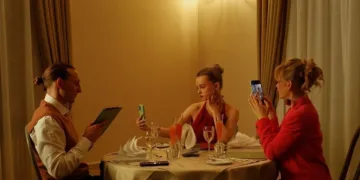

















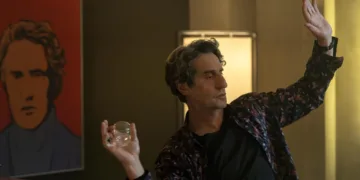












Childhood was once a private dress rehearsal for life. Now, for a select and growing few, it is the main performance, a monetized and live-streamed production from the first ultrasound. Joscha Bongard’s German-language drama Babystar takes this cultural shift and treats it not as a curiosity, but as the premise for a quiet horror story.
The film documents the life of Luca, a 16-year-old girl who is the primary asset of her family’s influential social media channel, “our_bright_life.” She has been raised as both daughter and product. Her existence is thrown into sharp relief when her parents, in a bid for renewed market relevance, decide to introduce a new character. This impending baby fractures Luca’s curated reality, forcing a painful reckoning with a life lived entirely for the approval of unseen millions.
The Panopticon with Good Lighting
The family’s home is the film’s most potent symbol, an architectural manifestation of their inner lives. It is a stark, modernist expanse of glass and white walls, a place that feels less like a home and more like an art gallery where the art is a perpetually happy family. Every corner of this remote estate, from the envy-inducing swimming pool to the perfectly manicured shrubbery, is optimized for the camera’s gaze.

It is a panopticon with excellent natural lighting. This sterile perfection is a direct reflection of the emotional landscape within. The endless, unseen work of maintaining this facade—the ‘dead labor’ of the influencer—is palpable. The on-camera persona of “our_bright_life” is one of effortless warmth and spontaneous joy. When the recording stops, however, the mood shifts to that of a tense quarterly board meeting. Conversations are about metrics, engagement, and brand alignment. Life is a series of key performance indicators.
The ultimate expression of this reality is the project to create an AI version of Luca. It is a form of digital taxidermy, preserving the marketable 16-year-old version of her in algorithmic amber, a forever-friend for her followers long after the real Luca has aged out of her demographic. Her soul is being backed up to the cloud.
A Glitch in the Content Stream
The decision to conceive a new child is framed entirely as a business proposition, a strategic pivot to capture the lucrative “new baby” market. For Luca, this is more than an announcement; it is a psychological schism. Her ensuing rebellion is a complex, volatile reaction. It contains the predictable possessiveness of an only child, but it is fused with a more profound terror.
She is witnessing, with the clarity of a veteran performer, the pre-production of a new life that will be subjected to the same relentless documentation as her own. She is horrified by the cyclical nature of her own exploitation. Her slow transformation from a complicit, if somewhat vacant, participant to a skeptical saboteur is the film’s central thread.
Her acts of defiance are not planned insurrections but desperate, primal screams against the artifice. A public outburst at a restaurant becomes a form of digital-age iconoclasm, a frantic attempt to smash the perfect image her parents have so carefully constructed. Her parents, in response, engage in a form of corporate gaslighting.
Her genuine distress is reframed as teenage angst, her rebellion a temporary brand crisis that requires careful management, not parental empathy. She is not a daughter in pain; she is a glitch in the content stream.
The Uncanny Valley of the Everyday
Director Joscha Bongard’s style is as clinical and unsettling as the world he depicts. The film is defined by a chilly, suffocating atmosphere that prioritizes observation over emotion. The cinematography consistently employs high angles and detached, distant framing, positioning the viewer as another unseen observer through a surveillance feed.
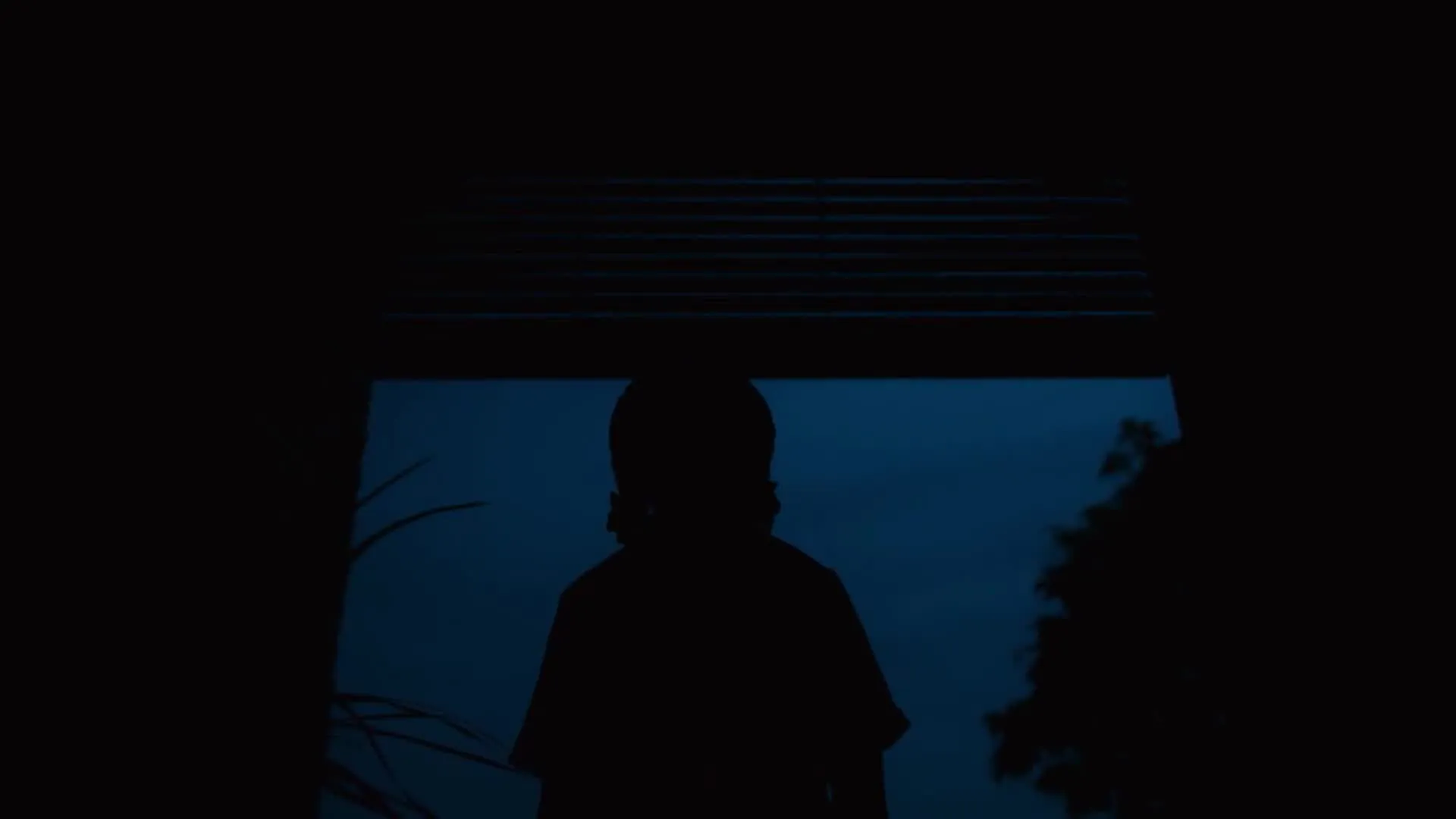
We are implicated in the voyeurism. This aesthetic choice turns the family home into a psychological laboratory. An intentionally spare and hollow electronic score enhances this feeling of alienation, producing the queasy sensation of watching a family that is a near-perfect, but slightly off, simulation of humanity. The film is acutely aware of its lineage, dropping a direct reference to The Truman Show. Yet the comparison highlights a crucial, more disturbing difference.
Truman was an unwitting prisoner in a world he believed to be real. Luca has long been a knowing, if not entirely willing, accomplice in her own captivity. Bongard’s most clever satirical jab is the bleeping out of brand names and the blurring of platform logos. This act of redaction, far from creating a universal story, aggressively points to the commercial forces it pretends to obscure. It makes the invisible architecture of capitalism visible through its very absence.
The Performers
The film rests on the strength of Maja Bons’s central performance as Luca. She conveys the character’s immense internal shift with subtle physicality. We see it in the gradual slump of her posture, the way the practiced light in her eyes dims into a guarded skepticism.
She carries the weight of a person who realizes her entire personality is a construct, and her performance makes that abstract crisis feel immediate and painful. As her parents, Stella and Chris, Bea Brocks and Liliom Lewald are chillingly effective. They portray two people who have so thoroughly internalized the language of branding that it has become their native tongue.
Their dialogue, even in moments of supposed intimacy, is peppered with the empty jargon of marketing. They are sentient algorithms of parental affection, their protective instincts permanently subordinated to the demands of their audience. They are not monsters; they are something far more modern and unsettling. They are simply people who have successfully optimized their lives for a world that rewards performance above all else.
Logging Off Is Not an Option
As a piece of social commentary, Babystar is a potent critique of “sharenting,” framing it as a sanitized, aesthetically pleasing form of unregulated child labor for the new economy. The film presses on the sensitive ethical questions of consent and privacy in an age where a person’s life can be documented and distributed for profit before they can even speak.
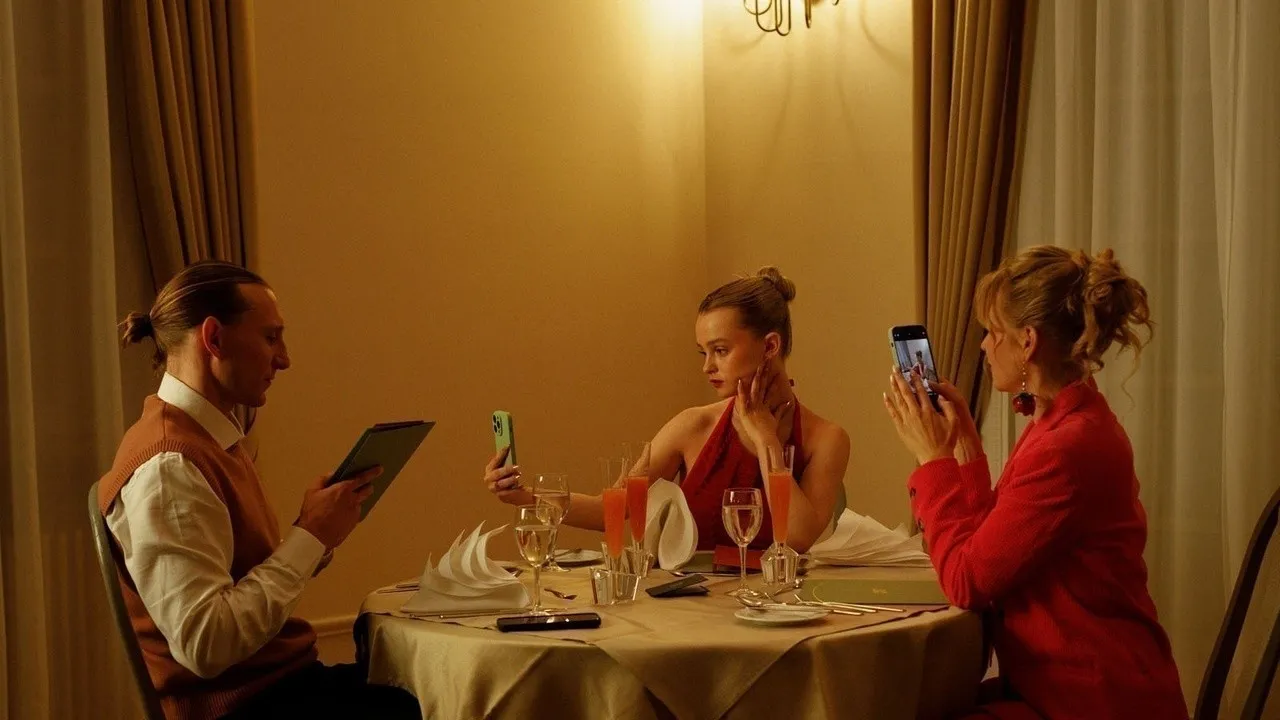
It asks what becomes of a person whose every developmental stage is public domain. Bongard refuses to offer a simple resolution. The film’s final act avoids the catharsis of a triumphant escape. When Luca finally breaks free from the family home, her newfound freedom is not depicted as joyous. It is disorienting, terrifying, and profoundly lonely.
How does one function in the real world after a life spent performing in a simulation? The film suggests that logging off is not a real option when your entire history is an archived, searchable commodity. The ending leaves us with the sobering implication that Luca has not escaped into freedom, but has merely entered a different kind of void: the paralyzing emptiness of an unscripted life.
The movie Babystar is a 2025 German drama directed by Joscha Bongard. It focuses on the teenage daughter of a family vlogging couple who learns she is a victim of her parents’ content, exploring family life in the influencer age. The film premiered at the Toronto International Film Festival (TIFF).
Director: Joscha Bongard
Writers: Joscha Bongard, Nicole Rüthers
Producers and Executive Producers: Lisa Purtscher, Lotta Schmelzer
Cast: Maja Bons, Bea Brocks, Liliom Lewald, Joy Ewulu, Maximilian Mundt, Verena Altenberger, Matthias Matschke, Tiana Vanitha R.
Director of Photography (Cinematographer): Jakob Sinsel
Editors: Emma Holzapfel, Wolfgang Purkhauser
Composer: Jonas Vogler
The Review
Babystar
Babystar is a meticulously crafted and deeply unsettling film for our hyper-documented age. Its clinical precision and chilly atmosphere create a potent examination of a life lived as performance. Anchored by a phenomenal central performance from Maja Bons, the film functions as a necessary, if uncomfortable, mirror held up to the strange realities of online existence. It is a sharp, intelligent, and quietly chilling piece of social science fiction that feels alarmingly close to fact.
PROS
- A timely and intelligent exploration of influencer culture and digital-age parenting.
- A powerful and nuanced lead performance by Maja Bons.
- Precise, atmospheric direction that creates a consistent and chilling tone.
- Sharp satirical elements that critique modern commercialism.
CONS
- The deliberately cold and analytical approach may feel emotionally distant to some.
- The narrative loses some momentum in its final section.
- Characters are designed to be difficult to empathize with, which can be alienating.