












A teenage fairy on a skateboard careens through a world that expects him to fly. This is the opening impression of Van, the disaffected protagonist of A Tooth Fairy Tale, a film that treats the clandestine work of its mythical creatures less like magic and more like a monotonous job. The nightly collection of baby teeth is framed as a transactional duty, a key component in an inter-species supply chain where incisors and molars are bartered with a mysterious goblin society for the gold coins left under children’s pillows.
This mundane reality chafes against Van’s desire for something more, for a life beyond the rigid expectations of his community. His restlessness is not merely adolescent boredom; it is a fundamental rejection of a system built on tradition and ignorance, setting in motion an adventure that will force two separated worlds into a long-overdue collision.
Bridging a Chasm of Prejudice
The film’s world is built upon a carefully maintained ignorance, a social architecture where prejudice serves as a pillar of identity for both fairies and goblins. The fairies, living in a seemingly idyllic society, perceive the goblins as primitive, foul-smelling brutes who toil away in dark caves. This belief allows them to maintain a sense of superiority even as their entire economy depends on goblin labor.
Conversely, the goblins see the fairies as frivolous, entitled thieves, creatures of whimsy who take what they want without understanding its value. These deeply ingrained biases create a chasm that is both psychological and physical. The narrative directly confronts this by forcing an encounter between Van and a young goblin named Gemma.
Their meeting is a calculated dismantling of stereotypes; Gemma is revealed to be a brilliant engineer, part of a technologically sophisticated culture that has been deliberately misrepresented. As their alliance forms, the film introduces a common, uncomplicated enemy: a horde of ravenous spiders. Led by characters voiced by Jon Lovitz and Fran Drescher, the spiders are a purely existential threat, a force of nature that simplifies the story’s moral landscape and makes cooperation an act of necessity rather than a true ideological reconciliation.
Characters in Pursuit of Purpose
Van’s personal story begins with the loss of his wand, but his true search is for a sense of self. His skateboard is an emblem of his individualism, a terrestrial rejection of the conformity of flight, while the tear in his wing is a physical manifestation of his feelings of otherness. His development hinges on transforming this perceived inadequacy into a unique strength, moving from aimless rebellion to a focused effort to change his world.
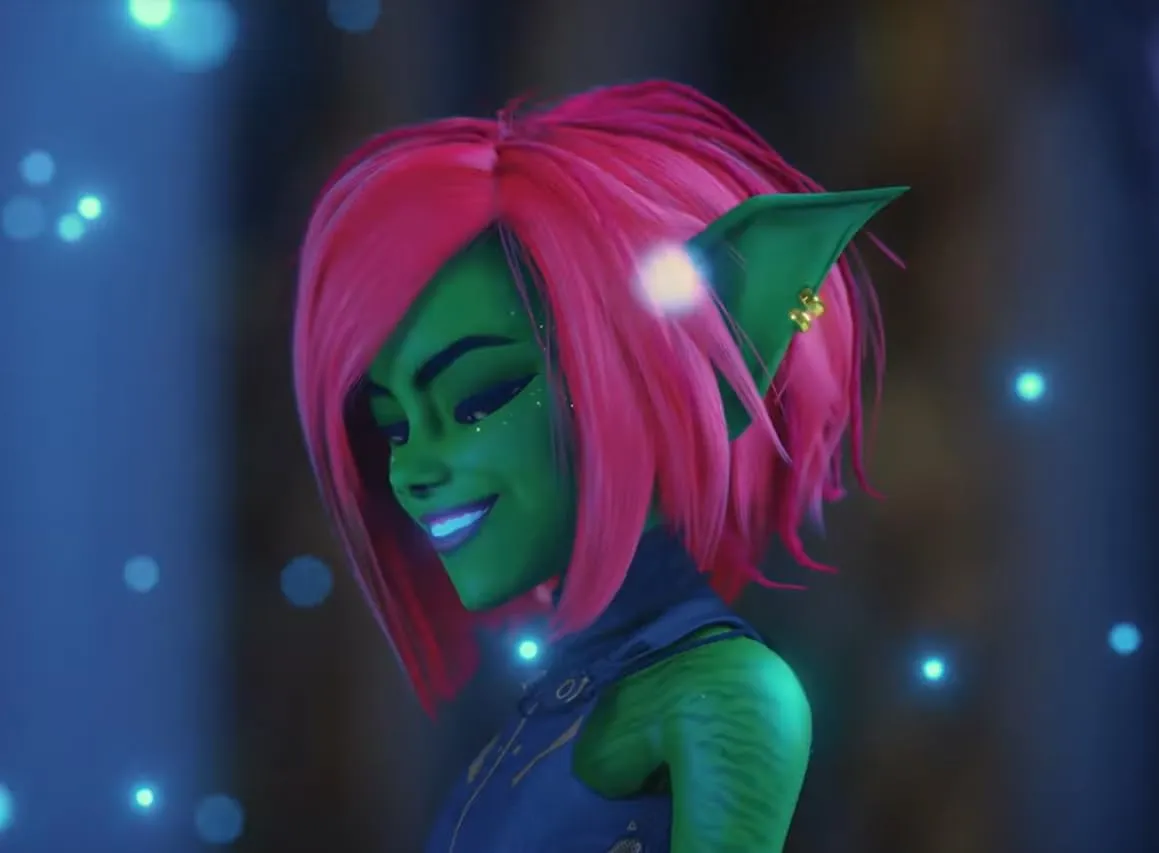
His character is a study in finding purpose not by fitting in, but by challenging the very definitions of his society. Gemma provides a compelling counterpart. She is not a passive discovery for Van but an active participant with a defined goal: to learn the truth about her deceased mother’s history. Her quest is one of reclamation, of seeking a narrative for her people that has been lost or suppressed. While Van seeks to escape tradition, Gemma works to uncover it, creating a dynamic where their personal missions become intertwined with the fate of their communities.
They are surrounded by a small group of allies, including the troll Rupee, whose archaic “life debt” to Van introduces a code of honor that contrasts sharply with the transactional relationship between the primary societies. This motley ensemble works to illustrate that bonds can be forged outside of prescribed social structures.
A Story of Unity and Visual Energy
The film propels itself toward an unsubtle but earnest message about cooperation. The friendship and budding romance between Van and Gemma serve as the primary symbol for a potential harmony between their warring cultures, suggesting that personal connection can override generations of systemic distrust.
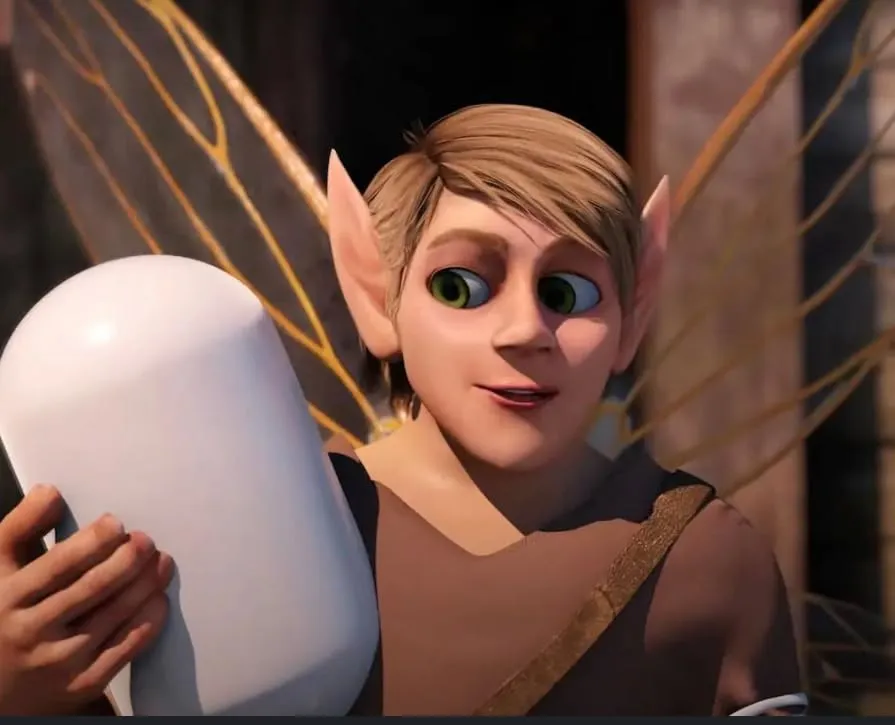
The story implies that true strength is found not in isolation but in a shared vulnerability, a lesson forced upon the characters by an outside threat. This theme is presented within a world rendered in bright, energetic CGI. The animation uses a distinct visual language for each culture, contrasting the ethereal pastels of the fairy world with the industrial, earthy tones of the goblin mines.
The action sequences are fluid and fast-paced, accompanied by an upbeat musical score that keeps the tone light even during moments of peril. This aesthetic packaging makes the film accessible to its target preteen audience, a demographic navigating its own emerging social complexities and the first stirrings of romantic connection. The narrative offers them a straightforward allegory for overcoming prejudice, a tale where unity is both the method and the reward.
A Tooth Fairy Tale is an animated adventure and fantasy film that was released digitally and on Video-on-Demand (VOD) on May 20, 2025. The movie centers on a rebellious teenage tooth fairy named Van who teams up with Rupee, a cuddly troll, and Gemma, a brilliant goblin scientist, to embark on an adventure. Their mission is to unite their magical worlds and save them from an invasion of malicious spiders. The film features a notable voice cast including Booboo Stewart, Fran Drescher, Vivica A. Fox, and Jon Lovitz. It was distributed by Shout! Kids/Shout! Factory.
Full Credits
Director: Michael Johnson
Writers: Jeffrey Giles, Michael Lurie, Richard Dane Scott
Producers and Executive Producers: Jeffrey Giles, Michael Lurie
Cast: Booboo Stewart, Jailen Bates, Larkin Bell, Fran Drescher, Vivica A. Fox, Nicolas J Greco, Maz Jobrani, Jon Lovitz
Composer: Aldo Shllaku
The Review
A Tooth Fairy Tale
A Tooth Fairy Tale delivers a commendable message about unity wrapped in a vibrant animated package. Its earnest characters and visually energetic world will resonate with its intended preteen audience. While the narrative follows a familiar path, uniting disparate societies against a common foe, it approaches its themes of prejudice and friendship with enough charm and sincerity to create an engaging, if predictable, adventure.
PROS
- Presents positive and clear themes of cooperation and overcoming prejudice.
- The CGI animation is bright, energetic, and visually appealing for a younger audience.
- Features relatable character arcs that explore finding one's purpose.
- The world-building concept behind the fairy-goblin economy is creative.
CONS
- The plot is formulaic, relying on the predictable trope of a common enemy forcing rivals to unite.
- The antagonists are straightforward and lack significant depth.
- The resolution feels more like a necessity for survival than a genuine ideological shift.
- Its narrative simplicity may not engage older viewers.