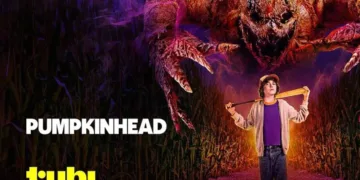











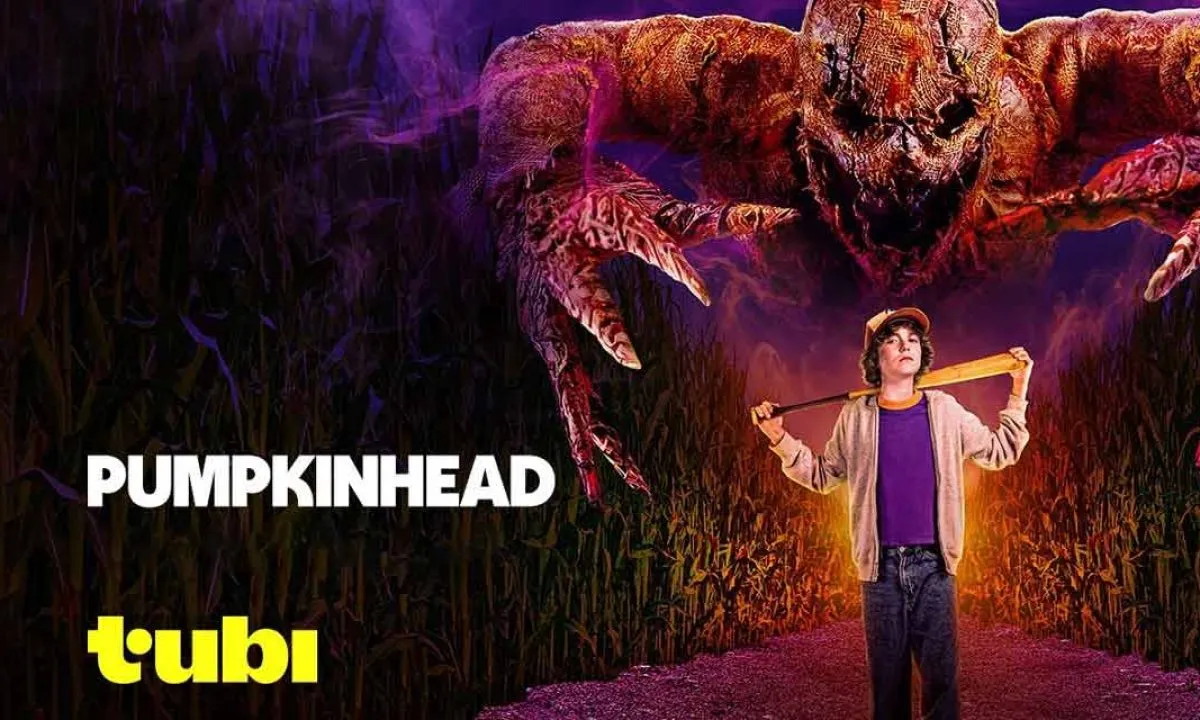

R.L. Stine’s Pumpkinhead arrives on Tubi under writer-director Jem Garrard. Drawn from one of Stine’s short stories, the feature aims squarely at Young-Adult viewers and works within a TV-14 frame. The setup tracks Sam, a thirteen-year-old pulled from the city and set down in Redhaven, a harvest-fixated town on the cusp of Halloween.
The family’s reset sours fast when Sam’s older brother, Finn, disappears. Every other resident, including their mother, sheds all memory of him. Sam faces the town’s buried history and the riddle of a seasonal curse to bring Finn back. The premise snaps into place quickly, sending Sam into a race against communal forgetfulness and the clock.
The Ontology of the Forgotten Brother
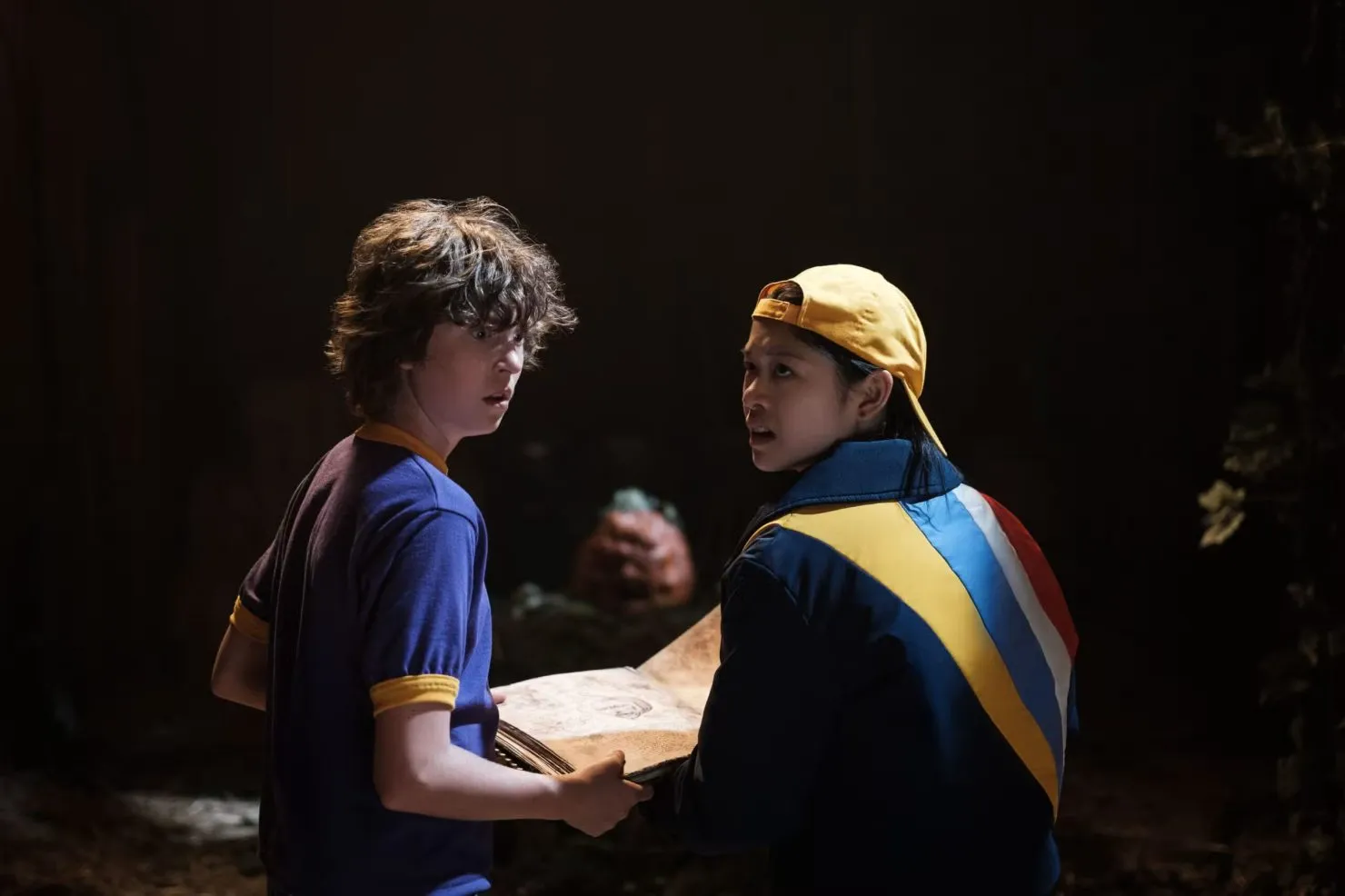
The story’s spine is the erased identity. Finn’s removal from memory turns Redhaven into an ethical gray zone where the map of reality follows perception. Sam’s search runs alongside Becka, the Sheriff’s clear-eyed daughter, and Rusty, the resident oddball with necessary arcane know-how.
The trio reflects a classic Stine pattern. Adults register as unhelpful or absent, which leaves the children to handle an existential threat. World-building pivots on Farmer Palmer and his prized pumpkin, a ritual object tied to the town’s claimed salvation at the “turn of the century” in 2003. The date lands as a quiet joke about invented antiquity.
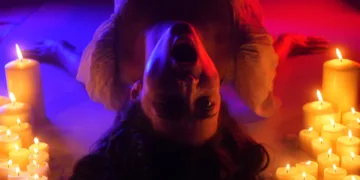
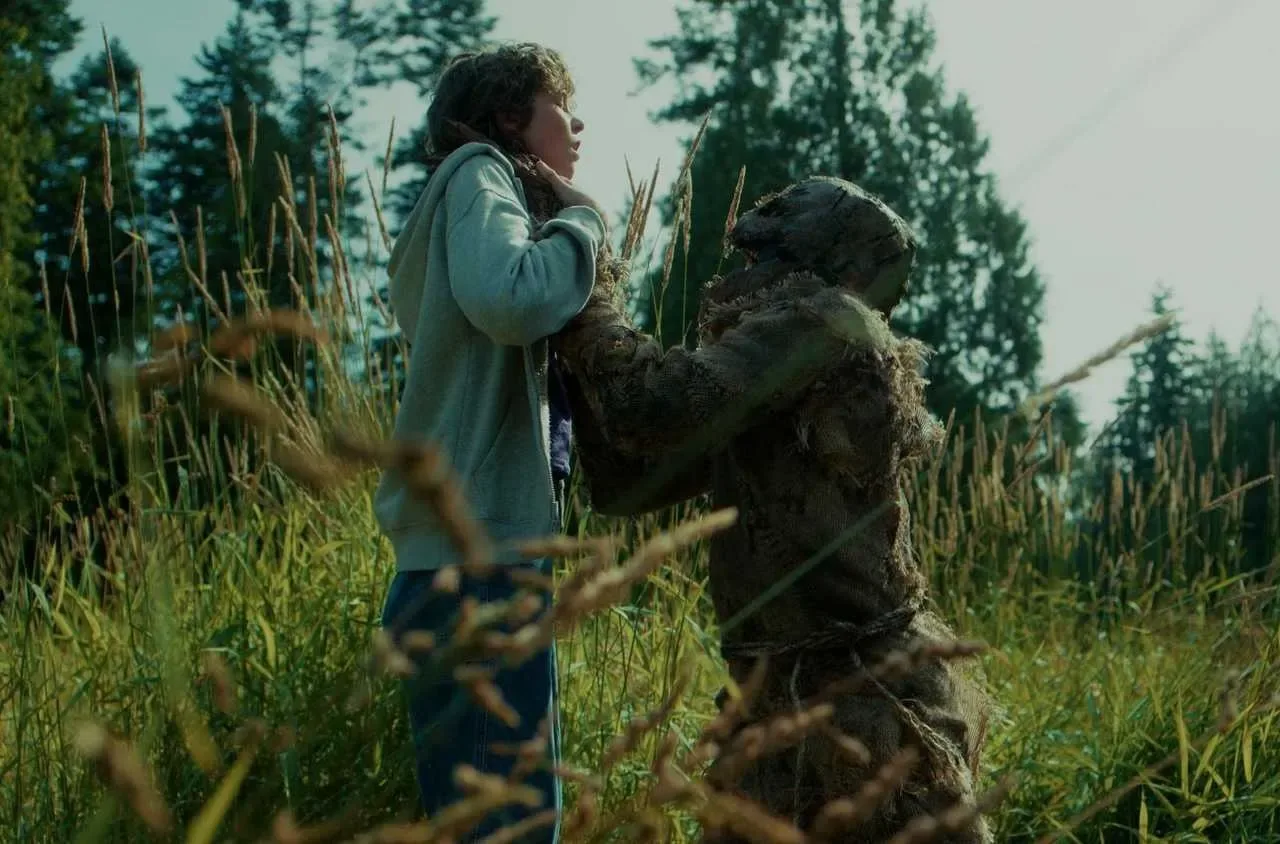
The Scarecrow stands as the gatekeeper, a threshold figure who polices the boundary between order and loss. The last stretch compresses into a timed ritual with a spell and lands on a hard final note that preserves Stine’s taste for a sting.
The lingering query carries philosophical weight. Sam appears to fight for a brother and also for the shape of reality that brother secures. Free will feels fragile in a place where memory edits the world. The film stages that fragility as a test of identity, and it keeps the stakes personal. Clean answers remain out of reach by design.
’90s Expressionism and Practical Terror
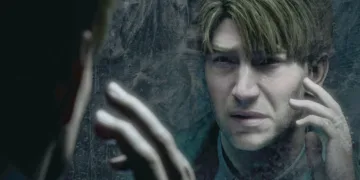
Garrard steers a horror-comedy register that mixes light thrills with broad humor. The image track leans into a ’90s Stine atmosphere. A family woody wagon, an old tube television, and a flip phone hold the frame in a comfortable time pocket. The town reads as a curated stage free of modern distraction. The approach cues expressionistic space, a place sculpted by ritual and seasonal iconography.
The Scarecrow benefits from practical effects and from the performer’s contortionist control. Daylight reveals the figure’s mass and texture, which gives the menace weight that digital work often diffuses. Burlap and straw gain presence through motion and scale. The analogue ethic echoes classic genre craft and suits the material.
Lighting choices emphasize the creature’s silhouette and the crop-field geometry. Faces separate from backgrounds, and the scare-figure’s outline carries legibility even under bright skies. The composition supports tension through clear sightlines and simple blocking that lets the body work read.
The closing beat commits to a blunt outcome. It withholds a sugary fix and preserves the threat that earned the TV-14 label. The choice respects young viewers by trusting they can handle a dark tag. A small mercy for anyone who still side-eyes cornfields.
Character Dynamics and Structural Drag
The young cast carries the charge. Bean Reid gives Sam a credible shift from shut-down grief to reluctant action. Doing becomes healing, and the performance traces that line with restraint. Adeline Lo emerges as the engine. Becka delivers the crucial information and guards the group with streetwise calm.
Matty Finochio’s Rusty introduces a variable. He supplies lore and comic release, and he does it with a big swing that risks tonal overload. Some will find the pitch too broad. Others will read it as a pressure valve built for this audience.
Story rhythm wobbles through the second act, especially when Rusty’s extended exposition takes the wheel. The short-story origin shows at feature length. The plot thins across ninety minutes, and the middle section spends its energy telling rather than tightening.
Sam’s grief receives minimal exploration. The film hooks his inner life to the rescue of Finn and keeps that line simple and direct. The result favors clear genre beats and a steady YA pulse. The scare works through presence and timing. The humor works through contrast with that presence. The machine runs, even with drag in the gears.
R. L. Stine’s Pumpkinhead premiered on October 17, 2025. It is an original young-adult horror-thriller inspired by a story from R.L. Stine’s anthology series The Haunting Hour. The film is a holiday-appropriate story that follows a teenager named Sam who must unravel a town’s curse after his older brother mysteriously vanishes and the entire town, including their own mother, forgets he ever existed. It is available to watch exclusively on the streaming service Tubi.
Full Credits
Director: Jem Garrard
Writers: Jem Garrard
Producers and Executive Producers: Charles Cooper, Jem Garrard, James Mattagne, Joan Waricha, Harvey Kahn, Yvonne Bernard, Dan Bernard, Allen Lewis, Rama Diallo
Cast: Bean Reid, Adeline Lo, Kevin McNulty, Bob Frazer, Matty Finochio, Seth Isaac Johnson, Kendra Anderson, Dominic Mariche
Director of Photography (Cinematographer): Robert Zawistowski
Editors: David Trevail
Composer: Jordan Andrew
The Review
R. L. Stine's Pumpkinhead
The film succeeds in its mission as effective young-adult gateway horror. Director Jem Garrard delivers a visually assured feature that consciously embraces the nostalgic '90s aesthetic of its source material, utilizing excellent practical effects for its primary monster. While the pacing lags significantly during the expository second act, and character exploration remains superficial, the narrative still provides potent themes of isolated heroism. The commitment to a darker, unsentimental ending solidifies its genre credentials.
PROS
- Effective use of practical Scarecrow effects and physical performance.
- Strong visual atmosphere and successful '90s aesthetic nostalgia.
- Successful balancing of horror elements with broad comedy.
- Adeline Lo delivers a strong, capable lead performance.
- The final sequence is dark and unsentimental, avoiding a tidy resolution.
CONS
- Significant pacing issues and structural drag in the second act.
- Limited exploration of the protagonist’s deeper trauma and grief.
- The comedic relief character (Rusty) risks becoming a distraction.
- The plot feels stretched thin across the 90-minute runtime.