










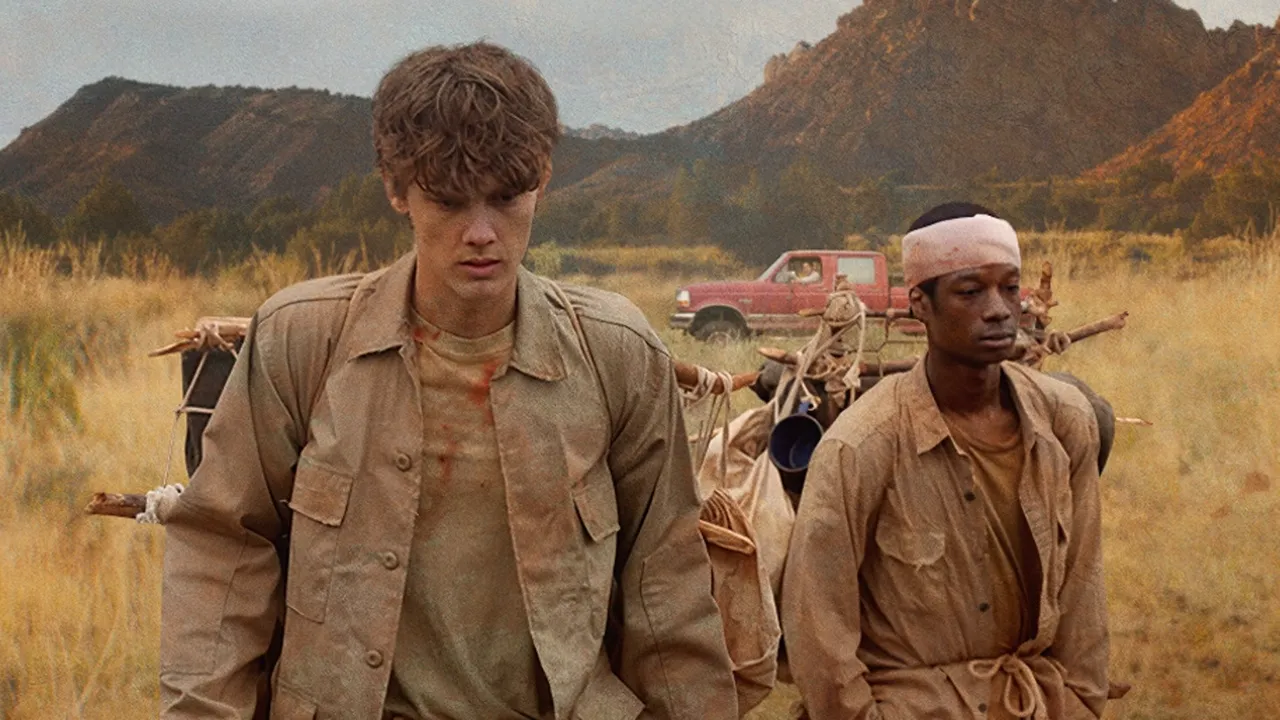

Spencer King’s The Wilderness commits to a dark premise with notable restraint. The story opens with a jolt as Ed (Hunter Doohan), a young man living with a history of trauma, is taken from his home and delivered to a remote wilderness therapy program in the Utah desert. The camp presents itself as a site for psychological reform and survival instruction under the calm yet commanding guidance of James (Sam Jaeger).
King favors a slow-burn approach, stepping away from the heightened drama often attached to teen-centered narratives in mainstream American cinema. The result is a tense, grounded atmosphere that directs attention to the ethical ambiguity around the “Troubled Teen Industry.”
Tension accumulates through the power imbalance between vulnerable adolescents and authority figures, which shapes a subdued psychological drama. The opening movement unsettles through a preference for behavioral detail over spectacle and primes the viewer for a study of control and compliance.
Nuance in Isolation: The Central Performances
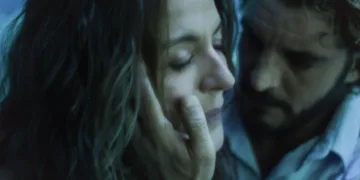
The film’s emotional weight rests on its leads. Hunter Doohan shapes Ed with a quiet, observant presence, carrying the residue of prior harm in his posture and clipped speech. Small gestures do the heavy lifting and keep the character’s pain near the surface without overt display, which gives the narrative a steady emotional spine.
Opposite him, Sam Jaeger crafts James as a leader with soft edges and latent threat. The performance sustains an uneasy mix of care and coercion, steering clear of simple villainy. James believes in the hardness of his methods, and that conviction keeps each interaction charged. Ed’s tentative bond with Miles (Lamar Johnson) adds necessary human warmth.
Johnson plays sincerity without sentiment, offering a nearby point of trust that helps the film measure intimacy against a harsh environment. These performances anchor the story in lived-in behaviors and invite the audience to read silence, stance, and pace as key signals.
Thematic Depth and Narrative Restraint
The Wilderness reads as a direct critique of abusive practices linked to the Troubled Teen Industry. Helplessness and the illusion of control shape the film’s core concerns, aligning with a global wave of stories that interrogate institutions failing young people. The approach recalls strands of Indian parallel cinema that scrutinize state or institutional power.
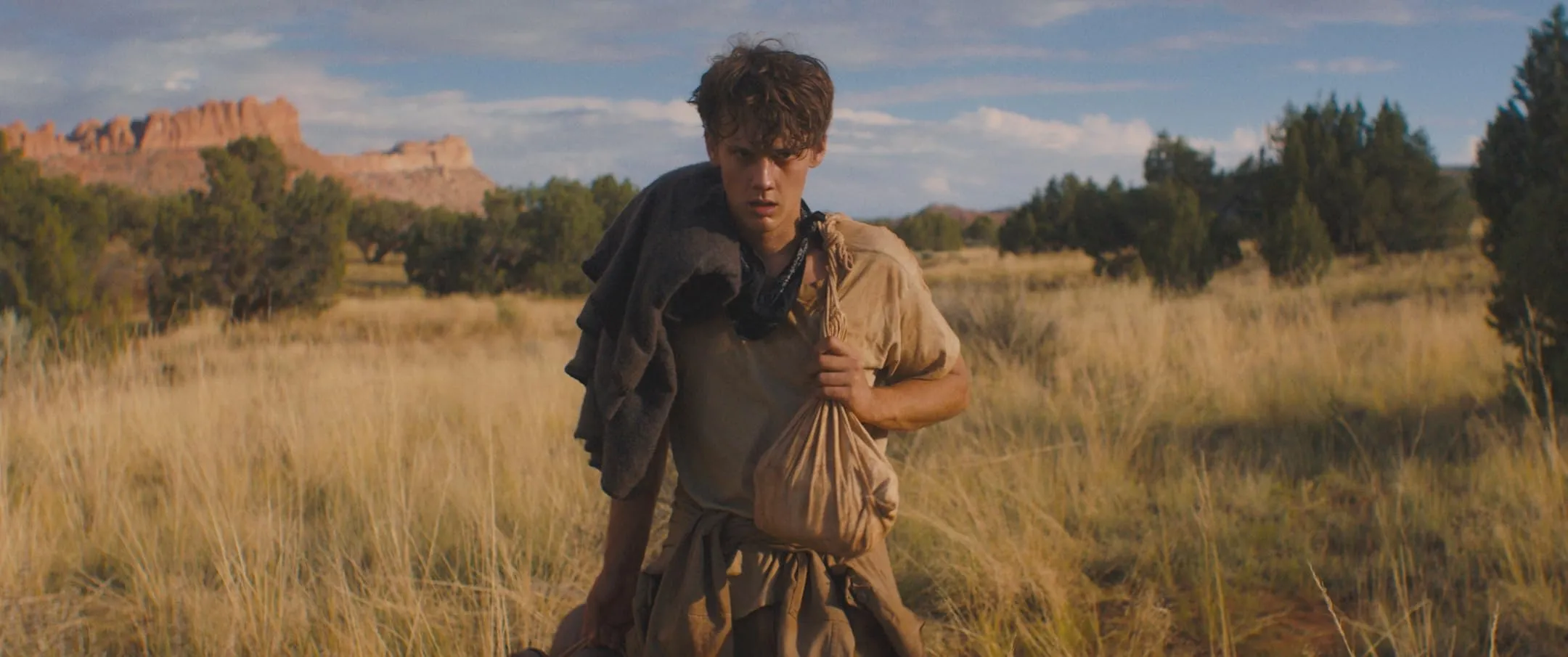
King works within a realist frame to mark dehumanizing tactics, including forced compliance and hints of profit motive that shadow the program’s rhetoric of care. The same restraint that lends authenticity also narrows momentum. The film circles ideas of trauma and renewal without fixing on a clear throughline, which keeps the piece suspended between psychological thriller and patient character study.
The desert functions as a striking setting, yet the narrative treats the terrain as a composed backdrop more than an active risk. The film locates the actual wilderness within the characters, where fear, doubt, and conditioned obedience play out, and the survival material carries limited dramatic force as a result.
Aesthetic Contrast and Final Weight
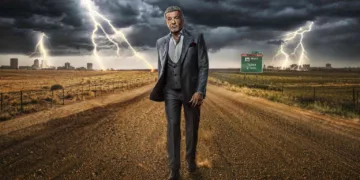
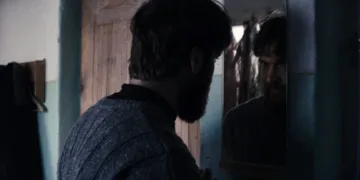
Cinematographer Sean Mouton composes sweeping views of the Utah landscape, capturing canyons and open distances with poised clarity. Soft, muted tones lend the locations a dreamlike hush rather than an adversarial edge. Isaac Middleton’s gentle score supports that visual grammar and heightens the dissonance between natural beauty and the teens’ inner turmoil.
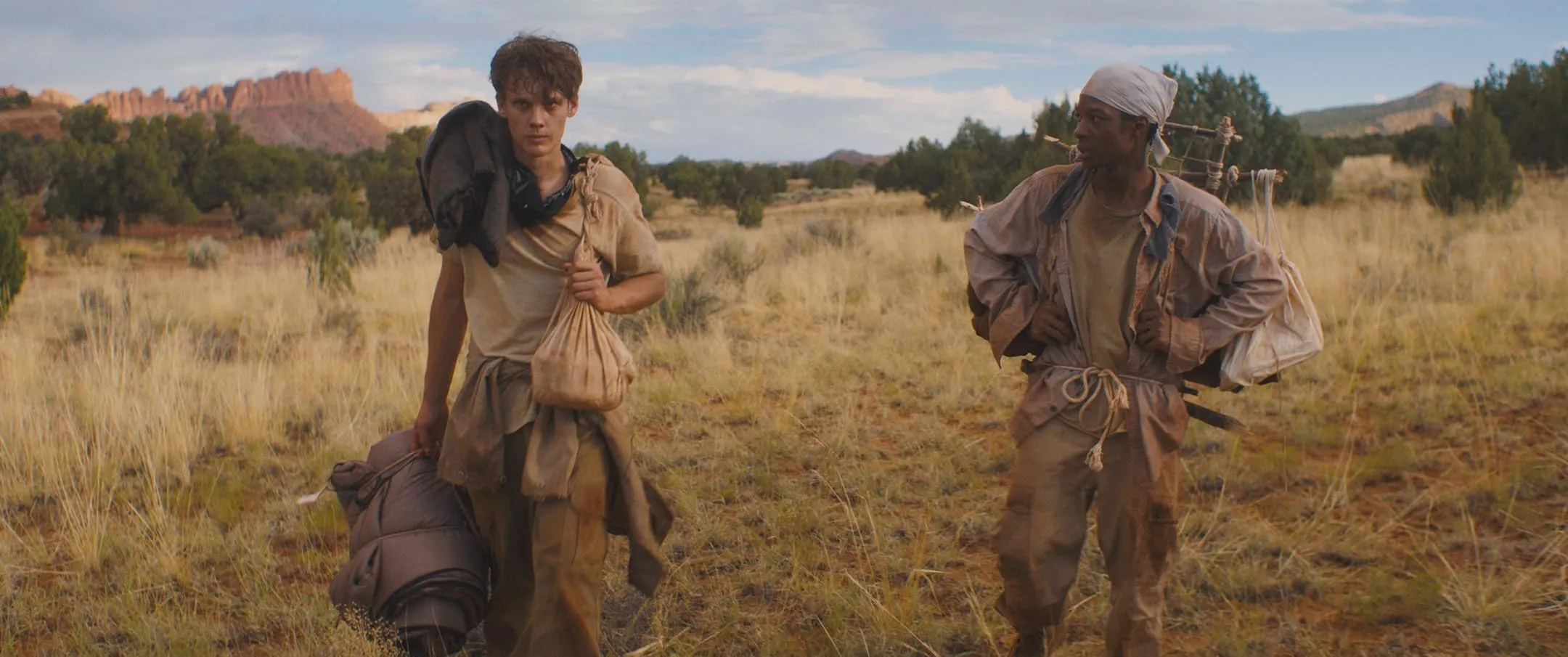
The images often appear tightly arranged and controlled, which mirrors the program’s ideology and the film’s preference for poise over rupture. The acting remains committed, and the subject holds real urgency.
The measured pacing and limited narrative focus reduce the cumulative impact, even as the film presents a careful look at a morally contested institution. The viewer leaves with questions about method, consent, and authority, paired with a sense that the story withholds the catharsis its premise suggests.
The Wilderness is a 2025 American drama film written and directed by Spencer King. The movie centers on a group of troubled teenage boys who are kidnapped from their homes and forced to attend a brutal, secretive wilderness therapy program deep in the unforgiving Utah desert. Cut off from the outside world, the boys must struggle to survive both the harsh elements and the manipulative mind games of the cryptic program director, whose true intentions are far from healing. The film, distributed by Dark Star Pictures, was released in US theaters on October 17, 2025. You can check local theater listings for showtimes and tickets.
Full Credits
Director: Spencer King
Writers: Spencer King
Producers and Executive Producers: Aaron Paul, Amy Berg, Larissa Beck, Lily Blavin, Hunter Doohan, Spencer King
Cast: Hunter Doohan, Lamar Johnson, Aaron Holliday, Matt Gomez-Hidaka, Vinessa Shaw, Liana Liberato, Sam Jaeger, Le Gros, Thompson, Avery
Director of Photography (Cinematographer): Sean Mouton
Editors: Amir Mosallaie
Composer: Isaac Middleton
The Review
The Wilderness
The Wilderness is a visually striking film anchored by stellar performances from Hunter Doohan and Sam Jaeger, who bring necessary nuance to a difficult subject. Director Spencer King establishes an authentic, tense atmosphere critiquing the troubled teen industry. However, the film's deliberate restraint and slow, drifting pace prevent the narrative from establishing a strong throughline. The result is a work that is intellectually rewarding yet emotionally detached. It possesses great potential that remains partially unrealized.
PROS
- Stellar, restrained lead performances from Hunter Doohan and Sam Jaeger.
- Spectacular cinematography capturing the remote Utah landscape.
- Authentic, subdued tone that avoids typical Hollywood melodrama.
- Strong thematic critique of the Troubled Teen Industry.
- The unsettling sense of psychological tension and power dynamics.
CONS
- Drifting, slow pace that can sometimes feel aimless or detached.
- Lack of clear narrative focus (teeters between thriller and character study).
- Secondary characters among the teens are underdeveloped.
- Minimal threat from the natural environment, making survival aspects feel hollow.