





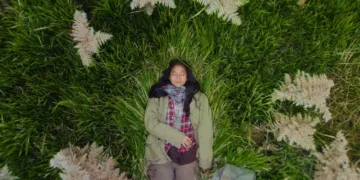










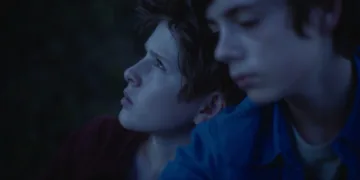







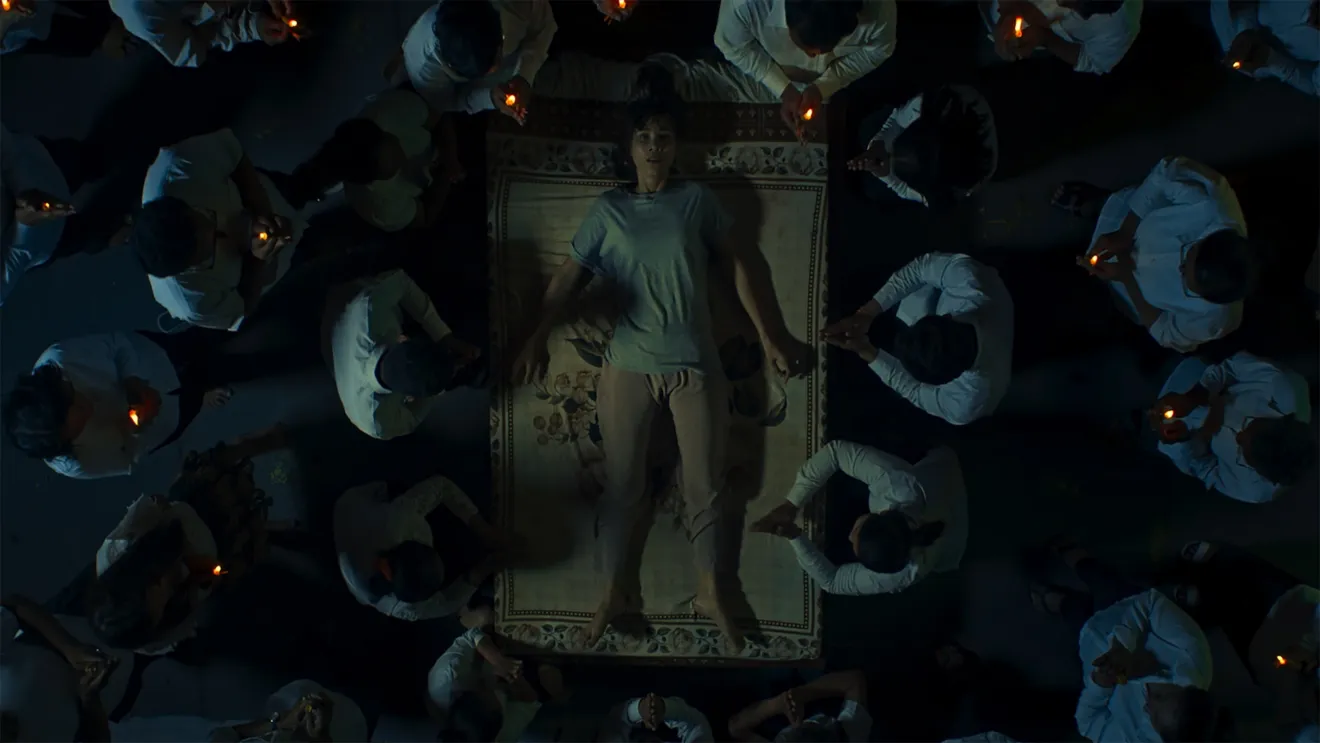

A nursery rhyme drifts through the dark, its sweetness fractured by a jolting prologue that fixes the mood in unease. The break in innocence ushers in Tenement, the debut feature from writers and directors Inrasothythep Neth and Sokyou Chea. The film stages supernatural horror that listens to history’s aftershocks. The story follows Soriya (Thanet Thorn), a Japanese-Cambodian manga artist.
After her mother’s death, Soriya travels to Phnom Penh with her boyfriend, Daichi, looking for creative spark and a link to estranged relatives. Their path leads to Metta, a crumbling Khmer Rouge–era apartment block where her family lives. The welcome feels warm, a brief shelter of kinship. Ominous visions soon press in, and dread gathers.
Cambodia’s official submission for the Best International Feature Film category shifts the family return into a confrontation between past and present, fixing the central struggle inside the building and among those who inhabit it.
Architecture of Dread and Eerie Rhythms
The direction favors patience and atmosphere; pacing moves with care and steadily tightens the coil. Cheap jolts never overrun the slow rise of tension. Horror grows from rooms that carry memory, from hallways that feel walked and worn, from lives marked by history rather than spectacle. Metta provides the engine for this approach.
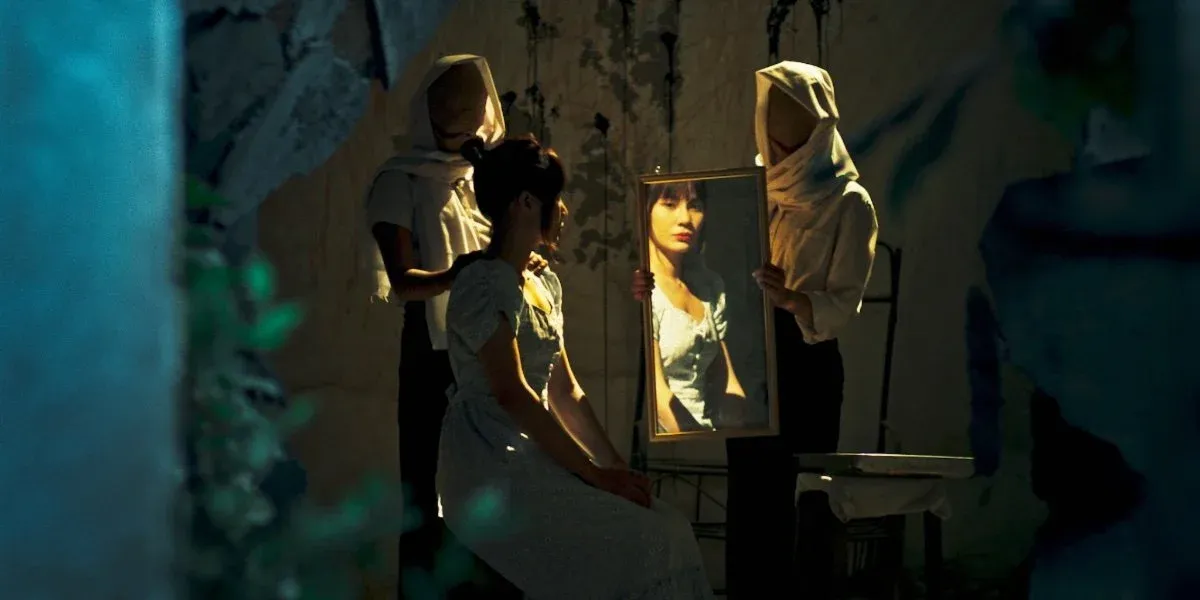
The apartment block does more than host the action. Decay shows in the walls, damp creeps across paint, corridors squeeze the frame. The space behaves like a living adversary. Cinematographer Jeremiah Overman shapes this presence with clean, confident images that make the building’s wear feel authentic while drawing out a constant undertow of fear.
Sound becomes an equal partner. Jean-Charles Bastion’s score threads Cambodian percussion with Western instrumentation. The music tightens the air, building pressure across long stretches of quiet in the first half and summoning an ominous hum that works on its own.
Ritual practices, beliefs, offerings, and traditional arts appear with care, and they ground the film within a specific cultural frame that sharpens the horror idea. Attention to image and sound gives the piece a distinctive texture inside the genre, a sense of craft tuned to mood, place, and memory.
Trauma’s Persistence and the Helpless Host
The film’s force arrives through its thematic structure. A malignant presence known as the Tenement seeks a new host, and that conceit carries the weight of enduring trauma and inherited pain. Apparitions trace back to Cambodia’s violent past, specifically the Khmer Rouge period, and they seep into the present rather than fade.
Mythology remains withheld. The story offers no firm origin for the spirit, leaving interpretive space. Focus stays with Soriya’s fear and loss of agency. Dreams and waking life smear together as a deliberate stylistic choice, creating a locked viewpoint. The audience stays inside Soriya’s unsettled mind. Thanet Thorn grounds this existential horror with a performance that receives and transmits the building’s menace.
She bears the emotional load, suspended between a fragile embrace of family and a flood of terrifying images. Family members provide quiet humanity, with Aunt Mao (Sveng Socheata) giving measured kindness that humanizes the household while tension climbs. Daichi’s watchful, protective presence offers a brief sense of safety, which makes the recognition of Soriya’s fate strike with more force.
An Experienced End
Tenement runs under ninety minutes, a lean length that still grants the first half a lingering quality. The film spends time with mood and the map of the building before the shift later on. When horror breaks through, the images go blunt and bodily.
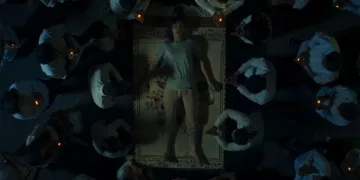
A young girl’s face crawls with maggots. A room exists for punishment. The commitment to ambiguity stretches to the scares, and some viewers may find them familiar or softened within the current horror field.
The choice to align viewer uncertainty with Soriya’s condition produces a final passage that feels trance-like and unnerving. That same choice can cool the impact of the climax, which can read as predictable. The ending carries a feverish haze. Clear answers remain withheld.
The film resists defining how things work or why they happen, giving an experience that feels complete in sensation yet partial in story shape. Ideas seeded along the way, including Daichi’s relentless photography and Soriya’s own horror manga, enter the frame with promise. They do not fully connect with the final blow, and they remain compelling threads left unresolved.
Tenement is a Cambodian folk horror film that follows Soriya, a Japanese-Cambodian manga artist who travels to Phnom Penh with her boyfriend to explore her estranged mother’s past after her death. She moves into her mother’s old apartment in the dilapidated Metta building, where she soon faces strange and terrifying supernatural events linked to the building’s dark history and the traumas of the Khmer people. The film premiered at the International Film Festival Rotterdam (IFFR) on January 27, 2024, before its theatrical release in Cambodia on November 14, 2024. The movie was distributed by Westec Media Limited in Cambodia and can be found on various VOD platforms for international viewing, depending on the region.
Credits
Title: Tenement (Youk Snor Akear)
Distributor: Westec Media Limited (Cambodia)
Release date: January 27, 2024
Running time: 88 minutes
Director: Sokyou Chea, Inrasothythep Neth
Writers: Sokyou Chea, Inrasothythep Neth
Producers and Executive Producers: Loy Te (Producer)
Cast: Thanet Thorn, Yoshihiko Hosoda, Sveng Socheata, Rous Mony, Katsuya Maiguma, Vandalis Sav, Sahrah Pich Manika, Sokannarith Preng, Touch Narady, Ma Rynet
Director of Photography (Cinematographer): Jeremiah Overman
Editors: Jimmy Henderson, Loy Te, Vicheth Proumchin (Assistant Editor)
Composer: Jean-Charles Bastion
The Review
Tenement
Tenement is a distinguished debut that uses its derelict setting, Metta, as a profound character, grounding supernatural horror in the weight of inherited trauma and cultural memory. Directors Neth and Chea display masterful visual and auditory control, crafting a palpable sense of dread. While the film excels as an immersive experience, its highly ambiguous mythology and several unresolved plot threads prevent it from achieving complete narrative coherence. It is an artful and unsettling examination of the past, even if the ending feels more like an emotional surrender than a resolution.
PROS
- Exceptional cinematography and the unique, eerie score create sustained atmosphere.
- The Metta apartment building is used powerfully to generate genuine claustrophobia and dread.
- Explores the serious subject of inherited national trauma and historical memory.
- Thanet Thorn delivers a compelling, calibrated performance as Soriya.
CONS
- Core mythological explanations are withheld, leaving the plot feeling incomplete.
- The slow-burning first half focuses heavily on mood and may test the patience of some viewers.
- The climax is underwhelming for some, resulting in a "fever-ish" ending.
- Interesting subplots, like Soriya’s manga and Daichi's photography, are dropped.