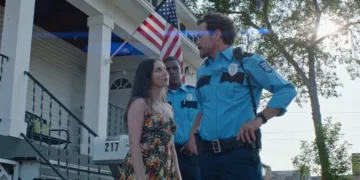








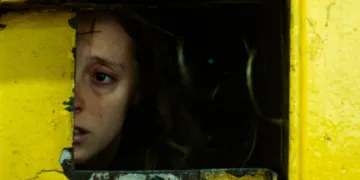









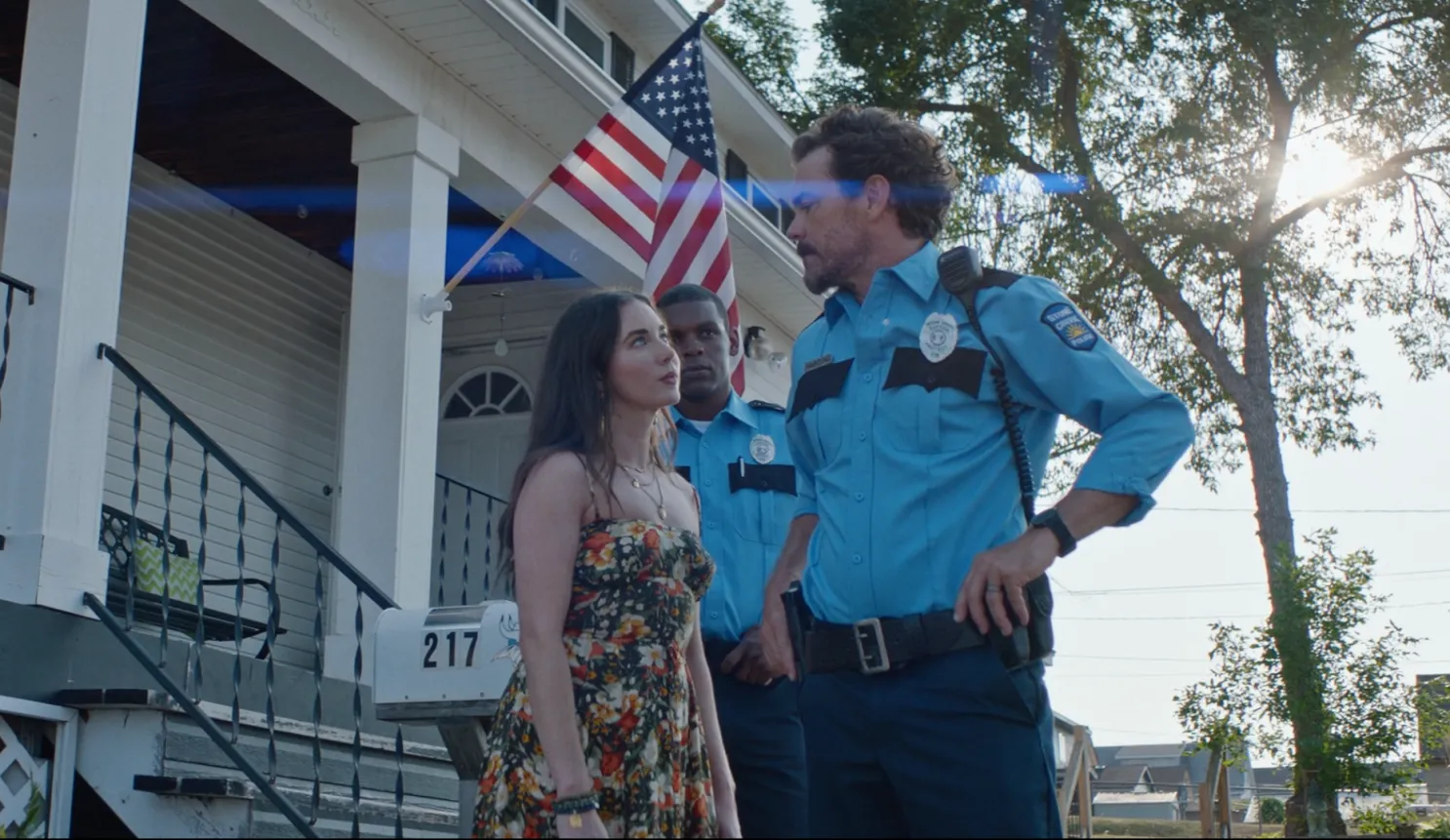

Stone Creek Killer works as a slow-burn independent thriller that understands how small-town routines can feed a story about violence and paranoia. The film plants itself in a seemingly pleasant, believable Minnesota town, the kind of place where a flat tire feels like the height of drama. That sense of calm erodes quickly as bodies begin to appear and the possibility of a serial killer takes hold.
The story follows Police Chief Karl (Clayne Crawford), whose alcoholism and murky history give the plot a built-in instability. His internal chaos reflects the rising brutality outside his home. The tone stays somber, steeped in addiction and loss, with only a few quick, sharp jokes to briefly cut through the gloom. The main draw sits in the constant plot turns, a design choice that cycles suspicion through nearly every character and manages to keep the killer’s identity hidden until the final stretch.
Performance as Narrative Anchor
The acting choices provide the clearest point of stability in a film that thrives on uncertainty. Clayne Crawford’s work as Chief Karl sits at the center of this. Karl deals with memory problems and heavy drinking, and Crawford leans into those flaws with precision, shaping a figure who appears plausibly innocent and plausibly guilty at the same time. That ambiguity holds the core tension of the narrative and keeps the viewer asking if the lead is tracking a killer or stepping into that role himself.
Britney Young’s Marge follows a clearly drawn path. She enters the story as the police assistant who feels lighter in tone and eager for recognition in the office, then shifts into a state of frantic concern as the situation grows more dire. Vincent Washington and Andrew J. West help fill out the small-town ensemble.
Their work gives the community a lived-in quality that supports the sense of shared history in the town. The strength of the casting encourages viewers to care about these neighbors and colleagues, even though the script offers only modest backstories for many of them.
The Aesthetic of Independent Production
On a technical level, Stone Creek Killer makes careful use of its independent and apparently low-budget origins. The atmosphere establishes itself right away through a simple opening setup. Karl is summoned after a night of heavy drinking, just as a local mother who struggles with drugs reports her daughter missing. That sequence pulls the viewer into the town’s bleak rhythm in a direct, efficient way.
Also Read






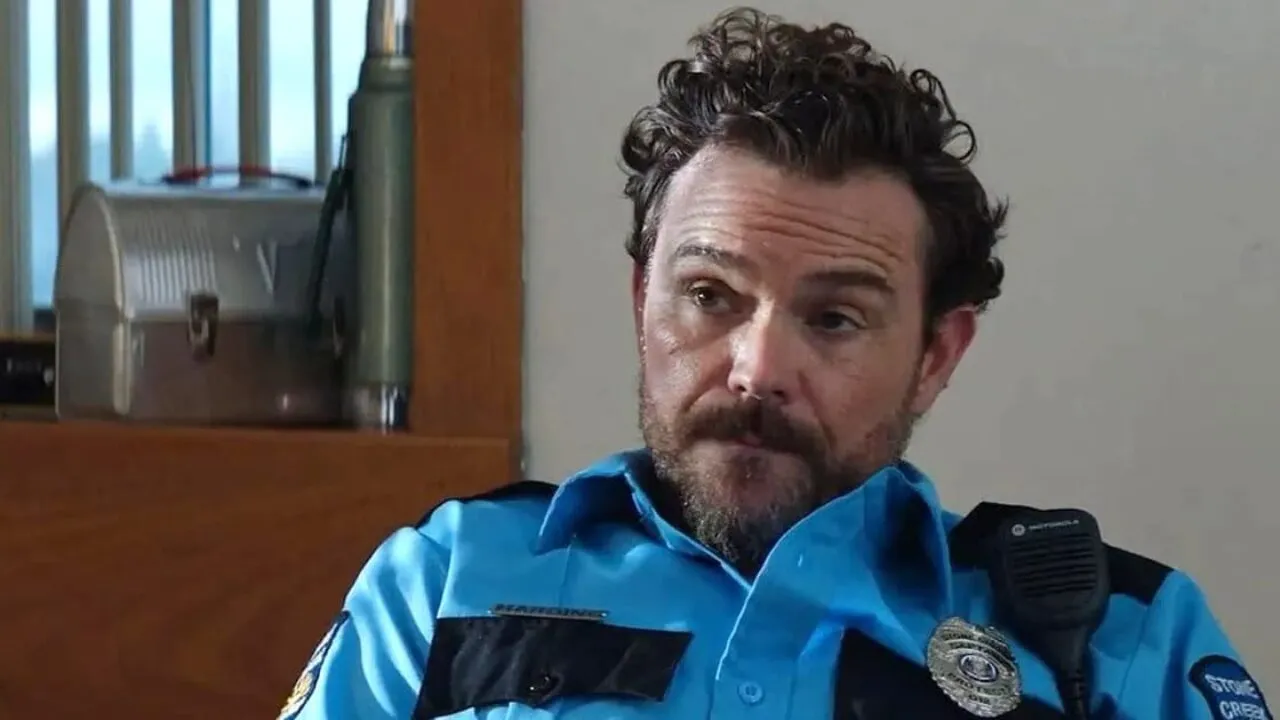
Chris Lange’s cinematography frames the real location of Chisholm with clean, precise images that help the world feel grounded and specific. That visual specificity supports the story’s focus on a small community where secrets are hard to hide. Karam Salem’s score pairs neatly with this visual approach.
The music leans into creepiness and mystery without drowning the scenes. Salem’s careful use of silence becomes one of the film’s sharpest tools and gives key moments extra pressure. The fact that this level of polish arrives from limited resources and a quick production schedule makes the technical work feel especially accomplished.
Structure and the Slow-Burn Mechanism
The film leans into a slow-burn structure, stretching out tension over time rather than rushing from revelation to revelation. The story keeps twisting, which stops the pacing from going slack. The central mystery holds together, and the final reveal manages to surprise.
The script feels sturdy, yet it also introduces small-town side elements that sit closer to world-building than to essential narrative function. The threatened shutdown of the police department and the sudden entrance of a psychic character fall into this category. Both have interest on their own, but they do not meaningfully deepen the central mystery or Karl’s personal struggle.
Certain choices, including dream scenes and bits of odd “filler,” can land as slightly disjointed. They still register as the kind of experiments that often appear in low-budget thrillers looking for texture and variety. As the film moves into its later stages, the structural energy begins to fade, leading to an ending that may feel like a mild cop-out. Even with those issues, the movie delivers a satisfying watch for viewers who enjoy a patient, slow-burn thriller that relies on tension, atmosphere, and character uncertainty to keep them engaged.
The psychological thriller Stone Creek Killer premiered with a limited theatrical and Video On Demand (VOD) release on November 28, 2025. This independent film, acquired by Vertical for distribution, is a tense slow-burn mystery that follows a small-town police chief pursuing a serial killer while struggling with his own personal demons. As of today, November 30, 2025, the film is available to rent on platforms such as Amazon Video and is also playing in select theaters.
Full Credits
Title: Stone Creek Killer
Distributor: Vertical
Release date: November 28, 2025 (Limited Theatrical and VOD)
Rating: R
Running time: 96 minutes
Director: Robert Enriquez
Writers: Clint Elliott
Producers and Executive Producers: Robert Enriquez, Clint Elliott, Susan Elliott, Britney Young, Lloyd Show, Jenny Bergstedt
Cast: Clayne Crawford, Lyndon Smith, Andrew J. West, Adam Hicks, Wilmer Calderon, David Sullivan, Britney Young, Lily Rains, Vincent Washington
Director of Photography (Cinematographer): Christopher Lange
Editors: Robert DeBoucher
Composer: Karam Salem
The Review
Stone Creek Killer
Stone Creek Killer is a strong, character-driven thriller that successfully leverages its small-town setting and atmospheric production. Clayne Crawford’s committed lead performance and the film’s genuine sense of place elevate the material, making its mystery consistently engaging. While the story struggles to integrate all its subplots and the final resolution feels structurally rushed, the film provides a solid, surprising watch for fans of slow-burn suspense.
PROS
- Clayne Crawford handles the ambiguity of Chief Karl with high skill.
- Crisp cinematography and a pitch-perfect, moody musical score.
- Successfully creates a somber, authentic small-town environment.
- Successfully twists the plot to keep the killer's identity unpredictable until the end.
CONS
- Elements like the psychic and the police department closure feel tacked on.
- The final act feels slightly rushed, leading to a conclusion that some may find unsatisfying.
- Certain dream sequences and "filler" scenes disrupt the overall flow of the narrative.