




















Hayley Kiyoko’s directorial debut started its life as a five-minute music video back in 2015, the one she co-directed with Austin S. Winchell that’s sitting near 163 million views on YouTube. That clip turned into a 2023 YA novel, and the novel is now a Focus Features release written by Kiyoko, Chloe Okuno, and Stefanie Scott, who played a lead role in the original video and now helps build out its world on the page.
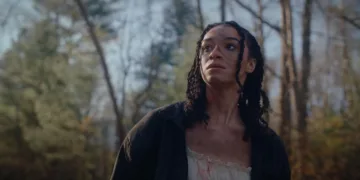
The story: summer 2006, small-town Oregon (shot up in Vancouver), where 17-year-old Coley (Maya da Costa) moves in with her estranged father Curtis (Zach Braff) after losing her mother, and falls for popular girl Sonya (Myra Molloy), already tangled up with the possessive Trenton (Levon Hawke). Cinematographer Sonja Tsypin and composer Jessica Rose Weiss build the sound and look of that summer around them. I want to spend my time on what changes when a five-minute song has to become a feature, because Kiyoko’s choices here are the most interesting thing about the movie.
A Plot Built Around What It Leaves Out
Most coming-of-age romances need an engine, something external pushing the couple apart so the back half of the film has somewhere to go. A bully who finds out. A parent who reacts badly. A town that turns on them. Kiyoko strips that engine out entirely, and once you notice the absence, the whole shape of the film reorganizes around it.
Walk through the beats: Coley gets driven off by Trenton’s crowd at a convenience store, and it’s Sonya who comes looking for her afterward. They end up at a swimming hole surrounded by evergreens, where Sonya writes her AIM username on Coley’s arm and asks her to promise she’ll message that night. From there the relationship escalates through small physical gestures: a borrowed jacket, a knee that lingers too long against another knee in the backseat of a car, the coded “olive juice” Sonya whispers when she can’t yet say the real words. None of that requires a villain. The conflict comes entirely from inside Sonya, who likes the social safety of dating Trenton more than she’s ready to admit she likes Coley.
That’s a real departure from the original video, which gave Coley a bloodied, beaten-up confrontation with the boyfriend character. Cutting that out wasn’t a budget call. It’s a structural decision that moves the entire story inward, and you can feel the gears shift around the midpoint: the first half plays like a loose, sun-drunk mood piece, all texture and glances, and the second half tightens into something closer to a conventional will-they-won’t-they once Sonya’s retreat kicks in.
I like that the film is honest about that shift instead of pretending it doesn’t happen. It builds to a real argument scene where both girls finally say the thing they’ve been circling, and the film ends on a note people in my screening were still arguing about in the lobby. A movie willing to leave you unresolved earns more credit from me than one that ties a neat bow on a story this messy.
Two Performances Doing the Script’s Job For It
Here’s something worth knowing about screen acting before I get into specifics: when a script underwrites a relationship, the actors either expose that gap or paper over it. Da Costa and Molloy paper over it, and they do it so well that you might not notice how thin some of the connective writing actually is.
Da Costa plays Coley almost entirely through posture and gaze, long stretches where she’s not given much dialogue and has to carry grief and longing in how she holds herself in a room. Watch how her physical bearing changes once she and Sonya act on the attraction; she gets looser, more upright, less braced. Molloy’s job is harder in a different way. Sonya has to seem confident and a little careless with people, using closeness and physical affection as currency, and then crack open underneath that exact same confidence once her own feelings catch up to her. The two of them together generate real chemistry, the kind that papers over scenes where the script is basically vamping.
Braff gets the toughest assignment and the least material. Curtis barely speaks for most of the first two acts, and the backstory of his estrangement from Coley doesn’t surface until late, which means his big quiet moments are doing work the screenplay never set up. It mostly works because Braff plays restraint convincingly rather than blankness. Hawke’s Trenton is the thinnest character on paper, basically a type, but one detail saves him: he refuses to put on calamine lotion for a poison ivy rash because the pink color reads as gay to him. That’s a single line of writing doing more characterization than three scenes of generic boyfriend behavior, and it’s the sharpest piece of dialogue in the film.
Kiyoko’s Eye, Inconsistent But Genuine
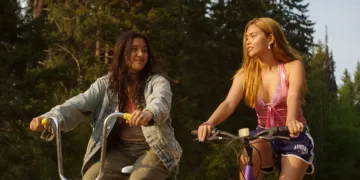
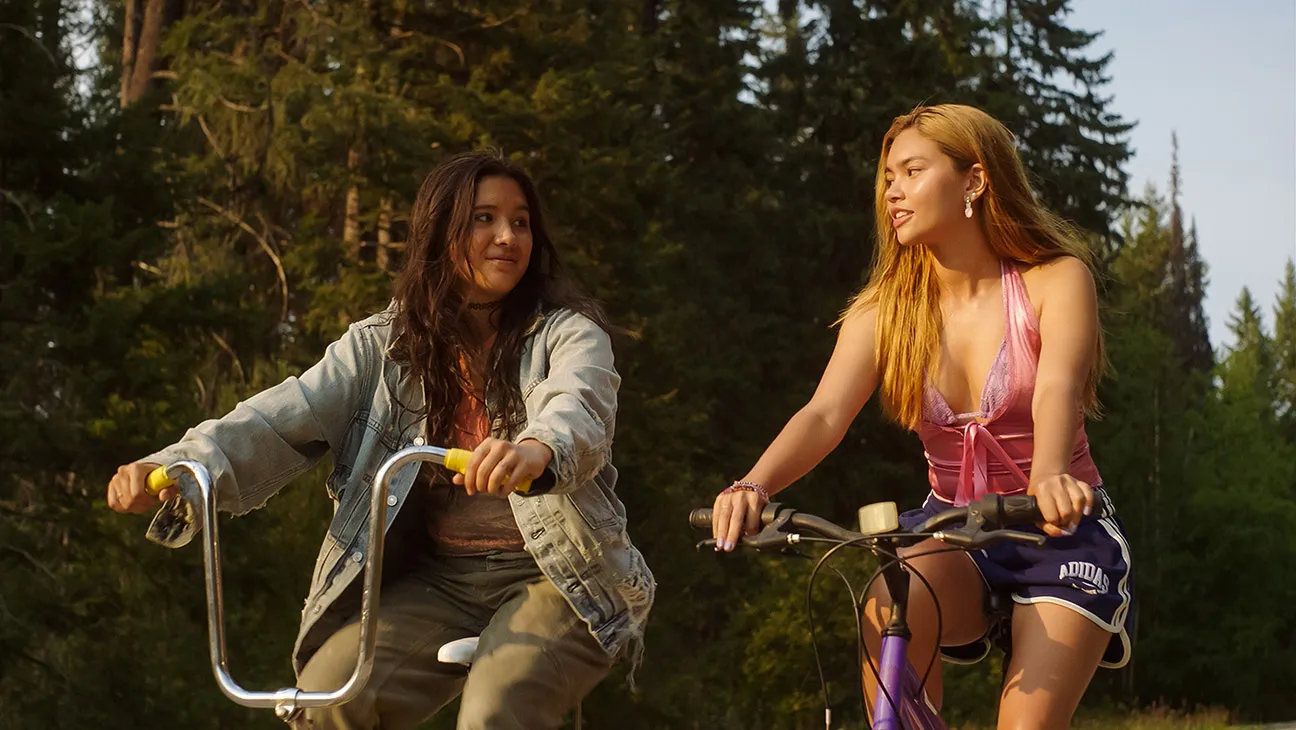
Tsypin’s camera bathes this movie in warm, late-afternoon light, the kind of glow that makes a bike ride down a tree-lined street feel important. The camera lingers on small things, a flutter of fingers, a strand of hair, in a way that tells you these gestures matter to Coley before the dialogue catches up. That’s smart blocking and a smart lens choice working together.
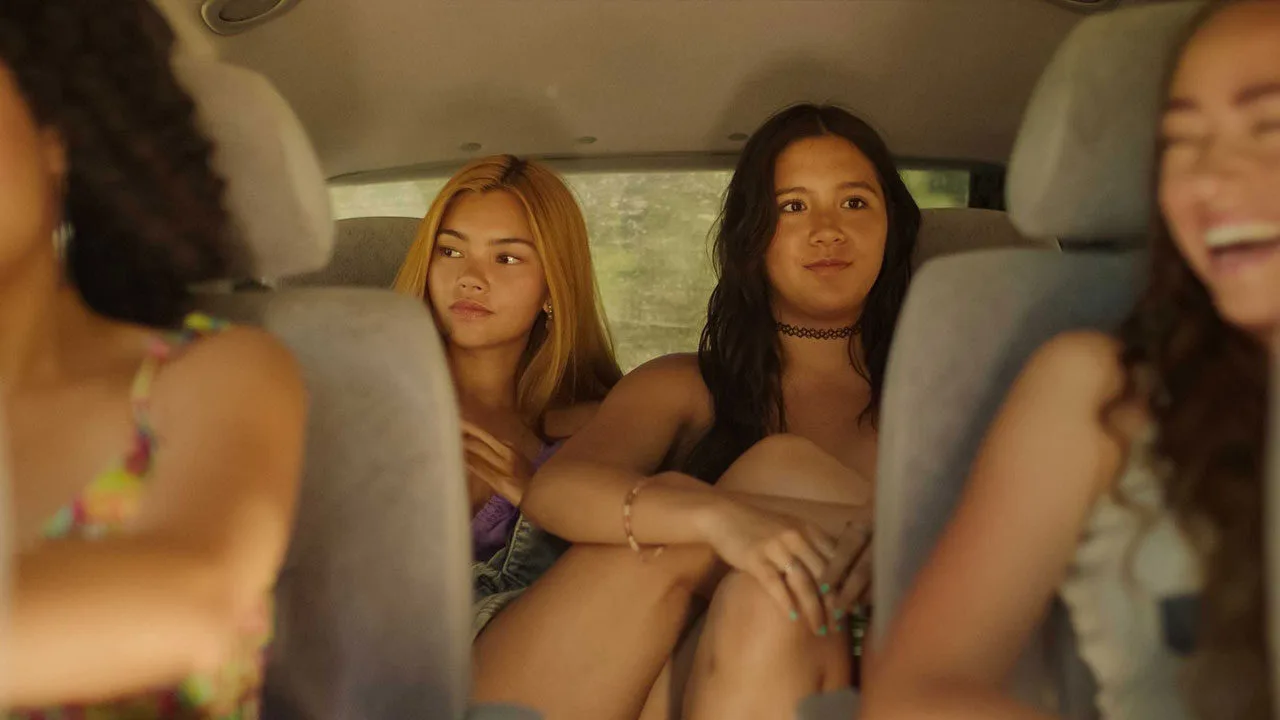
Where I’m less sold is the color work overall. A story about a girl discovering her own desire while a more confident, magnetic love interest pulls her into a brighter social world seems like it’s begging for some contrast in palette, something to make Sonya’s world visually pop against Coley’s grief. Instead the film keeps everything fairly muted throughout, and I’m honestly split on if that’s a deliberate choice (Coley’s quiet, cautious queerness mirrored in quiet, cautious color) or just a missed opportunity to make the visual grammar match the emotional stakes. I lean toward thinking it’s intentional, since Kiyoko is precise everywhere else, but I wanted the film to commit harder to that idea if it’s the idea.
The sound design earns more confidence from me. Weiss’s score stays moody rather than syrupy, and the soundtrack reaches past Kiyoko’s own catalog into a wider early-2000s playlist, Imogen Heap, Tegan and Sarah, which keeps the film from feeling like a promotional vehicle for her songbook.
Production design fills in the rest: the chunky desktop balanced on Coley’s knees, the AOL Instant Messenger notification sound, the period clutter that makes 2006 feel lived-in instead of staged. Kiyoko lets scenes breathe that another director might have trimmed, a slow pan around Coley’s new room, silences between the girls that go on a beat longer than expected, and that patience is the clearest sign of someone who already understands pacing even on her first feature.
A Song About Nothing New, Landing in a Different Decade
The lyric this whole project is built on says it outright: “girls like girls, like boys do, nothing new.” That’s the argument the film is making in miniature form, the idea that queer desire isn’t a novelty and doesn’t need a tragedy attached to prove it’s real. Setting the story in 2006, before “Heartstopper,” when civil unions existed only in Vermont, gives that argument some teeth. The song came out in 2015, the same year marriage equality passed nationwide, and now it’s a 2026 feature landing at a moment when a lot of queer audiences feel less certain those protections are permanent.
I find that timeline genuinely moving once you sit with it: a video made in one cultural moment, expanded into a film released in another, both versions of the same five words trying to say something true regardless of what year it is. Kiyoko had the chance to make this story about persecution and chose self-acceptance instead, which is a real choice and one I respect even when the execution gets uneven elsewhere. A quiet movie about two girls learning to say what they feel doesn’t need to be loud to matter.
Directed by Hayley Kiyoko, the coming-of-age movie Girls Like Girls expands her viral 2015 music video and 2023 bestselling novel into a feature-length cinematic experience. The film is scheduled to premiere tomorrow, June 19, 2026, making its debut exclusively as a theatrical release from Focus Features. The plot takes place during a nostalgic summer in 2006, tracking a reserved 17-year-old named Coley as she relocates to rural Oregon following her mother’s passing and finds herself navigating a complicated first love with a popular girl named Sonya.
Where to Watch Girls Like Girls Online
Full Credits
Title: Girls Like Girls
Distributor: Focus Features
Release date: June 19, 2026
Rating: R
Running time: 95 minutes
Director: Hayley Kiyoko
Writers: Hayley Kiyoko, Stefanie Scott, Chloe Okuno
Producers and Executive Producers: Dee Best, Katie McNicol, Jason Moring, Michael Philip, Marc Platt, Richard Alan Reid, Samantha Sadoff
Cast: Maya da Costa, Myra Molloy, Zach Braff, Levon Hawke, Alozie LaRose, Sierra Sidwell, Hunter Dillon, Sophia Carriere
Director of Photography (Cinematographer): Sonja Tsypin
Editors: Christine Armstrong, Sabine Hoffman
Composer: Jessica Rose Weiss
The Review
Girls Like Girls
Girls Like Girls knows exactly what story it wants to tell, and it tells that story with real patience. Da Costa and Molloy do work the script sometimes leaves for them, the camera trusts silence, and dropping an outside villain pays off in a conflict that feels lived-in instead of plotted. The visual palette stays cautious longer than the story needs it to, and Coley's father gets shortchanged until late in the runtime. Still, this is a confident first feature built on genuine craft rather than borrowed style.
PROS
- Da Costa and Molloy's chemistry carries scenes the script leaves thin
- Conflict stays internal, no external villain needed
- Soundtrack mixes Kiyoko's own catalog with wider 2000s needle drops
- Patient pacing that lets silence do real work
- The calamine lotion line gives Trenton more shape than three pages of dialogue could
CONS
- Father-daughter relationship underwritten until late in the film
- Color palette stays muted longer than the story seems to want
- Trenton remains thin outside his one good detail
- Some connective scenes lean on chemistry to cover gaps in the writing