




























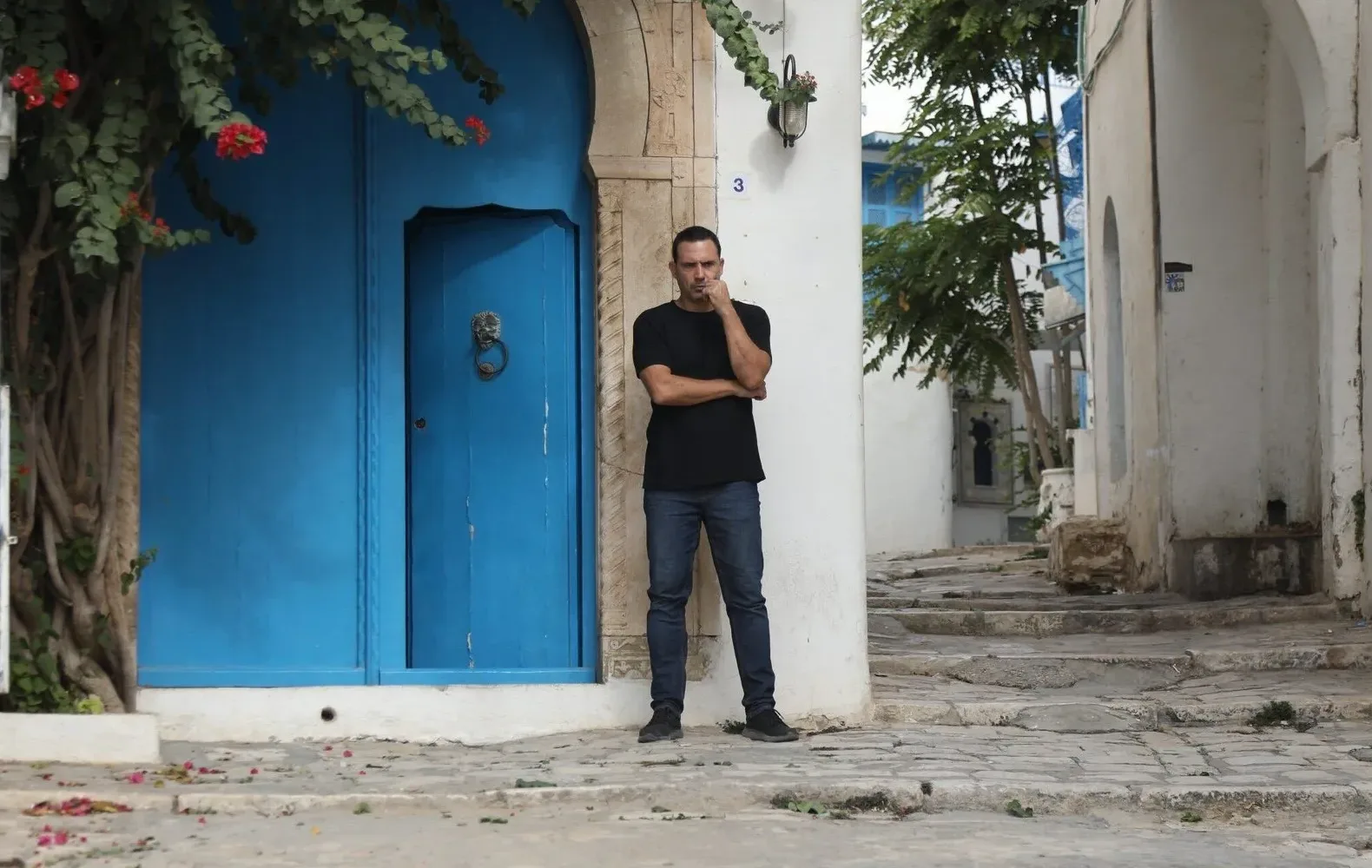

Dhafer L’Abidine moves from a long acting run into a more expansive filmmaking role with his third feature, Sophia. The film continues his interest in fatherhood, displacement, and the pressure exerted by memory. Emily, played by Jessica Brown Findlay, arrives in Tunisia from London with her young daughter, hoping to repair the relationship between the child and her father, Hicham. He is estranged, and the hints around his past point to a life shaped by complication.
A visit to a crowded local market turns that fragile plan into panic when Sophia disappears. The disappearance pushes the film into a chase narrative with urgent momentum. Suspicion lands on Hicham almost immediately, tied to earlier legal trouble in the United Kingdom and a reputation that marks him as an outsider on familiar streets.
He runs to find his daughter and protect his name, slipping into fugitive status as the city tightens around him. The result is a pursuit thriller driven by parental desperation, shaped by systemic suspicion and a personal need for redemption.
The Stoic Father and the Distressed Outsider
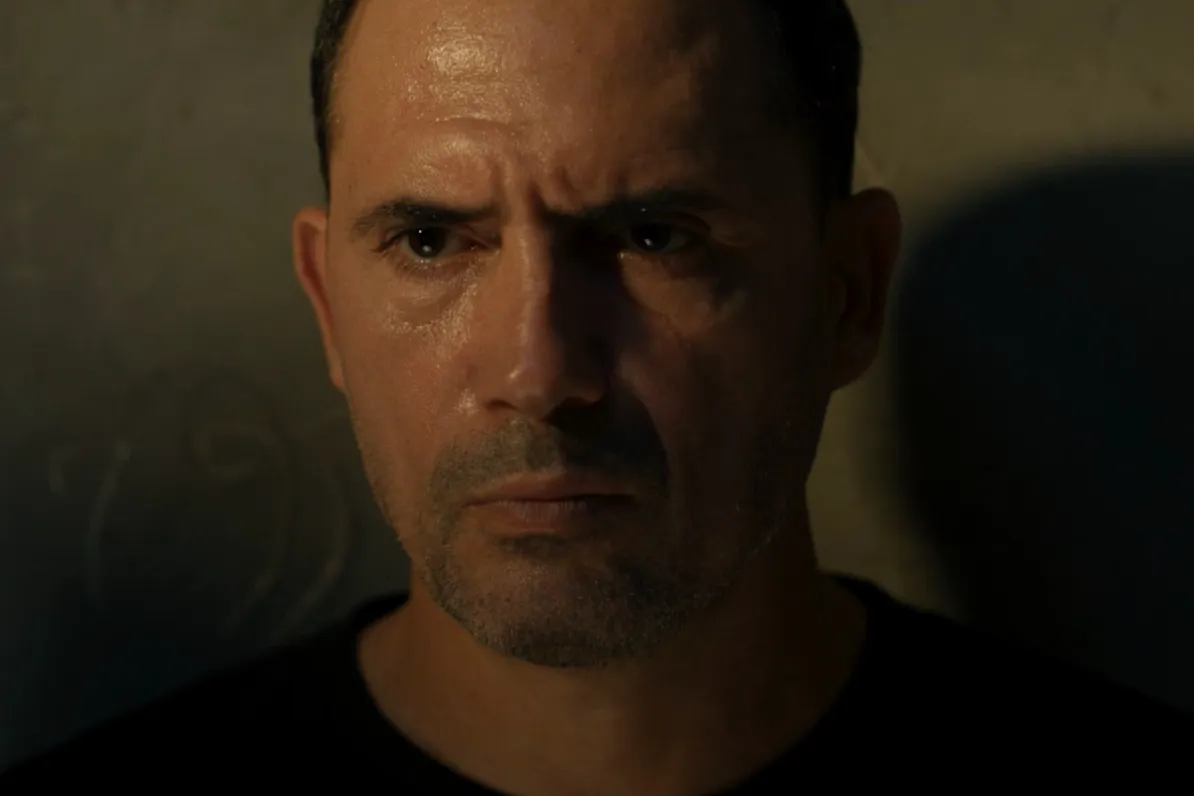
The film’s emotional charge rests with Hicham and Emily, and with the distance that sits between them. Hicham works as a boxing trainer, presented through physical authority and a quiet, brooding intensity. The performance leans into an action-cinema mode that recalls older genre heroes, and that choice sometimes narrows the space for visible paternal grief.
Emily arrives with British habits and expectations, then collides with a place where she has no linguistic foothold and few social anchors. Her reactions crest sharply, capturing the fear of a parent trapped with partial information and no clear route forward.
Their scenes together keep a deliberate coolness, reflecting years of separation inside the story. The police chief and Emily’s wealthy father, Anthony, function mainly as blocks in Hicham’s path, tightening the sense of pressure from both institutions and family. The police chief’s conduct carries a bias that echoes real social prejudices aimed at people shaped by deportation and marginalization. The acting stays close to genre logic, yet the lack of tenderness between the parents weakens the pull of their former romance, making it harder to feel fully invested in what they once had.
Shadows and Sunlight in the Urban Maze
On a technical level, the film captures the heat and density of Tunis with confidence. Cinematographer Willie Nel leans on warm tones and natural light, turning the air itself into part of the tension. The camera moves through tight alleys and busy markets, building a claustrophobic feeling that matches the near-impossible task of locating one child inside an urban sprawl.
L’Abidine frequently uses tight close-ups at moments of friction, holding the viewer inside a character’s anxiety. Wider frames, often positioned at a remove, introduce a watchful quality, suggesting unseen eyes tracking the family’s movements.
The pacing strains under a runtime close to two hours, which feels stretched for a straightforward plot engine. Extended dialogue passages slow the energy created by rooftop chases and physical confrontations. The film also gestures toward poverty and police misconduct, giving the action a gritty setting that lifts it above a routine procedural track. The middle stretch still drifts, and a sharper edit would likely have kept the tension tauter across the full search.
Tropes and the Mechanics of Suspicion
The script works inside the familiar kidnapping-thriller framework, leaning on established beats to keep the story moving. Several turns rely on convenient timing, with Hicham discovering exactly what he needs to evade capture at the moment danger spikes. That dependence on luck can weaken the internal logic of the investigation.
The screenplay uses Hicham’s history of illegal stay in the UK to motivate the police’s immediate hostility, tying the pursuit to present-day realities around migration and legal status. The question of who took Sophia follows a standard pattern of misdirection, moving suspicion across secondary figures to maintain uncertainty.
When the answer arrives, the effect lands softly, partly because the build lacks the psychological density associated with more nuanced dramas. Dialogue stays workmanlike, focused on moving pieces into place rather than opening deeper character space.
The film ends up suspended between a grounded portrait of a family in crisis and a familiar television-style structure. The craft looks polished, yet the writing often stays cautious, relying on predictable storytelling habits that many audiences will recognize across global thrillers, including popular commercial modes that travel easily between regions.
Sophia is a gripping family thriller that explores the intense emotional landscapes of fatherhood, exile, and the clash of cultures. Premiering as a Gala Screening at the Marrakech International Film Festival in late 2025, the film marks the third directorial effort from Tunisian star Dhafer L’Abidine. The story follows a British mother who travels to Tunis to reconcile her daughter with her estranged father, only for the child to vanish in a crowded market, sparking a desperate race against time. A co-production between Tunisia’s Double A Productions and the UK’s New Sparta Productions, the film is currently being showcased at international film festivals and handled by MAD World for global distribution.
Full Credits
Title: Sophia
Distributor: MAD World (International Sales), MAD Solutions
Release date: December 2, 2025
Rating: TV-MA
Running time: 120 minutes
Director: Dhafer L’Abidine
Writers: Dhafer L’Abidine
Producers and Executive Producers: Dhafer L’Abidine, Sophie Lipsey, Christopher Simon
Cast: Dhafer L’Abidine, Jessica Brown Findlay, Kais Setti, Jonathan Hyde, Hiba Abouk, Maya Celine El Gharbi, Alex Macqueen
Director of Photography (Cinematographer): Willie Nel
Editors: Hafedh Laaridhi
Composer: Selim Arjoun
The Review
Sophia
The film functions as a polished exercise in the kidnapping thriller genre, utilizing the textures of Tunis to ground a familiar story. While Dhafer L’Abidine demonstrates technical skill behind the lens, the narrative suffers from a predictable structure and a lack of emotional depth. The reliance on genre tropes and a bloated runtime prevents the movie from reaching its full potential. It serves as a competent but safe entry into the vigilante subgenre, providing a solid showcase for L’Abidine’s physical screen presence without reinventing the formula.
PROS
- Atmospheric cinematography that captures the authentic heat and density of Tunis.
- Grounded exploration of themes like exile and the struggles of a deported parent.
- Strong physical performance by Dhafer L’Abidine in the action sequences.
CONS
- Overly long runtime that thins out the central tension.
- Predictable plot developments and a lackluster final revelation.
- Dialogue lacks the psychological nuance needed to make the characters feel three-dimensional.