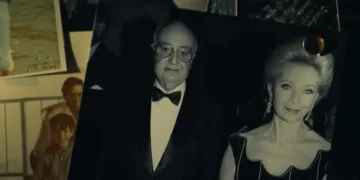












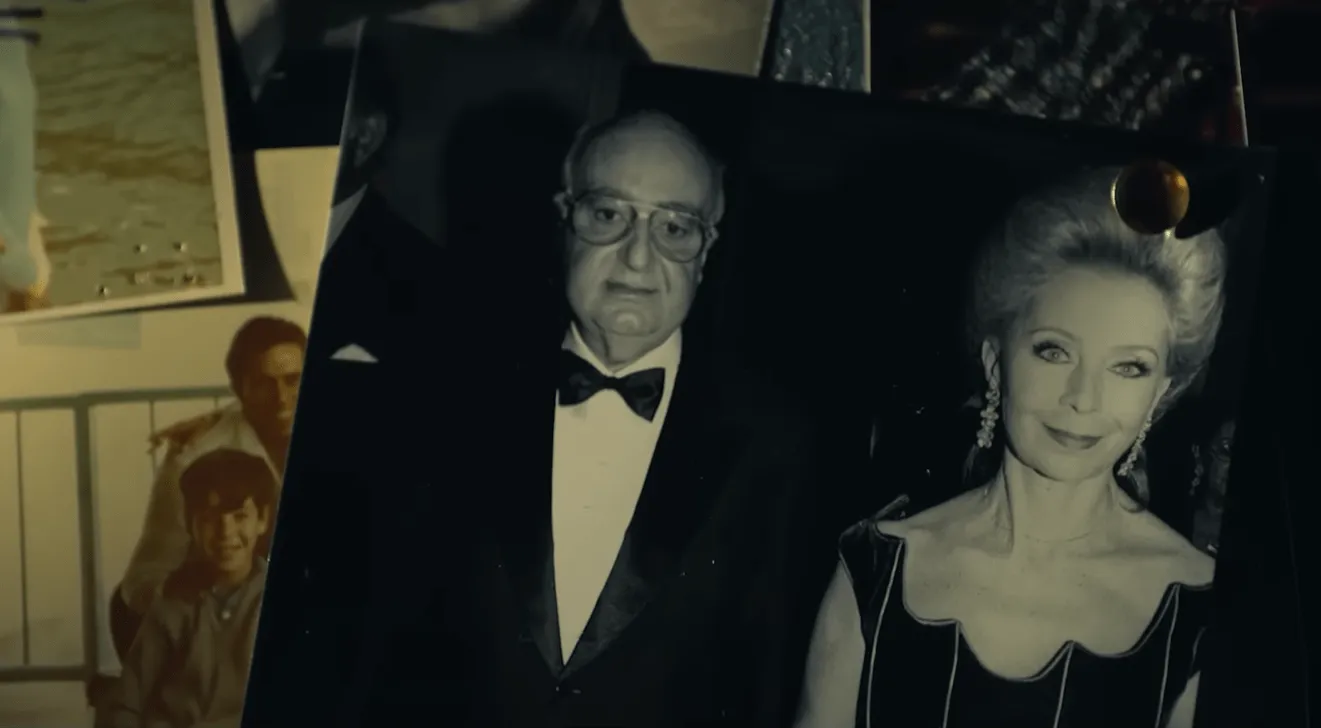

Monaco sells itself as a Securitopia, a sovereign sanctuary where the physics of ordinary law rarely apply. In December 1999, that gilded hyper-reality cracked for Edmond Safra. Safra was a Lebanese-Brazilian banking titan who lived in high-alert paranoia (a side effect of managing billions in a world of shifting allegiances). His Belle Epoque penthouse was a 10,000-square-foot fortress, equipped with bulletproof shutters and panic buttons.
The building became a tomb during a mysterious fire. Safra and his nurse, Vivian Torrente, died from smoke inhalation. They were trapped inside a reinforced room designed to protect them from external threats. This creates a bitter irony. The technology of protection became the mechanism of death.
Ted Maher, an American nurse and former Green Beret, appeared as the primary suspect. Hodges Usry directs this ninety-minute examination of the case. The film moves away from a fire report and turns into an investigation of international finance and Russian organized crime. It presents a world where private power creates its own risks. It treats extreme wealth as something that can facilitate its own destruction. It looks at the friction between personal safety and the global forces of capital. Safra’s death became a global event. The fire reads as a small, domestic failure with massive consequences.
The Heroic-Arson Narrative and the Russian Shadow
The investigation stages a choice between a pathetic individual act and a massive geopolitical hit. The official version focuses on the Heroic-Arson script. Prosecutors argued that Ted Maher lit a fire in a wastebasket to play the savior. He wanted to secure a permanent place in Safra’s inner circle. The theory leans on a specific American desperation, the idea that one dramatic act can buy status and safety.
Maher later offered his own account. He claimed the police forced a confession. He spoke no French. He signed papers he could not read. He insists he only lit the paper to trigger a smoke alarm during a genuine attack by masked men. He claims he stabbed himself to maintain the ruse. It sounds like the logic of a man drowning in his own bad decisions. Then it sounds like an emergency narrative built to survive the next hour. The film leaves space for both impressions, and my response keeps shifting with it.
The Russian Shadow provides the darker alternative. Safra recently helped the FBI identify Russian money-laundering schemes. His paranoia becomes a rational response to a world where enemies include state-backed killers. His joint venture, the Hermitage Centre, had recently lost 900 million dollars of client funds. That number creates a long list of people with a motive for murder, and the documentary keeps returning to it like a grim refrain.
The Domestic-Vacuum theory is equally forceful. Lily Safra, the billionaire’s widow, is a central figure. She allegedly ordered the twenty-five bodyguards to take the night off. Safra’s will changed just weeks before his death to favor her. The fire department took over an hour to act. This suggests a Managed-Lethargy. The locked panic room ensured that no one could interfere with the outcome. These red herrings create a fascinating skein of implications.
The Theater of Performed Selves and the Torrente-Ghost
The film presents a gallery of performed selves. Ted Maher (now Jon Green) looks like a man haunted by his own mythology. His 2003 prison escape with an inmate named Luigi plays as pure absurdity. They used saws and trash-bag ropes to flee a Monaco jail. Maher then used a stolen credit card to call a priest and his ex-wife.

The behavior suggests Narcissistic-Stupidity, a performance of competence that collapses under its own details. He constantly presents himself as a victim of a grand design. Sonia Herkrath, the nursing chief, describes him as having a Jekyll and Hyde personality. She remains convinced of his guilt.
Lady Colin Campbell provides a different brand of theater. Her presence pulls the narrative toward the world of high-society venom. She describes Lily Safra as a praying mantis. This metaphor strips the widow of her humanity. Her haughty delivery and aristocratic scorn turn the documentary into a social satire, a portrait of power talking to itself in a closed room.
These loud voices drown out the Torrente-Ghost. Vivian Torrente died in that same room. The film ignores her personal history. This silence reflects a hierarchy of grief. The billionaire’s death becomes a global event. The nurse’s death becomes a footnote. The disparity shows how documentaries can mirror the class structures they claim to critique. The focus remains on the characters (The Nurse, The Aristocrat, The Widow) while the human cost of the fire stays in the shadows. The lack of recognition for the second victim is a brutal detail.
Director-Entanglement and the 2022 Pivot
Hodges Usry employs a visual style that feels like digital archaeology. He stitches together grainy 1990s television clips and modern, high-definition shots of the Mediterranean coast. He uses large-captioned titles for his subjects. This creates the atmosphere of a live-action game board.
Usry does not stay behind the lens. He appears in the film through selfie-videos and phone calls. He becomes a participant in the story. This Director-Entanglement is a risky choice. It shows how easy it is for an investigator to lose objectivity. He admits to getting emotionally attached to the man he was investigating.
A pivot occurs during the final twenty minutes. New developments from 2022 regarding Maher’s credibility force Usry to reconsider his stance. This shift makes the documentary feel honest. It acknowledges that true crime is a genre of manipulation. The music and editing try to evoke a spy thriller. There are mentions of the Mossad and business rivals.
The film stays grounded in the reality of a messy, unresolved investigation. It avoids providing a tidy answer. It offers a study of how people use tragedy to tell their own preferred stories. It remains a portrait of a mystery that will never truly be solved. The film falls into that small pile of reputable documentaries that question their own foundation. It is a satisfactory watch for those who like conflicting theories.
Murder in Monaco is a gripping true-crime documentary that premiered globally on Netflix on December 17, 2025. Directed by Hodges Usry, the film meticulously re-examines the haunting 1999 death of billionaire banker Edmond Safra and his nurse, Vivian Torrente, following a suspicious fire in his high-security Monte Carlo penthouse. By weaving together archival footage from the late nineties with contemporary interviews and new investigative developments, the documentary explores deep-seated conspiracy theories involving the Russian mafia and high-society tensions. The film is currently available for streaming exclusively on Netflix.
Full Credits
Title: Murder in Monaco
Distributor: Netflix
Release date: December 17, 2025
Rating: TV-MA
Running time: 90 minutes
Director: Hodges Usry
Writers: Sam Hobkinson
Producers and Executive Producers: John Battsek, Ali Brown, Sarah Thomson
Cast: Ted Maher, Lady Colin Campbell, Michael Griffith, Sonia Herkrath, Isabel Vincent, Bill Browder, Sandrine Setton, Luigi Ciardelli
Director of Photography (Cinematographer): Tim Cragg, Alan Jensen
Editors: Nic Zimmermann
Composer: Nainita Desai
The Review
Murder in Monaco
Murder in Monaco succeeds as a character study of the unreliable narrator, though it occasionally loses its footing in the pursuit of sensationalism. By focusing on the friction between high-society glamour and the gritty reality of a tragic fire, director Hodges Usry captures the essence of a mystery that remains perpetually unsolved. While the lack of focus on Vivian Torrente is a moral oversight, the documentary provides a compelling look at how wealth and paranoia can create a lethal environment. It is a solid entry for those who value ambiguity over easy answers.
PROS
- Fascinating look at the eccentric personalities involved.
- Balanced presentation of conflicting conspiracy theories.
- Strong use of archival footage to build atmosphere.
- Honest re-evaluation of the subject's credibility.
CONS
- Neglects the personal history of the second victim.
- Directorial self-insertion can feel distracting.
- Some segments feel over-edited or overly dramatic.
- Fails to provide a definitive conclusion.