





























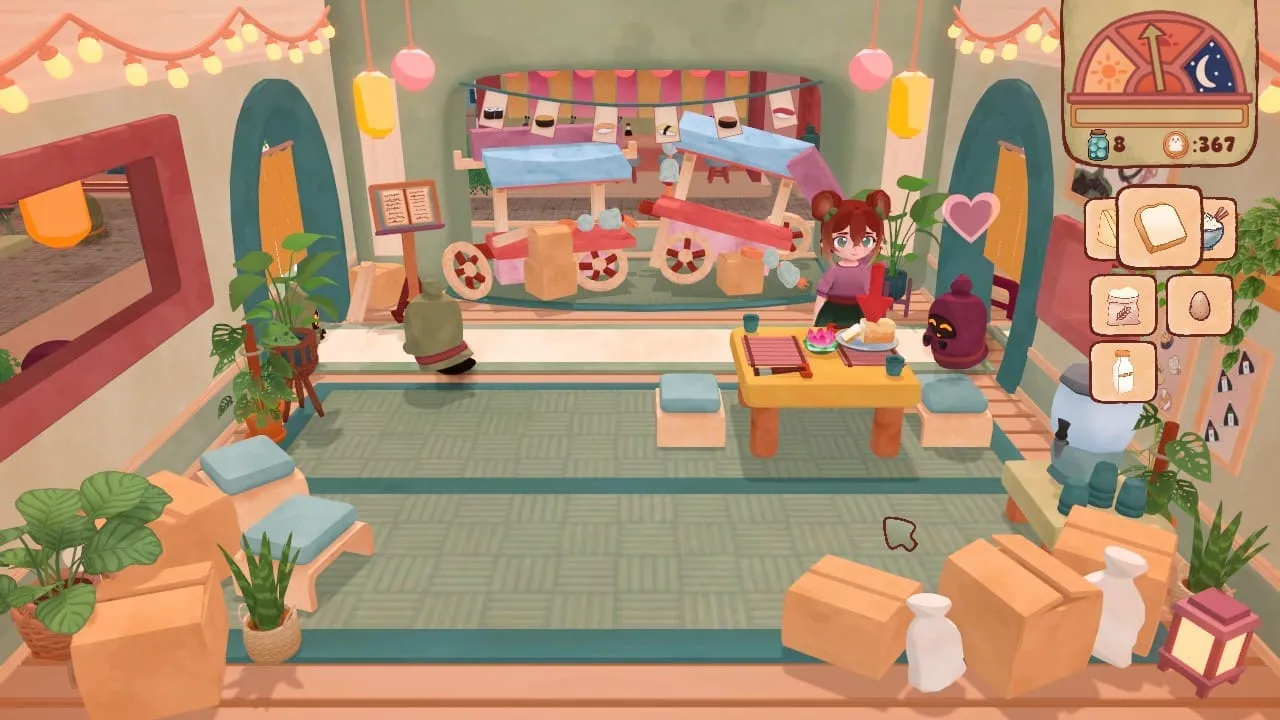

Kokoro Kitchen opens with a quick pivot from everyday routine into something otherworldly. After a sudden incident involving a van, the player wakes inside a run-down Japanese restaurant that sits in the spirit world. The game skips long setup scenes and introduces the key relationship right away: Alan. He is a grumpy ghost chicken, a self-described poultry-geist, and he fills two roles at once, acting as mentor and landlord. He expects work in exchange for a place to stay, which locks in the central goal of restoring a forgotten restaurant.
The layout sells the premise fast. The ground floor holds the kitchen and dining area, with a garden just outside for day-to-day production. Upstairs, a small living space gives the player character a private pocket away from service. From the first minutes, the tone stays gentle.
The restaurant feels like a place built for comfort, which shifts the usual energy of management games toward calm routine. Stakes stay low, the work stays steady, and the focus lands on serving local spirits and improving the building piece by piece. That creates a loop of quiet labor and spectral hospitality in a world that stays strange in a friendly way.
Sustenance and Preparation Cycles
The core loop connects outdoor cultivation to indoor prep with clean, readable steps. You run the garden by planting and watering crops, and the space supports livestock like cows and chickens. Regular interaction turns those animals into steady sources of milk and eggs. The garden covers most of your needs, and the remaining ingredients come from outside. A traveling merchant brings meat and fish, so planning your stock before opening hours matters.
Once materials are in hand, the flow moves into the prep room near the stairs. This space uses dedicated mini-games to convert raw items into usable components. You ferment soybeans for soy sauce, dry leaves for matcha powder, and handle nori through similar hands-on tasks. Anything processed here remains available through the work day, which cuts down busywork during service. The game supports that clarity with a label system tied to a keypress. Hitting F shows the names and functions of machines, so you can match a station to an ingredient without guesswork.
The building layout supports the system. Movement between the garden’s dirt and the kitchen’s heat happens with no loading screens, and that continuity keeps the restaurant feeling like a single, physical workplace. Tasks chain naturally into the next step, so the rhythm reads as one connected process rather than a set of isolated minigames.
The Low Stakes of Spiritual Service
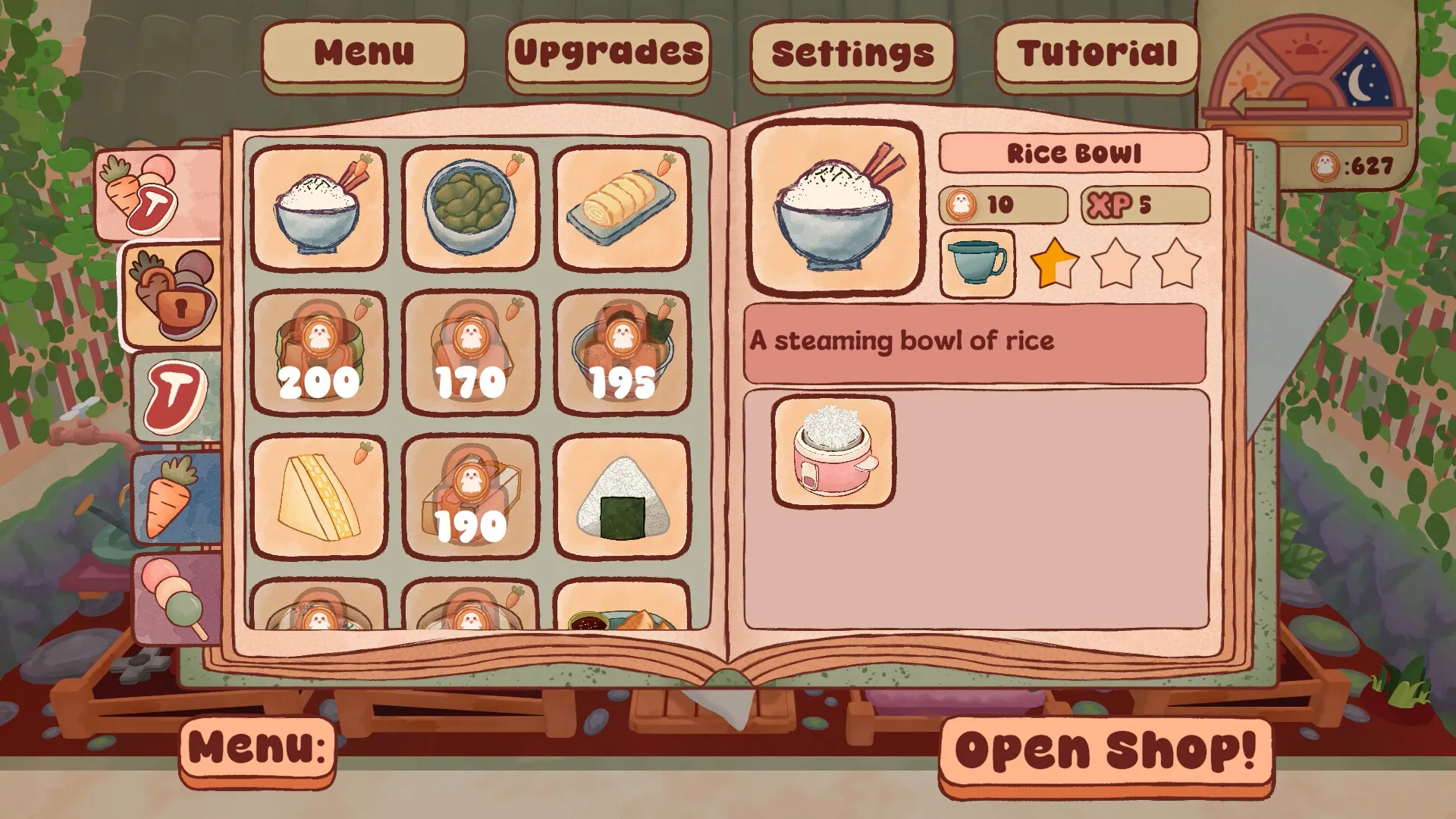
Running the dining room hinges on player choice, and those choices shape how demanding each day becomes. Every morning you select the recipes that will sit on the active menu. That selection works like a hands-on difficulty dial. A broad menu packed with complex dishes raises the workload. A tighter list keeps the shift more manageable.
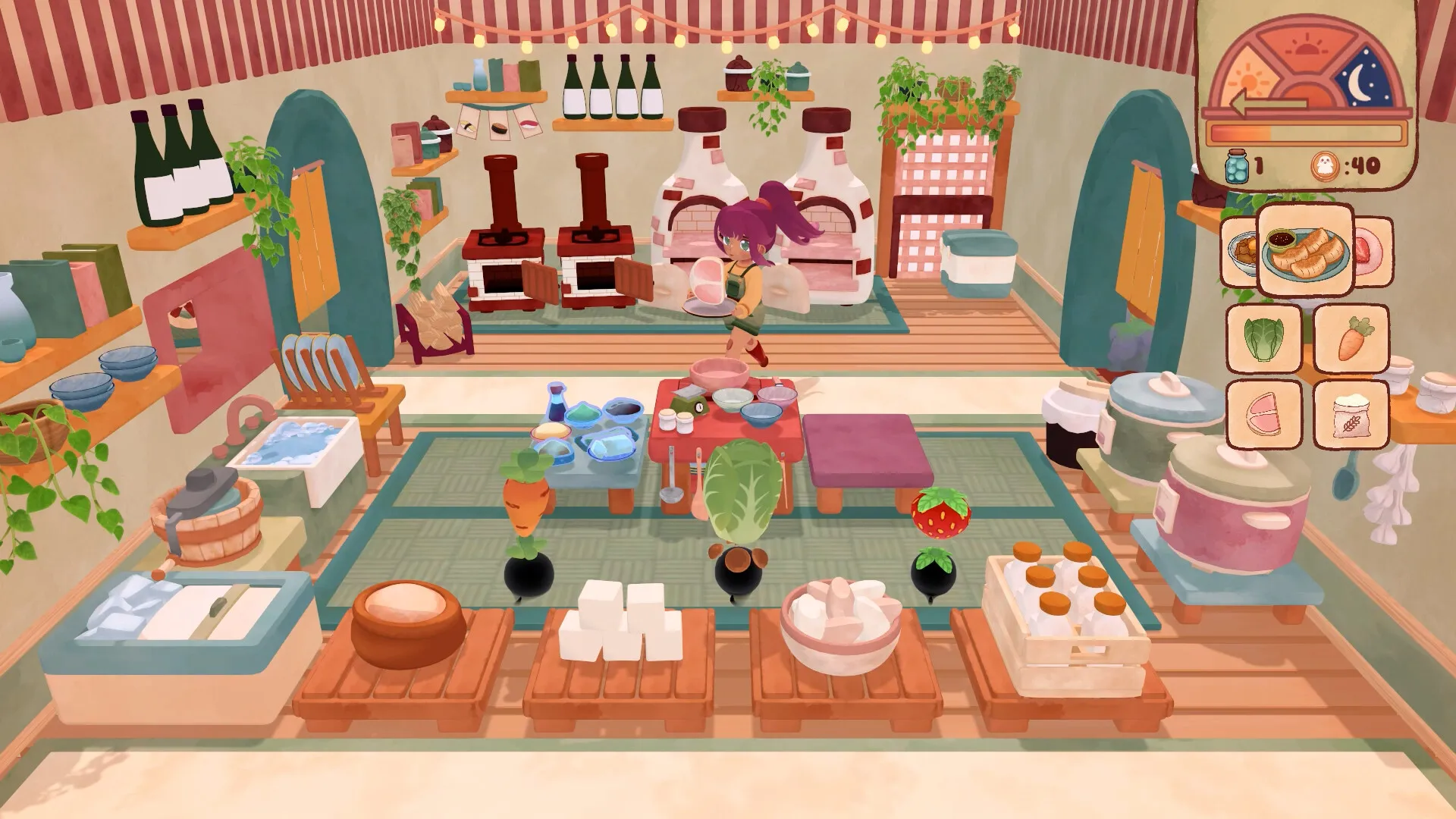
Once the doors open, the routine clicks into a familiar service loop: take orders, cook, and deliver plates to tables. The structure echoes classic time-management design, and the feel remains calm. Errors do not carry lasting damage. Burn a dish and you can toss it and cook again. Let a customer wait too long and they can leave, and the game avoids permanent hits to reputation or long-term progress. That approach invites experimentation and keeps the learning curve friendly for players who like optimizing, along with players who just want to keep the room running.
The spirit customers add texture to the routine. Regular patrons show up with specific challenges that break up the standard order flow, and those interactions push the story forward in small steps. Even the chores feed the pacing. Washing dishes by hand becomes a steady reset between bursts of orders, and it stays part of the day until you can pay for mechanical help. Time advances through what you choose to do, and the day ends when you return to the upstairs living space, where the game saves automatically.
Growth and Atmospheric Details
Progress uses two currencies with distinct jobs. Money covers new recipes and farming supplies. Experience points pay for structural upgrades. You decide how to invest across the farm, the restaurant, and the kitchen, and those decisions can reshape the daily routine. Buy an automated dishwasher and the sink stops being your constant obligation. Hire a lazy assistant and serving duties can shift off your shoulders. The upgrade path lets you automate the parts of the work you enjoy least, which changes how you spend your attention during service.
Story beats arrive through that same improvement loop. Helping recurring customers reveals pieces of the restaurant’s history and details about Alan’s past life. Special guests can show up every ten days if you meet certain conditions, and they bring larger story moments along with big payouts of upgrade points.
The presentation supports the tone. The visuals lean on soft sage greens and warm burnt oranges, and small props like fairy lights and potted plants give the restaurant a lived-in feel. Rooms look cluttered yet cozy, implying a long history that your daily work slowly repairs.
The soundtrack keeps to steady, cheerful loops, with simple melodies that stay pleasant across long play sessions. The game also opens with character customization, letting you shape how your presence in this world first appears, reinforcing the sense that this place becomes yours through routine.
The Review
Kokoro Kitchen
Kokoro Kitchen offers a serene departure from the typical pressures of the management genre. By removing penalties for failure and focusing on the tactile joy of the farm-to-table loop, it creates a meditative experience. While the progression can occasionally feel like a slow grind, the charming interactions with Alan and the local spirits provide a constant sense of warmth. It is a thoughtfully designed title for those who value atmosphere and steady, low-stress growth.
PROS
- Relaxing, penalty-free gameplay.
- Seamless transition between farming and cooking.
- Charming visual and auditory atmosphere.
- Flexible difficulty through menu selection.
CONS
- Economy feels slightly stingy in the mid-game.
- Tutorial requires manual checking of labels (F key).
- Experience point progression can become a bit grindy.