








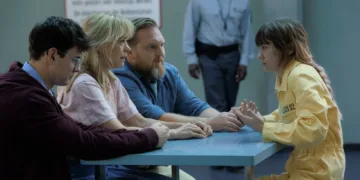
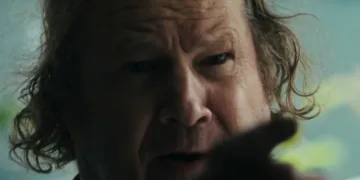






A Town Called Purgatory establishes its presence through a post Civil War landscape defined by exhaustion and decay. The 19th century frontier appears as the skeletal remains of ambition. Dust coats every surface. The sun feels heavy. Travelers arrive at a ghost town that immediately triggers a sense of the uncanny. It feels wrong in the way a liminal space often does. The setting enables a sharp merger of the traditional Western and survival horror, letting familiar iconography turn sour.
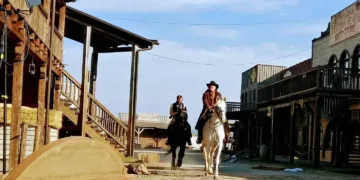
The production used a Western themed park in Austria. That geographical displacement supplies a degree of artifice that serves the film. The environment looks real and also feels subtly alienated from history, like frontier imagery rebuilt from memory and left slightly out of alignment. The film settles into cow skull anarchy. Death sits at the elbow of every character. Civilization survives as a fragile memory. The law has no reach. The pillars of society have been bent by men who are familiar with the void. This is a world where the supernatural waits for the human spirit to break.
Lexical Shrapnel and Moral Weight
The script pulses with genuine cowpuncher lingo. This 19th century vocabulary gives the dialogue a rhythmic quality. It sounds precise. It carries a pleasurable chime that plays against the surrounding desolation. Language becomes part of the film’s texture, a small music of identity amid dust and threat.
The film operates within deep moral ambiguity. The protagonists are not heroes in any traditional sense. They walk a thin line between righteousness and villainy. Guilt functions as the primary engine of the plot. Past choices refuse to stay buried. The narrative forces these men to face their internal demons, the ones that speak with the intimacy of memory. Prejudice and old conflicts color every interaction. The uneasy feeling stays constant, even in the pauses.
The ghost town acts as a psychological pressure cooker. Isolation becomes a character itself. For the first two acts, the film prioritizes human grit over supernatural spectacle. Cowboy on cowboy violence remains the central focus. This choice keeps the audience engaged with the human stakes.
The horror is a slow burn. We watch men murder each other while a greater threat watches from the shadows. It is a cynical, effective approach to pacing. The film conditions the viewer to read every hesitation as a warning and every silence as a setup.
Archetypes of the Black Abyss
Dan De Luca inhabits the screen with the comfort of a worn gun belt. He plays a gentleman who exists in the cracks of Western mythology. His performance is believable because he avoids the theatrical. He feels like a man who has seen too much and done worse.

Matt Servitto portrays Frank as a creature from a black abyss. He represents the absolute absence of decency. His presence is skin crawling. He moves through the frame with a predatory stillness that recalls the most nihilistic villains of the genre, the ones who make violence feel like a philosophy with boots. The film grants a wry kindness here. Frank never needs to explain himself. The silence does the work.
The chemistry between De Luca and Ken Arnold provides the film with its grounded center. They are fully locked into their roles. One never catches them acting. The supporting cast contributes to a lived in, honest atmosphere that defines high quality independent cinema.
Trust is the rarest currency in this world, portrayed as a hard earned tool for survival. These men are naturally suspicious. They look at each other with eyes that expect betrayal. This psychological tension makes the eventual need for cooperation feel earned and desperate.
Synths, Skin, and Shadow Play
The horror elements center on a skinwalker that is genuinely nasty. Its design relies on impressive practical effects. The creature looks grotesque and wrong in its proportions. The cinematography balances wide open vistas with tight, claustrophobic interiors, moving the viewer between exposed space and compressed panic.
Large scale shots of the Austrian landscape stand in for the American West with surprising success. The camera’s attention slides from those exposed frames to interiors where shadow takes over, a chiaroscuro instinct applied to frontier space.
Cazz Cerkez provides a score that defies expectation. It uses a pounding electronic synth sound reminiscent of 1980s slashers. This modern auditory choice works against the period backdrop. It creates a jarring, effective juxtaposition.
The film handles its supernatural side with restraint until the third act. Indigenous folklore provides the foundation for the terror. These entities function as symbolic ghosts. They represent the sins that a nation refuses to confront. Some digital touch ups appear, while the physical makeup work carries the most weight. Pulling off a convincing period piece in Austria on an independent budget is a technical triumph. The film respects the genre lineage of the horse opera while embracing the visceral gore of the midnight movie.
A Town Called Purgatory premiered at festivals throughout 2024 before its wider digital release on December 9, 2025. This independent production is accessible on major video-on-demand platforms. Viewers can find the film for purchase or rental on services such as Apple TV, Google Play, and Amazon Video. It offers a gritty fusion of traditional frontier aesthetics and supernatural horror elements.
Full Credits
Title: A Town Called Purgatory
Distributor: Dark Star Pictures, Uncork’d Entertainment
Release date: December 9, 2025
Rating: TV-MA
Running time: 1 hr 27 mins
Director: Matt Servitto
Writers: Ken Arnold, Dan De Luca
Producers and Executive Producers: Ken Arnold, Dan De Luca, Frederik Füssel, Matt Servitto, Andre Fontana, Bob Ryan, Bill Steffey
Cast: Matt Servitto, Ken Arnold, Dan De Luca, Kevin Jiggetts, Jeff Ricketts, Sam Kozeluh, Maria Lohn, Zach Steffey
Director of Photography (Cinematographer): Frederik Füssel
Editors: Ken Arnold, Jay Wade Edwards, Joshua Land
Composer: Cazz Cerkez
The Review
A Town Called Purgatory
A Town Called Purgatory stands as a grim meditation on the violent inheritance of the West. It rejects the polish of studio efforts for a raw, visceral experience that prizes character friction. The jarring electronic score and the grotesque creature work provide a sharp edge to the familiar period setting. This is a work of nihilistic ambition.
PROS
- Precise 19th-century linguistic flavor.
- Menacing antagonist performance.
- Audacious 1980s-style electronic score.
- High-quality practical horror effects.
CONS
- Occasional inconsistencies in digital imagery.
- Underdeveloped thematic treatment of indigenous folklore.