












Back to the Past plays like a cinematic reanimation of a television property that once stamped itself onto an era. The entire enterprise rides on the persistence of Louis Koo, stepping back into Hong Siu-Lung two decades after the original series ended.
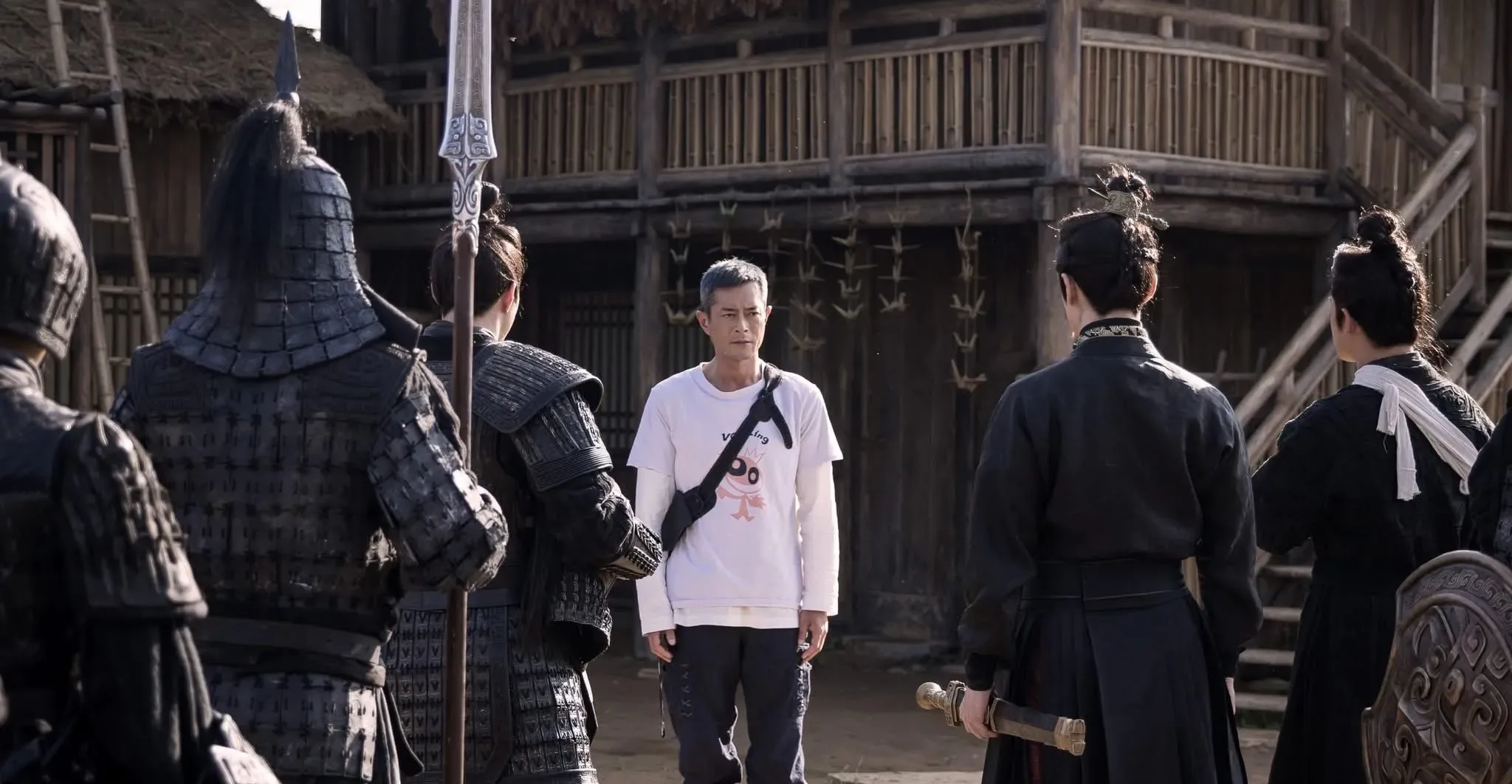
The story opens with Hong settled in the ancient Qin dynasty, living a pastoral life at a distance from the modern world he once carried in his head. That calm collapses the moment a faction from the future arrives and starts tearing at the historical timeline.
Moving the premise from television to a theatrical scale gives the material a larger stage and a louder pulse. It doubles as a reunion for the cast that helped define Hong Kong entertainment at the start of the millennium. The hook remains pleasingly simple: a 21st-century man adapting to the third century BC. Koo’s production company pushes the scale to match twenty years of anticipation, and the sequel leans into the permanence of choice.
Hong chose to stay in the past. Now the past he accepted faces danger from the very technology he left behind. The film frames that collision as a high-stakes return where history and science fiction share the same uneasy room.
The Geometry of Power and Revenge
The plot runs on a triangular pressure system, each corner tightening the others. Ken stands on one point of the triangle: the embittered inventor of the time machine. Michael Miu plays him as a man determined to overwrite history for a private grievance, with ambition sharp enough to cut through centuries. He intends to replace the first emperor and take the throne.
On another point sits Ying Zheng, a cold ruler who has spent years consolidating his empire, a figure shaped by power and sealed off by it. The third point belongs to Hong Siu-Lung, a reluctant mediator trying to protect his family and the timeline he helped establish.
Also Read




That structure turns the film into a psychological thriller draped in historical costume. Ken arrives with a mercenary squad outfitted with modern firearms and vehicles, and the introduction of superior firepower into an ancient world tilts the moral field instantly. The script keeps the existential threat from becoming oppressive by threading in dry wit and small acknowledgments of the characters’ shared past.
Hong and the emperor carry a bond that has cooled across two decades, transforming a master-pupil dynamic into mutual suspicion. The tension sits in a single ugly question: can the past be protected without devouring the person assigned to guard it? Ken’s hubris lands as classic noir logic, the kind that promises total control and delivers ruin with paperwork-level inevitability.
Anachronistic Spectacle and Chiaroscuro Violence
The film’s visual language thrives on the jolt between ancient mud and futuristic chrome, an anachronistic texture that keeps the eye alert. Sammo Hung oversees the action, fusing traditional wuxia swordsmanship with the tactical grit of modern gun-fu. The choreography often turns claustrophobic, with tight framing that traps the viewer inside the chaos as high-tech mercenaries collide with infantry ranks. Hoverboards and digital masks drift through the dusty Qin landscape like imported glitches, and the imagery aims for brazen spectacle.
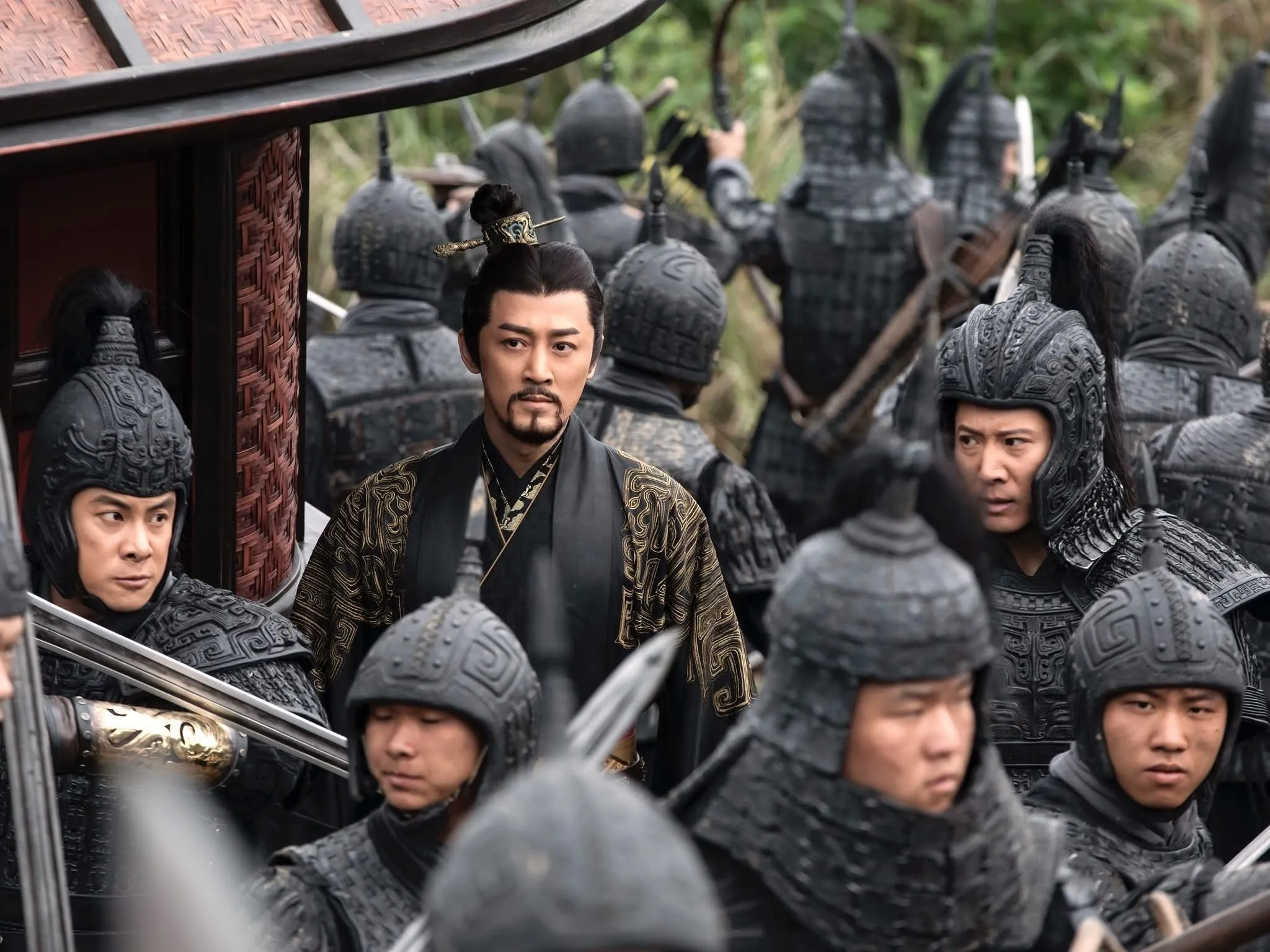
Some of the digital rendering lands unevenly, with pixelated edges that call attention to themselves at the worst moments. The directors respond with a nippy pace, pushing forward before the audience can stare too long at the seams. Night sequences lean hard on shadow, using darkness to conceal the limits of the digital backgrounds while building an expressionistic mood. The chiaroscuro effect suits the story’s moral murk, since time travel here reads less like wonder and more like contamination.
A motorcycle tearing past a horse-drawn chariot delivers a spike of strange energy, and the camera meets these collisions with frantic motion that underlines how violently the future sits inside the past. An escape through a tea plantation briefly relaxes into practical scale, a moment where physical space carries the weight. The film embraces its hybrid identity and treats its time-travel tech with a casual irreverence, letting absurdist humor slip through even as explosions keep arriving on schedule.
Reprise, Resonance, and the Weighted Gaze
The performance layer leans heavily on the return of the original cast, and the film knows it. Louis Koo gives Hong a weary, deadpan gravity, playing him as a man burdened by knowledge of what comes next. His presence feels hardened, a shift from the energetic cop of the series into a watchful father who measures danger before he moves. Raymond Lam works as an excellent foil as the emperor, projecting a chill that suggests the isolation that comes with absolute power. Their shared scenes carry the weight of history without needing exposition. They look at each other and the past speaks.
Jessica Hsuan and Sonija Kwok returning sharpens the emotional stakes, presenting a domestic harmony the plot threatens to erase. The script keeps a direct line to the audience through internal references and small jokes, including a running wink at the lead actor’s famous tan. The sequel functions as a large piece of fan service, openly aware of its roots while pressing to expand the property’s legacy.
For the Hong Kong film industry, the production registers as a serious attempt to reclaim the glory of early 2000s storytelling. The veterans’ chemistry remains the film’s strongest asset. Their interactions supply a human anchor inside high-concept chaos, a reminder of why these characters have stayed relevant for twenty-five years.
Back to the Past is a historical science fiction action film that serves as a direct sequel to the iconic 2001 television series A Step into the Past. The movie premiered in Hong Kong on December 31, 2025, and expanded to theaters in the United Kingdom and Ireland on January 2, 2026. As of today, January 8, 2026, the film is officially making its debut in the Netherlands. Audiences can catch this high-budget production in major theatrical circuits globally, where it has already set several box office records for Hong Kong cinema.
Full Credits
Title: Back to the Past
Distributor: One Cool Pictures, Trinity CineAsia, Huace Pictures
Release date: December 31, 2025
Rating: 15, Category IIB
Running time: 107 minutes
Director: Ng Yuen-fai, Jack Lai
Writers: Chang Chia-lu, Lily He
Producers and Executive Producers: Louis Koo, Tang Wai-but
Cast: Louis Koo, Raymond Lam, Jessica Hsuan, Sonija Kwok, Joyce Tang, Michael Miu, Bai Baihe, Michelle Saram, Louis Cheung, Timmy Hung, Fish Liew, Wong Man-piu
Director of Photography (Cinematographer): Kenny Tse
Editors: Wong Hoi
Composer: Chan Kwong-wing
The Review
Back to the Past
The film functions as a cinematic reunion that prioritizes the emotional history of its audience. While the technical execution of the science fiction elements feels uneven, the presence of the original cast provides a stable emotional anchor. It manages to balance the absurdity of high-tech warfare in the Qin dynasty with a grounded look at aging and legacy. Fans of the source material will find satisfaction in seeing these characters again. The production serves as a loud, energetic tribute to a specific era of storytelling.
PROS
- The return of the main actors brings immediate chemistry and weight to the story.
- The fight sequences maintain a high level of energy and physical impact.
- The script includes clever references that reward long-time viewers.
- The collision of modern weaponry and ancient military tactics creates a striking visual experience.
CONS
- Certain digital elements and backgrounds look dated by modern standards.
- The motivations of the villain feel underwritten and lack depth.
- The narrative occasionally feels like a series of chases rather than a cohesive plot.
- The transition between lighthearted comedy and serious historical drama can feel jarring.