

























![Kingdom Hearts Collection [I-III] Review](https://gazettely.com/wp-content/uploads/2026/10/Kingdom-Hearts-Collection-I-III-1-360x180.webp "Kingdom Hearts Collection [I-III] Review: KHII Holds Steady as Newer Entries Fluctuate 37")



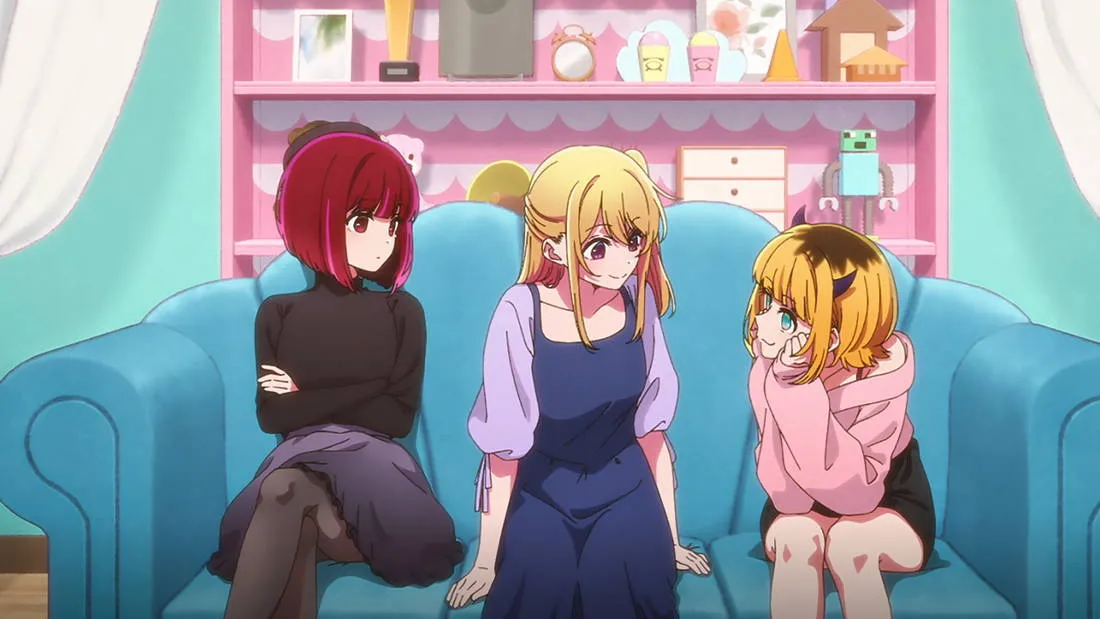

Oshi No Ko Season 3 treats the spotlight like a weapon. The story picks up six months after the previous arc. The Hoshino siblings have grown up inside the entertainment industry. B-Komachi has built a big online audience. Their momentum creates fresh problems for the group. Aqua still carries the past with him.
He keeps searching for the man tied to his mother’s death. Ruby hits a different stage of growing up. The season stays fixed on the reality of fame and the price of ambition. It keeps its sharp eye on the systems that manufacture idols. I still think about my first visit to a television studio. A bright set sat right above dark, dusty cables scattered across the floor, and that image never left me. This season nails that same feeling.
The Death of a Dream
Ruby Hoshino’s shift from wide-eyed idol to calculating strategist changes the story’s temperature. Ichigo Saitou guides her down that path. The former manager returns and takes on a mentor role. They step into a transaction where professional success becomes the route to the secrets of her past. The change shows up in her character design. Her eyes once held a single bright star. Now they hold two dark stars. That detail points to a colder mindset taking root.
The discovery of Dr. Amamiya’s remains lands as the break that she cannot walk back from. Finding the bones of the man she loved in her previous life wipes out what innocence she had left. A mysterious white-haired girl arrives and gives the final shove. This figure reveals the circumstances of the doctor’s death. Ruby takes on the focused demeanor Aqua carried before. She turns to social manipulation to reach her goals.
She lies to staff members for an advantage. She buries her real intentions under professional enthusiasm. That evolution matches the predatory industry she lives in. It shows an environment that pressures optimistic people into hard shapes if they want to survive. I remember watching old tapes of dark psychological anime as a teenager. Those stories tracked how a goal can hollow a person out. Ruby’s arc plays like a modern heir to that tradition.
The Exhaustion of the Machine
The series turns toward the labor that stays off-camera. Yoshizumi, an assistant director, stands in for the worker stretched past reason. He handles tasks that belong to multiple employees. The depiction reads as a critique of modern workplace standards. It points to companies skirting labor regulations. Workers bring assignments home to dodge the anger of their superiors.

V-tubing and cosplay subcultures add texture to the season’s view of entertainment work. Mimi, the director’s sister, becomes the guide for that side of the digital economy. The plot thread tied to the show Digging Deep sharpens the tension between creative freedom and legal limits. A manga author refuses to approve certain costumes, and the production spirals into chaos. It echoes the friction between branches of Japanese media that share audiences and resources, then collide over rights and control.
The animation leans into fatigue. Bodies move with weight. Faces carry that haggard look that comes from too many late nights. It takes me back to my retail job during the holiday rush. The cycle of demands and missing appreciation felt endless, and the show taps into that same grind. The season speaks for people who get ignored while attention stays glued to stars. It gives the production office the same intensity it gives the stage.
The Cost of Protection
Relationships here run on trauma and secrets. Aqua and Akane keep their partnership going. Their romance rests on deception. Akane knows it. She stays because the connection matters to her. Her analytical nature lets her see through the absence of genuine affection. The result is tragic. She performs the part of a girl in love while holding a cold understanding of what the arrangement really is.
Kana Arima carries the emotional bill for these games. She feels Aqua’s silence pressing down on her. Isolation drags down her performance. Her sadness turns into a problem for the group. Aqua keeps his distance for a specific reason. He believes closeness would put her in danger. Ai Hoshino’s fate stays in his mind, and he wants to block anything like that from happening again.
Mem-cho fills the stabilizer role. Her past as a content creator helps keep the group steady. She senses the friction between her teammates. She tries to close the gap while still protecting her own career. Her maturity stands out against the others’ internal chaos. The show makes these personal battles feel as high-stakes as the central mystery.
A Visual Language of Decay
Doga Kobo’s production quality stays strong. The animation uses targeted techniques to express what characters cannot say. I picked up on loose, jagged lines during moments of high anxiety. The characters start to look like they might physically splinter under pressure. Color choices separate public idol life from the private reality tied to revenge. Stage lighting burns bright, while the Hoshino home sits in darker, muted tones.
The music reinforces that split. The opening runs upbeat tracks against ominous imagery. The twins’ father appears in those frames, and the sequence builds dread without needing to spell it out. Voice acting adds another level. Akane Kurokawa lands lines in a cheerful tone that still carries the chill of her thoughts underneath.
That performance fits the character’s complexity. It brings to mind the psychological thrillers of the nineties, where a pleasant surface could hide something sharp. The craft across animation, color, music, and performance builds unease scene by scene, and the execution makes the story’s emotional weight land in every frame.
Oshi No Ko Season 3 arrived in late 2025. It serves as a sharp continuation of the story of the Hoshino siblings. Viewers can watch the episodes on HIDIVE and Crunchyroll. This season examines the harsh realities of the idol world and the transformation of Ruby and Aqua. It keeps the dark tone and emotional weight of the previous years.
Full Credits
Title: Oshi No Ko
Distributor: HIDIVE, Tokyo MX, Crunchyroll, Netflix
Release date: October 6, 2025
Rating: TV-MA
Running time: 24 minutes
Director: Daisuke Hiramaki, Chao-Ok Sung
Writers: Jin Tanaka
Producers and Executive Producers: Shimpei Yamashita, Kunisaki Kobayashi, Takuya Yoshioka, Ryo Ohyama
Cast: Takeo Otsuka, Yurie Igoma, Megumi Han, Manaka Iwami, Rumi Okubo, Lynn, Yasuyuki Kase, Takehito Koyasu
Editors: Kentaro Tsubone
Composer: Takuro Iga
The Review
Oshi No Ko Season 3
The third season represents a masterful evolution of its central themes. It moves past simple idol worship to examine the wreckage left by ambition and vengeance. The technical execution from Doga Kobo creates a haunting atmosphere that mirrors the internal decay of its characters. This season succeeds by exposing the machinery of the industry while maintaining a focus on the personal cost of fame. Watching these characters sacrifice their identity for a camera lens feels like witnessing a modern tragedy.
PROS
- The show provides a grounded look at the exhaustion and systemic pressures faced by production staff.
- The use of jagged line art and dark eye pupils effectively communicates the characters' mental decline.
- Her shift from an innocent dreamer to a calculated player is handled with significant emotional weight.
- The vocal performances capture the disconnect between public personas and private intentions.
CONS
- Certain episodes prioritize industry education over plot advancement.
- The heavy focus on exploitation and trauma might feel oppressive for viewers seeking lighter entertainment.







