






![Kingdom Hearts Collection [I-III] Review](https://gazettely.com/wp-content/uploads/2026/10/Kingdom-Hearts-Collection-I-III-1-360x180.webp "Kingdom Hearts Collection [I-III] Review: KHII Holds Steady as Newer Entries Fluctuate 33")




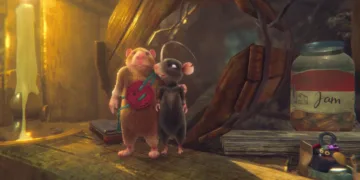
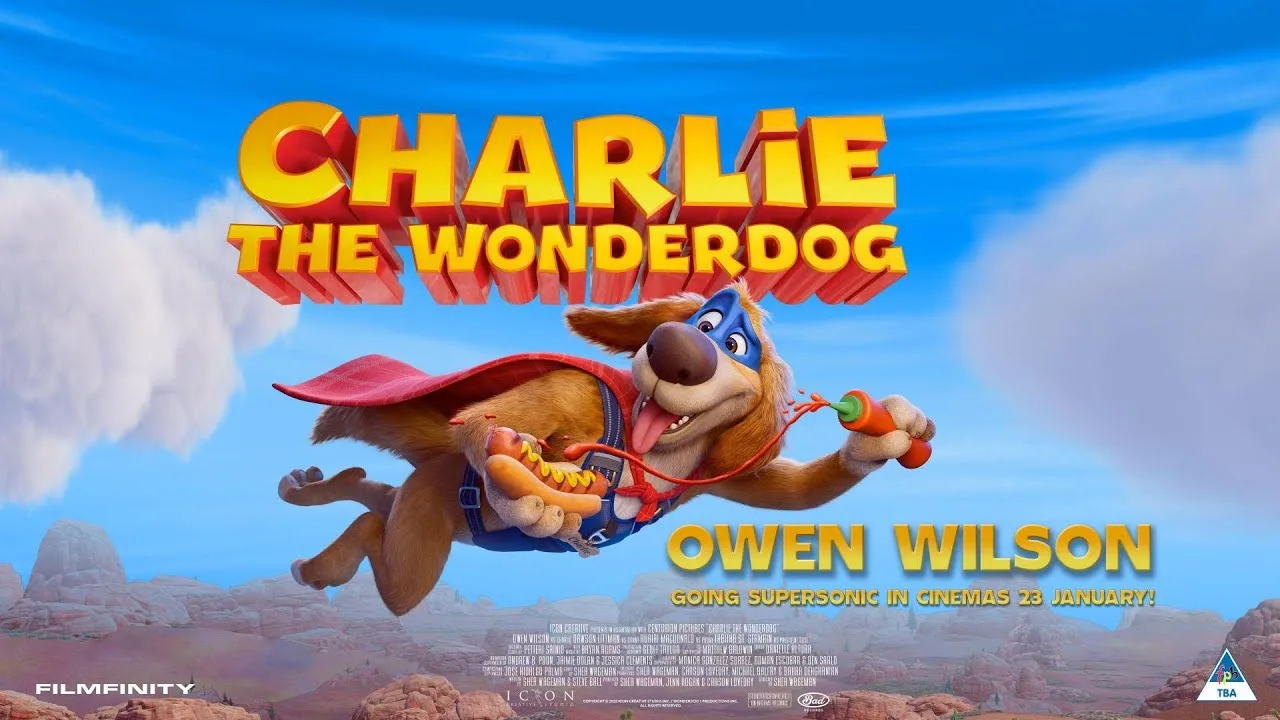

Charlie the Wonderdog opens with a portrait of a golden retriever entering his final years. Danny, the owner, observes his companion’s slowing body as a shared childhood reaches its end. The story takes an abrupt turn when extraterrestrials abduct the dog. These visitors alter the biology of several neighborhood pets.
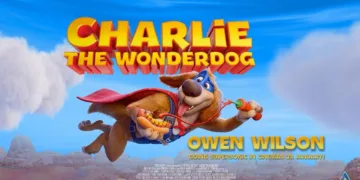
Charlie returns with flight, super strength, and the ability to speak. A nearby cat, Puddy, experiences a parallel alteration. Puddy embraces destruction, while Charlie adopts the role of protector. Their conflict unfolds through loud confrontations and satirical diversions. The film places an intimate bond beside the kinetic expectations of a contemporary superhero parody.
Owen Wilson voices Charlie with an easygoing cadence that shapes the character’s new identity. The narrative expands from suburban routine to an international arena shaped by politics and corporate maneuvering. Shea Wageman directs the feature with bright imagery and slapstick rhythms designed for younger viewers.
From Domestic Grace to Cosmic Absurdity
The prologue relies on visual storytelling to express aging and loyalty. This approach recalls traditions in international animation where gesture and framing replace dialogue to establish emotional grounding. Time passes through visible changes in Charlie’s fur and Danny’s growth from toddler to teenager. The sequence carries the weight of intimate drama and situates the audience within a shared understanding of attachment and loss.
The arrival of squid-like extraterrestrials ruptures this domestic space. An alien prince treats Earth’s animals as collectible objects, a narrative device that redirects the film toward the crowded field of superhero entertainment. Genetic alteration functions as a mechanical reset of the story’s priorities. Charlie gains extraordinary strength and mobility, while the earlier emotional sincerity fades from focus.
The central stretch weakens as Charlie’s role as planetary guardian draws him away from Danny. Their relationship recedes while large-scale rescue missions dominate the plot. The script emphasizes spectacle over the complications of a pet granted agency and speech. This choice aligns with patterns in commercial cinema that favor action sequences over interior development. The familiar logic of a boy-and-dog story dissolves as the film adopts standard heroic routines. The audience exchanges a reflection on mortality for sustained pursuit through urban environments.
Archetypal Voices and the Satiric Mirror
Owen Wilson’s performance fits within his recognizable screen persona. His relaxed delivery gives Charlie a steady presence amid escalating chaos. The voice work communicates loyalty and warmth, even when the dialogue simplifies emotional beats. The restrained tone avoids the aggressive vocal style common in contemporary animation and provides stability for the central figure.
Puddy the cat operates as an embodiment of long-standing feline antagonism. Ruairi MacDonald voices the character with open disdain and self-regard, drawing on familiar images of the domineering house cat. Conflict arises through species-based shorthand that frames cats as scheming and dogs as altruistic. Puddy’s treatment of his owner, Otis, reinforces a moral divide rooted in older animated traditions built on animal archetypes.
President Rose introduces a layer of political satire that sits apart from the animal rivalry. Tabitha St. Germain portrays the leader with single-minded pursuit of profit. The character combines recognizable traits from contemporary political figures into a broad portrait of institutional greed. A subplot involving a dog food endorsement transforms Charlie into a tool for state-backed enrichment. This angle speaks toward adult viewers and reflects concerns about celebrity culture intersecting with governance. The satire operates in isolation, adding to a sense of narrative fragmentation.
Synthetic Fidelity and the Uncanny Canine
ICON Creative Studio delivers visuals consistent with a mid-budget animated production. Surface rendering and environmental detail show technical proficiency. Fur simulation carries a degree of realism, and lighting interacts convincingly with character models. Backgrounds remain clean and serviceable, allowing action to unfold without visual distraction.

Charlie’s redesigned body introduces visual tension. After gaining powers, his form shifts toward a muscular, upright silhouette. Defined pectorals and a human stance coexist with a canine head and paws. This hybrid appearance occupies an uneasy space between realism and caricature. The design recalls exaggerated physiques from older comic imagery applied to a household pet. The contrast between Charlie’s natural movement in the opening and his stiff, humanlike posture later interrupts visual continuity.
The color palette maintains high energy throughout. Saturated hues sustain attention for younger audiences. Set pieces such as the airborne rescue of a falling plane display confident handling of motion and spatial dynamics. These scenes demonstrate the studio’s capacity for complex choreography. The animation remains capable, even while the central character design lacks cohesion.
Tonal Friction and the Fractured Resolution
The film struggles with tonal consistency across its comedic strategies. Low-brow humor appears frequently, aiming for immediate audience reaction. Moments featuring bodily fluids during scenes of vulnerability and insects moving beneath skin undermine the emotional groundwork established earlier. Such choices signal uncertainty about sustaining engagement through warmth and simplicity.
Attempts at topical relevance feel dated within the narrative. Jokes centered on AI deepfakes and fleeting social media trends suggest ideas formed well before release. A gag involving a dog claiming a feline identity gestures toward commentary yet lands as an outdated reference. These elements clash with the straightforward superhero framework and slow the satirical rhythm.
The climax unfolds in a brightly colored amusement park, bringing Charlie and Puddy’s conflict to a final confrontation. The sequence seeks resolution through heightened stakes and physical spectacle. It echoes imagery from the opening in an effort to reconnect action with the story’s emotional origins. The pacing of the battle holds momentum, while the earlier dramatic weight proves difficult to restore. The film closes in a rush of activity, far removed from the quiet neighborhood where it began, leaving an impression of a story pulled in competing directions.
Charlie the Wonderdog premiered in theaters across North America on January 16, 2026, marking a significant domestic release for the Canadian animation studio ICON Creative. This family-oriented superhero adventure follows a golden retriever who gains extraordinary abilities after an alien encounter, voiced by Owen Wilson. Currently, the film is primarily available for viewing in cinemas, though digital and streaming distribution through Viva Pictures is expected following its theatrical window.
Full Credits
Title: Charlie the Wonderdog
Distributor: Viva Pictures, Centurion Pictures
Release date: January 16, 2026
Rating: PG
Running time: 95 minutes
Director: Shea Wageman
Writers: Steve Ball, Raul Inglis, Shea Wageman
Producers and Executive Producers: Carson Loveday, Jenn Rogan, Shea Wageman, Michael Balfry, Bahar Dehghanian
Cast: Owen Wilson, Dawson Littman, Ruairi MacDonald, Tabitha St. Germain, Sebastian Billingsley-Rodriguez, Rhona Rees, Anthony Bolognese, Mela Pietropaolo
Editors: Danielle Altura
Composer: Petteri Juhani Sainio
The Review
Charlie the Wonderdog
The film begins with a powerful emotional weight that dissolves into loud superhero tropes. Owen Wilson provides a grounded voice performance. The script relies on dated political jokes and inconsistent character designs. These elements distract from the central bond. It functions as a distraction for children. Adults are left with a sense of missed potential. The technical quality is high for its budget. The artistic direction lacks a clear focus.
PROS
- Effective wordless opening sequence.
- Sincere vocal performance by Owen Wilson.
- Precise animation quality.
CONS
- Distracting character designs.
- Disjointed political satire.
- Heavy reliance on gross-out humor.