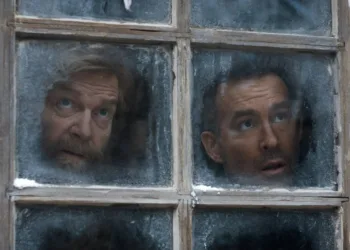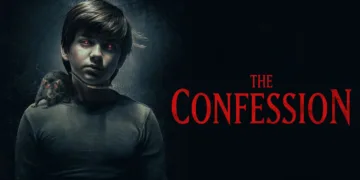


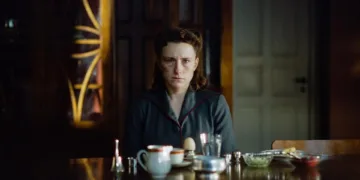
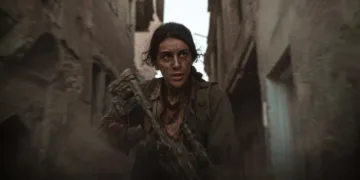

















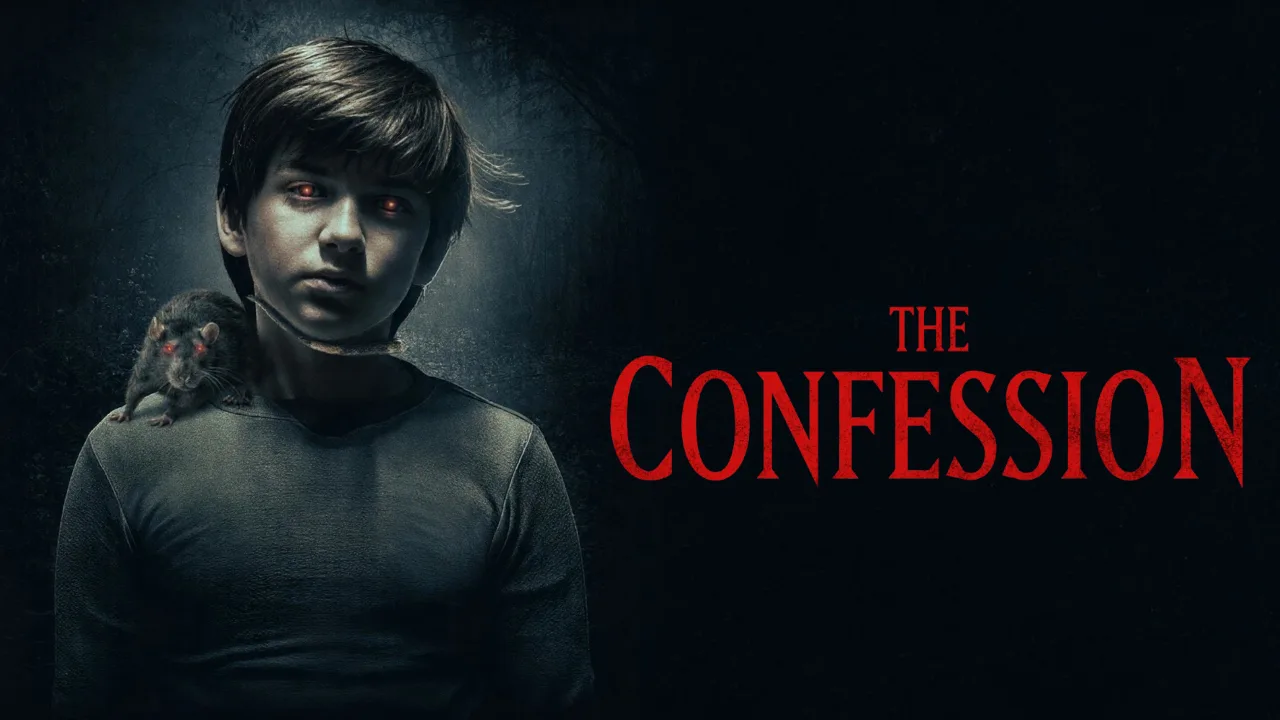

“The Confession,” written and directed by Will Canon, locates Naomi Riley in the arid, judgmental town of Elbe, Texas. A recently widowed musician, Naomi returns to her childhood house to find a place to record an album. Her nine year old son Dylan comes with her, equally unmoored. The house carries the absence of Pastor Arthur Riley, Naomi’s father, who drowned himself in a local lake.
That suicide functions as the score’s opening chord. While sorting the detritus of a life lived under the pulpit, Naomi discovers a cassette tape. On it Arthur admits to the killing of Royce Cobb. The confession reframes the film’s concerns. What begins as a study of bereavement pivots into a procedural that courts the supernatural.
Dylan’s behavior hardens into something predatory. Naomi must reckon with the likelihood that her father’s choices have left a dreadful inheritance. The result is a grim appraisal of parental desperation set within small town secrecy.
Melodies of the Macabre: The Piper’s Debt
The cassette tape is the film’s sonic hinge. It reconfigures the diegetic world by making past sins audible in the present. Arthur Riley’s voice collapses pastoral authority and culpability into the same sentence. Naomi seeks information from Grayson, an investigative journalist and former friend.
Their search for Royce Cobb’s remains supplies a procedural skeleton that anchors the haunting in forensic terms. Harling, an associate of the late pastor, supplies historical context: a 1950s legend of an ice cream man called “The Piper,” a figure who lured children. Will Canon borrows the architecture of Robert Browning’s “The Pied Piper of Hamelin” for the film’s nightmare logic.
The children of Elbe operate as the story’s currency. Arthur’s tape frames his violence as a temporary credit against a coming demand. The reappearance of rats in the Riley home reads as a biological alarm, signaling an end to protective measures. The antagonist resists easy physical definition.
It stages a psychological siege, a pressure that leaches vitality from the living. Characters must contend with spiritual and mental attrition. Pacing is patient, letting dread accumulate like dust in an unused attic. When the supernatural blooms, inevitability feels settled, methodical.
Fatalism and Fretboards: The Riley Duo
Italia Ricci’s Naomi has a sharp, jagged edge. She performs what the town calls “devil’s music,” a vocation that widened the distance between her and her father. Naomi meets local condescension with combativeness. She declines the patronizing tone of a headmaster and returns a police officer’s autograph request with a barbed riposte.
Maternal instinct is constant and fierce, complicated by a history of resentment toward a stifling community. Zachary Golinger’s Dylan oscillates between vulnerable child and cold receptacle of something malign. He speaks of bringing his mother’s severed head to show and tell; the line lands because the delivery avoids theatrical excess.
The threat becomes plausible through restraint. The move from California intensifies the mother son friction. Naomi insists on his individuality in a town that rewards conformity. Scott Mechlowicz’s Grayson functions as the film’s ethical interlocutor. His background as a religious author permits him to mediate Naomi’s skepticism and the town’s zeal without sliding into stereotype.
Arthur Riley appears only as recorded audio, a presence made more disturbing by absence. Craig Kolkebeck’s voice on tape haunts because it belongs to someone who is physically gone. His suicide with a bag of bibles is a striking, imagistic metaphor for the weight of religious duty. That voice directs the living through a territory shaped by his acts. The chemistry between Ricci and Mechlowicz carries lived warmth into an otherwise cold narrative.
The Chiaroscuro of Texas Decay
Will Canon treats genre as a movable surface. The film reads like a cold case early on and evolves into demonic possession without stylistic embarrassment. The cinematography privileges a muted palette, gray and sepia washing frames to emphasize Elbe’s stagnation. Lighting sculpts spaces expressionistically; shadows occupy the frame as if they were objects of set dressing.
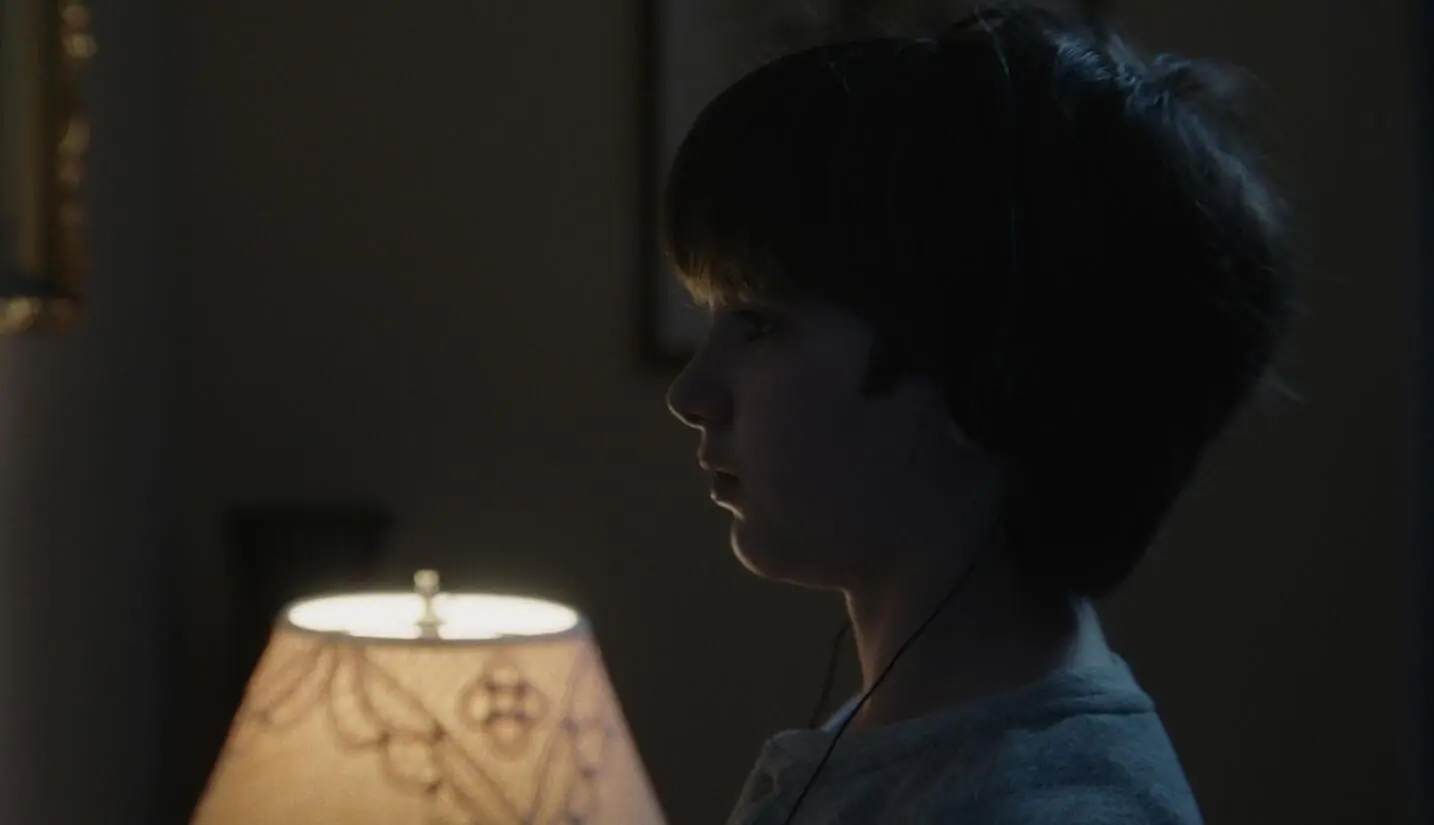
The Riley house’s visual rot mirrors the family’s internal corrosion. Camera choices favor measured movement and composed frames that keep the viewer observing rather than being shouted at. Composition often deploys negative space to suggest absence and to let off screen forces feel proximate. Dan Marocco’s score is a low frequency pulse that raises physiological tension. It resists cheap jump cues and opts for a slow, grinding unease.
One effective sequence uses a practical effect: Naomi discovers a bedsheet shaped like a sitting child. The image registers because it is simple and uncanny rather than ornate. The film’s first two acts emphasize the accrual of evidence, a rhythm that behaves like a procedural for the damned.
Familiar tropes appear, such as the malevolent child and the haunted homestead, but the Pied Piper motif supplies a specific folkloric axis. Cinematic mood dominates over spectacle. The film manipulates audience perception by blurring the boundary between a grieving mother’s psychological collapse and a true paranormal incursion.
The Liturgy of Inherited Guilt
The film frames sin as an account passed across generations. Arthur Riley’s violent attempt to protect his family performs as a postponement of payment. Naomi inherits the ledger. This cycle of trauma ties into the evangelical habits of the region. The story depicts a culture of enforced conformity where ritual offers the illusion of order over disorder.
Naomi’s rock and roll stance operates as an instinctive rejection of that order. Skepticism serves as her first line of defense, yet it falters when confronted by phenomena that exceed explanation. The Piper functions as a metaphor for charismatic figures whose promises of protection lead to harm. The 1950s backstory implies that guardianship and ruin can spring from the same claim.
The critique of religious and social structures remains embedded within narrative choices and never collapses into sermonizing. Parental sacrifice appears in a cynical register. Arthur regarded his action as sacrifice. In effect he condemned his daughter and grandson to prolonged torment. Naomi faces a moral calculation about whether to repeat a morally compromised act in order to free Dylan.
The final act supplies explicit metaphysical rules that reframe the conflict as a contest over eschatological territory. The tonal shift toward doctrinal combat is abrupt, matching the messiness inherent in faith disputes. Identity becomes the contested terrain when the past refuses burial. The ending leaves a residual weight. The viewer is asked to consider what it means to inherit certain liabilities and whether any flight from origin suffices to outrun them.
The Confession was officially released on Digital and On Demand on January 16, 2026, following its acclaimed international premiere at FrightFest and screenings at the Cucalorus Film Festival in 2025. This psychological horror-thriller, which reinterprets the Pied Piper legend within a Southern Gothic setting, is currently available to watch on major streaming and rental platforms. You can find the film on services such as Apple TV, Amazon Prime Video, Vudu, and Google Play via its distributor, Quiver Distribution.
Full Credits
Title: The Confession
Distributor: Quiver Distribution
Release date: January 16, 2026
Rating: TV-MA
Running time: 87 minutes
Director: Will Canon
Writers: Will Canon
Producers and Executive Producers: Rosanna Eden-Ellis, Kristi Ray, James Harris, Mark Petersen, Will Canon, Steve Carson
Cast: Italia Ricci, Zachary Golinger, Scott Mechlowicz, Terence Rosemore, Allie McCulloch, Justin Matthew Smith, Jay DeVon Johnson, Ron Fallica, Craig Kolkebeck, Troy Rudeseal, Vince Eisenson, Owen Daly
Director of Photography (Cinematographer): John W. Rutland
Editors: Kyle Walczak
Composer: Dan Marocco
The Review
The Confession
Will Canon’s film succeeds by treating the supernatural as a forensic necessity. While the third act stumbles into dense folklore, the atmosphere of Texas rot stays thick. Italia Ricci provides a sharp, unsentimental anchor for a story that could easily have drifted into melodrama. The use of the Pied Piper legend grants a fresh coat of paint to familiar haunts. It is a grim, well-acted study of spiritual debt that demands payment in blood.
PROS
- Ricci’s abrasive, protective performance.
- Sinister use of low-tech media like cassette tapes.
- Atmospheric, muted cinematography.
- Eerie integration of the Pied Piper myth.
CONS
- Final act becomes cluttered with lore.
- Some horror beats mimic established classics too closely.
- The mystery of the son feels secondary to the murder investigation.